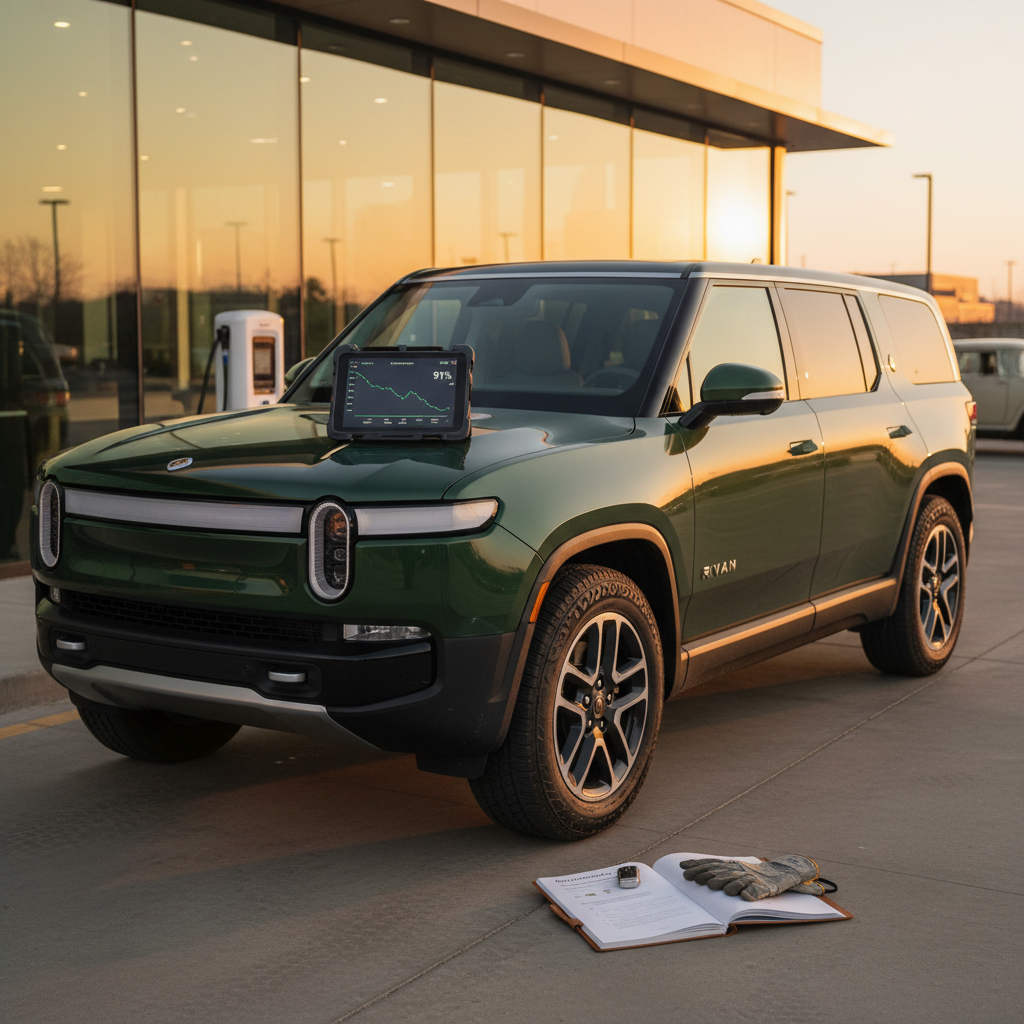
Used EV prices have been on a roller coaster. After a huge drop in 2023–2024, the market in 2025–2026 has settled into something more complicated: in many segments, used EVs are now cheaper than hybrids, and incentives have shifted or disappeared. That’s good news for you, if you know how to negotiate a used EV price with data, not vibes.
The 2026 used EV reality
Why negotiating a used EV is different from a gas car
1. The battery is most of the value
On a used EV, the single biggest unknown is battery health. A pack that’s lost 15% of its capacity isn’t just a range hit, it's a pricing lever. You’re not just buying paint and leather; you’re buying kilowatt-hours that you expect to still be there in five years.
2. Market swings are sharper
Used EV prices fell hard in 2023–2024 and then started to stabilize. Some models dropped 30–40% in two years, then flattened. That volatility makes comparable sales even more important; a stale asking price can be thousands above where the market really is.
- Battery health and remaining warranty matter more than oil changes and timing belts.
- Fast‑charging speed and network access (NACS vs CCS, adapters, paid subscriptions) can justify or destroy a price premium.
- Software features and connectivity (apps, OTA updates, driver‑assist) are now value items you can negotiate on if they’re missing or limited.
Think like an appraiser
Step 1: Know the used EV market before you talk price
Before you ever say, “What’s your best price?”, you need evidence. For used EVs in 2026, that means understanding how fast prices have moved recently and how your specific model behaves.
Used EV price context for 2025–2026
How to build your pricing baseline in 30 minutes
Three quick sources to check before you negotiate
1. Price guides & listing sites
Use KBB, Edmunds, or similar to get a trade‑in, private party, and dealer retail range for the exact year, trim, and mileage.
Screenshots make great receipts in a negotiation.
2. Real listings within 100 miles
Search 3–5 sites for the same model, year, and similar miles within your region. Note:
- Lowest asking price
- Average asking price
- Days on market (if visible)
3. Incentive & tax‑credit history
If your EV qualified for a big new‑car tax credit or recent rebate, depreciation is usually steeper. That’s your argument: this market has already repriced, so asking prices must, too.
Watch out for stale pricing
Step 2: Turn battery health into a dollar adjustment
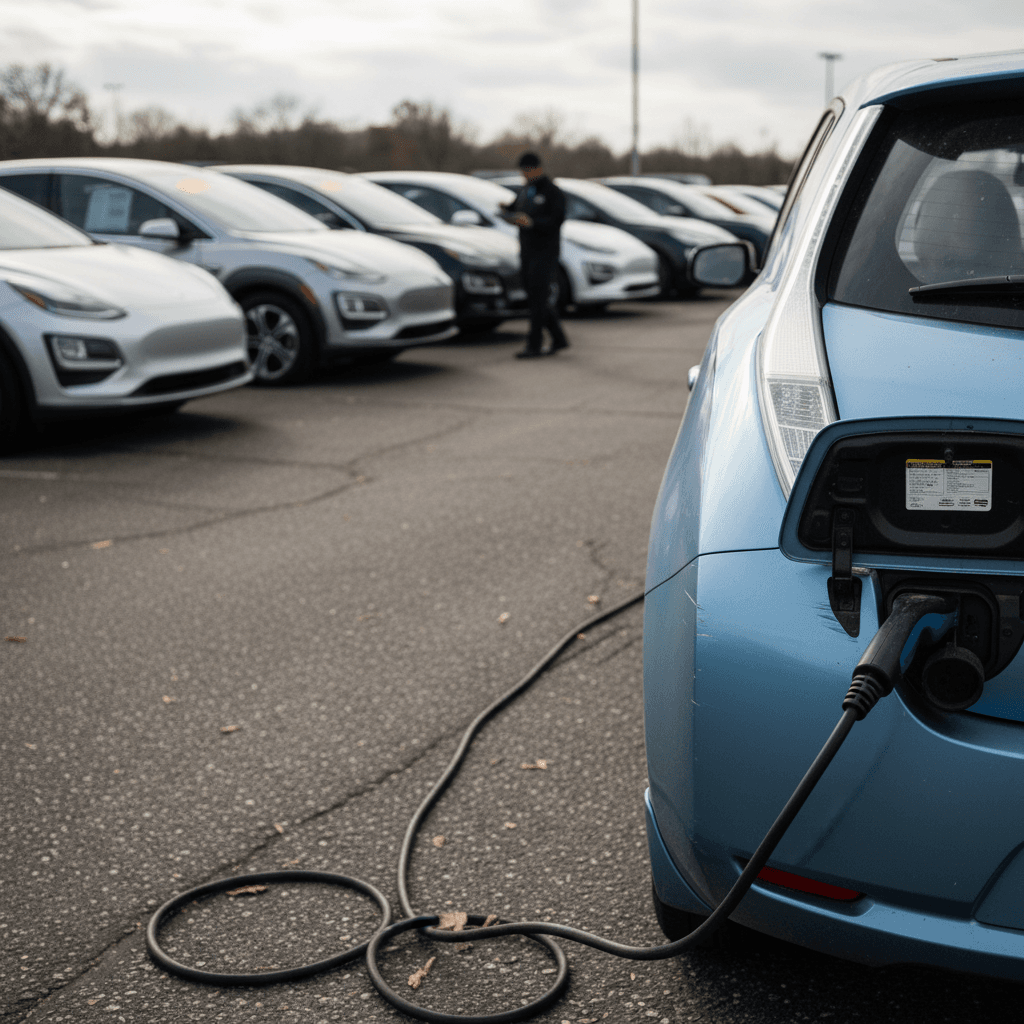
This is where EV negotiation becomes interesting. Most EV batteries are lasting far longer than early skeptics predicted, with many packs degrading only a couple of percent per year under normal use. But the specific battery health of this car should still move the price, up or down.
Battery health checks that directly affect price
Get real‑world range at 100% charge
Ask for a photo of the dash at 100% charge showing estimated miles, or check it yourself. Compare it to the EPA range for that trim. If a 259‑mile car now shows ~215 miles, that’s roughly 17% loss, and a reason to push price down.
Ask for a battery health report
Some OEMs and third‑party tools can generate a <strong>State of Health (SoH)</strong> report. Anything in the low 90s for a 3–4‑year‑old car is normal. Numbers drifting into the low 80s should trigger a discount discussion.
Verify remaining battery warranty
Most EV battery warranties run around 8 years / 100,000 miles. If you’re buying a 6‑year‑old car with 90,000 miles, the warranty “safety net” is thin, worth a lower price or walking away.
Check charging behavior history
Ask how the car has been charged: mostly DC fast vs mostly Level 2, usually to 80–90% vs always to 100%. Lots of hard fast‑charging abuse isn’t an automatic deal‑breaker, but it supports a more aggressive offer.
Rule of thumb: pricing battery loss
Step 3: Inspect and test‑drive with negotiation ammo in mind
Your job on the inspection isn’t to nitpick for sport; it’s to politely collect line items you can convert into dollars. Used EVs give you a few categories that reliably move price.
What to look for and how to convert it into money
Use this as a quick cheat sheet during your inspection and test drive.
| Item | What to check | Why it matters | Typical price impact |
|---|---|---|---|
| Included charging equipment | Is the Level 1/Level 2 cable included? Condition? | Missing or damaged cable = instant out‑of‑pocket spend. | $300–$700 |
| Tires & brakes | Uneven wear, low tread, warped rotors | EVs are heavier; tires and brakes aren’t cheap. | $500–$1,200 |
| DC fast‑charging test | Does it reach expected kW and hold it? | Weak fast‑charging performance kills road‑trip value. | $500+ or walk away |
| Software & connectivity | App access, OTA updates, ADAS features working? | Missing features reduce convenience and resale. | $300–$1,000 |
| Cosmetic damage | Curb rash, dings, interior wear | Not fatal, but useful negotiation leverage. | $250–$1,000 depending on severity |
You don’t have to argue every tiny flaw, bundle them into a clear, reasonable discount request.
Non‑negotiable red flags
Step 4: Set your target price and your walk-away point
You don’t walk into a chess match saying, “Let’s just see what happens.” Before you call, email, or step onto the lot, you need a plan anchored in the actual market and the data you just gathered.
Build a simple pricing plan in three numbers
Write these down before you negotiate, seriously.
1. Fair‑value range
Use guides and local comps to set a realistic range. Example: $23,000–$25,000 for a 3‑year‑old, mid‑trim EV with average miles in your zip code.
2. Target price
The price you’d be happy to pay, after considering battery health, equipment, and condition. Often the lower third of your fair‑value range.
3. Walk‑away point
Your hard ceiling. This is where you stop negotiating and leave contact info. If they call tomorrow, great. If not, there are other cars.
Write it, don’t just think it
Step 5: Negotiate differently with dealers vs private sellers
The car might be the same, but the person across the table absolutely isn’t. Dealers and private sellers respond to different pressure points, and used EVs add a few twists of their own.
At a dealership
- Leverage days on lot. Many dealer sites show how long a car has been sitting. Anything over 45–60 days is ripe for a meaningful discount, especially with EVs.
- Separate the deal pieces. Nail down the out‑the‑door price before you even talk financing, trade‑in, or warranties.
- Use competition. Reference specific comparable cars at other dealers. You’re not bluffing; you’ve got tabs open.
With a private seller
- Lead with respect. Most private sellers need emotional reassurance as much as money. Start by acknowledging they took care of the car.
- Bundle your asks. Instead of nickel‑and‑diming, present one clean offer that accounts for tires, missing cable, cosmetic issues, and battery health.
- Leverage convenience. Cashier’s check today, no test‑drive circus, no strangers at their house. That’s worth a discount.
Where Recharged fits in
Step 6: Use incentives, trade-ins, and financing to your advantage
In the EV world, total deal structure matters as much as the sticker. Your goal is to optimize the full transaction, not just shave a grand off the asking price.
Levers beyond the sticker price
Check current used‑EV incentives
Federal credits for used EVs changed in late 2025, and some states or utilities still offer their own rebates or bill credits. If a credit applies only below a certain sale price, that threshold becomes a powerful negotiation anchor.
Know your trade‑in value in advance
Get written offers for your current car (gas or EV) before you visit a dealer. Online instant‑offer tools and dealers like CarMax give you a floor, so you’ll know if the EV dealer is lowballing.
Separate price from payment
Salespeople love to focus on monthly payment. You should focus on <strong>out‑the‑door price</strong> and APR. A longer term can hide thousands in extra interest.
Leverage pre‑approved financing
Walking in pre‑approved, through your bank, credit union, or a platform like Recharged’s financing partners, gives you leverage. You can always let the dealer try to beat your rate after the price is set.
Financing with Recharged
Common mistakes to avoid when negotiating a used EV
- Focusing only on price and ignoring battery health, charging performance, and remaining warranty.
- Letting the seller control the framing, accepting vague phrases like “these hold their value” without recent data.
- Negotiating from MSRP or original window sticker instead of today’s market comps.
- Getting hypnotized by the payment instead of the total cost of the deal.
- Not being willing to walk away when you hit your pre‑set ceiling. There is always another EV. Always.
Beware the “EV rarity” story
Negotiation scripts you can actually use
Most people hate negotiation because they don’t know what to say. Here are a few simple, polite lines adapted specifically for used EVs. Steal them shamelessly.
Dealer vs private seller: word‑for‑word examples
Adjust the numbers to your situation and say them out loud a few times before you call.
At a dealership
Opening offer:
“I’ve looked at pricing guides and local listings. For a car with this mileage and battery health, I’m seeing fair prices in the $23–24k range. I’m ready to buy today at $23,500 out‑the‑door if we can make that work.”
When they counter too high:
“I understand where you’re coming from, but given the range test, the missing charging cable, and the recent cuts in used EV prices, $26,900 OTD is above my ceiling. If you can get closer to $24,000, I’ll sign today. Otherwise I may need to look at the other cars I’ve short‑listed.”
With a private seller
Respectful low offer:
“You’ve clearly taken good care of it, and I appreciate the records. Based on the range I saw and the tires being close to replacement, the number that makes sense for me is $18,000. That’s a bit below your ask, but I can bring a cashier’s check this weekend and keep it simple for you.”
When they hesitate:
“I get it, it’s hard to see it go for less. Why don’t we split the difference a bit? If we can meet at $18,750, I’m comfortable moving forward right away.”
Sound calm, not combative
Frequently asked questions about used EV price negotiation
Used EV negotiation FAQ
When to stop negotiating and just buy the car
There’s a point where another $300 off isn’t worth another weekend of shopping. If the EV you’re looking at has verified battery health, clean charging behavior, a documented history, and a price that lands in the fair‑value range you mapped out, you’re not being “taken” by saying yes. You’re buying a tool for your life.
Used EV prices in 2026 are finally in a place that makes sense for a lot of households, especially compared with hybrids and new EVs. If you do your homework, come armed with battery and market data, and stay disciplined about your target and walk‑away numbers, you’ll almost always end up with a better deal than the person who just asks, “Can you knock a little off?” And if you’d rather skip the theater altogether, you can let Recharged do the homework for you with inspected cars, Recharged Score battery reports, expert EV specialists, and financing options you can compare from your couch.