Search for “news EV” right now and you’ll see a mess of headlines: record global sales, policy uncertainty in the U.S., tax credits in limbo, and stories claiming EV demand is either “booming” or “dead.” If you’re just trying to decide whether to buy a new or used electric vehicle, that noise doesn’t help much.
Why this “news EV” guide exists
Latest “news EV” headlines in 2025, decoded
Big 2025 EV numbers in one glance
Put bluntly, the global EV story is still growth. The nuance is that the strongest momentum is outside the U.S., and the headlines you see often mix battery EVs, plug‑in hybrids, and regular hybrids into the same bucket. When you’re interpreting “news EV” coverage, always ask: are they talking about full EVs, or everything with a battery?
Watch for mixed categories in EV news
Global EV sales are booming, but the story is complicated
On a global level, 2024 was another step‑change: around 17 million EVs were sold worldwide, up roughly 25% year‑over‑year. In 2025, analysts now expect 20 million‑plus EVs to be sold, and September alone saw about 2.1 million EVs delivered, an all‑time monthly record.
- China remains the engine of global EV growth, accounting for close to half of EV sales and pushing prices down through intense competition.
- Europe has rebounded after a patchy 2024, with strong growth in countries like Germany, the UK, and Italy as incentives and new models arrive.
- Emerging markets, from Southeast Asia to Latin America, are finally starting to show meaningful EV volume, often boosted by affordable Chinese models.
How to read global EV headlines
The U.S. EV market slowdown: what the headlines miss
In the U.S., the 2025 “news EV” story is more mixed. EVs crossed roughly 10% of new‑vehicle sales in 2024 and kept growing into early 2025, helped by a strong March and an overall jump in electrified vehicles (including hybrids). But as the year has gone on, two forces have cooled the party: policy uncertainty and mainstream consumer hesitation.
Why U.S. EV growth looks choppy in 2025
Growth hasn’t stopped, but it’s uneven and more price‑sensitive.
Policy whiplash
Mainstream expectations
Affordability squeeze
The important nuance
EV tax credit news: what changed in 2025
One of the noisier “news EV” topics in 2025 has been federal incentives. The simple version: tax credits have become more limited, more political, and more time‑sensitive, and that’s directly shaping EV pricing and demand.
High‑level snapshot of 2025 U.S. EV incentive news
Details vary by income, vehicle price, and where the vehicle and battery are built, but this table summarizes the themes you’ll see in headlines.
| Topic | What the news says | What it means for you |
|---|---|---|
| New EV tax credit | Debates in Congress over whether to scale back or phase out the $7,500 new EV credit | Don’t assume every EV qualifies. Check current IRS lists and your income/price caps before you shop. |
| Used EV tax credit | Pressure to trim or end the $4,000 used EV credit to save budget | If you want to use the used EV credit, timing matters, policy can change faster than model cycles. |
| Leased EVs | Extra scrutiny over how credits are applied via leasing companies | Leasing may still unlock incentives on some models, but ask how the credit is being passed through, if at all. |
| State & local rebates | Some states are topping up incentives, others are cutting back | Your ZIP code matters as much as federal policy. Look up state programs before you sign. |
Always confirm current IRS guidance or talk to a tax professional before you count on a credit in your budget.
Don’t budget around a credit you haven’t verified
Charging in the news: fast growth and persistent gaps
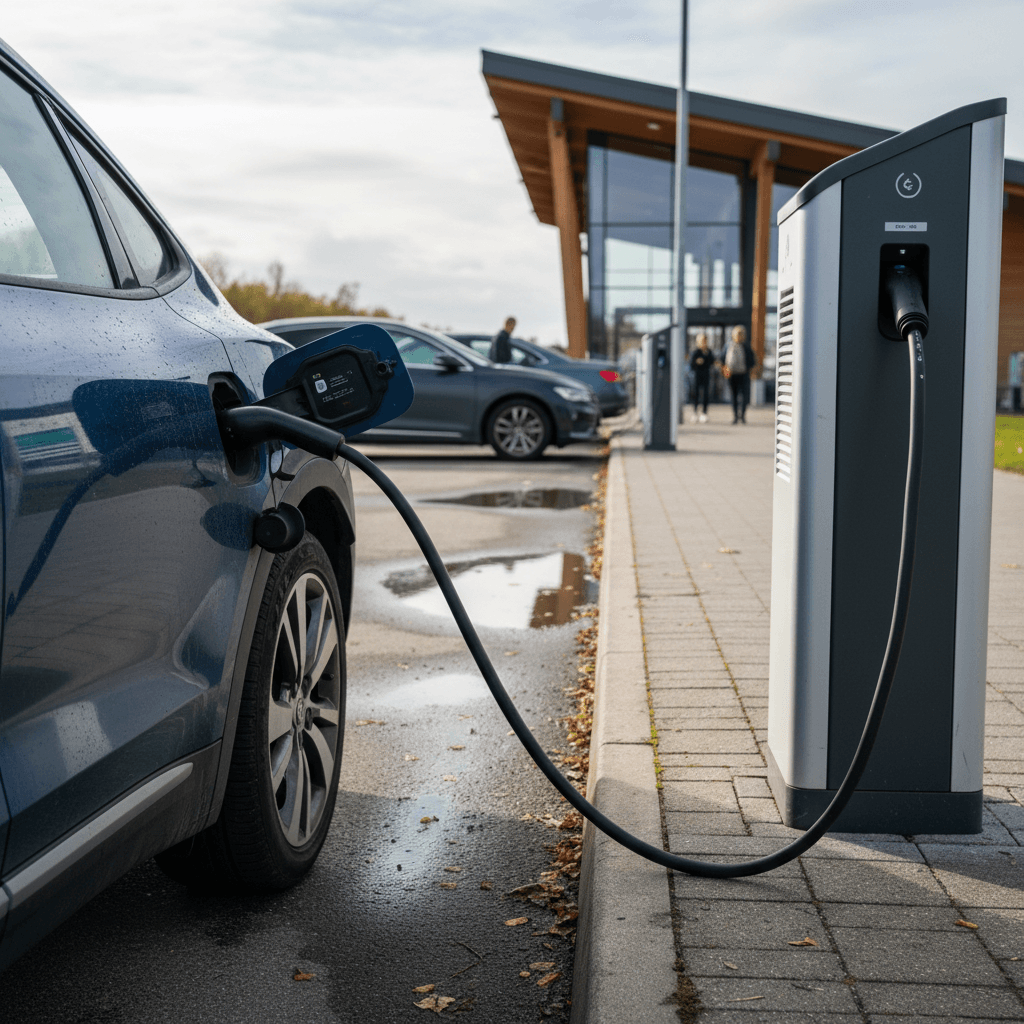
Behind every “news EV” story about adoption is the quiet infrastructure story. In 2025, the U.S. is finally seeing real progress on public fast charging, but the experience still depends heavily on where you live and which networks you use.
What’s getting better
- More DC fast chargers along major corridors, often funded by federal NEVI dollars and state programs.
- Tesla’s NACS connector is becoming the de facto U.S. standard, with most major automakers adopting it for future models.
- Apps from Tesla, Electrify America, ChargePoint, and others are getting better at real‑time status and pricing.
What’s still frustrating
- Reliability remains patchy on some third‑party networks, out‑of‑order stalls and slow sessions are still common complaints.
- Urban renters and condo residents often lack predictable overnight charging options.
- Rural coverage is improving, but you still need to plan road trips more carefully than in a gas car.
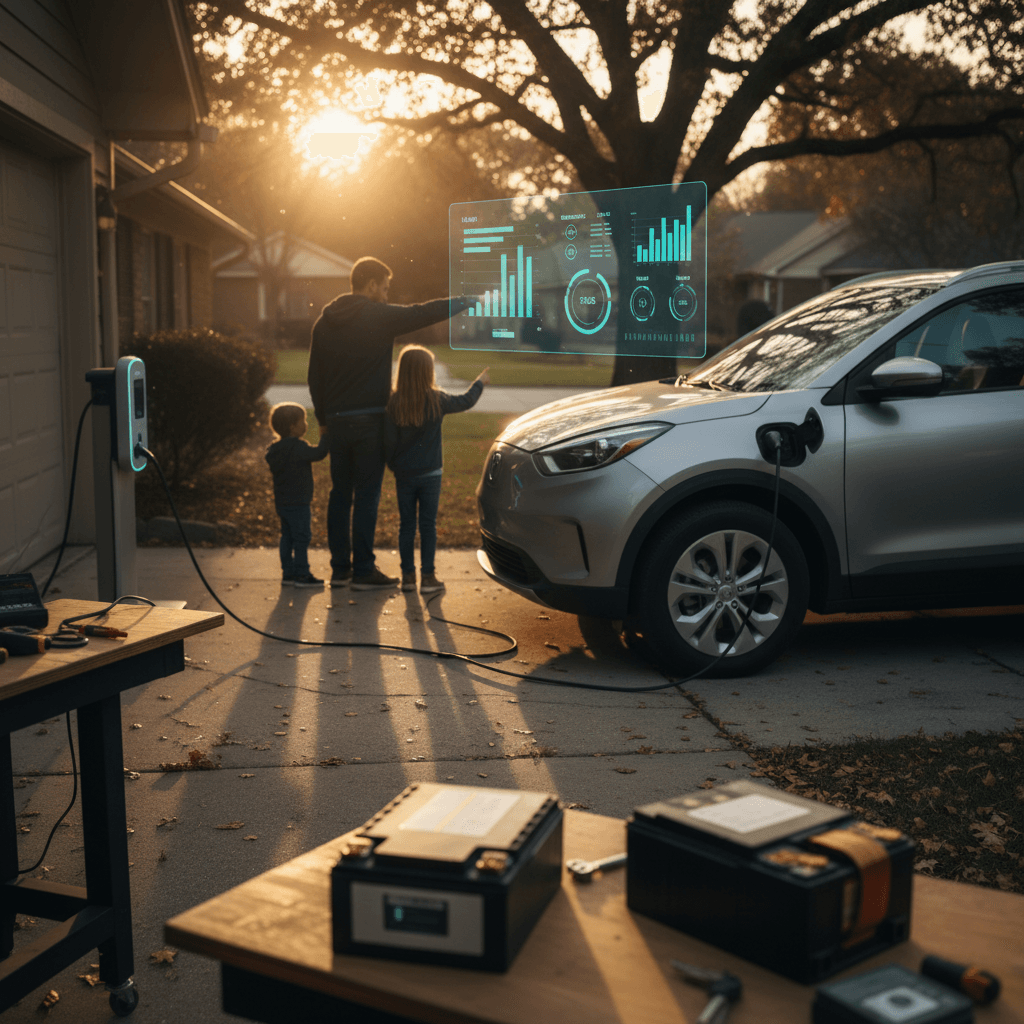
Practical charging prep
Used EV market: the quiet winner of 2025
While new‑EV headlines swing between euphoria and panic, the used EV market has matured fast in 2024–2025. Early‑generation EVs are coming off lease, more models are eligible for used‑EV incentives, and depreciation has already done some of the hard work for you.
Why used EVs look especially attractive in 2025
Policy noise is mostly aimed at new‑vehicle sales, but value lives in the pre‑owned segment.
Lower upfront prices
More data on battery health
Less policy risk
Where Recharged fits in
Ready to find your next EV?
Browse VehiclesHow today’s EV news should shape your buying strategy
If you strip away the noise, the 2025 “news EV” cycle boils down to a few practical takeaways for shoppers. You don’t need to be an industry analyst; you just need to align your decision with how you’ll actually use the car and how much risk you’re comfortable taking on incentives and technology.
If you’re considering a new EV
- Focus on TCO (total cost of ownership) rather than just the purchase price, fuel and maintenance savings matter over 5–8 years.
- Double‑check incentive eligibility for the specific VIN and your tax situation before you sign.
- Favor models on widely supported charging standards (NACS or CCS with a clear upgrade path).
- Be honest about charging: can you install Level 2 at home, or will you rely heavily on public DC fast charging?
If you’re considering a used EV
- Prioritize a battery health report. Range loss is the main thing that separates a good used EV from a bad one.
- Look for warranty coverage on the high‑voltage battery and drive unit, especially on newer models.
- Compare pricing to similar gas cars on a monthly‑cost basis, including fuel and maintenance.
- Consider buying through an EV‑focused marketplace like Recharged that can ship nationwide and provide guidance, instead of a generalist dealer figuring it out on the fly.
Checklist: questions to ask before you buy an EV in 2025
Key questions to de‑risk your EV purchase
1. How many miles do I actually drive per day?
Take a week and track your miles. Most U.S. drivers cover 30–40 miles per day, which even older used EVs can handle comfortably.
2. Where will I charge most of the time?
Home Level 2 charging is ideal. If that’s not an option, confirm workplace charging or reliable public stations on your normal routes.
3. What’s the real battery health on this car?
Ask for a <strong>battery health report</strong>, not just a full‑charge range estimate. Recharged’s Score Report is an example of the kind of data you should expect.
4. How long do I plan to keep the car?
If you keep vehicles for 3–4 years, you can be more aggressive on newer tech. If you tend to keep them 8–10 years, prioritize proven models and strong warranties.
5. How exposed am I to policy changes?
If your purchase only works with a tax credit, pause and run the numbers again with no credit. If it still works, you’re in safer territory.
6. Can I live with my worst‑case charging scenario?
Imagine a cold snap, a busy holiday weekend, or a broken fast‑charge site. If that scenario sounds miserable, you may want more range or a stronger home‑charging setup.
“News EV” FAQ: quick answers to common questions
Frequently asked “news EV” questions in 2025
Bottom line: what 2025 EV news really means for you
If you zoom out from the daily “news EV” cycle, the trend is clear: electric vehicles are moving from experiment to mainstream, just not in a straight line. Policy shifts and attention‑grabbing headlines can move the market month‑to‑month, but over a 5–10‑year ownership window, what matters most is how the car fits your life, how you’ll charge it, and how healthy its battery will be over time.
That’s why many shoppers in 2025 are discovering that a well‑vetted used EV offers the best mix of value and risk management. With tools like the Recharged Score Report, transparent pricing, financing, trade‑in options, and nationwide delivery, Recharged makes it easier to act on the EV news that matters, and ignore the noise that doesn’t.