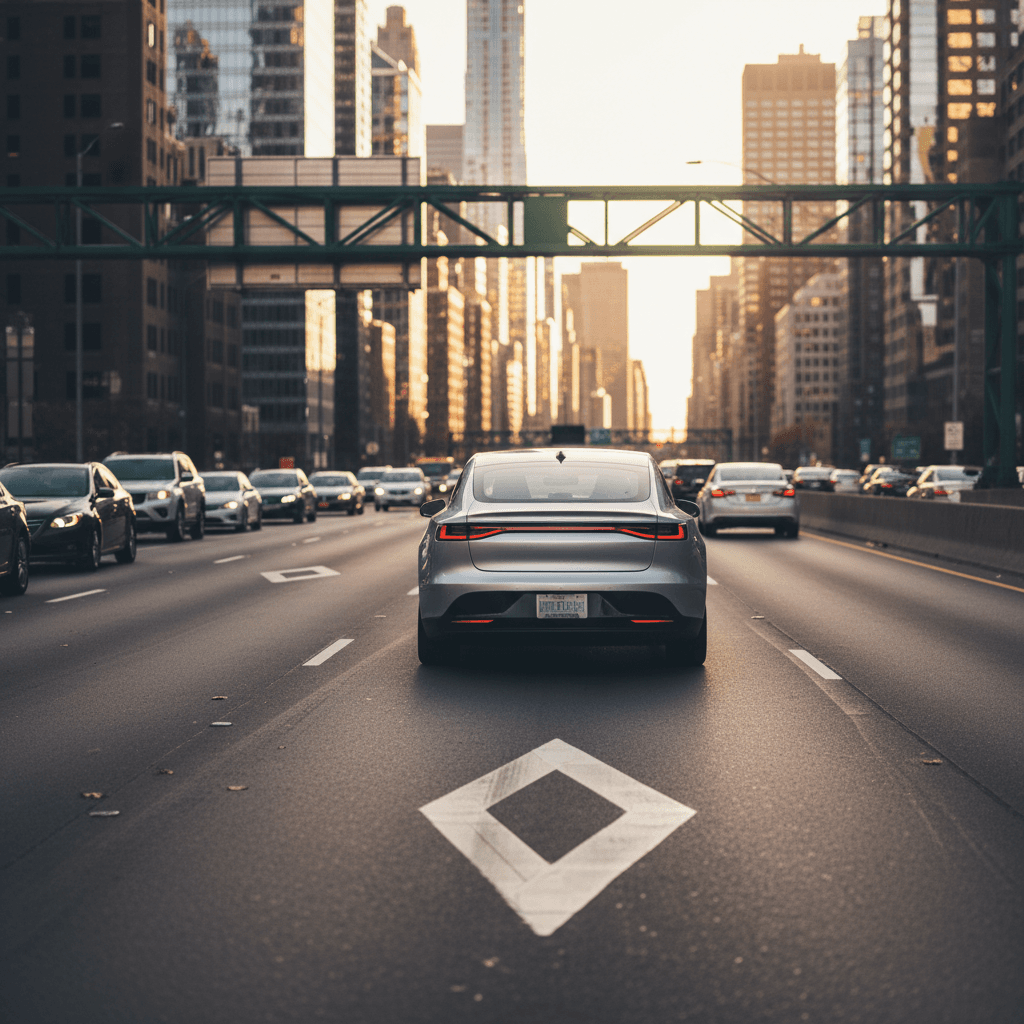
If you drive an electric vehicle in New York, the HOV lane used to feel like a quiet, fast-moving secret. With a Clean Pass sticker on your bumper, you could slip into the Long Island Expressway HOV lane even when you were driving alone. As of **October 1, 2025**, that perk is gone, so it’s time to get clear on the new **New York EV HOV lane rules** before a state trooper does it for you.
Fast facts for 2026
Overview: New York EV HOV lane rules in 2026
Let’s start with the single most important point: **your EV no longer gets special treatment in New York HOV lanes.** New York’s Clean Pass program, which once allowed certain EVs and hybrids to use the 40-mile HOV stretch of the Long Island Expressway (I‑495) with only one person in the car, **expired on September 30, 2025**. As of **October 1, 2025**, all vehicles, electric, hybrid, or gas, must meet standard HOV occupancy rules to legally use those lanes.
- On the **Long Island Expressway (LIE) HOV lanes**, you generally need **at least 2 people** in the car during HOV hours, even if you drive an EV.
- Your old **Clean Pass windshield stickers no longer grant HOV access**. They’re basically souvenirs now.
- **Other HOV facilities in New York City** (approaches to certain tunnels/bridges) also do **not** offer special solo-EV privileges; they follow normal occupancy or permit rules.
- What *hasn’t* changed: You may still get **toll discounts and utility incentives** for driving an EV, just not HOV exemptions.
Don’t trust that leftover sticker
What changed: Clean Pass ended on September 30, 2025
For nearly two decades, the **Clean Pass Program** allowed qualifying low‑emission vehicles, including many plug‑in hybrids and battery EVs, to use the **LIE HOV lane** with just one occupant. That program was created under federal authority to test whether special HOV access could boost clean-vehicle adoption.
Clean Pass: the program New York EV drivers lost
In **October 2025**, that federal authorization expired and was not renewed. New York State’s Department of Transportation officially announced that **Clean Pass privileges ended at midnight on September 30, 2025**, and that **beginning October 1, all vehicles in the HOV lane must meet occupancy rules**, no exceptions for clean vehicles.
Key date burned into the rulebook
Current New York HOV rules for EV drivers
So what are the **New York EV HOV lane rules** now, in plain English? Think of it this way: New York HOV rules are about **who’s in the car**, not **what powers it**.
EVs and HOV lanes: treated like everyone else
What matters now is occupancy and vehicle type, not fuel type
Standard HOV eligibility
- Typically **2+ people** in the vehicle (driver + at least one passenger).
- Some segments may require 3+ during certain times, **always obey posted signs**.
- Applies to all passenger cars, whether gas, hybrid, or full EV.
Special vehicle categories
- **Buses, vanpools, and motorcycles** are usually allowed in HOV lanes even solo.
- Some **express-lane permits** exist for commercial and transit fleets heading to NYC tunnels, these are not EV perks, they’re fleet permits.
During posted HOV hours (for example, **6 a.m.–10 a.m. and 3 p.m.–8 p.m. on weekdays** on the LIE), troopers and camera systems look for **heads, not drivetrain types**. If you’re alone in your Tesla, Hyundai IONIQ 5, Chevy Bolt, or any other EV, you’re treated exactly like someone alone in a gas SUV.
How to think about it on your commute
Where New York EV HOV lane rules actually apply
Most of the drama around EVs and HOV lanes in New York centers on **Long Island**, but it’s not the only place with special-lane rules. Here’s where these rules show up most often and what they mean if you drive an EV.
Key New York HOV and express-lane facilities for EV drivers
What an EV driver can (and can’t) do in each corridor as of 2026.
| Location / Facility | Type | What mattered before 10/1/2025 | What matters now (2026) | EV-specific privilege? |
|---|---|---|---|---|
| Long Island Expressway (I‑495), Nassau & Suffolk | HOV lane (approx. 40 miles) | Clean Pass vehicle or HOV occupancy | HOV occupancy only (usually 2+; check signs) | No |
| NYC approaches to Queens–Midtown & Brooklyn–Battery Tunnels | HOV / express lanes with permits | Fleet permits and occupancy rules | Same fleet permit & occupancy rules | No |
| Other NY highways (I‑87, I‑90, etc.) | HOV/express segments in limited spots | Vehicle type & occupancy based on local signs | Same rules; no EV exemption | No |
| Port Authority bridges & tunnels | Toll facilities, not HOV lanes | Green E‑ZPass could mean discounts, not lane rights | Same: potential toll discounts for “Green Pass” tags | Discounts only; no extra lane access |
Remember: the fine print is always on the roadside sign. When in doubt, follow the sign over anything you read online.
HOV vs toll perks
Common real-world scenarios for EV drivers
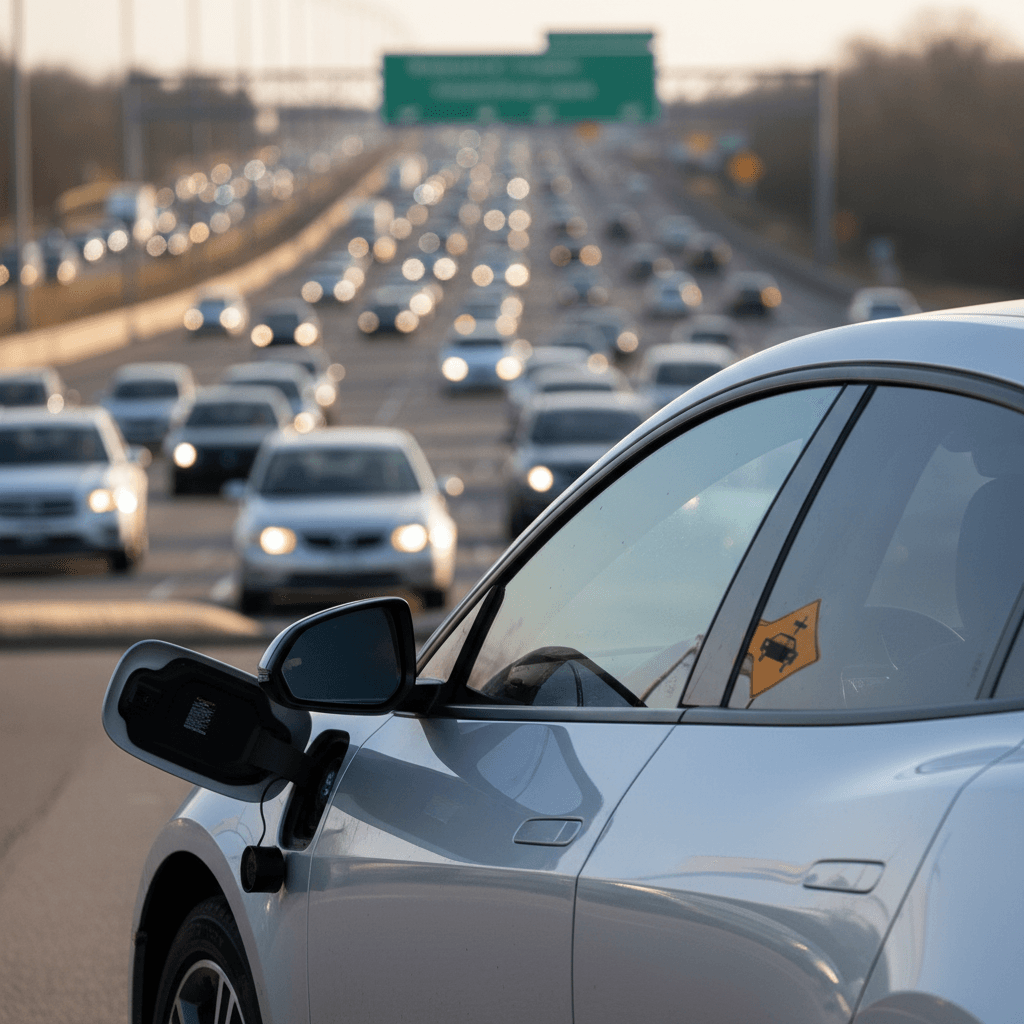
Rules are one thing; the way you actually drive at 7:15 a.m. on the LIE is another. Here are some of the most common situations New York EV drivers run into, and what’s legal right now.
1. Solo commute in a used EV with an old Clean Pass sticker
You just bought a used Nissan LEAF, Toyota RAV4 Prime, or Tesla Model 3 in New York. There’s a Clean Pass sticker fading on the bumper, the previous owner swears it was "good for the HOV lane," and traffic in the general lanes is ugly.
Today, that sticker is meaningless for HOV access. If you’re alone in the car during posted HOV hours, you’re not allowed in the HOV lane, even if the sticker is still perfectly readable.
2. Two people in an EV during HOV hours
You and a coworker share a ride in your Chevy Bolt EUV to Melville every morning. The HOV lane opens up, and you’re wondering if everything’s above board.
Good news: **with 2+ occupants, you’re fine**. Your EV is treated just like any other carpool. The fact that it’s electric is irrelevant, but it also doesn’t hurt.
3. Three-row EV with kids in the back
You’re in a Kia EV9 or Tesla Model Y, kids strapped into child seats in the second row, heading to school or a weekend activity.
Kids absolutely count as occupants. If the sign says **HOV 2+** or **3+**, any breathing human counts, regardless of age, as long as they’re actually in the vehicle during the restricted times.
4. Rideshare driving an EV
You drive Uber or Lyft in an EV, picking up passengers along the LIE corridor.
**HOV rules care only about how many people are in the vehicle at that moment.** If you have a paying passenger aboard, they count. If you’re deadheading (no passenger) to your next pickup, you’re a solo driver and must stay out of the HOV lane during restricted hours.
The upside: carpooling just got more valuable
Fines, penalties, and how enforcement works
With Clean Pass gone, New York has gone back to straightforward, and increasingly strict, HOV enforcement. State Police and local agencies regularly run **HOV emphasis patrols** along the Long Island Expressway, and they know perfectly well that thousands of EV drivers used to enjoy solo-lane privileges.
- Expect **minimum fines around $150** for a first offense, plus state surcharges that can push the total higher.
- Repeat offenses can climb substantially, and judges have discretion, don’t assume it will stay cheap.
- Violations may carry **points on your license**, which insurers absolutely notice.
- Officers will not accept “but I have an EV” or “the previous owner said I could” as a defense.
Why EV drivers get extra scrutiny
Alternatives to HOV perks: How NY still rewards EVs
Losing HOV access stings, especially if you built your commute, and your car purchase, around it. The upside is that New York has layered in **other EV benefits** that still help with cost of ownership, even if they don’t get you past traffic.
Perks New York EV drivers still get
The lane may be gone, but the savings aren’t
Utility bill credits
Toll discounts for “green” tags
State & federal purchase incentives
If you’re shopping used, you won’t stack as many tax credits, but you can still save in the long run with **lower fueling and maintenance costs** and potential toll discounts. When you shop with a trusted EV specialist like Recharged, you also get a **Recharged Score battery health report**, so you’re not gambling on range or longevity with a mystery pack.
Trade a lane perk for total cost savings
Buying or selling an EV in NY now that Clean Pass is gone
The end of Clean Pass created a weird wrinkle in the **used EV market** on Long Island and in the New York metro area. Many owners bought EVs or plug‑in hybrids specifically because the HOV perk made a brutal commute tolerable. Now those same cars are hitting the market, and buyers need to be clear‑eyed about what they’re getting.
If you’re buying a used EV in New York
- Don’t let a Clean Pass sticker influence price. It has zero current legal value for lane access.
- Focus on battery health, range, and charging speed instead, those are what you’ll live with every day.
- Ask the seller directly: "Are there any remaining HOV or toll perks tied to this car besides standard E‑ZPass discounts?" The honest answer, as of 2026, will usually be no.
If you’re selling or trading in your EV
- Be transparent if you used to enjoy Clean Pass access. Don’t market the car as having HOV privileges.
- Highlight what still matters: warranty status, battery health, and charging flexibility.
- Consider selling through a specialist like Recharged, where the Recharged Score and expert pricing tools show buyers the real value of your car, without relying on expired perks.
How Recharged helps NY buyers and sellers
Ready to find your next EV?
Browse VehiclesQuick checklist: Staying legal in NY HOV lanes with an EV
NY EV HOV lane compliance in 60 seconds
1. Stop relying on Clean Pass
Treat every Clean Pass or clean‑vehicle sticker you see, including your own, as a historical artifact. It does **not** grant solo HOV access anywhere in New York in 2026.
2. Read the roadside sign every time
Before entering any HOV or express lane, confirm the posted rules: **occupancy requirement, hours, and any vehicle‑type exceptions**. If you don’t clearly qualify, stay out.
3. Count everyone in the car (including kids)
If the sign says **HOV 2+**, you need at least two people; for **3+**, three. Babies and children in car seats count, pets and mannequins do not.
4. Know that EVs get no special HOV status
Tell yourself this before you merge: "My EV is treated exactly like a gas car in this lane." If you’re solo and it’s HOV hours, the lane is off‑limits.
5. Don’t argue EV benefits at a traffic stop
Officers enforce written law, not personal opinions about emissions. Save yourself time and stress by following the rules before blue lights appear in your mirror.
6. Look for savings elsewhere
Explore **toll discounts, utility rebates, and fuel savings** as the real benefits of EV ownership in New York now that the HOV shortcut is gone.
FAQ: New York EV HOV lane rules
Frequently asked questions about New York EV HOV rules
Bottom line for New York EV drivers
The era when a Clean Pass sticker could magically part Long Island Expressway traffic for single‑occupant EVs is over. In 2026, **New York EV HOV lane rules are simple**: if you don’t meet the posted **occupancy** and **vehicle-type** requirements, your electric drivetrain doesn’t buy you a thing in the carpool lane.
That doesn’t mean going electric in New York stopped making sense. It means the value equation moved away from a special lane and back to fundamentals: **lower running costs, quieter commutes, access to home charging, and long‑term savings**. If you’re planning your next EV purchase, or deciding what to do with the one in your driveway, focus on range, charging, and battery health, not on an expired sticker.
If you want help sorting through used EV options that make sense for your commute and your budget, Recharged can help. Every vehicle we list comes with a **Recharged Score battery health report**, fair‑market pricing, and EV‑savvy guidance, so you can enjoy the benefits New York still offers EV drivers, and stay out of trouble in the HOV lane.