If you’ve switched to an electric car in New York, you already know you’ll skip gas stations. But one thing you *don’t* skip is New York’s annual inspection. Understanding New York electric car inspection requirements, what’s checked, what’s exempt, and how NYC rules can differ, is the key to a smooth, sticker-on-the-windshield kind of year.
Quick Answer
Overview: How New York Inspects Electric Cars
New York treats EVs first and foremost as cars that share the road with everyone else. That means every light-duty vehicle registered in the state, gas, hybrid, or fully electric, must be in safe operating condition and inspected at least once every 12 months at a licensed New York State inspection station.
New York Inspections at a Glance for EV Owners
Think of it this way: in a gas car, your inspection is part safety check, part emissions test. In a battery‑electric car, you’re really there for the safety portion. The inspector still puts your car on the lift and checks the same list of critical components that keep you and everyone around you safe.
Do Electric Cars Need an Inspection in New York?
Yes. Every electric car registered in New York State must pass a safety inspection at least once every 12 months, and also whenever the registration changes to a new owner. If you buy an EV from a private seller or bring one in from out of state, you’ll need to get it inspected as part of registering it in your name.
- Inspection applies to: battery‑electric vehicles (BEVs), plug‑in hybrids (PHEVs), and conventional hybrids.
- Timing: once every 12 months or whenever you register the vehicle to a new owner in NY.
- Location: any state-licensed inspection station that’s approved to inspect your vehicle class (most can inspect passenger EVs).
Don’t Ignore the Expiration Date
Are Electric Cars Exempt From Emissions Tests in NY?
Here’s the good news: vehicles powered exclusively by electricity are exempt from New York’s state motor vehicle emissions inspections. That exemption has been on the books for years as part of the state’s broader clean‑air regulations.
- Plugging into your OBD port to check emissions readiness monitors, or
- Running a tailpipe “sniffer” test, because you don’t have a tailpipe.
Battery‑Electric Vehicles (BEVs)
- Example: Tesla Model Y, VW ID.4
- Required: Safety inspection every 12 months
- Exempt: State emissions inspection
Gas, Diesel & Most Hybrids
- Subject to OBDII, low‑enhanced, or diesel emissions tests depending on year and weight
- Must pass both safety and emissions to be fully compliant
What About Plug‑In Hybrids?
What Gets Checked on an Electric Car Safety Inspection
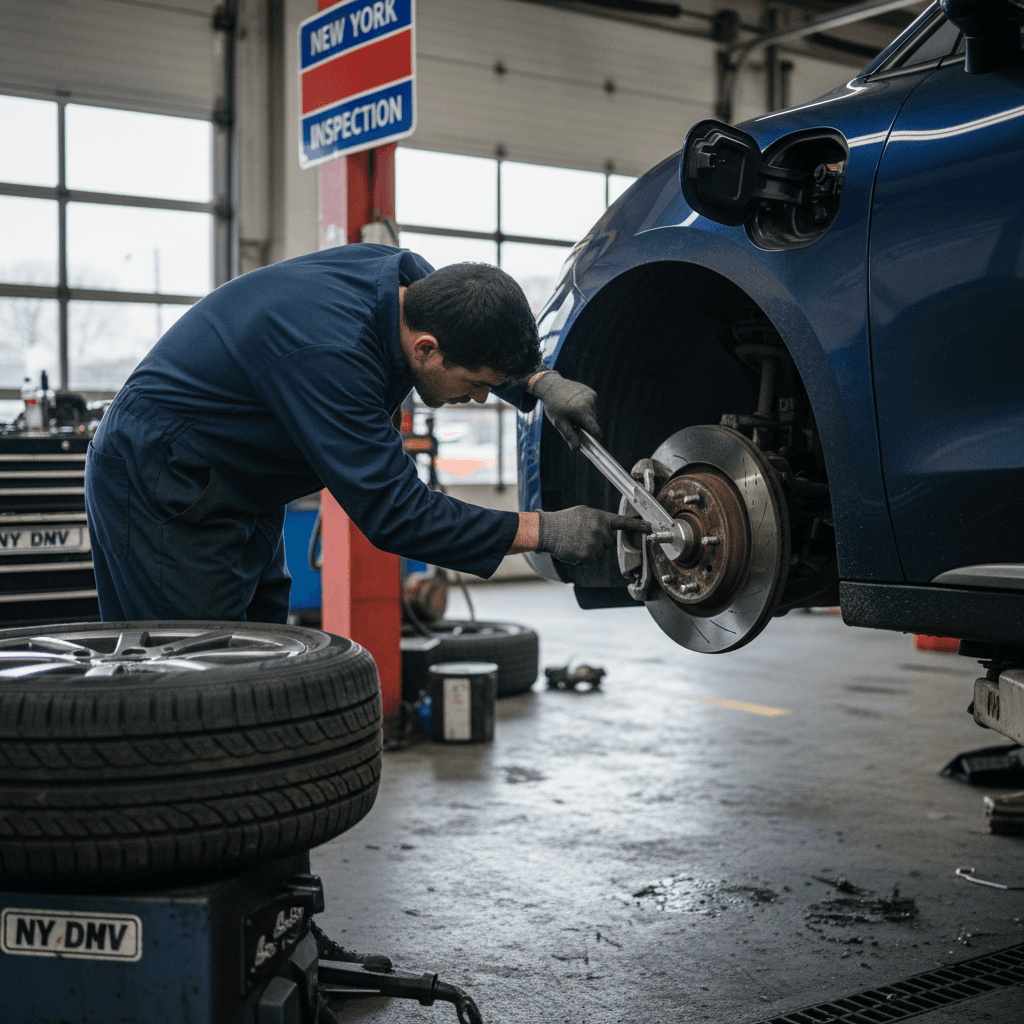
The New York State safety inspection checklist is largely the same whether your car runs on electrons or unleaded. The inspector is looking for worn, broken, or unsafe components that could cause a crash or leave you stranded.
Core Safety Items Checked on Your EV
Different powertrain, same responsibility to be roadworthy
Brakes & Steering
- Brake pads, rotors, hoses, and lines
- Emergency/parking brake operation
- Steering linkage and power assist
Suspension & Tires
- Shocks, struts, ball joints
- Tire tread depth and condition
- No severe sidewall damage or mismatched sizes
Lights & Visibility
- Headlights, brake lights, turn signals
- Windshield wipers and washer
- Glass and mirrors (no illegal tint or major cracks)
They’ll also confirm your seatbelts work properly, check for excessive rust or structural damage, and verify that your registration and VIN match. The big difference for an EV is what they’re *not* checking: there’s no fuel tank, fuel lines, muffler, or catalytic converter to inspect.
Tip for Low‑Mounted Batteries
NYC vs. Rest of New York: Extra Rules for TLC and Fleets
If you’re just commuting or road‑tripping in your EV, the standard NY State inspection is all you need. But if you’re using an electric car for for‑hire work in New York City, rideshare, black car, livery, or taxi, the Taxi & Limousine Commission (TLC) adds its own layer of requirements.
Electric Car Inspections: NYC TLC vs. Regular Private Use
How inspection rules change when your EV moves from personal use to for‑hire work in New York City.
| Use Case | Who Sets the Rules | Where You’re Inspected | How Often | Emissions Test? |
|---|---|---|---|---|
| Private EV, anywhere in NY | NY DMV | Any licensed NY State inspection station | At least once every 12 months | No, if 100% electric |
| Uber/Lyft or black car EV in NYC | NYC TLC + NY DMV | TLC’s Woodside inspection facility for TLC checks; DMV criteria are applied there | Typically every 2 years for many for‑hire vehicles, plus when licensed or transferred | No, if 100% electric |
| Yellow/Green taxi EV (NYC) | NYC TLC + NY DMV | TLC’s Woodside facility (hack‑up and recurring inspections) | Every 6–12 months depending on vehicle class | No, if 100% electric |
TLC doesn’t change the fact that EVs are emissions‑exempt, but it does control how often and where your for‑hire vehicle is inspected.
Thinking of Using Your EV for TLC Work?
Cost, Timing, and Paperwork for NY EV Inspections
Inspection fees in New York are set within ranges by the state and can vary a bit by station. Battery‑electric cars fall into the same basic fee category as other light passenger vehicles but skip the emissions portion of the test.
- When: Once every 12 months, or at registration/ownership transfer.
- Where: Any New York State‑licensed inspection station authorized to inspect your vehicle class. In NYC, TLC vehicles have additional appointments at the TLC facility.
- What to bring: Current registration, proof of insurance, and a form of payment. Keep your prior inspection report if you had borderline items last time (like worn tires).
What If You Fail?
How to Make Sure Your EV Passes in New York
Because there’s no emissions test on a pure EV, passing inspection in New York mostly comes down to basic maintenance and a little advance preparation. Here’s a simple pre‑inspection routine you can run through in your driveway or garage.
EV Pre‑Inspection Checklist for New York Drivers
1. Check all exterior lights
Turn on headlights (both beams), parking lights, turn signals, brake lights, and hazard flashers. Replace burned‑out bulbs before you show up; it’s one of the easiest failure items to avoid.
2. Inspect your tires closely
Look for low tread, cords showing, bubbles, or deep cracks. Heavy EVs can wear tires faster, especially on the inside edges. If you’re near the legal minimum, budget for replacement before inspection day.
3. Test wipers and washer
New York wants you to be able to see in bad weather. Make sure wipers aren’t streaking badly and that the washer reservoir is filled and spraying.
4. Buckle up every seat
Click every seatbelt and tug on it. A belt that doesn’t latch securely or retract properly can fail inspection, even if you rarely carry passengers in that seat.
5. Look for cracks and tint issues
Small windshield chips may pass, but long cracks or badly peeling tint in the driver’s view can be a problem. Dark, non‑compliant tint on front windows is another common reason for a failed inspection.
6. Listen and feel on a test drive
Before your appointment, drive over a few bumps and brake firmly from neighborhood speeds. Any grinding, clunking, or pulling to one side is your cue to have a shop look things over first.
EV‑Specific Tip
Used EVs and Inspections: What Buyers Should Know
When you’re shopping used, a fresh New York inspection sticker can feel reassuring, but it only tells you the car met minimum safety standards on that day. It doesn’t say much about long‑term health, especially for an electric vehicle’s battery.
What the State Inspection Covers
- Brakes, tires, suspension, lights, glass, belts
- Basic structural rust and safety items
- VIN and registration match
What It Does Not Cover
- Battery pack health and capacity loss
- DC fast‑charging performance
- Software history, recalls, or over‑the‑air updates
How Recharged Can Help
Ready to find your next EV?
Browse VehiclesIf you’re buying privately, try to see a recent NY inspection report and ask where the car was serviced. In coastal parts of New York where salt and moisture are constant companions, underbody rust can be a bigger concern, especially for earlier EVs that have spent a decade or more in the region.
Frequently Asked Questions About NY Electric Car Inspections
NY Electric Car Inspection FAQ
Key Takeaways for New York EV Owners
Owning an electric car in New York simplifies a lot of things, especially fueling and emissions, but it doesn’t erase your responsibility to keep the car safe. You’ll still roll through a New York State safety inspection every 12 months, and if you’re working under NYC TLC, you’ll see the inspection lane even more often.
- Pure battery‑electric vehicles are exempt from emissions testing in New York but must pass safety checks.
- Plug‑in hybrids generally follow the same emissions rules as gas cars.
- Most private EV owners can use any state‑licensed inspection station; TLC drivers must follow TLC scheduling and rules.
- A passed inspection doesn’t tell you anything about battery health, that’s a separate evaluation.
- Doing a simple pre‑inspection check at home can save you time, money, and repeat visits.
If you’re already in an EV, keep that inspection sticker current and treat each visit as a quick safety audit. If you’re shopping for a used electric car, pair the state’s inspection requirements with a trusted battery health report and transparent history. That’s exactly what Recharged was built for, making EV ownership in New York simpler, safer, and a lot more transparent from day one.