When people talk about new smart cars in 2025, they rarely mean the tiny two‑seater from a decade ago. Today, “smart” is shorthand for cars that behave more like connected devices: always online, constantly updating, and increasingly capable of driving and parking themselves. If you’re shopping for your next car, or your first electric vehicle, understanding what makes a car “smart” will help you sort real value from marketing buzzwords.
Smart car ≠ the Smart brand
What is a “new smart car” in 2025?
A decade ago, a smart car was usually a tiny city runabout that squeezed into motorcycle‑sized parking spots. In 2025, a new smart car can be a compact EV, a luxury sedan, or even an SUV. What unites them isn’t size, it’s software. These vehicles are built on software‑defined platforms that can add or improve features long after you buy them, the way your phone updates overnight.
- Always-connected infotainment with built‑in navigation and streaming apps
- Advanced driver‑assistance systems (ADAS) like lane‑keeping, adaptive cruise, and automatic emergency braking
- Over‑the‑air (OTA) software updates for features, bug fixes, and sometimes efficiency or range gains
- Rich sensor suites, cameras, radar, and often LiDAR on higher‑end models, for driver assistance and parking
- Tight integration with mobile apps, from pre‑conditioning the cabin to checking charge status and locating the car
How to spot a truly smart car
Headline new smart cars to watch
If you’re just starting your research on new smart cars, it helps to see how different brands interpret the idea. Here are a few headline examples that illustrate where the market is going, some you can buy soon, others that signal what’s coming next.
Examples of new smart cars and concepts
From tiny city EVs to AI‑rich luxury sedans
smart #2 (all‑electric city car)
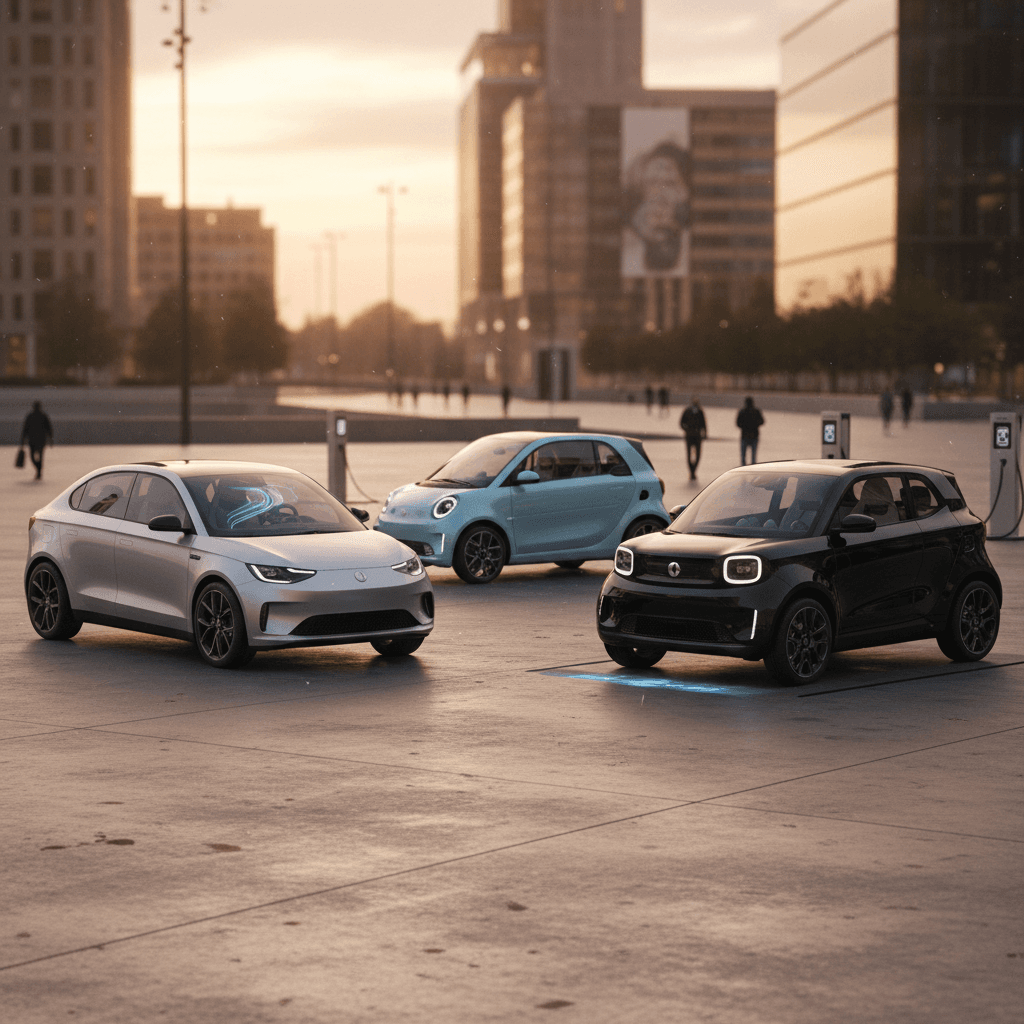
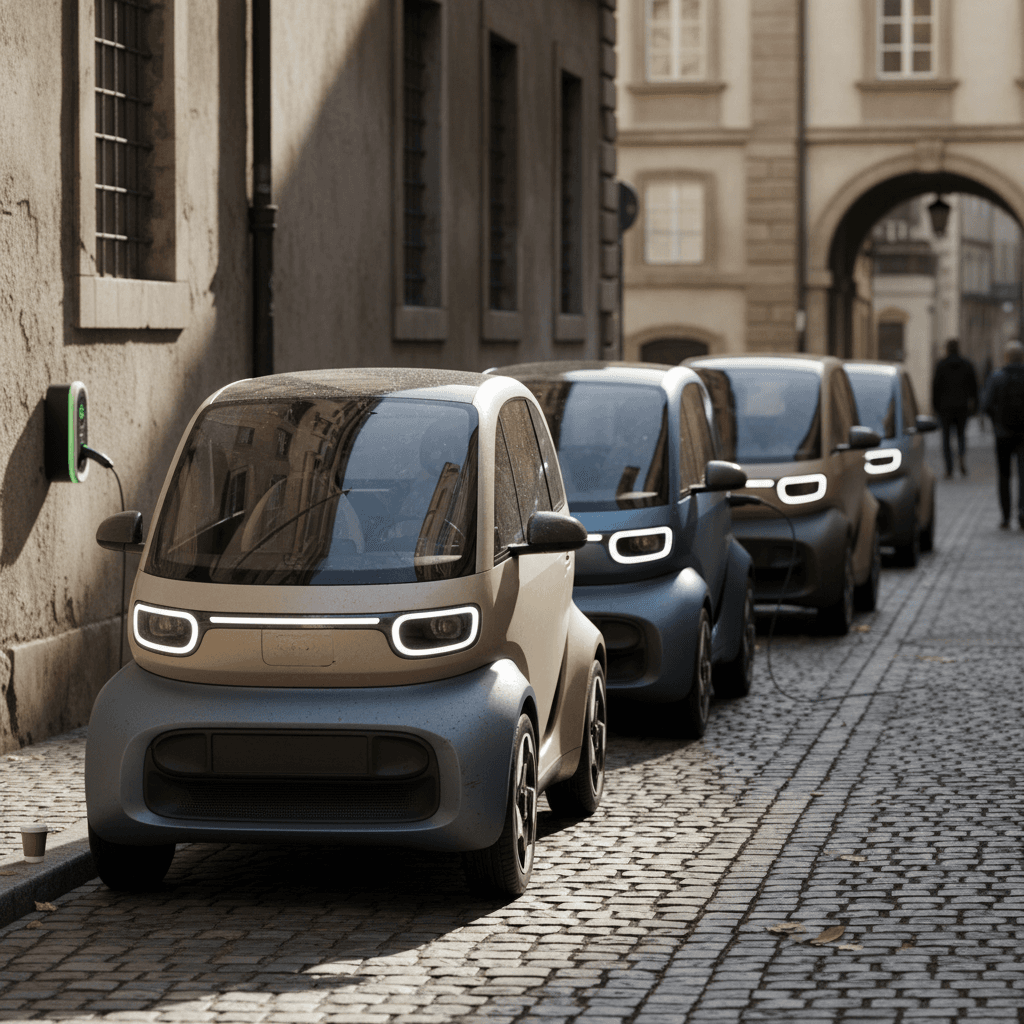
The smart brand is returning to its roots with the all‑electric smart #2, a two‑seat A‑segment city car that revives the original fortwo concept with modern tech. It’s being developed on a new architecture focused on ultra‑compact EVs, with production and a world premiere targeted for late 2026 in China and Europe.
Think of it as a premium micro‑EV: tiny footprint, easy parking, and cabin tech aligned with smart’s larger #1 and #3 crossovers.
Mercedes‑Benz CLA with EQ Technology
The third‑generation Mercedes‑Benz CLA, unveiled in 2025, shows what a mainstream luxury smart car looks like. Built on Mercedes’ new MMA platform, the EV versions use an 800‑volt architecture capable of adding significant range in about ten minutes of fast charging, plus advanced driver assistance.
The latest MBUX system runs on Mercedes’ in‑house OS and deeply integrates AI from major tech partners, with a conversational virtual assistant and a dashboard‑wide screen layout.
Honda 0 Saloon (2026+)
Honda’s 0 Saloon concept previews a production EV due around 2026. It combines a ~300‑mile projected range with an AI‑driven cockpit that adapts to driver habits, plus semi‑autonomous capability and fast‑charging hardware.
While still a concept, it’s a clear example of how traditional automakers are designing future sedans around software, connectivity, and AI as much as motors and batteries.
Outside of pure EVs, you’ll also see “street‑smart” crossovers like the redesigned Nissan Kicks tout new dual‑screen dashboards, expanded driver‑assist suites, and app‑centric features. The common thread: more computing power and connectivity baked into relatively affordable vehicles.
Core tech that makes cars “smart” today
Strip away the branding and a smart car in 2025 is defined by a handful of core technologies. As you compare new smart cars, or used ones a few years old, pay close attention to these areas.
Smart car tech trends to know
1. Advanced driver assistance and semi‑automation
New smart cars lean heavily on cameras, radar, and sometimes LiDAR to deliver ADAS features. You’ll commonly see:
- Adaptive cruise control that automatically maintains speed and distance.
- Lane‑keeping assistance and, in some cases, automated lane changes.
- Traffic‑jam assist that handles stop‑and‑go driving with minimal input.
- Automatic parking and remote parking on higher‑end models.
These systems are generally “hands‑on” today, you’re still responsible for supervision, but they can dramatically reduce fatigue.
2. Connected infotainment and AI assistants
The latest smart cars treat the cabin like a rolling smart display. Expect large, high‑resolution screens, customizable layouts, and integrated services for navigation, charging, and media.
More brands now bundle AI‑based voice assistants that can understand natural speech, suggest routes, and even learn your routines, like automatically cueing up your favorite podcast on the commute home.
Underneath the glossy interfaces, chipmakers and cloud providers are investing heavily in platforms that support these experiences. Events like Qualcomm’s Snapdragon Auto Day underscore how much of the innovation is now happening in software, connectivity and AI rather than traditional mechanical upgrades.
Smart cars and EVs: how they overlap
Most of the buzzworthy smart cars today are electric, but the two ideas aren’t identical. You can have a basic EV with minimal connectivity, or a hybrid packed with sensors and AI. Still, there’s a strong overlap.
- EVs benefit the most from smart routing and charging‑station data, which reduce range anxiety.
- Battery health and energy use can be tracked and optimized over time via connected apps.
- OTA updates can improve charging curves, add range‑estimating tools, or refine regenerative braking.
- Smart thermal management uses software to warm or cool the battery for faster, safer charging.
Where Recharged fits in
Ready to find your next EV?
Browse VehiclesShould you buy a new or used smart car?
When shoppers talk about new smart cars, they’re often torn between paying for the very latest tech or letting the first owner absorb the depreciation. There’s no one‑size‑fits‑all answer, but a few patterns show up consistently.
Pros of buying new
- Latest hardware and software, including the newest driver‑assist suites and infotainment systems.
- Full new‑car warranty and, in many cases, a separate long‑term battery warranty on EVs.
- Access to subscription or feature unlocks that might not be available, or might be more expensive, on older models.
- Better support for future OTA updates and upcoming app ecosystems.
Pros of buying used
- Significant savings versus MSRP, especially on tech‑heavy models that depreciate quickly.
- Ability to step up a trim level, getting more smart features, for the same budget.
- Proven software: early bugs and recalls are often addressed within the first ownership cycle.
- Lower insurance costs in many cases, thanks to the lower vehicle value.
Watch out for feature changes
This is where a structured marketplace like Recharged can help. Because our focus is used EVs, we pay close attention to how each model’s software has evolved, what’s included from the factory, and what might require a paid subscription later.
Checklist for buying a used smart EV
If you decide a used smart EV is the right play, go in with a plan. The car you’re evaluating is as much a digital device as a vehicle, so you’ll want to look beyond paint and tires.
Smart EV buying checklist
1. Confirm battery health and fast‑charging behavior
Ask for objective battery health data, not just “it seems fine.” Tools like the <strong>Recharged Score Report</strong> give you a snapshot of usable capacity and fast‑charge performance so you know how much real‑world range you’re getting.
2. Inventory the driver‑assist features
Sit in the car and go through the menus. Verify which ADAS features are included, adaptive cruise, lane‑keeping, blind‑spot monitoring, parking assist, and test them on a brief drive if possible.
3. Check infotainment version and OTA status
In the settings menu, note the software version and last update date. A car that hasn’t been updated in years may have unresolved bugs or lack newer features, especially for navigation and charging.
4. Test the mobile app pairing
Create or log into an owner account and pair the vehicle if the seller allows it. Make sure you can lock/unlock, start climate control, and see charging status from your phone. If features are locked behind subscriptions, factor that into your total cost.
5. Verify charging hardware and cables
Confirm which charging ports the car uses (NACS, CCS, J1772) and what cables or adapters are included in the sale. Missing adapters or home‑charging equipment can add hundreds of dollars to your real price.
6. Review ownership and data transfer
Ask how driver profiles, navigation favorites, and digital keys will be wiped or transferred. For cars tied tightly to cloud accounts, a clean handoff is essential for both privacy and functionality.
Safety and privacy first
Frequently asked questions about new smart cars
FAQ: New smart cars, answered
The bottom line on new smart cars
New smart cars are less about being tiny and more about being connected, updatable, and intelligent. Whether it’s an upcoming micro‑EV like the smart #2, a luxury sedan with an AI assistant, or a mainstream crossover with a dual‑screen cockpit, the pattern is the same: software now defines the experience as much as horsepower or leather seats.
If you’re leaning new, focus on how each brand handles driver assistance, infotainment, and software updates. If you’re open to used, a recent smart EV with solid battery health data and proven OTA support can stretch your budget surprisingly far. Either way, take the time to test the tech, not just the test‑drive route.
Recharged was built around making that easier. Every used EV on our marketplace includes a Recharged Score battery‑health report, fair‑market pricing, and guidance from EV specialists who live this technology every day. When you’re ready to explore smart cars that fit your real life, not just the press‑release version, we’re here to help you find, finance, and enjoy the right one.