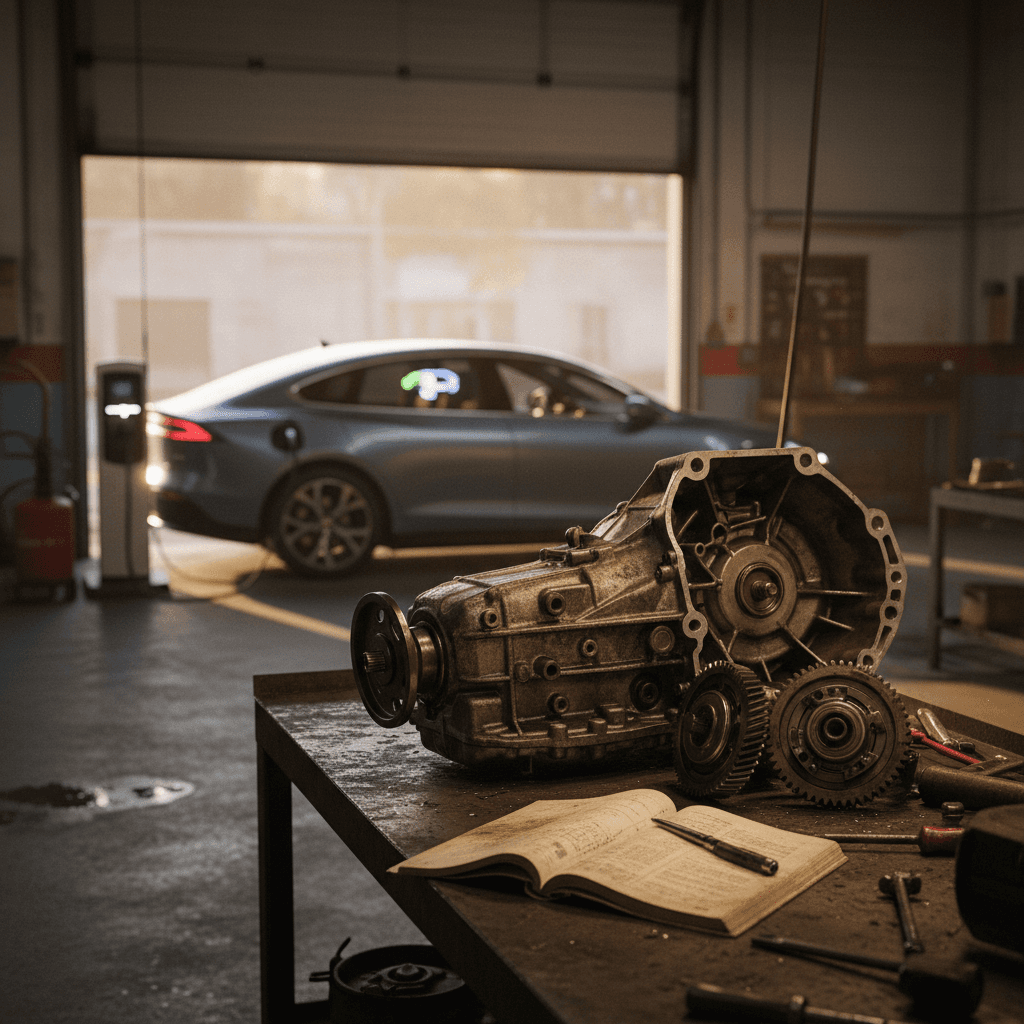
If you’re typing “nearest transmission shop near me” into your phone, odds are your car is slipping, shuddering, or refusing to go into gear, and you’re worried about getting stranded or slammed with a massive bill. In 2025, transmission repairs are some of the most expensive fixes you can face on a gas car, so it’s worth slowing down, understanding your options, and asking a bigger question: is it worth repairing… or is this the moment you move to a used EV instead?
Quick context
Why you’re Googling “nearest transmission shop near me”
When a transmission starts to go, it rarely announces itself politely. You feel slipping between gears, harsh shifts, delayed engagement when you shift into Drive, or you suddenly notice a burning smell and red fluid under the car. At that moment, searching for the nearest transmission shop near me is a rational reaction: you need someone close, fast, and competent.
- You’re worried the car might leave you stranded on the next drive.
- You have no idea if this will be a $200 service or a $6,000+ replacement.
- You need a local shop that won’t upsell you into work you don’t need.
- You’re trying to decide if it’s finally time to stop pouring money into this car.
First move
What a transmission shop actually does
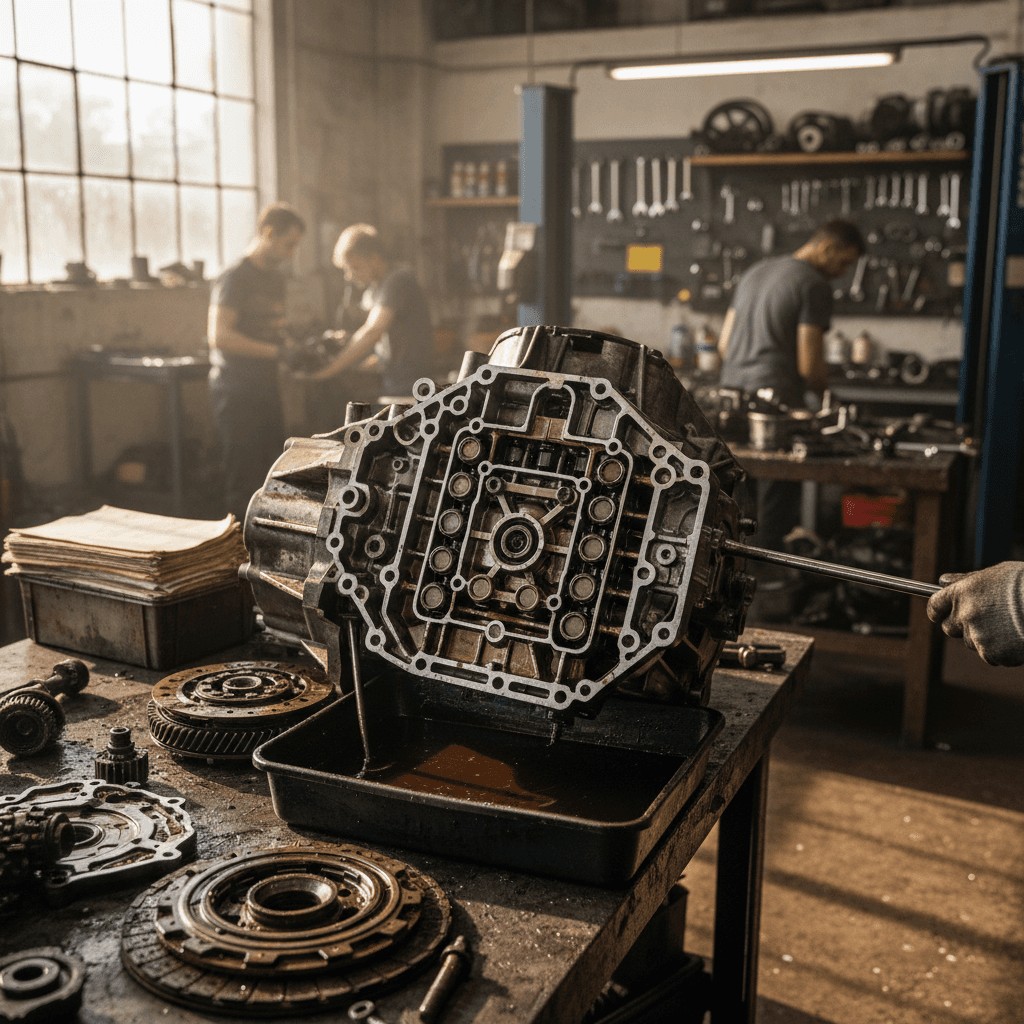
A dedicated transmission shop is to your gearbox what a cardiologist is to your heart. General repair shops can handle fluid services and minor issues, but transmission specialists spend all day diagnosing and rebuilding these complex units.
Core services a transmission shop offers
From simple fluid service to full rebuilds
Inspection & fluid service
Repairs & rebuilds
Replacement & upgrades
The true cost of transmission repair in 2025
Let’s translate those vague horror stories into real numbers. In 2025, nationwide auto repair costs are up, and transmissions are right at the top of the chart. You’ll see wide ranges online because costs hinge on your vehicle, where you live, and what actually failed, but we can outline realistic ballparks.
Typical 2025 transmission costs (gas vehicles)
For many mass‑market sedans and crossovers, a full replacement lands in the $3,000–$6,000 zone. Trucks, CVTs, luxury brands, and some hybrids can go much higher, sometimes into five figures. That’s why searching for the closest shop is really about something bigger: whether this car deserves that kind of money.
Watch the “diagnostic fee”
How to choose the right transmission shop near you
Typing “nearest transmission shop near me” into Google will surface plenty of options, but proximity alone isn’t enough. You want a shop that’s close, yes, but more importantly, one that’s honest, experienced, and set up to work on your specific type of transmission.
Transmission shop selection checklist
1. Look for a true specialist
Shops that focus on transmissions (automatic, CVT, DCT) see thousands more cases than general repair garages. That experience pays off in faster, more accurate diagnosis.
2. Check reviews for pattern problems
Ignore a single angry review and look for themes. Do people complain about surprise add‑ons, missed diagnoses, or cars coming back with new issues?
3. Ask about certifications and equipment
Certifications like ASE and brand‑specific training show the techs understand modern electronics, CVTs, and dual‑clutch units, not just old‑school automatics.
4. Demand a written estimate
You should receive a written estimate that breaks down labor, parts, shop fees, and taxes. If it’s just one big number, ask for details before authorizing work.
5. Understand the warranty
Good shops stand behind their work with 12–36 month warranties on rebuilds or replacements. Ask what’s covered (parts, labor, or both) and where you can get service if you’re traveling.
6. Clarify rebuild vs replacement options
A transparent shop will explain whether your unit can be rebuilt or whether a remanufactured or used transmission is smarter, and they’ll walk you through the tradeoffs.
Good sign
Step by step: how to find a good shop nearby
Here’s a simple, practical way to turn that vague “nearest transmission shop near me” search into one or two solid candidates you can trust.
- Search Google Maps or Apple Maps for “transmission shop” rather than just “mechanic.” Filter to shops within a realistic towing distance (often 5–15 miles in cities, 15–30 in rural areas).
- Sort results by rating and number of reviews. Target shops with at least 4.3★ and 50+ recent reviews when possible.
- Scan photos and website links. Shops that invest in equipment and training usually showcase it.
- Call your top 2–3 shops, describe symptoms, and ask about diagnostic fees, turnaround time, and warranty.
- If the car still moves, schedule the earliest diagnostic appointment. If it doesn’t, ask which tow companies they partner with and whether they can help coordinate.
- Once you have a written estimate, pause before approving major work, especially if the car is older, high‑mileage, or already needs other big repairs. This is where the EV question comes in.
Warning signs your transmission is failing
Being able to describe symptoms clearly will help the shop diagnose faster and avoid guesswork. Here are classic signs of a sick or dying transmission:
Common symptoms of transmission trouble
What you notice behind the wheel
Slipping & harsh shifts
Delayed engagement
Leaking or burnt fluid
Warning lights & limp mode
When to stop driving immediately
When transmission repair stops making financial sense
The hard question isn’t just “Where’s the nearest transmission shop near me?” It’s “Does this car deserve a $3,000–$7,000 repair?” There’s no universal answer, but some patterns are clear.
Rules of thumb: repair vs move on
Use this as a gut‑check before signing a big repair order.
| If this sounds like you… | Think carefully about… | You should at least consider… |
|---|---|---|
| Car is 10+ years old and 150k+ miles, with rust or interior issues | A $4,000+ transmission bill may exceed the car’s private‑party value | Moving on instead of rebuilding, especially if other big repairs are looming |
| You still owe a lot on the car loan | You could be financing repairs on a depreciating asset | Whether rolling negative equity into a better, more reliable vehicle makes sense |
| You’ve already replaced engine, suspension, and other major components recently | The rest of the car is solid and you plan to keep it years | Authorizing a rebuild or replacement, if the total cost is well below replacement value |
| You rarely drive and just need a beater for short trips | Spending thousands may not match your actual usage | Downsizing, car‑sharing, or a cheaper used EV with low running costs |
Every situation is unique, but these guidelines keep you from throwing good money after bad.
Why EVs don’t need traditional transmission shops
Here’s the twist most drivers don’t realize: modern electric vehicles don’t have multi‑speed transmissions the way gas cars do. Most EVs use a single‑speed reduction gear that’s far simpler than a 6‑, 8‑, or 10‑speed automatic or CVT. There’s no clutch pack doing endless gear changes, no torque converter handling stop‑and‑go traffic, and no band adjustments.
You still have a drive unit, gears, bearings, and lubricant, but failures are rare compared with traditional automatics. When EV driveline issues do happen, they’re usually handled under powertrain warranty or by specialized EV shops, not your neighborhood transmission rebuilder.
Less to break, less to service
Comparing costs: fix the transmission or buy a used EV?
In a world where used EV prices have fallen sharply over the last couple of years, a major transmission repair is often the moment people quietly run the numbers and realize they could just switch propulsion systems entirely.
Scenario A: Rebuild the transmission
- Major repair or replacement: $3,000–$7,000+ depending on vehicle.
- Future risk: engine, cooling system, emissions equipment, and other aging components still waiting to fail.
- Fuel costs: regular gas fill‑ups, plus rising maintenance on a high‑mileage drivetrain.
You keep a familiar car, but you’re doubling down on a platform that still has many complex moving parts.
Scenario B: Move into a used EV
- Monthly payment: Often comparable to financing a big repair, especially with falling used EV prices.
- Maintenance: No transmission services, fewer fluids, no oil changes, and far fewer moving parts.
- Energy costs: Home charging can feel like paying the equivalent of ~$1–$2 per gallon in many regions.
You trade transmission drama for a simpler drivetrain and predictable running costs.
Where Recharged fits in
Ready to find your next EV?
Browse VehiclesPut simply: if your transmission quote is creeping toward $4,000–$6,000 and your gas car is older, it’s rational, not impulsive, to compare that against the down payment and monthly cost of a used EV. For many drivers, especially those who rack up miles, the math tilts toward electric once you include fuel and maintenance over a few years.
FAQ: Transmission shops vs switching to an EV
Frequently asked questions
Bottom line: what to do next
If your search history is full of “nearest transmission shop near me”, you’re already dealing with one of the most expensive components on a gas car. Your next move shouldn’t just be about getting the car back on the road tomorrow, it should be about whether you’re setting yourself up for predictable, affordable driving over the next few years.
- Use maps and reviews to find a nearby transmission specialist, not just the closest general mechanic.
- Get a clear, written estimate and warranty terms before approving major work.
- Compare that repair cost to the total cost of ownership of a used EV with verified battery health.
- If the numbers favor a switch, explore used EV options instead of doubling down on a failing drivetrain.