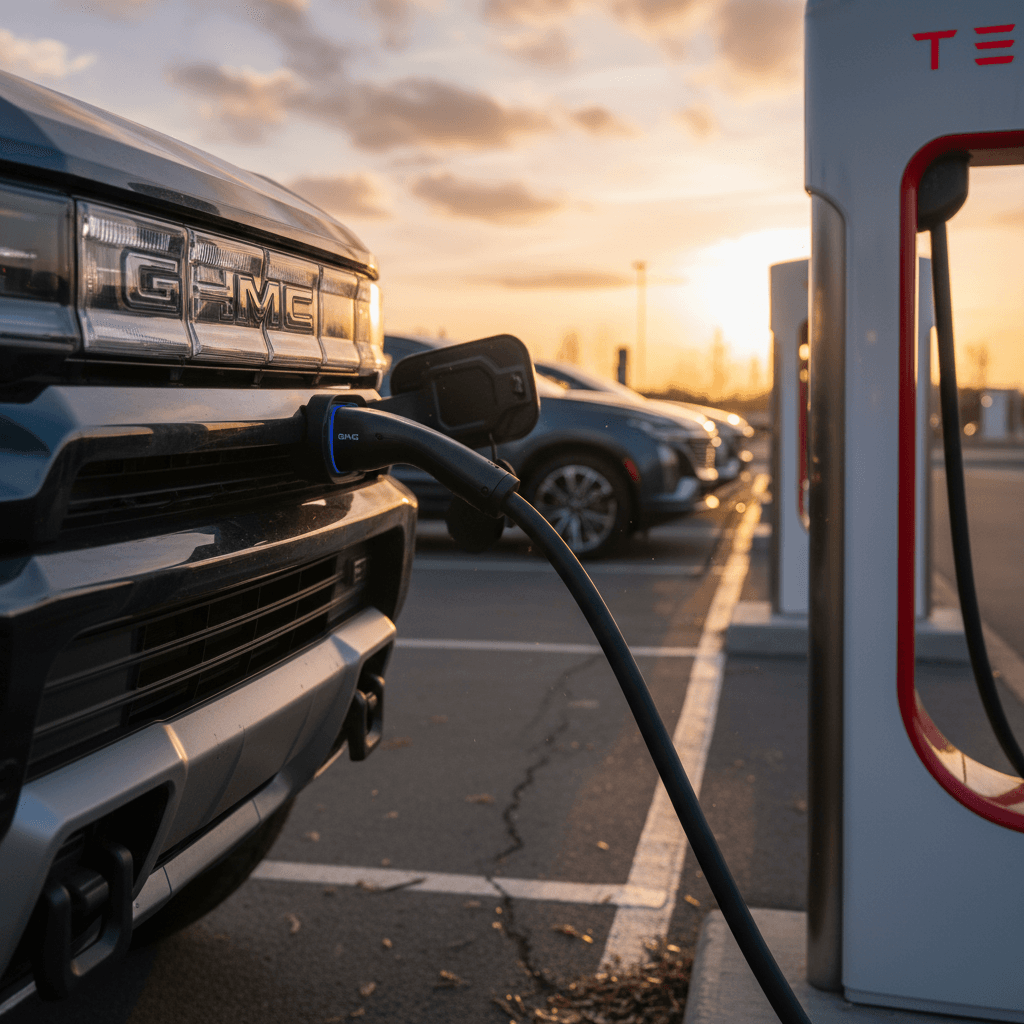
If you’re shopping for an electric car in 2025, you’ve probably run into the alphabet soup of NACS vs CCS connectors. One side of the market is moving quickly toward Tesla’s slimmer North American Charging Standard (NACS), while many existing EVs still use the bulkier Combined Charging System (CCS1). Understanding the difference isn’t just trivia, it affects where you can fast‑charge, whether you need adapters, and how future‑proof your next EV (or used EV) will be.
The short version
NACS vs CCS in one glance
NACS vs CCS at a glance
- NACS (North American Charging Standard): Originated by Tesla, now adopted by most automakers for future EVs. Smaller, lighter connector that handles both AC and DC charging.
- CCS1 (Combined Charging System Type 1): The previous "universal" standard for North America used by Ford, GM, Hyundai, Volkswagen, and many others for DC fast charging.
- Both can deliver very high power, hundreds of kilowatts, when backed by the right charging station and vehicle battery system. The big differences are physical shape, who uses them, and how the transition is being managed.
How EV charging connectors actually work
Before we put NACS and CCS head‑to‑head, it helps to understand what a connector actually does. Think of the connector as the plug and language between your EV and the charger. It has to do two things: carry serious amounts of power safely and let the car and station talk to each other about voltage, current, temperature, and payments.
AC vs DC: two kinds of charging, one connector
Both NACS and CCS are designed to handle slow and fast charging, but in different ways.
AC charging (home & Level 2)
Most of your charging, especially at home or work, will be AC (Level 1 or Level 2).
- Typical power: 1–2 kW (Level 1) or 7–19 kW (Level 2)
- Great for overnight charging
- Cheapest electricity, least stress on the battery
DC fast charging (road trips)
On the road, you’ll rely on DC fast charging.
- Typical power: 50–350+ kW
- Ideal for long trips and quick top‑ups
- Usually more expensive per kWh
Both NACS and CCS1 use the same physical inlet on the car for AC and DC in North America.
Don’t confuse connector with charging level
What is NACS?
NACS stands for North American Charging Standard. It began life as Tesla’s proprietary connector in the United States and Canada, but in late 2022 Tesla opened the design and rebranded it as NACS. In 2023 the Society of Automotive Engineers (SAE) started the process to codify NACS as an official standard known as SAE J3400. Today, NACS is on track to become the default DC fast‑charging connector for new EVs sold in North America.
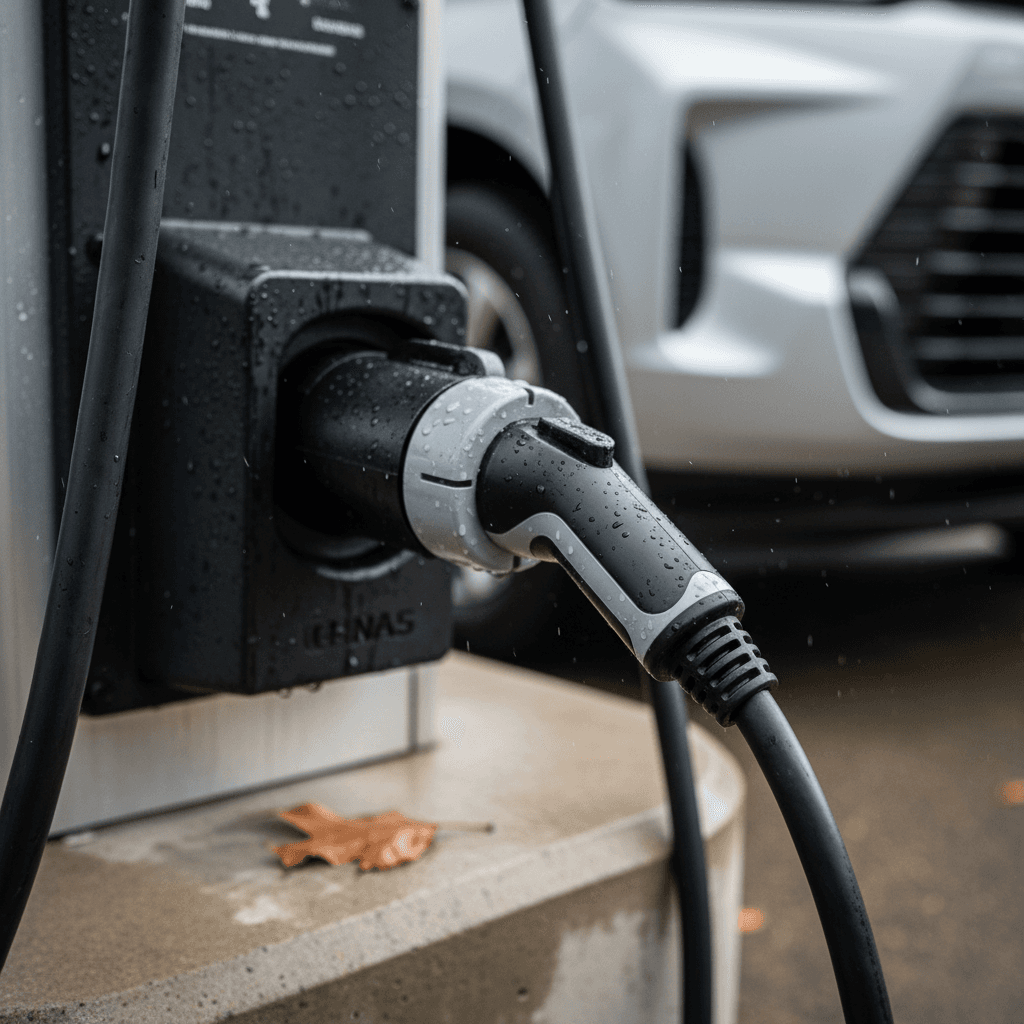
- Origin: Designed by Tesla for its own vehicles and Supercharger network.
- Design: Compact, lightweight plug that handles both AC and DC using the same pins.
- Power capability: Supports DC fast charging well above 250 kW on modern Superchargers and high‑power third‑party stations.
- Network: Native connector for Tesla’s Supercharger network and increasingly common on new multi‑brand stations like Ionna.
Why automakers like NACS
What is CCS?
CCS stands for Combined Charging System. In North America you’ll see it referred to as CCS1. It’s the chunky, two‑piece connector used on most non‑Tesla EVs built through about the 2024 model year. "Combined" refers to the fact that it merges a standard J1772 AC plug with two extra pins below it for DC fast charging.
- Origin: Developed by a consortium of European and American automakers and suppliers to be a common standard.
- Design: Larger plug: the top portion is J1772 for AC; the bottom pins carry DC current.
- Power capability: Modern CCS1 hardware can support 150–350 kW fast charging on capable stations and vehicles.
- Network: Main connector for networks like Electrify America, EVgo, ChargePoint DC, and many utility‑backed public fast chargers.
CCS isn’t going away overnight
NACS vs CCS: key technical differences
NACS vs CCS1 connector comparison
How NACS and CCS1 compare on design, performance, and everyday usability.
| Category | NACS (Tesla-style) | CCS1 (legacy industry standard) |
|---|---|---|
| Physical size & weight | Smaller, lighter plug; easier to handle with one hand | Larger, bulkier plug; can feel heavy in tight spaces |
| AC charging | Same inlet used for AC and DC; no separate J1772 on the car | Uses J1772 shape for AC; same inlet location as DC |
| Max DC power (theoretical) | Designed for 500+ kW and 1,000 V systems, depending on cable and station | Also supports up to 500+ kW and 1,000 V in latest spec; actual sites often 150–350 kW |
| Current typical use | Native on Tesla Superchargers and starting to appear on new multi‑brand fast‑charging sites | Standard for most non‑Tesla DC fast chargers built before the NACS migration |
| Vehicle adoption | Standard port on Tesla models; rolling out on many 2025–2026 EVs from Ford, GM, Hyundai, Kia, Volvo, and others | Standard port on most 2018–2024 non‑Tesla EVs; future models shift to NACS but keep CCS compatibility via adapters |
| User experience | Compact cable heads, often paired with plug‑and‑charge and well‑maintained sites | Varies widely by network; some excellent sites, some with reliability issues and heavier cables |
From a driver’s standpoint, the biggest differences you’ll notice are connector size, network access, and whether you need an adapter.
NACS: Pros and cons
- Pros: Smaller connector, broad Supercharger access, strong industry momentum, SAE J3400 standardization.
- Cons: Still in transition; some third‑party sites are slow to add NACS cables, and older EVs need adapters.
CCS1: Pros and cons
- Pros: Existing cars and charging networks already support CCS; plenty of highway sites today.
- Cons: Plug is bulkier, some networks have spotty reliability, and new vehicles are increasingly moving away from native CCS ports.
Charging speed, reliability, and real-world experience
From a physics standpoint, both NACS and CCS can be very fast. If you plug into a 250–350 kW DC fast charger and your EV’s battery is designed to accept that power, you can often add 150–200 miles of range in 20–30 minutes, regardless of connector type. Where drivers see a difference is reliability and consistency, especially on long road trips.
Where NACS and CCS feel different day‑to‑day
Real‑world fast charging is about more than the number on the pylon.
Peak charging speed
Modern NACS and CCS stations both advertise 150–350 kW.
What matters is your car’s charging curve. A small‑battery city EV may top out at 100–150 kW regardless of connector.
Site reliability
Tesla Superchargers using NACS have built a reputation for being more consistent than many early CCS networks.
Newer CCS networks and joint ventures like Ionna are working to close that gap.
Coverage and convenience
CCS corridors were built quickly along major highways, while NACS/Superchargers filled in both highways and key travel destinations.
By the late 2020s, most major sites are expected to offer both NACS and CCS cables.
How to compare stations for a trip
Which automakers are switching to NACS, and when
Starting in 2023, one automaker after another announced that they would adopt NACS for North America. The pattern is similar across brands: short‑term adapters, then native NACS ports on new vehicles, usually starting around the 2025 model year.
Selected automaker NACS adoption timelines (North America)
Approximate timelines based on public announcements as of early 2025. Always confirm details for a specific model year with the manufacturer or dealer.
| Brand (example models) | Access to NACS fast charging | Native NACS port timing* |
|---|---|---|
| Tesla (Model 3/Y/S/X) | Always native (no adapter needed) | Already standard for all models |
| Ford (Mustang Mach‑E, F‑150 Lightning) | Supercharger access via Ford‑supplied CCS→NACS adapter; rollout began 2024 | Targeted around 2025–2026 on new EVs |
| GM (Cadillac Lyriq, Chevy Equinox EV) | Adapters available starting in 2024; expanding through 2025 | First Cadillac with factory NACS port expected 2025, broader lineup by 2026 |
| Hyundai / Kia / Genesis (Ioniq 5, EV6, EV9, GV60) | Adapters and Supercharger access phased in 2024–2025 | Many 2025–2026 EVs in these families ship with native NACS and include CCS adapters |
| Volvo / Polestar (EX30, EX90, Polestar 2, 3) | Brand‑supplied adapters launched in late 2024 for Supercharger access | Most 2025 EVs expected to include NACS ports from the factory |
| Nissan (Ariya) & others | Adapters opening NACS access starting mid‑2020s | Future EVs pivot to NACS ports while keeping CCS compatibility with adapters |
Even as most new EVs shift to NACS, nearly all major brands are offering adapters so their CCS‑equipped owners can use Tesla Superchargers and other NACS fast chargers.
Always double‑check your specific EV
Adapters: using NACS and CCS together
Because there are so many CCS‑equipped vehicles already on the road, adapters are the bridge between today’s connector reality and tomorrow’s NACS‑heavy world. The good news: you usually don’t have to buy a random third‑party dongle online. Most automakers are providing OEM‑approved adapters designed, tested, and warrantied for their EVs.
Common adapter scenarios you’ll see
The exact details vary by automaker, but the patterns are similar.
CCS car → NACS charger
This is the most important path today.
- Lets a CCS‑equipped EV use Tesla Superchargers and other NACS sites.
- Often supplied by your automaker; sometimes free, sometimes around $200–$250.
NACS car → CCS charger
Becomes more relevant as new NACS EVs hit the road.
- Adapter lets a NACS‑port car use existing CCS fast chargers.
- Some brands plan to bundle this with NACS‑port vehicles.
Home Level 2 charging
Many home Level 2 chargers still ship with a J1772 plug.
- Tesla and other NACS‑port cars often include a small J1772→NACS adapter for home use.
- Functionally simple, but pay attention to amperage ratings.
Adapter safety checklist
What NACS vs CCS means for used EV buyers
If you’re considering a used EV in 2025 or 2026, you’re more likely to buy a CCS‑equipped vehicle than a native‑NACS car, simply because most of the used inventory predates the switch. That’s not a deal‑breaker at all, but you should factor charging connectors into your purchase decision, especially if you road‑trip regularly.
Connector and charging checklist for used EV shoppers
1. Confirm the DC fast‑charging port
Look at the actual charge port door or ask the seller which DC connector the car uses (CCS1, NACS, or CHAdeMO on older Nissan Leafs). This affects which networks you can use without adapters.
2. Ask about OEM adapters
Does the current owner already have a brand‑supplied CCS→NACS adapter or NACS→CCS adapter? If not, ask how much it costs and when it will be available for your model.
3. Check network coverage where you drive
Open PlugShare or your preferred charging app and filter by connector type in the areas you’ll drive most. You may find CCS stations are plentiful today, with NACS coverage growing rapidly along major corridors.
4. Understand your charging mix
If most of your miles will come from home Level 2 charging, connector type matters less. If you rely heavily on highway fast charging, plug standards and adapter timing matter more.
5. Factor the transition into resale value
As NACS becomes the norm, future buyers may place a small premium on native‑NACS cars or CCS cars with proven adapter support and strong fast‑charging performance.
How Recharged helps simplify this
How to future‑proof your charging setup
You don’t have to predict the future to make a smart decision. Focus on flexibility: a car that works with the networks you need today, and a plan to take advantage of growing NACS availability tomorrow.
If you already own or are buying a CCS EV
- Confirm whether your automaker offers a CCS→NACS adapter for DC fast charging and when you’ll get it.
- Use CCS fast chargers as your primary road‑trip solution for now, and treat NACS access as a useful backup.
- Choose a home Level 2 charger with a J1772 plug so it works with current and future vehicles via simple adapters.
If you’re buying a NACS‑port EV
- Enjoy native access to many NACS fast chargers, including supported Superchargers right away.
- Ask whether your vehicle includes a NACS→CCS adapter so you can tap into legacy CCS corridors.
- Consider a home charger that either has a NACS cable or supports swappable cables, so you’re not locked in.
Think in terms of trips, not just plugs
Frequently asked questions about NACS vs CCS
NACS vs CCS: your top questions answered
Bottom line: how to decide between NACS and CCS
The industry’s move from CCS to NACS has created understandable confusion, but it doesn’t have to derail your EV plans. NACS is clearly the direction the North American market is heading, especially for DC fast charging. At the same time, CCS remains deeply embedded in today’s public networks and in the used‑EV market, and adapters are closing the gap between the two worlds.
If you’re buying new, choosing a model with native NACS plus a path to use CCS corridors gives you maximum flexibility over the next decade. If you’re buying used, a CCS‑equipped EV backed by a reliable adapter program and good station coverage can still be a smart, cost‑effective choice. And if you’d like a second set of eyes on how a particular car will fit your charging reality, the team at Recharged is here to help you compare options, understand connector trade‑offs, and find a used EV that feels future‑proof, not like a science experiment.