If you search for the most affordable electric truck in 2026, you’ll see everything from $20,000 promises to $90,000 luxury rigs. The reality is more complicated. The cheapest trucks on paper are hard to actually buy, the ones you can find on lots often cost far more than the headline price, and the best deals are increasingly in the used market rather than brand‑new window stickers.
2026 electric truck pricing in one sentence
Why “most affordable electric truck” is so hard to pin down
When you’re talking about the “cheapest electric truck,” you’re juggling at least four moving targets: MSRP vs. real transaction prices, federal and state incentives, rapidly changing product plans, and the way options and batteries move the price needle. In the last two years, we’ve seen Ford cut F‑150 Lightning prices, then discontinue the pure BEV configuration in favor of an extended‑range setup, while Ram canceled its fully electric 1500 REV and pivoted to an extended‑range model instead. At the same time, GM has been sliding the Chevrolet Silverado EV from early, expensive first editions toward more attainable work‑oriented trims.
- MSRP headlines often refer to fleet‑only work trucks you can’t easily buy as a retail customer.
- Federal EV tax credits can erase up to several thousand dollars from the effective price, but only if the truck and your tax situation qualify.
- Production caps, wait lists, and dealer markups can turn a “$55,000” truck into $60,000+ out the door.
- Some of the lowest advertised prices belong to startup brands that may deliver in very limited numbers.
Watch the fine print
Cheapest electric trucks in 2026 at a glance
2026 electric truck price snapshots
Most affordable electric trucks 2026: headline prices
Approximate starting MSRPs and positioning for notable electric pickups affecting the 2026 market. Exact pricing and availability change frequently; always confirm locally.
| Model | Truck size / type | Approx. starting MSRP (2026) | Key caveat |
|---|---|---|---|
| Slate Truck | Compact / minimalist BEV | Under $28,000 | Startup, extremely bare‑bones, limited availability expected. |
| Chevrolet Silverado EV WT (Standard Range) | Full‑size work truck BEV | Mid‑$50,000s | Aimed at fleets; retail availability varies by dealer and region. |
| Ford F‑150 Lightning (remaining BEV stock) | Full‑size BEV | Low‑$60,000s+ | Current BEV version being phased out; deals depend on remaining inventory. |
| GMC Sierra EV (entry trims) | Full‑size BEV | Around $70,000+ | More premium positioning than Silverado, not an affordability play. |
| Future extended‑range F‑150 / Ram 1500 REV | Range‑extended, not pure BEV | TBD | Will blur lines between hybrid and EV; pricing not yet proven in market. |
Sticker prices are just the starting point, availability, incentives, and equipment can move these numbers up or down quickly.
How to use this list
Slate Truck: the sub-$30K wild card
The Slate Truck is the big disruptor in any 2026 “most affordable electric truck” conversation. This U.S.‑made compact pickup was unveiled with a headline starting price under $28,000, and marketing materials heavily implied that after federal EV incentives, some buyers could land closer to $20,000 out of pocket. That’s not just cheaper than other electric trucks; it’s competitive with many gas compacts.

What you gain, and give up, with a “cheap” EV truck
Slate Truck’s radical cost cutting is both its superpower and its biggest compromise.
Where the Slate Truck saves you money
- Simple construction: Exposed metal, no paint, and basic materials cut manufacturing costs.
- Minimal tech: No big touchscreen or complex infotainment system to pay for, or repair.
- Small battery: Lower capacity means lower cost, lighter weight, and easier urban use.
Tradeoffs you need to accept
- Shorter range: Compact pack means this is not a cross‑country tow rig.
- Bare‑bones cabin: Think work tool, not rolling lounge.
- Startup risk: Warranty coverage, parts availability, and long‑term support are unproven.
Early‑adopter risk is real
If your use case is mostly city and suburban driving, lighter payloads, and shorter trips, a compact truck like this could be a smart low‑cost way into electric ownership. If you need to tow frequently, carry big loads, or drive long highway stretches, you’ll most likely outgrow it quickly, and the “cheapest electric truck” might become an expensive mistake.
Full-size electric trucks: F-150 Lightning, Silverado EV and others
For most shoppers who actually need truck capability, the realistic hunt for the most affordable electric truck in 2026 still revolves around full‑size pickups like the Ford F‑150 Lightning and Chevrolet Silverado EV work‑truck trims. On paper, these were supposed to start in the $40,000–$50,000 range. In practice, the trims that have made it into showrooms have been higher‑content, and higher‑priced, variants.
Ford F‑150 Lightning (outgoing BEV)
- Status: Production of the pure BEV version is ending, with Ford pivoting to an extended‑range configuration.
- Pricing reality: Entry‑level Pro and mid‑level trims saw several rounds of price changes; by late 2025, genuinely sub‑$50K trucks were effectively gone.
- Upside for you: As Ford transitions its lineup, dealers may discount remaining stock, especially less desirable color or option combinations.
Chevy Silverado EV WT
- Positioning: Work‑oriented standard‑range model intended to align with F‑150 Lightning Pro‑type customers.
- Price band: Recent fleet and industry documents place the standard‑range WT in roughly the mid‑$50,000s before options and fees.
- Catch: Many units are earmarked for commercial fleets; retail availability can be spotty and region‑dependent.
Where these trucks still make sense
GMC’s Sierra EV plays in a more premium space, essentially taking Silverado EV hardware and wrapping it in Denali‑style comfort and styling. It’s interesting as a technology halo, but not really in the running for “most affordable” anything. Likewise, niche adventure‑oriented or luxury‑spec trucks might get the headlines, but they’re not where you’ll find compelling value.
Are range‑extended and plug‑in trucks worth considering?
One of the clearest trends by 2026 is that several automakers have cooled on pure electric pickups and moved toward range‑extended or plug‑in hybrid configurations. Ram’s 1500 REV shifted from a full BEV plan toward a setup where a gasoline engine drives a generator, and Ford is openly talking about extended‑range solutions for its next‑generation Lightning.
Pure EV truck vs. range‑extended: affordability tradeoffs
Why the cheapest “electric” truck might not be a pure BEV at all.
Pure BEV trucks
- Pros: Lowest running emissions, simple powertrain, great around town.
- Cons: Large batteries are expensive, fast‑charging adds cost and complexity.
Range‑extended / EREV
- Pros: Smaller battery, lower upfront cost, no towing‑range anxiety.
- Cons: Still relies on gasoline, more systems to maintain.
What it means for your wallet
- EREV trucks may carry lower MSRPs for similar capability.
- But electricity‑only operating cost advantages shrink when the engine runs often.
Should you count these as “electric trucks”?
New vs. used: where affordability is actually strongest
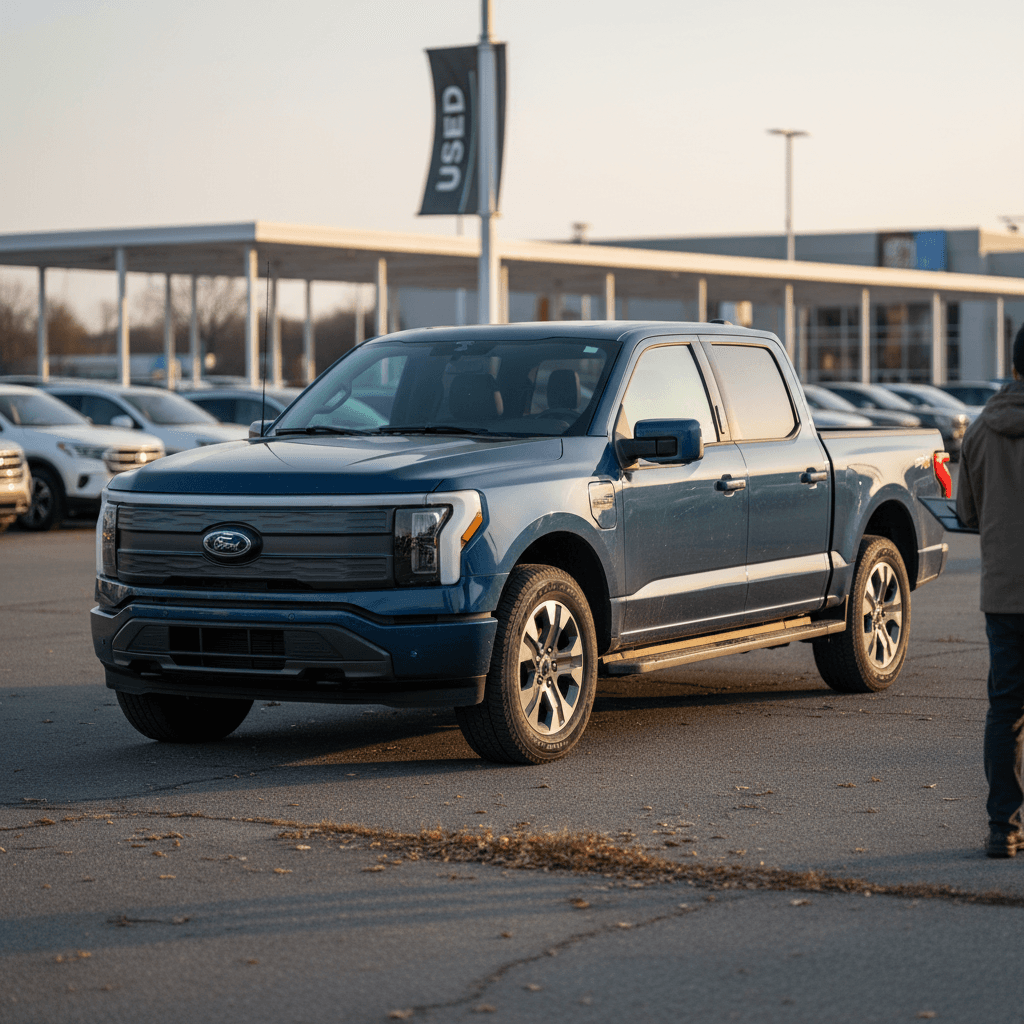
If your goal is simply to spend the least while still ending up with a capable electric truck, a used EV pickup increasingly beats the shiny new stuff. The combination of rapid product change, shifting incentives, and consumer anxiety about towing range has pushed depreciation on some electric trucks much faster than on comparable gas models.
Why used electric trucks often beat new on affordability
1. Steep early depreciation
Many electric pickups shed a large chunk of their value in the first 2–3 years, especially higher‑end trims that were originally optioned heavily. You can often buy a lightly used truck for 30–40% less than its original MSRP.
2. Incentives get priced in
Early buyers effectively subsidized the market by combining federal credits with high MSRPs. On the used side, those incentives are already “baked in” to today’s asking prices, so you capture the benefit without dealing with paperwork.
3. Real‑world performance data
With a used truck, you can look at energy‑consumption histories, owner reviews, and, in the case of platforms like Recharged, a <strong>verified battery‑health report</strong> before committing.
4. More transparent total cost
Insurance rates, maintenance needs, and real‑world charging costs are easier to estimate for a truck that’s already been in service for a few years.
How Recharged helps on the used side
If you’re cross‑shopping a bare‑bones new truck like the Slate Truck against, say, a 2‑ or 3‑year‑old F‑150 Lightning or Silverado EV bought through a transparent used‑EV marketplace, the used option often delivers more space, safety features, and capability for a similar monthly payment, especially once you factor in financing terms.
Costs beyond the sticker price
Sticker price gets the headlines, but the most affordable electric truck for you is the one with the lowest total cost of ownership over the years you plan to keep it. With EV trucks, that means looking closely at charging, tires, insurance, and battery health, areas where a little homework can save thousands.
- Charging costs: Home charging on a cheap overnight rate can make even a pricey truck economical to run. Relying heavily on highway fast‑charging, by contrast, can erode the EV advantage over gas.
- Tires: Heavy, high‑torque trucks chew through tires faster than compact cars. Budget for high‑quality replacements more often, especially if you tow or off‑road.
- Insurance: New, high‑value EV trucks can carry steeper premiums. Used examples with lower replacement cost frequently see friendlier rates.
- Battery health: A discounted used truck with a tired pack may be anything but affordable if it needs an early pack replacement or delivers disappointing real‑world range.
Don’t ignore battery diagnostics
How to choose the right affordable electric truck
Instead of asking, “What’s the single cheapest electric truck in 2026?”, a more useful question is, “Which electric truck is actually affordable for my use case?” That means matching your daily reality, miles, payload, towing, climate, and budget, to the right section of the market: compact startup trucks, full‑size used workhorses, or an extended‑range compromise.
Step‑by‑step: finding your most affordable electric truck
1. Define your real truck jobs
List your heaviest and most frequent use cases: towing weight, payload, highway vs. city, climate, and parking constraints. If your “truck work” is mostly Home Depot runs and light hauling, a compact or minimalist truck may be ideal.
2. Set a monthly budget, not just a price ceiling
Consider monthly payment, insurance, energy, and maintenance. A used full‑size EV that costs a bit more up front can be cheaper to own than a new cut‑price model once everything is bundled together.
3. Decide your tolerance for startup risk
If the idea of dealing with a small automaker’s growing pains worries you, lean toward mainstream brands or used trucks with solid support networks. If you’re comfortable being an early adopter, trucks like Slate may hold appeal.
4. Compare new vs. used side by side
Take at least one new truck and one used truck that fit your needs and build a simple TCO spreadsheet: down payment, monthly payment, insurance quote, and a realistic energy‑cost estimate for your driving pattern.
5. Get independent battery and condition data
When shopping used, insist on battery‑health information and a thorough inspection. Platforms like Recharged bake this into the process, but if you’re buying elsewhere, you may need to pay for diagnostics yourself.
6. Think about exit strategy
Ask how easy the truck will be to sell or trade in three to five years. Mainstream models with good service networks typically hold value better than niche products, even if they weren’t the absolute cheapest on day one.
In 2026, the most affordable electric truck isn’t just the cheapest window sticker, it’s the one that aligns your real work needs with a realistic view of technology risk, incentives, and long‑term ownership costs.
If you simply want the smallest possible number on a spec sheet, the Slate Truck and similar bare‑bones EV pickups will top most lists for the “most affordable electric truck 2026.” But if you step back and look at usability, risk, and long‑term costs, many buyers will be better served by a well‑priced used F‑150 Lightning, Silverado EV, or similar truck with proven support and transparent battery‑health data. No matter which path you choose, treat the sticker price as the start of the conversation, not the end, and lean on tools like the Recharged Score Report, fair‑market pricing, and EV‑specialist guidance to keep that bargain truck from becoming an expensive experiment.