If you’re hunting for the most affordable electric SUV in 2026, you’ve probably noticed two conflicting realities: headlines shouting about $30,000 EVs… and dealers parking $60,000 crossovers under confetti cannons. In between those extremes is the actual market where families, commuters, and first‑time EV shoppers live. That’s where this guide lives, too.
What “affordable” actually looks like now
Why “affordable” electric SUVs matter in 2026
Average new‑vehicle prices in the U.S. are still north of $47,000, and compact SUVs sit right in the thick of that. Electric SUVs usually start higher than gas versions but pay you back in fuel and maintenance savings over time. For many buyers, the question is no longer, “Is an EV SUV good?” It’s, “Can I afford one without wrecking my monthly budget?”
Three big forces shaping EV SUV affordability
Why 2026 looks very different from early‑EV sticker shock
Falling used EV prices
Used EV values have dropped faster than comparable gas vehicles in the last couple of years, which means a 2–4‑year‑old electric SUV can undercut new prices by five figures while still offering modern range and safety tech.
More mainstream models
Compact and subcompact electric SUVs from brands like Chevrolet, Hyundai, Kia, Toyota, Subaru, and Volkswagen have turned the segment into a volume business instead of a niche science project.
Incentives reshuffled
Federal and state EV incentives increasingly favor vehicles built in North America and buyers below certain income caps. That makes some EV SUVs effectively much cheaper than their MSRP and others surprisingly pricey.
How we define the most affordable electric SUV in 2026
When people search for the “most affordable electric SUV 2026,” they usually mean something more nuanced than the absolute cheapest thing with four doors and a battery. In this guide, “affordable” means a mix of low entry price, usable range, reasonable equipment, and predictable ownership costs for a U.S. buyer.
- Base price under about $40,000 for new electric SUVs, before incentives, with a realistic path into the low–$30,000s after credits and discounts.
- Used electric SUVs commonly trading under about $25,000, with solid battery health and mainstream range.
- At least roughly 200 miles of real‑world range for highway‑capable models, or a clear city‑commuter use case if range is shorter.
- Five‑door SUV or crossover body style, not a hatchback or sedan rebadged as an SUV.
- Availability in the U.S. market by late 2026, not just a concept or limited‑run halo car.
MSRP vs. what people actually pay
Most affordable new electric SUVs in 2026: the shortlist
New‑car shoppers want three numbers: price, range, and a payment that doesn’t make you queasy. Below is a snapshot of some of the most affordable new electric SUVs and crossovers for 2026 in the U.S. market, based on public pricing as of early 2026. Exact trims, destination fees, and local discounts will move the needle, but this frames the neighborhood.
Representative affordable new electric SUVs for 2026 (U.S.)
Approximate starting MSRPs and ranges for some of the most budget‑friendly electric SUVs and crossovers available or announced for the 2026 model year.
| Model | Size class | Approx. starting MSRP (incl. dest.) | Approx. EPA/est. range | Notable affordability angle |
|---|---|---|---|---|
| Nissan Leaf SUV (next‑gen) | Small SUV | Low–mid $30Ks (expected) | ~225–250 miles (est.) | Redesigned as a small SUV with a focus on low base price; positioned to be one of the cheapest new EV SUVs in the U.S. |
| Chevrolet Equinox EV | Compact SUV | Around $35,000 | Up to mid‑300s miles (depending on trim) | Mainstream compact with big‑car range; widely cited as a value benchmark for electric SUVs. |
| Toyota bZ4X (updated) | Compact SUV | Mid‑$30Ks to upper $30Ks | ~220–250 miles | Toyota’s mass‑market EV SUV, increasingly priced to compete with gas RAV4 buyers. |
| Subaru Solterra (2026 refresh) | Compact SUV | Around $40,000 | ~220+ miles | Standard AWD and Subaru‑ish practicality; pricing increasingly competitive in real‑world deals. |
| Volkswagen ID.4 | Compact SUV | High‑$30Ks | ~230–290 miles | One of the more common affordable electric SUVs, often discounted at the dealer level. |
| Hyundai Kona Electric (redesigned) | Subcompact SUV | Low–mid $30Ks | ~260+ miles | Small footprint, strong efficiency, and historically aggressive real‑world pricing. |
| Kia Niro EV | Subcompact SUV | Low–mid $40Ks (often discounted) | ~239 miles | Sticker price isn’t the lowest, but heavy discounts and leases can make it very affordable. |
Always check current manufacturer pricing and eligibility for incentives before you buy; numbers here are directional, not quotes.
Watch for trims you actually want
Cheapest used electric SUVs in 2026: where the real deals are
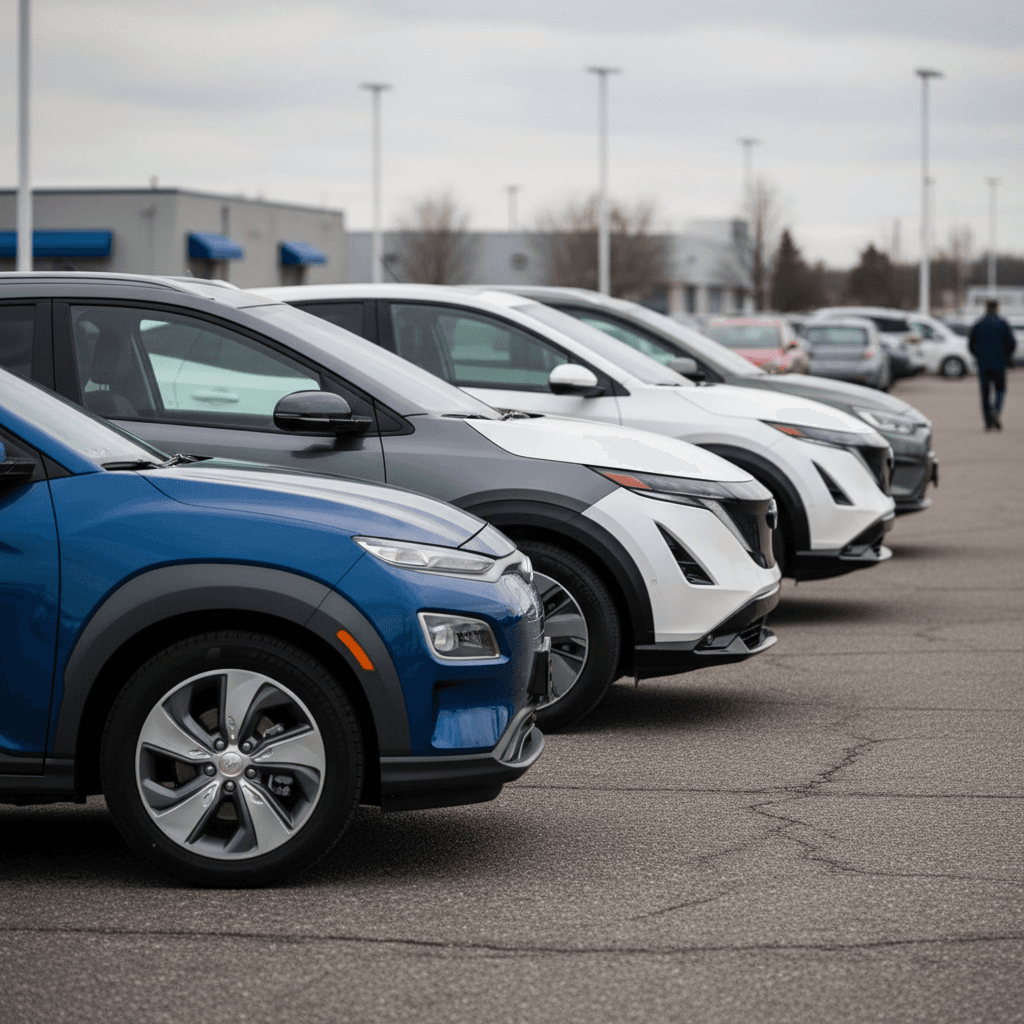
If you’re willing to buy used, the market tilts heavily in your favor. Used EVs have seen sharper price drops than gasoline models, as early adopters upgrade and leases return in volume. That’s why the most affordable electric SUV in 2026 for many shoppers will be a 2–5‑year‑old vehicle, not something factory‑fresh.
Why used electric SUVs are such strong values now
Used electric SUVs that often price far below new
Exact availability and pricing will vary by region and mileage, but these nameplates tend to offer strong value on the used market.
Hyundai Kona Electric
One of the early efficiency champs. Older Konas with ~250‑mile EPA range often show up in the low‑$20Ks on the used market, sometimes less, depending on mileage and region.
Chevrolet Bolt EUV
Technically a tall hatch, but cross‑shopped as a small SUV. Discontinued new, but plentiful used, with many landing well under $25,000 and offering ~240 miles of range.
Kia Niro EV (1st gen)
A quietly competent electric crossover. Earlier Niro EVs can represent solid value if the battery checks out and charging history looks healthy.
Volkswagen ID.4 (early years)
Among the more affordable true compact EV SUVs on the used market, especially former leases. Look for software‑updated units and a clean fast‑charging record.
Ford Mustang Mach‑E (value trims)
Sporty, popular, and often heavily discounted used compared to new models. Value improves when you’re not chasing the fastest variants.
Regional oddballs & deals
In EV‑dense regions (California, Pacific Northwest, Northeast), you may find aggressively priced used examples of more niche SUVs as owners upgrade to the latest thing.
The one non‑negotiable on a used electric SUV
New vs. used affordable EV SUVs: which path makes sense?
When a new EV SUV makes more sense
- Generous incentives: If you qualify for the full federal clean vehicle credit and your state kicks in a rebate, a $40,000 SUV can suddenly behave like a low‑$30K car.
- Longer horizon: You plan to keep the vehicle 8–10 years and value the latest battery tech and crash‑avoidance features.
- Charging lifestyle is complex: If you rely heavily on public fast‑charging, newer models often charge faster and manage heat better, big quality‑of‑life advantages.
- Peace of mind: Full factory warranty coverage plus a fresh battery and software support cycle.
When used is the smarter “affordable” play
- Up‑front price is king: You want to land around $20,000–$25,000 out the door, not $35,000+.
- Predictable driving: Your use‑case is mostly commuting and errands within a 50–70‑mile daily radius.
- Depreciation allergy: You’d rather let someone else eat the steep first‑owner drop and buy after the curve flattens.
- Access to data: You can buy from a seller who provides credible battery‑health diagnostics, not just a freshly washed detail job.
Total cost of ownership: why cheapest MSRP isn’t always cheapest
Affordable transportation isn’t about the lowest possible window sticker; it’s about how much money the vehicle quietly siphons from your account over five to ten years. With EV SUVs, energy, maintenance, insurance, and depreciation can swing the math dramatically, often more than a $2,000 difference in MSRP.
Key cost factors that can flip which EV SUV is “most affordable”
1. Electricity vs. gasoline savings
If you’re replacing a 22‑mpg gas SUV and driving 12,000–15,000 miles per year, the fuel savings from an efficient electric SUV can be worth thousands over your ownership period, especially if you can charge off‑peak at home.
2. Home charging setup costs
A compact EV SUV that looks cheap on paper but requires a $2,000+ panel upgrade to support Level 2 home charging may not actually be the budget choice compared to a similar EV you can slow‑charge overnight on an existing 240‑volt circuit.
3. Insurance and repair
Some EV SUVs carry higher insurance premiums or pricier glass and body parts. Get actual quotes for the short‑listed models instead of assuming they’re all the same.
4. Battery health and warranty
On used EV SUVs, a healthy pack and substantial remaining battery warranty can be worth a few thousand dollars in peace of mind. Conversely, a cheap SUV approaching the end of pack coverage deserves extra scrutiny.
5. Depreciation curve
Some models have already fallen off their big depreciation cliff; others are just starting. In 2026, older compact EVs and discontinued models can be screaming deals precisely because demand has shifted to the latest shapes.
Do a 5‑year cost comparison, not a driveway glance
How tax credits and incentives change what “affordable” means
The most affordable electric SUV for you in 2026 might be the one that happens to line up with the federal clean‑vehicle credit and your state’s incentive structure. Eligibility depends on where the vehicle is made, battery content, your income, and whether you’re buying new or used.
Three flavors of incentive that can make an EV SUV truly affordable
Exact dollar amounts and rules change often, always verify current programs before you sign anything.
Federal new EV credit
Qualifying new electric SUVs can unlock a federal clean‑vehicle credit (often claimed at the point of sale). That can turn a $40,000 crossover into something that behaves more like a low‑$30K purchase in your budget.
Federal used EV credit
Used EVs under specific price caps, bought from dealers, can qualify for a separate federal credit. That’s tailor‑made for making a 2–3‑year‑old electric SUV the genuinely cheapest way into EV ownership.
State & utility programs
Many states and utilities layer on rebates, grants, or off‑peak charging discounts, especially if you install a home charger. Stack those with federal incentives and a mid‑tier EV SUV can undercut a comparable gas model in monthly costs.
Incentives can disappear mid‑search
Shopping checklist for the most affordable electric SUV in 2026
Let’s put this into something you can actually use on a Saturday test‑drive marathon. Whether you end up in a new compact crossover or a used subcompact EV, the same questions separate a merely cheap SUV from a smart purchase.
11‑step checklist to find your most affordable electric SUV
1. Nail down your real budget
Decide on a target monthly payment and total out‑the‑door price, not just a vague sense of “cheaper than my current car.” Include taxes, fees, and likely charging setup costs.
2. Map your daily and weekly driving
Write down your typical weekday, your longest regular trips, and a couple of annual road trips. You may discover that 220 miles of range is plenty, or that you genuinely need more.
3. Confirm home or workplace charging
Do you have access to overnight Level 2 charging, a shared charger, or at least a reliable 120‑volt outlet? If not, factor in the cost and hassle of a home install or heavy dependence on public stations.
4. Short‑list 3–5 models by price and range
Use guides like this one plus a few manufacturer sites to create a short list that fits your budget, size needs, and minimum range requirement.
5. Check federal and state incentive eligibility
Plug in your income, ZIP code, and each short‑listed model into a current incentives tool to see which SUVs actually qualify. A model that misses out may effectively be several thousand dollars more expensive.
6. Get insurance quotes by VIN
Before you fall for a specific SUV on the test drive, call your insurer (or use online tools) to quote each contender. EV insurance costs are not created equal.
7. For used: insist on battery‑health data
Ask for a recent, third‑party battery‑health assessment, not just a screenshot of the range estimate at 100%. Look for pack degradation, rapid‑charging history, and any fault codes.
8. For new: look past the base trim
Price out the trim that actually meets your needs, heated seats, driver‑assist, bigger battery, then compare that number across vehicles, not the vanity base price in the ad.
9. Drive them back‑to‑back
Comfort, visibility, one‑pedal driving feel, noise levels, these matter every single day. A slightly pricier SUV that you actually love driving can be the better value over time.
10. Run a 5‑year total‑cost estimate
Put rough numbers to electricity, insurance, maintenance, and resale alongside the purchase price. There are plenty of online calculators; the exercise is more important than perfect precision.
11. Sleep on it, then negotiate
EV supply fluctuates, and deals change monthly. Don’t be rushed into a ‘today only’ offer. Walk away, compare notes, and only then commit.
How Recharged helps you shop affordable EV SUVs smarter
If you’re leaning toward a used electric SUV to stretch your budget, the missing piece is usually trustworthy information. That’s exactly the gap Recharged was built to close.
Why budget‑minded EV SUV shoppers start with Recharged
We focus on transparency, battery health, and making the numbers easy to live with.
Recharged Score battery health diagnostics
Every vehicle on Recharged includes a Recharged Score Report with verified battery health, charging history insights, and fair‑market pricing. You’re not guessing how much range you’ll still have in three winters.
Financing built for EVs
Recharged offers EV‑friendly financing with clear, upfront terms. You can pre‑qualify online, compare payments, and understand exactly how that used Kia Niro EV stacks up against a newer Equinox EV in your budget.
Trade‑in and instant offer options
Have a gas SUV or older EV to move? Recharged can give you an instant offer or consignment option, so you can roll that equity into a more efficient electric SUV without spending your weekends fielding classifieds responses.
Nationwide delivery
Found the right affordable EV SUV but it’s in another state? Recharged can arrange nationwide delivery, so you can shop for value across the country, not just in your ZIP code.
EV‑specialist support
Recharged’s team lives and breathes EVs. They can walk you through charging options, incentive questions, and whether a specific model is a fit for your use case, not just try to close a deal.
Richmond, VA Experience Center
If you’re near Virginia, you can visit the Recharged Experience Center in Richmond to see vehicles, ask questions, and get hands‑on with EV charging and features before you buy.
Ready to find your next EV?
Browse VehiclesFAQs: most affordable electric SUV in 2026
Frequently asked questions about affordable electric SUVs
Bottom line: finding your best affordable electric SUV
There is no single, universal “most affordable electric SUV 2026.” There’s your income, your commute, your charging situation, your tolerance for depreciation, and your appetite for new versus used. On one end, a next‑gen small SUV like the reborn Nissan Leaf or an Equinox EV‑type compact, properly incentivized, can deliver modern range and features at a truly middle‑class price. On the other, a carefully chosen used Kona Electric, ID.4, or Niro EV in the low‑$20Ks can undercut most new gas SUVs while giving you the quiet, low‑maintenance life an EV promises.
The trick is to stop thinking of affordability as a number on a windshield and start thinking of it as the total story your next SUV will tell over five or ten years, about your money, your time, and how much mental real estate the car occupies. If you’d like a guide through that story, especially on the used side, Recharged exists to make EV ownership simple, transparent, and, yes, genuinely affordable.