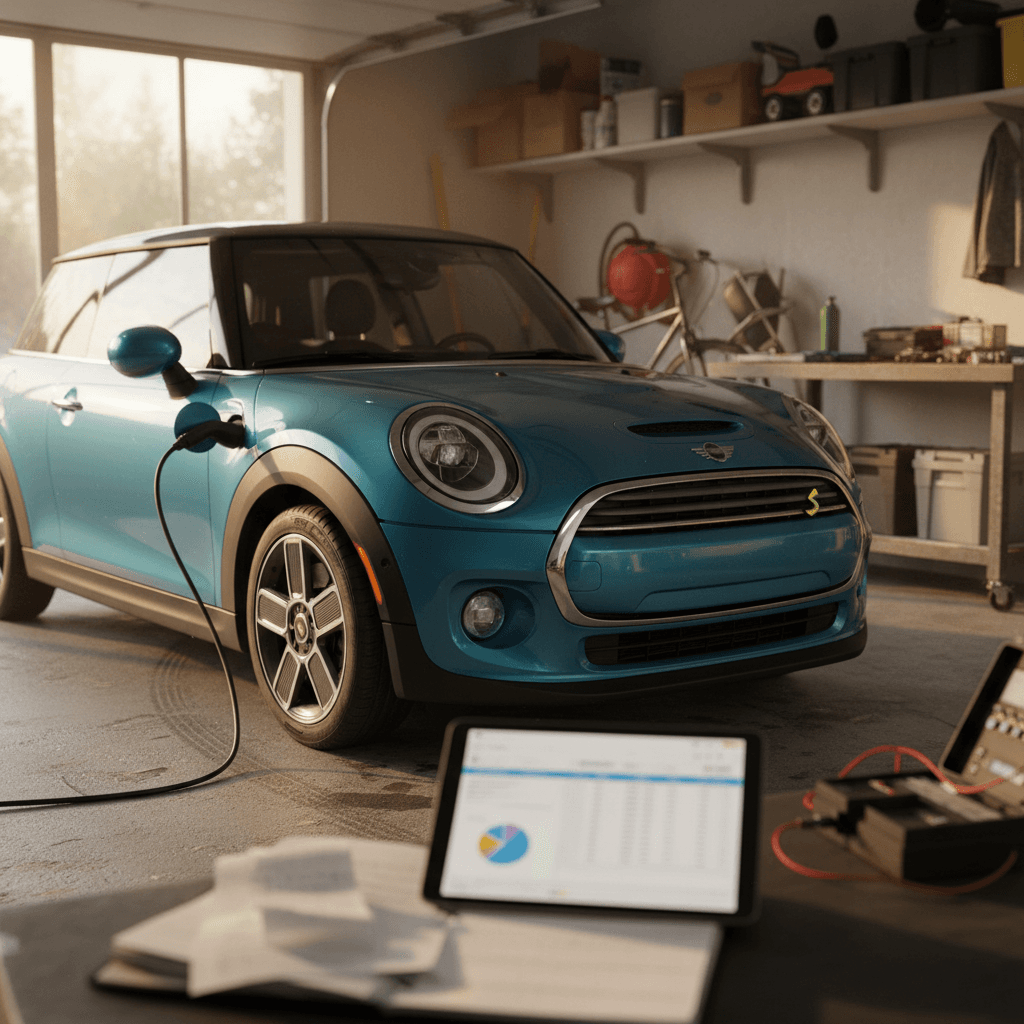
If you’re eyeing a Mini Cooper SE, you’re probably not just thinking about the sticker price. You want to know the true cost of ownership over 5 years, payments, charging, maintenance, insurance, and how it all stacks up against a gas-powered Mini or another small EV.
Quick take
Why the Mini Cooper SE’s 5‑Year Cost Matters
The Mini Cooper SE is one of the most affordable new EVs on the market and a darling of city drivers: compact, quick, and fun. But it also has modest range and a niche audience. That combination makes its 5‑year cost of ownership a little different from mainstream EVs like the Chevy Bolt or Tesla Model 3.
- Battery range ~114 miles (EPA for earlier models), designed for urban/short‑commute duty
- Purchase prices that undercut many other EVs, especially on the used market
- Lower fuel and maintenance costs vs a gas Mini Hardtop, but potentially higher depreciation
So the big question is: after 5 years, did this car actually save you money, or just make you smile on twisty on‑ramps? Let’s walk through the numbers, using realistic U.S. assumptions and calling out where things can swing higher or lower for you.
Mini Cooper SE price basics: new vs used
First, you need a sensible starting point. Exact pricing will vary by year, trim, incentives, and dealer discounts, but here’s a ballpark view you can use to frame a 5‑year cost comparison.
Typical Mini Cooper SE pricing in the U.S.
Approximate transaction prices for new and used Mini Cooper SE models. Actual prices vary by market, mileage, and condition.
| Vehicle | Example model years | Typical price range | Notes |
|---|---|---|---|
| New Mini Cooper SE | 2024–2025 | $32,000–$36,000 | Before any tax credits or rebates |
| Lightly used Mini Cooper SE | 2022–2023 | $22,000–$28,000 | Often with low mileage, still under warranty |
| Older used Mini Cooper SE | 2020–2021 | $16,000–$22,000 | Best value, range and tech still perfectly usable for city driving |
Use these figures as directional examples, not exact offers in your zip code.
EV incentive tip
Because brand‑new small EVs depreciate quickly, many cost‑conscious shoppers lean toward a 2‑ to 4‑year‑old Mini Cooper SE. You’re letting the first owner eat the steepest part of depreciation while you still get a modern EV with plenty of life left.

Depreciation: how fast does a Mini Cooper SE lose value?
Depreciation is usually the single largest cost of owning a Mini Cooper SE for 5 years. Smaller EVs with shorter range tend to lose value more quickly than long‑range models, because many buyers still shop by miles of range first.
5‑year Mini Cooper SE depreciation (rough estimate)
Remember: these are directional
Buy new, own 5 years
- Purchase price example: $34,000
- 5‑year value loss: roughly $15,000–$18,000
- Estimated value after 5 years: $16,000–$19,000
Buy 3 years old, own 5 years
- Purchase price example: $22,000
- 5‑year value loss (from your purchase): maybe $9,000–$11,000
- Estimated value at 8 years old: $11,000–$13,000
From a pure depreciation standpoint, buying a used Mini Cooper SE often makes more 5‑year sense than buying brand‑new. Someone else already absorbed the “new EV” penalty, while you still get years of battery warranty and usable urban range.
Charging costs vs gas: what you’ll spend to drive
Fuel is where the Mini Cooper SE quietly earns back money. Its small, efficient battery and city‑friendly size mean low energy use, especially if you mostly charge at home.
Mini Cooper SE: 5‑year charging vs gas costs
Example calculations for a typical U.S. commuter driving 10,000 miles per year.
Energy use
A Mini Cooper SE typically averages about 3.5 mi/kWh in mixed real‑world driving.
Home charging cost
At $0.15/kWh, that’s roughly $0.043 per mile, or about $430 per 10,000 miles.
Gas car comparison
A 30 mpg gas Mini at $3.50/gal costs about $0.117 per mile, or $1,170 per 10,000 miles.
Over 5 years and 50,000 miles, that rough math looks like this:
5‑year fuel/energy cost comparison
Approximate fuel vs electricity costs at 10,000 miles per year for 5 years.
| Vehicle | Cost per mile (example) | Annual fuel/energy cost | 5‑year total |
|---|---|---|---|
| Mini Cooper SE (mostly home charging) | ≈ $0.04 | ≈ $430 | ≈ $2,150 |
| Gas Mini Hardtop (30 mpg, $3.50/gal) | ≈ $0.12 | ≈ $1,170 | ≈ $5,850 |
Your actual numbers will depend on your electric rate, gas prices, and how often you use DC fast charging.
Fuel savings snapshot
Fast‑charging caveat
Maintenance and repairs: 5 years with an EV Mini
One area where EVs consistently shine is routine maintenance. No oil changes, no spark plugs, no exhaust system. The Mini Cooper SE shares that advantage, plus regenerative braking that can extend brake pad life compared with a gas Mini.
Typical 5‑year Mini Cooper SE maintenance items
Tires
Expect at least one set of replacement tires in 5 years, especially if you enjoy the Mini’s quick acceleration. Budget roughly $700–$1,000 depending on brand and size.
Brake fluid and inspections
You’ll still need periodic brake fluid changes and general inspections, but these are usually less frequent and sometimes cheaper than on a gas car.
Cabin air filter & wipers
Small consumables like filters and wiper blades still apply, plan on a few hundred dollars over 5 years.
Battery coolant (longer term)
High‑voltage battery systems can require coolant service on longer timelines. Over a 5‑year window, most owners won’t see this yet, especially on newer models.
Unexpected repairs
Electrics aren’t immune to repairs: infotainment glitches, sensors, or suspension work can pop up. Setting aside a modest annual repair budget is still wise.
Mini Cooper SE (5 years)
- Routine maintenance often in the $1,000–$1,800 range over 5 years for typical driving.
- Less wear on brakes thanks to regenerative braking.
- No engine‑related services like timing belts or exhaust work.
Gas Mini Hardtop (5 years)
- Likely $2,000–$3,000+ in maintenance and minor repairs over 5 years.
- Regular oil changes, more complex engine and exhaust systems.
- Potential for higher‑cost repairs as mileage climbs.
Battery health and long‑term value
Insurance, registration, and other overlooked costs
Insurance is where the Mini Cooper SE can surprise people. Because it’s an EV with pricey electronics stuffed into a small car, collision repairs can be costly. Some insurers price EVs slightly higher than their gas counterparts; others don’t.
The “quiet” 5‑year costs to budget for
They won’t dominate your spreadsheet, but they add up over half a decade.
Insurance
Depending on your driving record and location, insurance for a Mini Cooper SE may run slightly higher than for a gas Mini, but not always dramatically so. Ask for EV‑specific quotes.
Registration & fees
Some states have extra EV registration fees to make up for lost gas‑tax revenue. Over 5 years, that might add a few hundred dollars.
Home charging setup
If you don’t already have a 240V outlet, installing one (or a Level 2 charger) is an up‑front cost that you’ll spread over many years and possibly multiple EVs.
Safety first on home charging
Putting it together: 5‑year ownership scenarios
Let’s pull the pieces together with two simplified 5‑year Mini Cooper SE scenarios. These are not rigid quotes, just realistic examples using round numbers to show how the costs interact.
Example 5‑year cost of ownership scenarios
Very rough sample numbers for illustration only, assuming 10,000 miles per year and mostly home charging.
| Line item | Scenario A: New Mini Cooper SE | Scenario B: 3‑yr‑old used Mini Cooper SE |
|---|---|---|
| Starting price (example) | $34,000 | $22,000 |
| Depreciation over 5 years (est.) | −$16,000 | −$10,000 |
| Fuel/energy over 5 years | ≈$2,150 | ≈$2,150 |
| Maintenance & minor repairs | ≈$1,500 | ≈$2,000 |
| Insurance difference vs gas car | Slightly higher | Similar/slightly lower |
| Total major 5‑yr costs (ex‑financing) | Roughly $19,500–$21,000 | Roughly $14,000–$16,000 |
These examples don’t include financing interest or taxes/fees at purchase, which vary widely by buyer and location.
What about a comparable gas Mini?
How buying a used Mini Cooper SE changes the math
From a purely financial perspective, the sweet spot for Mini Cooper SE ownership is often buying used and driving it through the heart of its battery‑warranty years. You trim the worst depreciation while still capturing years of low fuel and maintenance costs.
Key advantages of a used Mini Cooper SE (for 5‑yr ownership)
1. Lower up‑front price
Dropping from the mid‑$30k range to the high teens or low $20k range has a huge impact on your monthly budget and your 5‑year depreciation hit.
2. Battery warranty overlap
Buying a 2‑ to 4‑year‑old car usually leaves several years of factory battery coverage, lowering your risk of a high‑voltage surprise during your ownership window.
3. Proven real‑world range
A used car has a history. With the right data, you can see how its range and battery health have held up in everyday use instead of guessing from a brochure.
4. Better fit as a second car
If you’re using the Mini SE mainly for commuting and errands, a used example delivers the same daily experience at a significantly lower true cost of ownership.
How to lower your 5‑year risk on a used EV
How Recharged can help you shop smarter
When you’re chasing the true 5‑year cost of ownership, the quality of the specific car you buy matters just as much as the model you choose. That’s where Recharged comes in if you’re considering a used Mini Cooper SE or another EV.
Turn Mini Cooper SE ownership math in your favor
How Recharged helps you control the big 5‑year variables.
Know the battery you’re buying
Every EV on Recharged comes with a Recharged Score Report that includes verified battery health diagnostics. Instead of guessing how much range the car has lost, you see real‑world data before you commit.
Transparent pricing & financing
Recharged shows fair market pricing up front and offers financing tailored to EVs, so you can see how payments fit your budget across your 5‑year plan.
Trade‑in and instant offers
If you’re moving from a gas Mini or another car, Recharged can value your trade‑in or make an instant offer, helping you roll equity directly into your Mini Cooper SE.
Nationwide delivery & support
Browse and buy digitally, get nationwide delivery, and lean on EV‑specialist support the whole way. In Virginia, you can also visit the Recharged Experience Center in Richmond to see vehicles in person.
All of that doesn’t just make the purchase smoother, it gives you the information and tools to line up your 5‑year cost of ownership with your real life, not just a spreadsheet.
FAQ: Mini Cooper SE 5‑year ownership costs
Frequently asked questions
Bottom line: Is a Mini Cooper SE worth it for 5 years?
If your life fits the Mini Cooper SE’s strengths, short commutes, easy access to home or workplace charging, and a love for small, fun cars, it can be a smart 5‑year ownership play. Fuel and maintenance savings help offset a steeper depreciation curve, especially if you buy used rather than brand‑new.
The key is to shop the right car, at the right price, with clear battery‑health information. That’s exactly what platforms like Recharged are built to surface: verified used EVs, transparent pricing, and expert help so your 5‑year Mini Cooper SE story is about joyful, low‑cost miles, not expensive surprises.