If you love the way the Mini Cooper SE drives but also dream of towing a small trailer or hauling bikes, you’re not alone. Shoppers routinely search for “Mini Cooper SE towing capacity and range loss” because they want one fun, compact EV that can also do light utility work. The catch is that the Mini SE’s official towing rating, and its small battery, put some hard limits on what you can safely do.
Quick answer
Can the Mini Cooper SE tow at all?
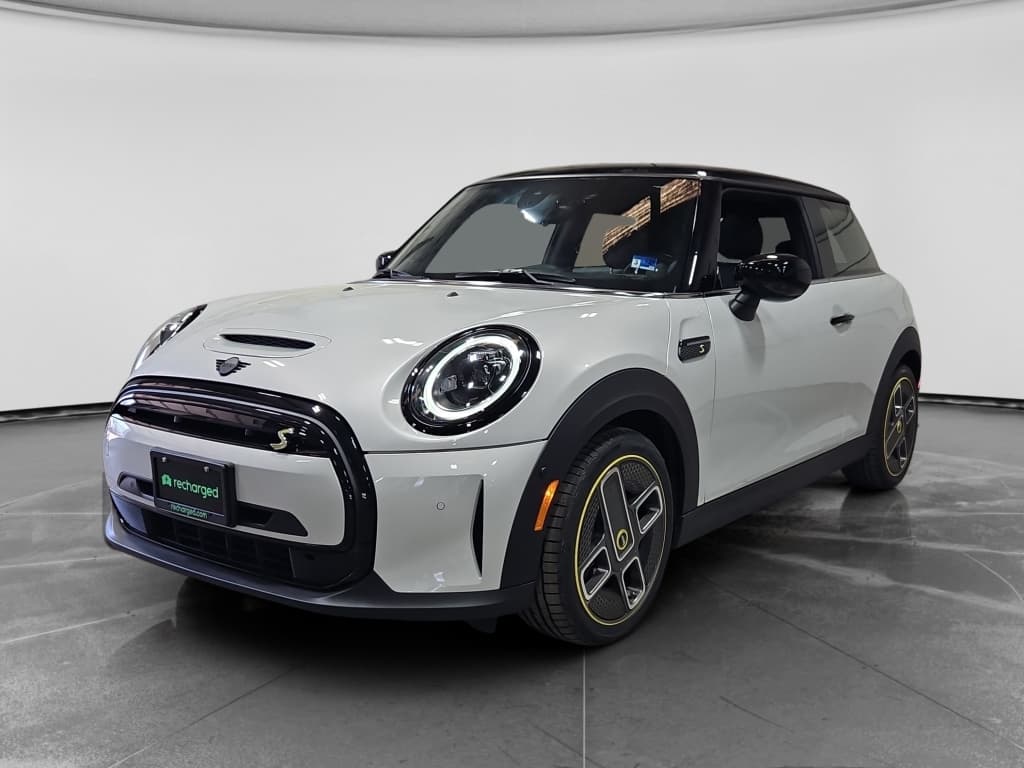
For the classic 3‑door Mini Cooper SE hatchback (the small city car sold in the U.S. from 2020 onward), Mini does not publish a tow rating. In practical terms, that means the car is officially rated for 0 pounds of towing, even though owners and hitch makers may talk about pulling small trailers.
- No factory tow package is offered on the U.S. Cooper SE hatchback.
- The owner’s manual and official specs list no towing capacity.
- Dealers will generally advise you not to tow with the Cooper SE hatch.
- Aftermarket hitches exist, but they’re marketed primarily for bike racks and small cargo platforms, not heavy trailers.
Warranty fine print matters
Mini Cooper SE towing capacity by generation
Mini Cooper SE towing capacity at a glance
How different Mini electric models stack up for towing so you don’t confuse the short‑range hatchback with the larger Countryman SE.
| Model | Body style | Official tow rating (U.S.) | Realistic use case |
|---|---|---|---|
| Mini Cooper SE (F56, 2020–2024) | 3‑door hatchback | 0 lbs (not rated) | City commuter; OK for hitch‑mounted bikes/cargo |
| Mini Cooper Electric SE (J01, 2025– ) | 3‑door hatchback | Not rated to tow (early info) | Improved range, but still not a tow vehicle |
| Mini Countryman SE ALL4 (U25) | Compact crossover | About 1,500–1,600 lbs with brakes (market‑dependent) | Light camping trailer, small utility trailer |
| Mini gas models with factory tow rating | Hatchback & Countryman (varies) | Up to ~1,500–2,000 lbs (market‑ and trim‑dependent) | Small trailers if equipped and rated |
Remember: the hatchback Cooper SE is a short‑range city car with no official tow rating, while the Countryman SE is the Mini you actually can tow with.
Why the Countryman SE is different
Hitches, bike racks, and “real” towing
When people ask about “Mini Cooper SE towing capacity and range loss,” they often really mean, “Can I install a hitch for bikes or a small utility trailer without wrecking the car?” It helps to separate hitch use into two buckets: racks vs. true towing.
Two very different ways to use a hitch on a Mini Cooper SE
Most owners are better off treating the hitch as a way to carry stuff, not pull it.
1. Hitch just for racks
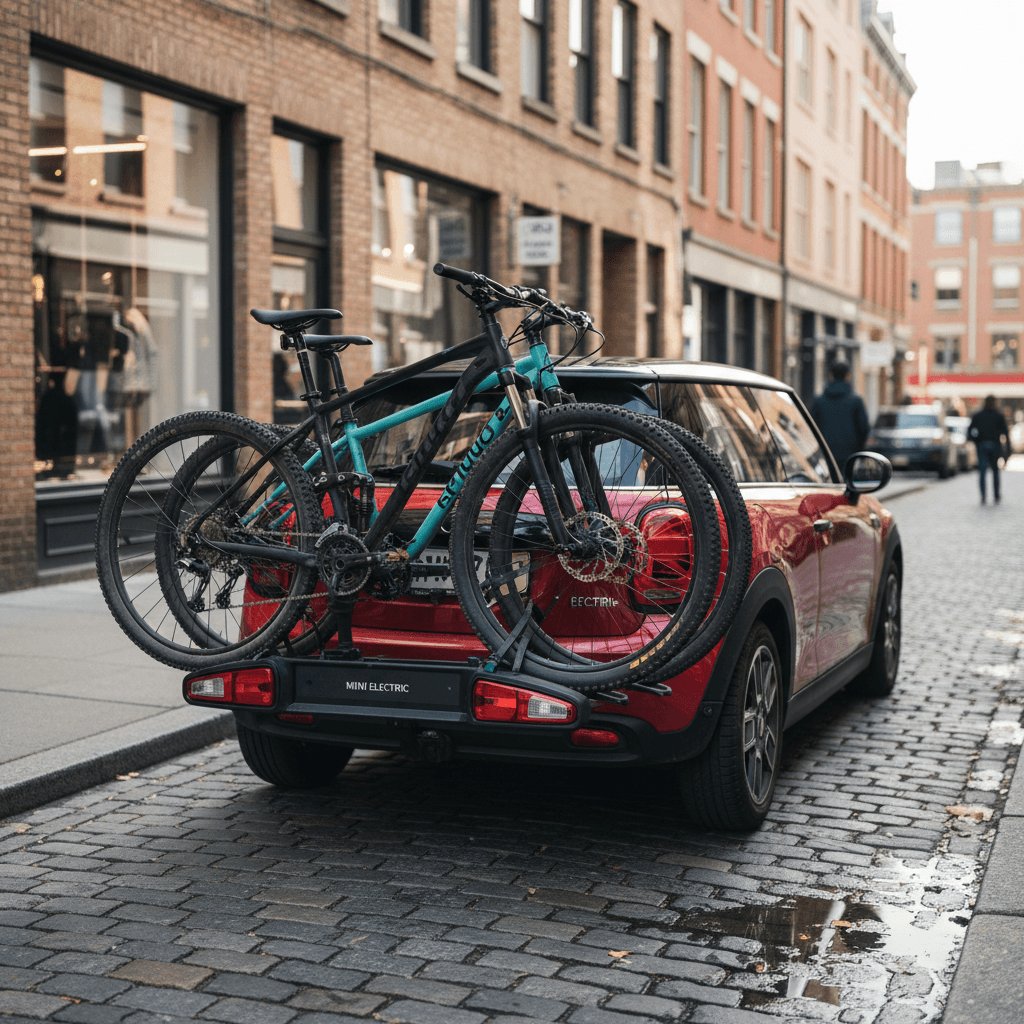
What it is: Install an aftermarket EcoHitch‑style receiver and use it solely for:
- 2–4 bikes on a platform rack
- A small cargo tray with coolers or luggage
- A ski or snowboard rack
What it means: Added weight and drag, but you’re not asking the car to pull thousands of pounds. This is how most Mini SE owners safely use a hitch.
2. True towing with a trailer
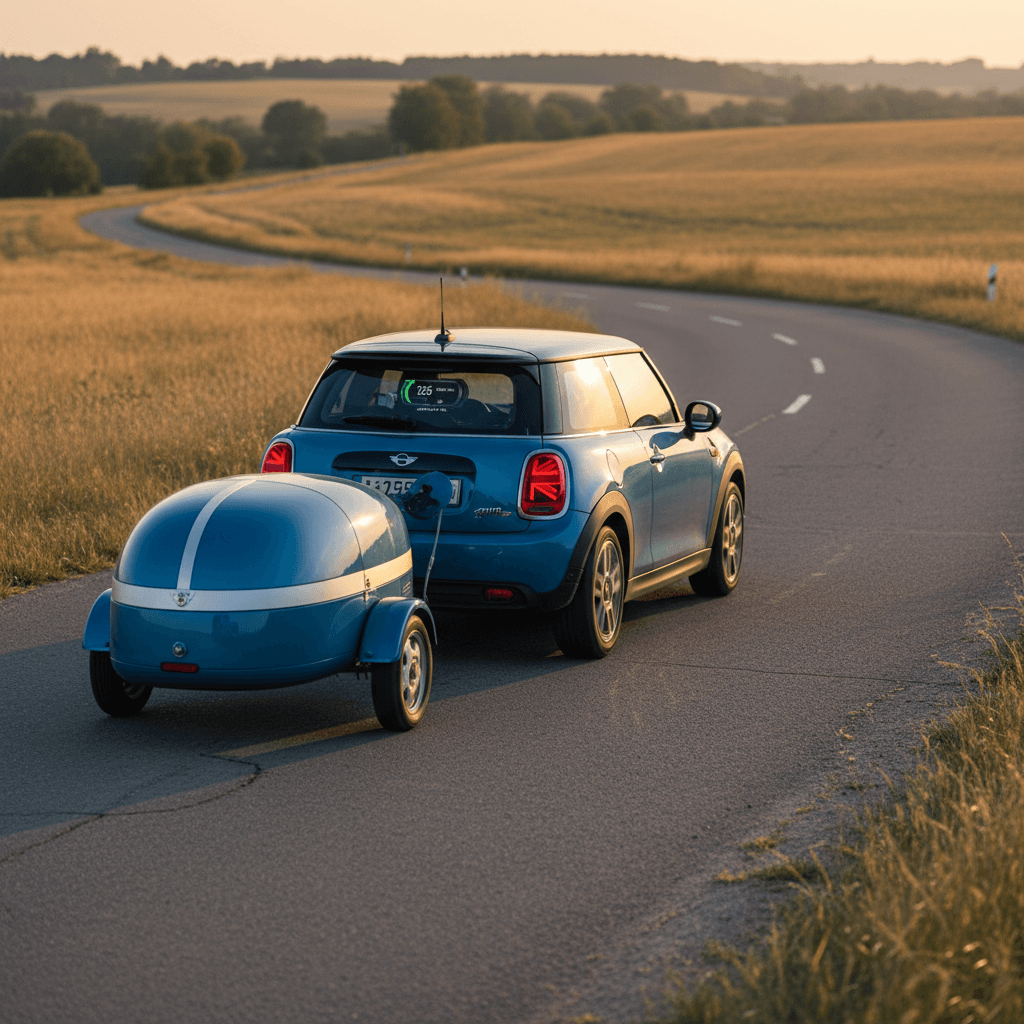
What it is: Pulling a small open utility trailer, teardrop camper, or landscaping trailer, anything with its own wheels.
- Now you’re adding rolling resistance and frontal area.
- Loads can easily exceed what Mini ever intended.
- You’re outside the official spec even with light trailers.
Bottom line: Possible in a pinch with a tiny, light trailer, but you’re very much on your own from a warranty and safety standpoint.
Smart way to think about hitches on a Mini SE
How towing and racks affect Mini Cooper SE range
Because the Cooper SE’s battery is small, any extra weight or aerodynamic drag shows up quickly in your remaining range. To understand range loss, start with a realistic picture of how far these cars actually go on a full charge.
Mini Cooper SE range fundamentals
Two things kill range fastest on a short‑range EV like the Mini SE: aerodynamic drag and sustained high power demand. Towing a trailer or stacking bikes across the airflow at the back of the car increases both. Even if the weight seems modest, you’re asking the motor and battery to work harder at any given speed.
What increases range loss
- High speed: 70–75 mph vs. 60 mph can easily mean 15–25% more consumption.
- Big frontal area: Tall trailers or upright mountain bikes disrupt airflow badly.
- Hills: Long freeway grades heat up the battery and inverter and burn energy quickly.
- Headwinds: A 20 mph headwind makes the car think you’re driving much faster.
What keeps range loss manageable
- Slower speeds: Cruising at 55–60 mph instead of 75 makes a huge difference.
- Low, narrow load: Compact, low trailers or carefully packed racks cut drag.
- Short hops: Using the Mini for local runs with plenty of charging options.
- Mild weather: Spring and fall conditions are far easier on a small battery.
Practical examples: Mini Cooper SE range loss with extra load
Every setup is different, but you can use a few real‑world scenarios to estimate how “Mini Cooper SE towing capacity and range loss” will play out in your life. We’ll assume a healthy earlier‑generation Cooper SE with about 110 miles of usable range in mixed driving.
How different loads change Mini Cooper SE range
Rough planning numbers only, always build in a safety buffer and watch your real‑time efficiency on the road.
| Scenario | Speed & conditions | Estimated range impact | Resulting practical range |
|---|---|---|---|
| Two bikes on a hitch rack | Mostly 45–60 mph; mild weather | ~15–25% range loss from added drag and weight | ~80–90 miles before you really need to recharge |
| Four bikes + heavy platform rack | Mix of city and 65–70 mph highway | ~25–35% range loss, worse in headwinds | ~70–80 miles practical range |
| Tiny open utility trailer (~400–600 lbs loaded) | 60–65 mph, rolling hills | ~30–40% range loss, potentially more | ~60–75 miles between comfortable charging stops |
| Tall boxy trailer or small camper | 65–70 mph, highway | Easily 40%+ range loss; car will feel strained | Trip becomes a game of hopping charger to charger every 40–60 miles |
These are ballpark estimates meant to help you decide if a Mini SE can handle your weekend plans, not exact promises.
Why these are conservative numbers
Is it safe to tow with a Mini Cooper SE?
Safety with a small EV isn’t just about whether the motor can pull the weight. It’s also about stopping distance, stability, and component stress. The Cooper SE’s short wheelbase and playful suspension make it a riot in town, but those same traits work against it when you hang a trailer off the back.
- Braking: The SE’s brakes and stability control were tuned for the car’s own weight, not another 1,000+ lbs pushing from behind.
- Stability: Short wheelbase + crosswinds + a trailer is not a recipe for relaxed highway cruising.
- Heat: Extra load keeps the motor, inverter, and battery working harder, especially on grades in hot weather.
- Clearances: Many aftermarket hitches sit low; a tongue‑heavy trailer can cause scraping over driveways and speed bumps.
Bare-minimum safety checks before you even think about towing
1. Confirm what your manual says
Read the towing and hitch section of your Mini SE’s owner’s manual. If it says “no towing,” that’s Mini’s official stance, and it should guide how far you’re willing to push things.
2. Keep trailer weight extremely low
If you do tow, keep the loaded trailer closer to <strong>400–600 lbs</strong> than 1,500 lbs, and keep tongue weight light. You’re already outside official specs; don’t make it worse.
3. Test braking and stability locally
Before any highway trip, do a few firm stops and lane‑change maneuvers in an empty lot at low speed. If the car feels sketchy there, it will feel terrifying at 70 mph.
4. Watch temperatures on long grades
If your Mini SE displays warnings about drivetrain temperature or reduced power, slow down, take a break, or end your towing experiment. Heat is the enemy of EV components.
5. Check and recheck your hitch hardware
Use torque specs provided by the hitch manufacturer, and re‑torque after the first few drives. Inspect wiring, safety chains, and the coupler before every trip.
Protecting battery health when you’re hauling extra weight
The Mini SE’s pack is relatively small, so it spends a bigger share of its life in the top and bottom of its state‑of‑charge window. Towing or carrying heavy loads accelerates the wear that would normally happen more slowly, especially if you habitually fast‑charge.
Battery‑friendly habits if you tow or use heavy racks
These apply whether you’re mounting bikes or occasionally pulling a tiny trailer.
Avoid 0–100% swings on towing days
Try to keep the battery between 20% and 80% on days when you’re working it harder than usual. Deep cycling plus heavy load equals extra heat and long‑term stress.
Watch for high heat
High battery temps are normal when you’re pulling more weight, but frequent fast‑charging with a hot pack accelerates aging. If possible, let the car cool a bit before plugging into DC fast chargers.
Charge more often, not deeper
Instead of running the pack nearly empty, stop more frequently for shorter charges. That keeps both range anxiety and battery stress in check, especially with a trailer.
How Recharged helps if you’re buying used
Ready to find your next EV?
Browse VehiclesWhen a Mini Cooper SE is not the right choice for towing
As someone who has spent a career helping buyers pick the right car, I’ll be blunt: the Cooper SE is a phenomenal city EV, but it’s a poor choice if towing is more than a once‑a‑year experiment. There’s nothing wrong with that, every vehicle has a lane it’s best in.
When the Mini SE still makes sense
- You mainly drive short, urban or suburban trips.
- You want to hang 2–4 bikes or a cargo tray off the back for weekend adventures.
- You have reliable local charging and don’t mind stopping more often with a loaded rack.
- You’ll rent or borrow a true tow vehicle for rare big jobs.
When you should look elsewhere
- You regularly tow a camping trailer or landscaping trailer.
- You need to haul gear long distances at freeway speeds.
- You live in an area with few fast‑chargers and lots of hills or headwinds.
- You want one EV that can be family car + tow rig + road‑trip machine.
Shopping your way at Recharged
Mini Cooper SE towing & range loss FAQ
Frequently asked questions about Mini Cooper SE towing capacity and range loss
Bottom line: Mini Cooper SE towing and range loss
The Mini Cooper SE is one of the most enjoyable city EVs you can buy, but when you zoom in on towing capacity and range loss, its limits are clear. Officially, the hatchback isn’t rated to tow at all, and its modest battery means even a couple of bikes or a tiny trailer can shave 20–40% off your usable range. That doesn’t make it a bad car, just the wrong tool if you’re hoping to combine daily errands, road trips, and regular towing in one vehicle.
If your life looks like short commutes, weekend rides with a couple of bikes on the back, and occasional trips inside a well‑developed charging network, the Mini SE can still be a terrific choice. If you need more muscle, it’s time to look at a Mini Countryman SE or another EV with a real tow rating. Either way, if you’re shopping used, Recharged can help you compare models, evaluate battery health with a Recharged Score report, arrange financing and trade‑ins, and even deliver the right EV to your driveway, so your next electric is a perfect fit for how you actually drive and haul today.