
If you’re planning to add a cargo box or bike rack to your Mini Cooper SE, the roof rack weight limit isn’t just a fine-print detail, it’s a hard line that protects both safety and warranty. For the Mini Cooper SE, the **roof rack weight limit is 75 kg (165 lbs)**, and that number includes the rack itself plus everything mounted on it.
Quick spec
Mini Cooper SE roof rack weight limit: the short answer
Mini doesn’t publish a separate roof rating just for the electric SE. It shares the same F56 Hardtop body structure, and official technical data and owner’s manuals for modern Mini Hatch and Hardtop models list an **approved roof load capacity of 75 kg (165 lbs)**. That figure is widely echoed by OEM accessories and reputable rack brands.
- The **official roof load limit** for the Mini Cooper SE is **75 kg / 165 lbs**.
- This is a **dynamic load rating**, what you can safely carry **while driving**, not parked.
- The limit is **for the car’s roof**, so you must subtract the weight of crossbars, towers/feet, and any attachments.
- You should **never exceed the lowest limit** among the car, rack system, and accessories.
Don’t confuse rack rating with roof rating
How the 75 kg (165 lb) roof load limit actually works
The single most common misunderstanding is treating 75 kg as the amount of gear you can throw on top. In reality, **75 kg is the sum of everything above the sheet metal**: the rack, mounting hardware, and your actual cargo.
Breaking down Mini Cooper SE roof load math
How much room is left after you add the rack itself?
1. Start with Mini’s 75 kg (165 lb) limit
This is the **maximum dynamic roof load** the car is designed to handle. It’s set to protect the body structure, handling, and safety systems in an emergency maneuver.
2. Subtract the rack hardware
A typical set of crossbars and feet for a Mini weighs **6–10 kg (13–22 lbs)**. Some heavier aero bars can be a bit more. This weight comes straight out of your 75 kg allowance.
3. What’s left for bikes or a box
After hardware, you’ll usually have **65–68 kg (143–150 lbs)** left. That needs to cover **bike trays, cargo box, skis, kayaks, and the gear itself**.
Engineers also assume you’ll carry that weight **evenly distributed** across the rack, not all at one corner. Sudden steering inputs, potholes, and crosswinds can briefly spike loads far above the static weight of the gear, which is why the rating is deliberately conservative.
Simple rule-of-thumb
What you can safely carry on a Mini Cooper SE roof rack
So what does 75 kg actually buy you in the real world? Quite a lot, as long as you’re thoughtful about both the rack and the cargo. Here are typical setups that keep a Cooper SE within its dynamic roof load rating.
Typical Mini Cooper SE roof rack load scenarios
Approximate examples assuming ~8 kg (18 lbs) for crossbars + feet. Always check the exact weights for your parts.
| Use case | Rack + hardware | Attachments | Cargo | Approx. total | Within 75 kg / 165 lb? |
|---|---|---|---|---|---|
| Two adult bikes | 8 kg / 18 lb | 2 trays: 4 kg / 9 lb | 2 bikes: 30 kg / 66 lb | 42 kg / 93 lb | Comfortably within limit |
| Three bikes (2 adult, 1 kid) | 8 kg / 18 lb | 3 trays: 6 kg / 13 lb | ~40 kg / 88 lb | 54 kg / 119 lb | Within limit if evenly spaced |
| Medium cargo box + luggage | 8 kg / 18 lb | Box: 14 kg / 31 lb | Luggage: ~35 kg / 77 lb | 57 kg / 126 lb | Within limit |
| Two kayaks | 8 kg / 18 lb | Cradles: 6 kg / 13 lb | 2 kayaks: 40 kg / 88 lb | 54 kg / 119 lb | Within limit |
| Large, overstuffed cargo box | 8 kg / 18 lb | Box: 18 kg / 40 lb | Luggage: 60 kg / 132 lb | 86 kg / 190 lb | **Over the limit – unsafe** |
These examples are for illustration, exact numbers vary by brand and accessory.
Avoid static-heavy "rooftop tent" style loads
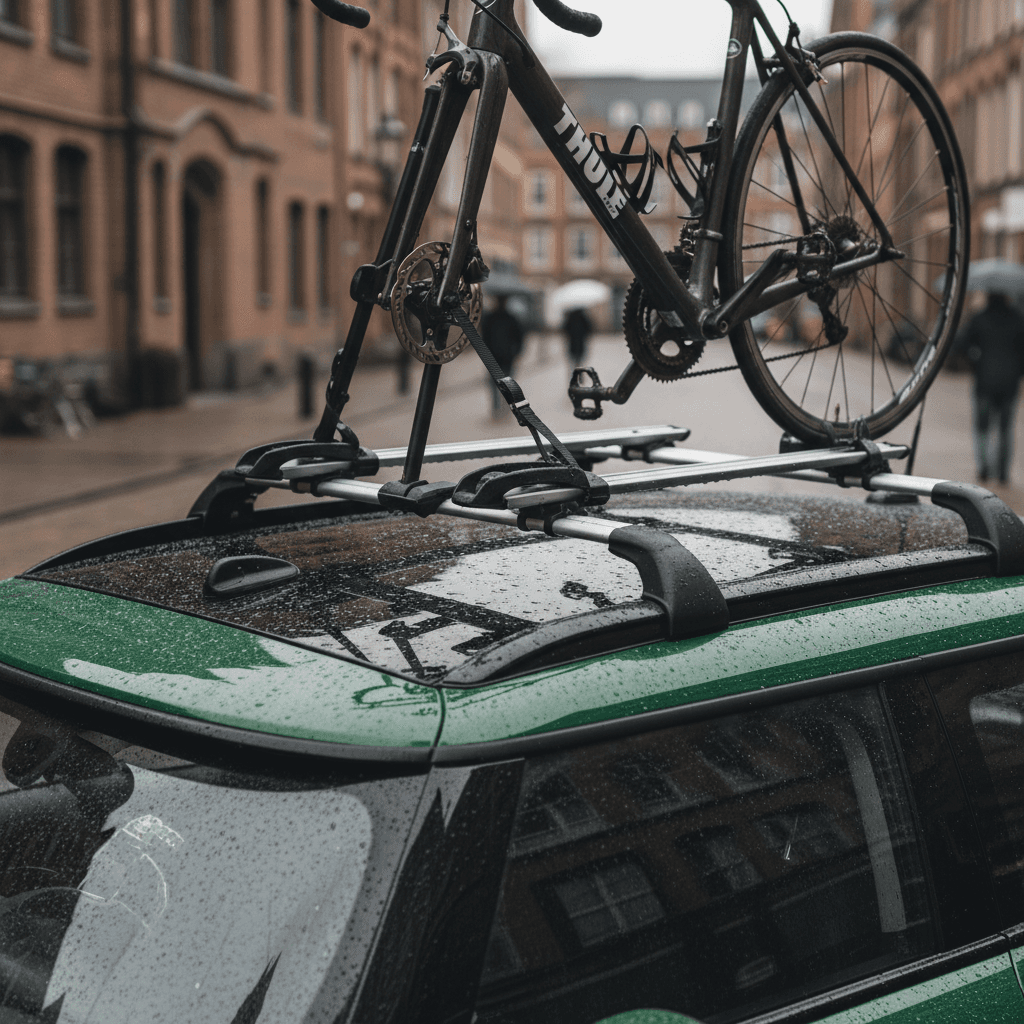
Factory roof rails vs aftermarket racks on the SE
One quirk of the Mini Cooper SE is that **not every car leaves the factory with roof rails**, and they weren’t always available in every market. But many cars do have Mini’s rail option, and there are aftermarket solutions, both of which still sit under the same 75 kg limit for the body shell.
Factory roof rails + OEM or Thule bars
- Best integration: Rails bolt into reinforced points, spreading load more predictably.
- Clean fit: OEM bars or branded systems (Thule, Yakima, etc.) often sit lower and look more "factory".
- Typical weight: 6–8 kg (13–18 lbs) for a quality two-bar setup.
- Ideal for: Regular bike hauling, a seasonal cargo box, or snow sports gear.
Clip-on/door jamb racks (no rails)
- Still subject to 75 kg/165 lb roof limit: Clamps transfer load into the door frames and structure.
- Fit is critical: Use a system specifically listed as compatible with the F56/SE body.
- Watch door seals: Poorly adjusted clamps can stress paint and weatherstripping over time.
- Ideal for: Occasional trips where you don’t want permanent rails.
Always use Mini- or rack-maker–approved fit kits
How a roof rack and cargo affect Mini Cooper SE range
With an EPA range in the low 100s of miles, the Mini Cooper SE doesn’t have much buffer to lose. **Extra mass and aerodynamic drag from roof cargo both cut into range**, and the hit is very noticeable at highway speeds.
Typical range impact of roof racks on a Mini-sized EV
Plan Mini Cooper SE road trips accordingly
In day-to-day city driving, the efficiency hit is smaller, but still noticeable. The worst-case scenario is stacking **weight + bad aerodynamics + high speed**: a heavily loaded cargo box or multiple bikes at 75–80 mph will make a small-battery EV feel even smaller.
Loading your Mini Cooper SE safely: step-by-step
Step-by-step: staying under the Mini Cooper SE roof load limit
1. Confirm the roof rating in your manual
Open the Mini Cooper SE owner’s manual (or online version) and verify the **75 kg / 165 lb roof load** spec. If your build year or market has different data, always follow the manual.
2. Add up the rack and accessories
Look up the published weights for your **crossbars, feet, and fit kit**, plus things like bike trays, kayak cradles, or a cargo box. Write that number down first.
3. Weigh or estimate your cargo realistically
Don’t guess low. Adult mountain bikes often weigh 14–17 kg (30–38 lbs) each, and a family’s luggage adds up quickly. When in doubt, **weigh the gear** before it goes on the roof.
4. Keep a safety margin below 75 kg
Aim to stay at least **10–15% under the roof limit**. On a 75 kg rating, that means keeping your actual total under about 65 kg (143 lbs). This margin helps in emergency maneuvers and bumpy roads.
5. Distribute weight evenly and low
Place the heaviest items **between the bars** and as low as possible in a cargo box. Spread multiple bikes or skis across the rack so no single side is overloaded.
6. Re-torque and re-check regularly
After your first drive with a new load, stop and re-check all clamps and straps. Then check periodically on long trips. If anything has shifted, you’re pushing the system too hard.
Mini Cooper SE roof rack buying tips
Given the SE’s modest roof rating and small footprint, the right rack choice is less about chasing maximum capacity and more about making smart trade-offs between **weight, noise, and range**.
What to prioritize in a Mini Cooper SE roof rack
Choose hardware that works with the car, not against it.
Lightweight, aero bars
Extruded aluminum aero bars save a few kilograms over chunky steel bars and cut wind noise. Less bar weight = more margin for your actual gear.
Low-profile mounts
Lower, closer-fitting bars reduce the frontal area that hits the wind. That means **less efficiency loss** and better garage clearance, important on a short, tall-ish hatchback.
Clear fitment for F56/SE
Whether you buy OEM or third-party, make sure the kit **explicitly lists the F56 Mini Hardtop and the electric SE**. Avoid “universal” solutions that rely on guesswork around the door frames.
- If you mainly haul bikes, consider whether a **hitch-mounted rack** (if properly rated for the SE in your market) makes more sense for range and convenience.
- For seasonal use only, a clip-on system you can remove in minutes will spare you the everyday efficiency hit of always-on bars.
- For all-weather use, spend extra for **quality locks and corrosion-resistant hardware**. The Cooper SE’s short roof magnifies any play or looseness in cheap hardware.
Where used EVs and racks intersect
Ready to find your next EV?
Browse VehiclesUsed Mini Cooper SE with a roof rack: what to check
A surprisingly large share of Mini Cooper SE owners are active-lifestyle drivers, cyclists, skiers, surfers, who use the roof regularly. When you’re looking at a used SE, a rack system is a clue about how the car has lived. That’s not automatically bad, but you should inspect carefully.
Inspection checklist for a Mini Cooper SE that’s carried roof loads
Look for paint wear at rack contact points
Check around roof rails or door jambs for **rub-through marks, dents, or cracked paint** from over-tightened feet. Exposed metal can rust over time, even on a relatively new car.
Inspect door seals and window frames
On clip-on systems, confirm weatherstripping isn’t crushed, torn, or misaligned. Poorly fitting racks can create **wind noise and water leaks** later on.
Ask how the rack was used
There’s a big difference between hauling two bikes on weekends and running an overstuffed roof box all year. Ask sellers for honest detail about **typical loads and trips**.
Check for range complaints
If the owner mentions “terrible highway range,” ask whether that was **with a box or bikes on the roof**. That context matters when you interpret their experience vs your own needs.
Get objective battery health data
Extra aero drag and weight mean more frequent DC fast charging on road-trippers. Use a **battery health report**, like the Recharged Score that comes with every car sold on Recharged, to see if the pack still looks healthy.
At Recharged, every used EV, including Mini Cooper SEs, comes with a **Recharged Score report** that quantifies battery health, verifies range, and cross-checks for inconsistencies. If a car has done a lot of loaded road trips, that’s exactly the kind of nuance you want surfaced before you buy.
Mini Cooper SE roof rack weight limit FAQ
Mini Cooper SE roof rack weight limit: frequently asked questions
Key takeaways for Mini Cooper SE roof loads
The headline is simple: the **Mini Cooper SE roof rack weight limit is 75 kg (165 lbs)**, and that’s a hard engineering constraint, not a suggestion. Once you subtract the mass of the rack system itself, you’ve typically got **60–65 kg** left for bikes, gear, or a cargo box, and you’ll want to stay a little under that for a safety margin. Respect that limit, choose purpose-built hardware, and accept that roof cargo will shave some range, and the SE can absolutely be a capable adventure hatchback.
If you’re considering a **used Mini Cooper SE**, a roof rack is one more lens into how the car has been used. Look closely at contact points, confirm there’s no structural or cosmetic damage, and pair that with objective **battery health data**. On Recharged, every EV, Mini included, comes with a Recharged Score report, fair market pricing, and EV-specialist guidance, so you know exactly how much life, and how much adventure, is realistically left in the car you’re buying.