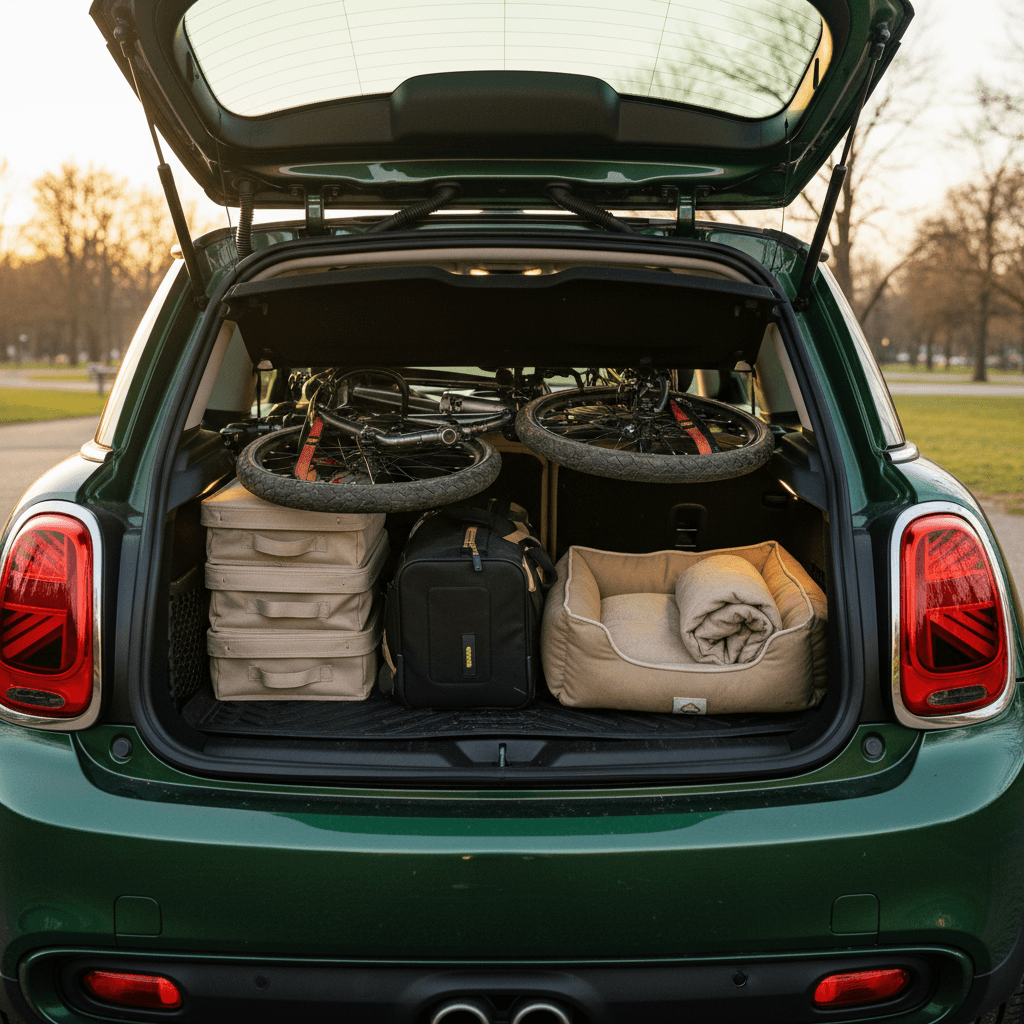
If you love the way the Mini Cooper SE drives but worry about practicality, you’re not alone. The question most people ask is simple: how much cargo space does the Mini Cooper SE have with the seats down, and is it enough for real life? Let’s get into the hard numbers and the honest, lived‑with reality.
Two generations, similar mission
Mini Cooper SE cargo numbers at a glance
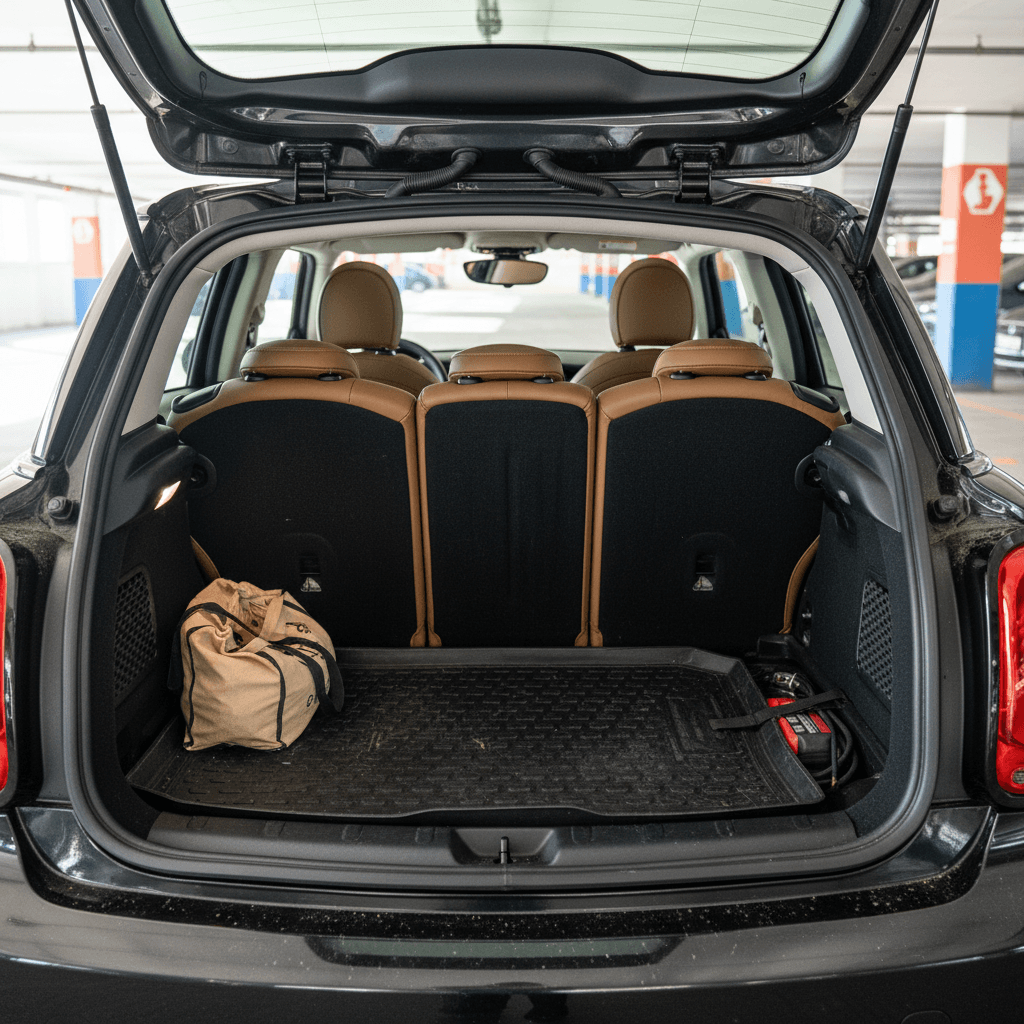
Mini Cooper SE cargo space with seats up and down
Put simply, with the rear seats up, the Mini Cooper SE has one of the smallest cargo areas in the segment. But once you fold the seats down, the numbers and the usability become a lot more interesting, especially if you’re usually driving solo or with one passenger.
Seats down: how much space do you really get?
Let’s separate the two main versions you’re likely to encounter, especially on the used market in the U.S. and Europe.
Mini Cooper SE cargo space by version
Same idea, slightly different numbers
2020–2024 Mini Cooper SE Hardtop 2 Door (F56, U.S. model)
Seats up: about 8.7–8.9 cubic feet (≈ 210–211 liters).
Seats down: around 34 cubic feet of maximum cargo volume, according to U.S. Mini retail materials.
The floor is mostly flat with the adjustable cargo floor in its higher position, and the load height is fairly low, which helps with heavier items.
New‑gen Mini Cooper Electric SE (J01, Europe & other markets)
Seats up: ~210 liters quoted in European reviews.
Seats down: 800 liters (manufacturer and third‑party specs), which translates to roughly 28.3 cubic feet.
The floor isn’t perfectly flat because of hinge points and battery packaging, but it’s close enough that luggage and gear stay put without drama.
Watch your source
Mini Cooper SE vs gas Mini and other small EVs
The good news: the electric conversion doesn’t steal meaningful cargo space. Mini tucked the battery under the floor, so the Cooper SE’s luggage area is essentially on par with the gas 3‑Door.
Mini Cooper SE cargo space vs rivals (seats up and down)
How the Mini Cooper SE stacks up against its gas sibling and popular small EVs. Figures are approximate but representative.
| Model | Powertrain | Seats up (cu ft) | Seats down (cu ft) |
|---|---|---|---|
| Mini Cooper 3‑Door (gas, 2024) | Gas | ≈8.7 | ≈25.8–25.8 (731 L) |
| Mini Cooper SE Hardtop 2 Door (F56) | Electric | 8.7–8.9 | 34.0 |
| Mini Cooper Electric SE (J01, EU) | Electric | ≈7.4–7.5 | ≈28.3 (800 L) |
| Chevrolet Bolt EV | Electric | 16.6 | 57.0 |
| Nissan Leaf | Electric | 23.6 | ≈30.0 |
| Hyundai Kona Electric | Electric | 19.2 | 45.8 |
Cargo space is where the Mini’s city‑car footprint really shows, especially against more upright hatchbacks.