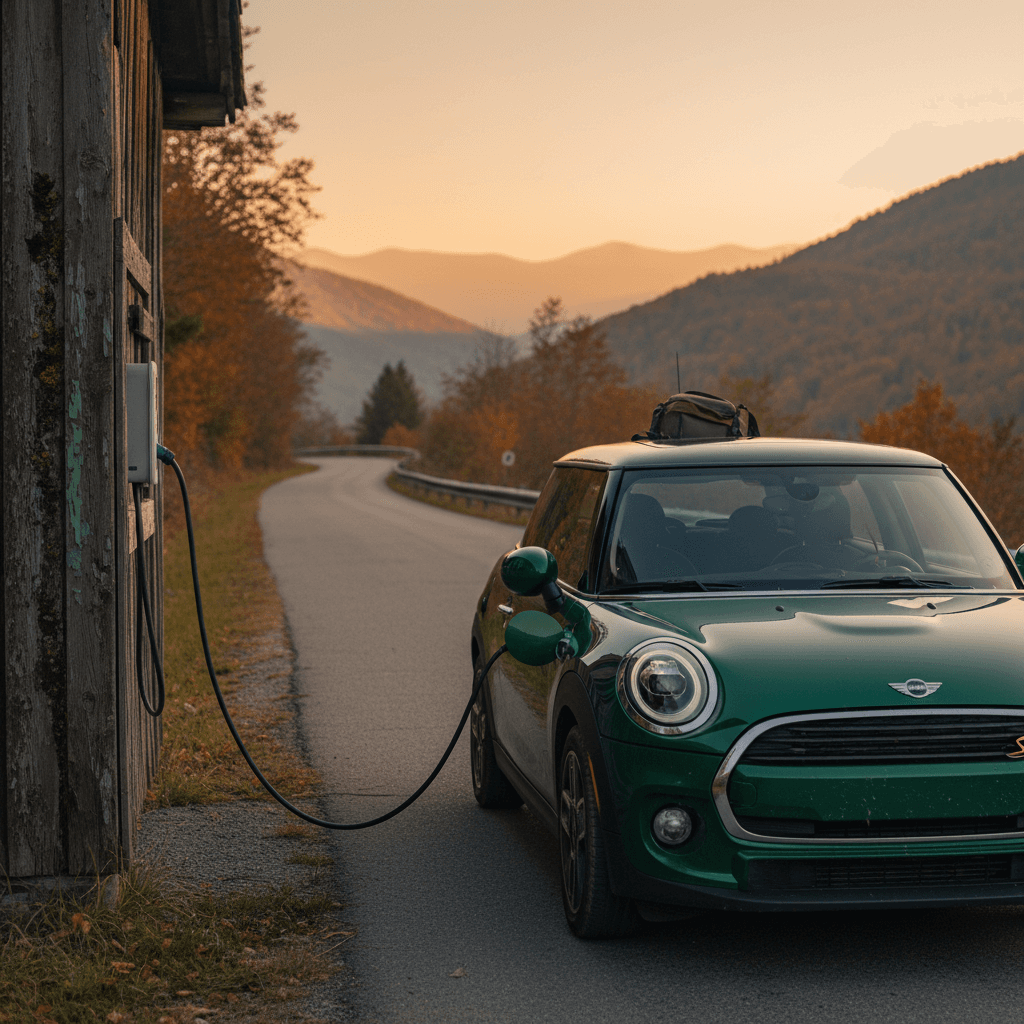
The Mini Cooper Electric (also sold as the Mini Cooper SE) is one of the most charming EVs on the road. But charm only goes so far when you’re staring at a fast‑charging screen on a cold night halfway through a road trip. This Mini Cooper Electric road trip review looks past the brochure numbers and focuses on what actually happens when you take this small‑battery EV beyond city limits.
Models covered
Mini Cooper Electric Road Trip Review: The Big Question
On paper, the Mini Cooper Electric is built for the city: a small hatchback with an EPA range around 110–120 miles depending on model year, a usable battery of roughly 28–32 kWh, and DC fast charging that tops out around 50 kW. In Europe and other regions, newer Mini EVs can see up to ~95–100 kW DC on the latest platform, but the used U.S. F56 cars most shoppers see today are the shorter‑range version with modest fast‑charging speeds.
So can you road trip it? Yes, if you plan carefully, accept more frequent stops, and keep your daily mileage reasonable. If you expect to cover 600 miles in a day at 80 mph, the Mini Electric will feel like the wrong tool. If your idea of a road trip is 200–300 miles with time built in for coffee, lunch and sightseeing, it can be fun, but it’s not effortless.
Mini Cooper Electric: The Road-Trip Basics
Specs That Matter When You Leave the City
When you’re evaluating any EV for road‑trip duty, ignore the marketing language and focus on four numbers: usable battery size, real‑world range at highway speeds, DC fast‑charging power, and how the car holds that power from 10–80% state of charge.
Key Road-Trip Specs: Mini Cooper Electric (F56 SE)
Approximate specs for the outgoing Mini Cooper SE that dominates today’s used market.
| Metric | Typical Value | Why It Matters on a Road Trip |
|---|---|---|
| Usable battery capacity | ~28–32 kWh | Smaller pack means more frequent stops compared with 60–80 kWh EVs. |
| EPA rated range | ~110–120 miles | Tells you roughly how far you’ll get at mixed speeds in mild weather. |
| Realistic highway range | 70–90 miles | At 70–75 mph, you’ll see noticeably less than the EPA sticker. |
| Max DC fast charge | ~50 kW | Slower than newer 100–250 kW EVs; you’ll spend longer at each stop. |
| AC charging (U.S.) | Up to ~7.4 kW | Overnight Level 2 will refill the small pack without issue. |
| AC charging (3‑phase regions) | Up to 11 kW | Faster home and destination charging where 3‑phase power is common. |
Always confirm exact specs for the model year you’re shopping, numbers can vary slightly by region and trim.
Mind the generation gap
Real-World Range: What You Actually See on the Road
In mixed city and suburban driving, many owners report the Mini Electric comfortably meeting or slightly beating its EPA range in mild weather. That changes once you set the cruise control above 70 mph, load up passengers and luggage, or hit winter temperatures.
Mini Electric Highway Range: Three Common Scenarios
These are realistic ballpark figures, not lab numbers, assuming a healthy battery.
Mild weather, 65–70 mph
Plan for ~90 miles between charges.
- Solo or two passengers
- Temps in the 60s–70s °F
- Light use of climate control
Good conditions can get you close to the EPA rating.
75–80 mph interstate blast
Plan for 70–80 miles between charges.
- Higher aero drag at speed
- More frequent passing and acceleration
- Range drops 20–30% vs sticker
This is where the Mini’s small battery feels most limiting.
Cold weather, 65–70 mph
Plan for 60–70 miles between charges.
- Cabin and battery heating eat energy
- Short hops between fast chargers feel even shorter
- Preconditioning while plugged in helps
Winter is when you need your best planning habits.
Use 60% of the gauge for planning
Charging on the Road: How Often You’ll Stop and For How Long
The Mini Electric’s DC fast‑charging hardware is fine, but not class‑leading. Older F56 cars top out around 50 kW, adding roughly 60–70 miles of usable highway range in about 25–30 minutes from 10–80% in good conditions. That’s less than half the power of many newer long‑range EVs that pull 120–250 kW.
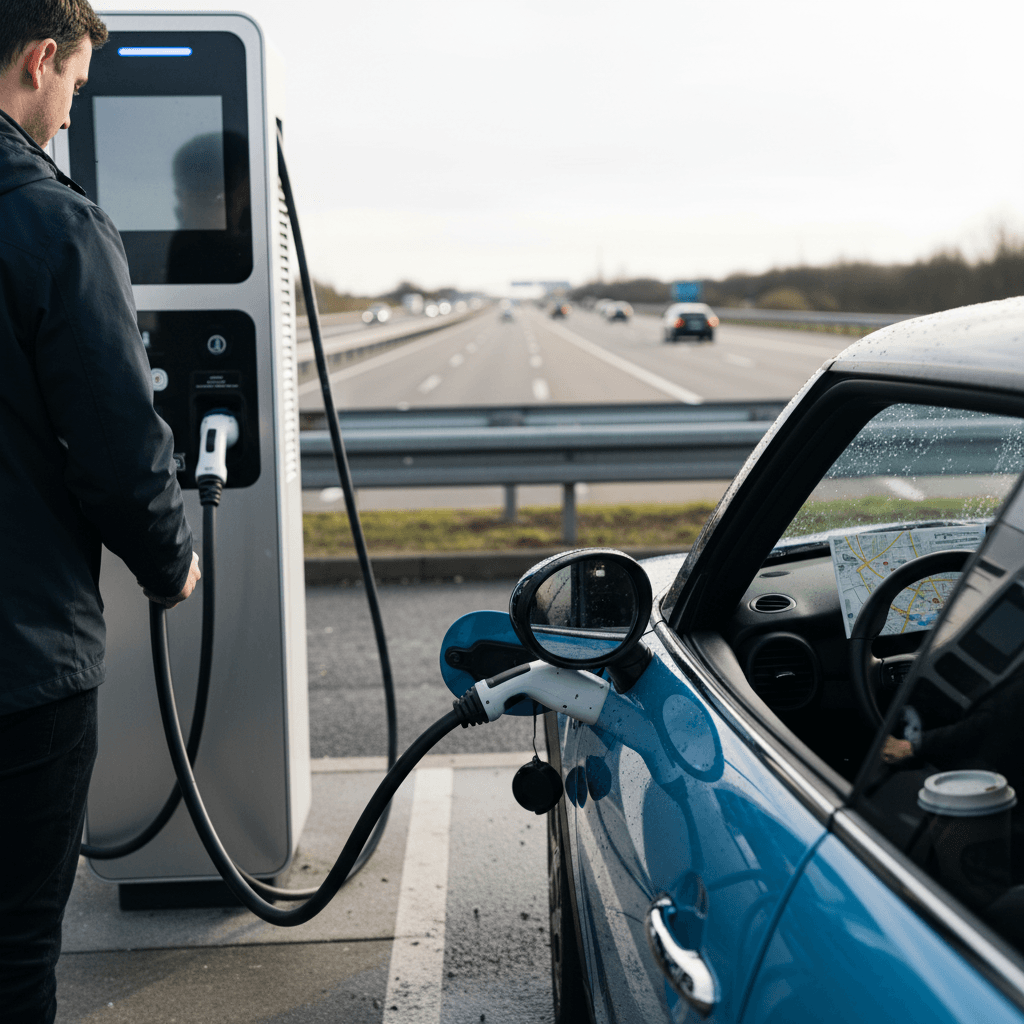
What a typical fast-charge stop looks like
- Arrive at the charger with 10–20% state of charge.
- Plug into a 50+ kW CCS DC fast charger.
- Watch power ramp quickly toward 40–50 kW, then taper after ~70–80%.
- In 25–30 minutes, you’re back near 80% and ready for another 60–80 miles.
In practice, that’s just enough time for a restroom break, coffee, email triage and a quick walk.
Network reality in the U.S.
- You’ll use CCS networks (Electrify America, EVgo, ChargePoint DC, etc.).
- Charger reliability varies by region; always have a backup station on your map.
- If you drive an updated Mini with a NACS port or adapter, you can tap into Tesla’s Supercharger network as it opens to non‑Tesla EVs.
- Apps like PlugShare help you avoid problematic sites and see recent user reviews.
The smaller your battery, the more charger downtime and reliability matter, so planning is non‑negotiable.
Don’t assume “any” 50 kW charger will be available
Comfort, Cargo and In‑Cabin Experience Over Long Days
Where the Mini Electric shines is how it feels between charging stops. The short wheelbase, low center of gravity and instant torque deliver the classic “go‑kart” handling people expect from the brand. Acceleration to 60 mph in the low‑7‑second range means merging and passing never feel like a chore, even with the added weight of the battery.
Living With a Mini Electric on the Open Road
Fun factor versus long‑haul practicality.
Driving feel
The Mini Electric is genuinely fun on twisty back roads, quick steering, planted stance, and instant torque out of corners. Long, straight interstates are where the short range, not the driving dynamics, becomes tiring.
Space and cargo
You get a small hatchback trunk, fine for a couple’s luggage or a solo road trip, tight for a family. Rear seats fold down, but rear‑seat adults will feel cramped on longer legs of the journey.
Seats & ride quality
Supportive front seats make 2–3‑hour stints manageable. The suspension can feel firm over broken pavement, especially with larger wheels, so it’s worth test‑driving on the kind of roads you travel most.
Where the Mini feels at home
Best- and Worst-Case Road Trip Scenarios
A small‑battery EV like the Mini Electric can be either delightful or frustrating on a trip depending on how you use it. Here’s how it plays out in the real world.
When a Mini Electric road trip works well
- Daily segments under ~250 miles. Two or three 60–80‑mile hops with planned stops feels natural.
- Destination has Level 2 charging. A hotel, rental or friend’s house with a 240V outlet makes overnight refills easy.
- You enjoy frequent breaks. Stretching every 60–90 minutes is healthier anyway, and the Mini makes the in‑between stretches fun.
- Redundant charging options. Corridors with overlapping CCS networks reduce stress if one site underperforms.
When you’ll wish for a bigger battery
- 500–700‑mile days. The combination of frequent stops and 30‑minute fast charges can easily add 2–3 hours to your day.
- Sparse charging regions. Rural interstates and some mountain passes still have thin CCS coverage.
- Heavy winter travel. Shorter range plus slower winter charging can tighten your margin for error.
- Four adults with luggage. The car can do it, but comfort and range both take a hit.
What It Costs to Road Trip a Mini Electric vs Gas
Even with frequent stops, the Mini Electric can be inexpensive to run on a road trip, especially if you favor overnight Level 2 charging or lower‑cost DC fast chargers instead of the most expensive per‑kWh options along major corridors.
Sample 300-Mile Day: Mini Electric vs Gas Hatchback
Illustrative example using rough U.S. averages; your numbers will vary by region, speed and energy prices.
| Vehicle | Energy Use | Energy Price Assumption | Estimated Cost |
|---|---|---|---|
| Mini Cooper Electric | ~86 kWh total (from multiple charges) | $0.25/kWh blended fast‑charge and Level 2 | ≈ $21.50 |
| Comparable gas hatchback | 8.6 gallons | $3.50/gal regular gasoline | ≈ $30.10 |
Assumes 300 highway miles, 3.5 mi/kWh for the Mini Electric and 35 mpg for the gas car.
Time vs money trade-off
Used Mini Cooper Electric: Smart Buy If You Travel?
On the used market, the Mini Cooper SE can be a compelling value if your driving is mostly local, with only occasional road trips. The small battery keeps acquisition prices lower than long‑range EVs, and the car’s character makes daily driving genuinely enjoyable.
Where it gets tricky is for shoppers who love the idea of a Mini but quietly expect it to behave like a 300‑mile EV on a cross‑country trek. That’s where transparent information about battery health, realistic range and charging performance becomes critical.
How Recharged can help
Mini Electric Road Trip Checklist
Pre-Trip Prep for a Mini Cooper Electric
1. Map your charging corridor
Use apps like PlugShare plus your preferred network app to identify fast chargers every 50–70 miles along your route, paying attention to recent check‑ins and reported uptime.
2. Build in backups
For each planned stop, star at least one alternate DC fast charger within 10–15 miles. With a small battery, redundancy isn’t optional.
3. Check weather and terrain
Cold temperatures, strong headwinds and long climbs all eat into range. If conditions look tough, shorten your legs and plan more conservative arrival state of charge targets.
4. Confirm destination charging
Call ahead to hotels or rentals to confirm working Level 2 charging or at least a 240V outlet. Overnight charging makes a small‑battery EV far easier to live with on the road.
5. Pack the right cables and apps
Bring your Level 1/2 portable EVSE, RFID cards and apps for major networks you might touch. Update firmware on your car and charging apps before departure.
6. Agree on expectations with passengers
Explain that you’ll be stopping roughly every 60–90 minutes for 20–30 minutes. Setting expectations up front turns those breaks into part of the trip instead of a surprise delay.
Mini Cooper Electric Road Trip FAQ
Frequently Asked Questions About Mini Electric Road Trips
Bottom Line: Should You Road Trip a Mini Cooper Electric?
If you view a road trip as a race from A to B, the Mini Cooper Electric is the wrong tool. Its modest range and middling DC fast‑charging speed simply can’t compete with today’s long‑range EVs or even most gas hatchbacks for pure point‑to‑point efficiency.
But if your travel style leans toward shorter days, scenic detours and frequent breaks, the Mini’s playful driving dynamics, compact size and low running costs can still make it a surprisingly satisfying companion. The key is to be honest about your habits: how far you really drive in a day, how often you travel, and how much planning you’re willing to do.
On the used market, the Mini Cooper Electric can be a smart buy for city‑first drivers who want the option to venture out of town a few times a year, as long as they understand the trade‑offs. If you’re not sure where you land, that’s where a transparent battery health report, a detailed EV walk‑through, and a candid conversation about your routes can help. That’s exactly the kind of support Recharged aims to provide for every used EV shopper.