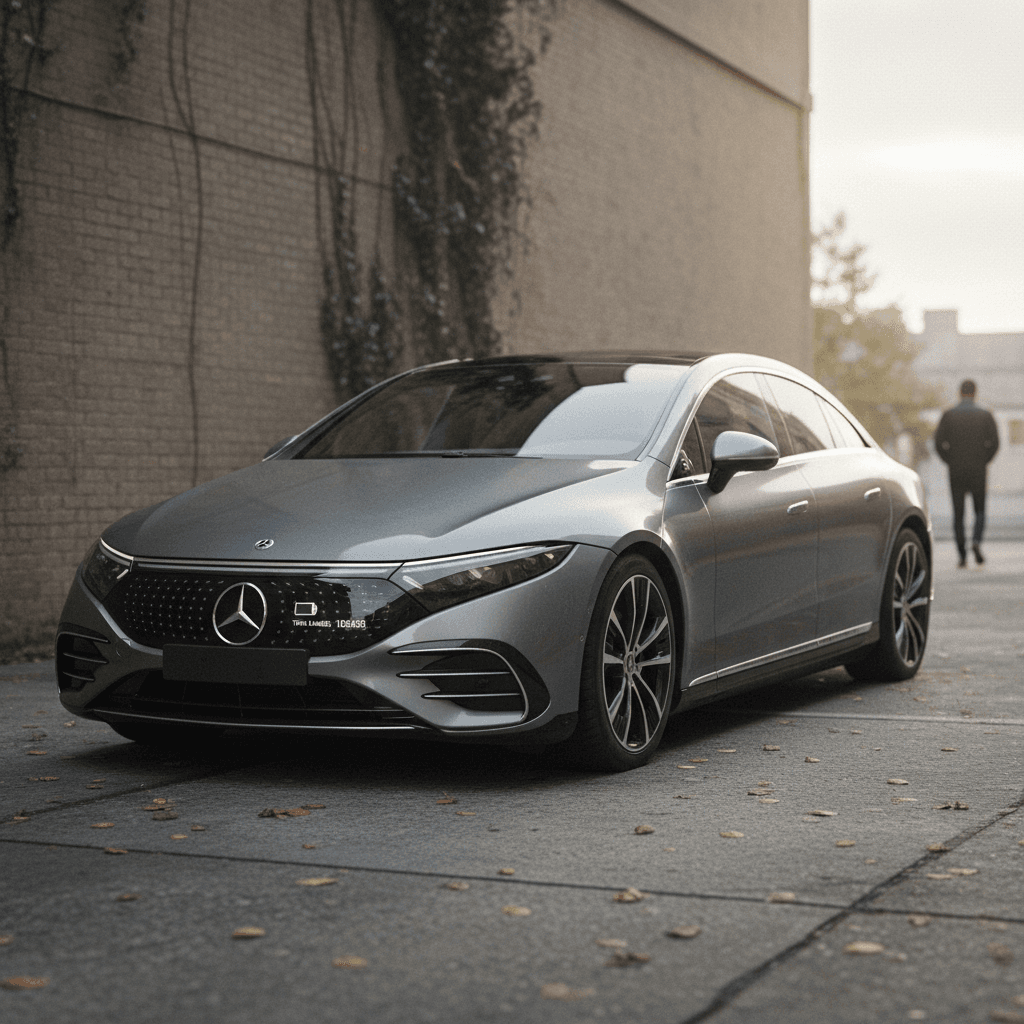
If you’re eyeing a Mercedes EQS or already have one in the driveway, you’ve probably heard the whispers: "these things fall off a cliff in value". That’s not entirely wrong. The Mercedes EQS value after 5 years looks very different from the day you drove it off the lot, but that can be a headache for current owners and a massive opportunity if you’re shopping used.
The short version
Why Mercedes EQS depreciation matters now
The EQS launched as Mercedes’ electric S‑Class statement piece: six‑figure sticker prices, a giant battery, and that wall‑to‑wall Hyperscreen. But since 2021, the luxury EV market has been moving at warp speed. Prices on new EQS models have been cut, incentives have been rich, and rival EVs keep showing up with sharper tech and more range for less money. At the same time, data from cost‑to‑own tools and market trackers shows five‑figure value drops in just the first couple of years for many EQS sedans and SUVs.
By 2026, the result is clear: the EQS has become one of the most extreme examples of luxury EV depreciation. For sellers, that’s a lesson in timing and expectations. For buyers, it’s an invitation to get S‑Class‑level comfort and tech for middle‑manager money, as long as you choose carefully.
Mercedes EQS value after 5 years at a glance
How much value a Mercedes EQS loses after 5 years
Let’s put some actual numbers behind the hand‑wringing. Several data sources that model depreciation and resale value for the Mercedes EQS paint a similar picture over a five‑year window:
- Cost‑to‑own calculators for a new EQS commonly show $60,000 or more in depreciation over 5 years for a six‑figure car.
- Some depreciation tools estimate that an EQS will be worth roughly 45–55% less after five years than when new.
- Other analyses of the luxury EV market suggest that certain EQS trims can land at around 30% of original MSRP after five years, especially early model‑year, heavily optioned cars.
Put simply, if you bought an EQS with a window sticker around $115,000, it’s not crazy to see a realistic five‑year value scenario in the $35,000–$55,000 range, depending on mileage, trim, options, and how much discounting happened at the time of purchase.
Illustrative 5‑year Mercedes EQS value scenarios
These simplified examples show how different starting prices and depreciation patterns can play out after five years.
| Original MSRP | 5‑Year Scenario | Estimated 5‑Year Value | % of Original Value |
|---|---|---|---|
| $105,000 | Moderate depreciation | $55,000 | 52% |
| $115,000 | Steep depreciation | $40,000 | 35% |
| $125,000 | Steep + heavy incentives when new | $38,000 | 30% |
| $100,000 | Conservative case (stronger than average) | $63,000 | 63% |
Numbers are rounded examples for discussion, not precise quotes. Real‑world prices vary by market and condition.
Depreciation tools are estimates, not gospel
Real‑world examples of 5‑year EQS values
Because the EQS only arrived for the 2022 model year, truly 5‑year‑old U.S. cars won’t hit the market until around 2027. But we can already see the trajectory by looking at how quickly 1‑ to 3‑year‑old cars have fallen and how used pricing has formed around them.
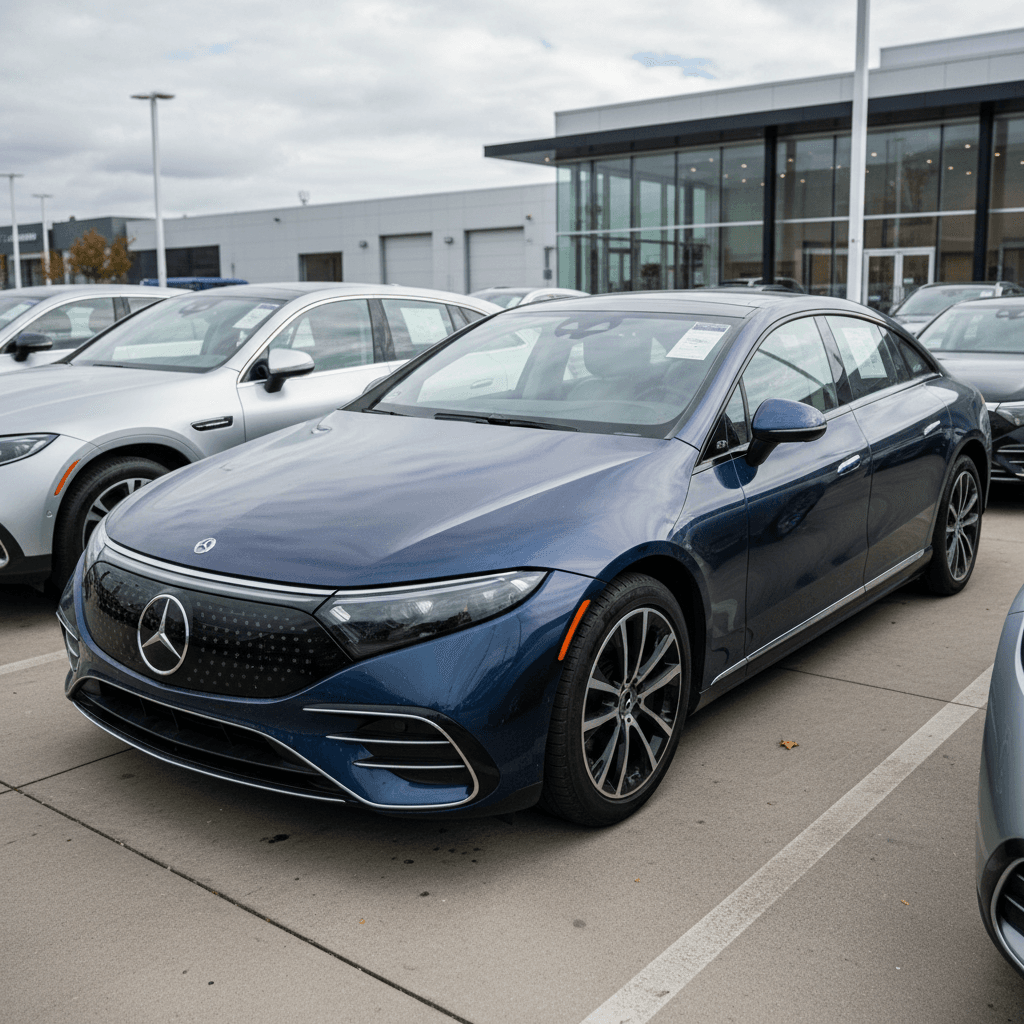
In early 2025 and into 2026, it’s become common to see 2022–2023 EQS 450+ sedans, cars that originally stickered near or above $100,000, listed and selling in the $45,000–$60,000 range, depending on miles and equipment. CPO SUVs with similar MSRPs have often been advertised around the high‑$50,000s to low‑$60,000s after just a year or two on the road.
What this implies for 5‑year‑old cars
If a 2‑ or 3‑year‑old EQS is already trading well under half of its MSRP, the line to a 5‑year value isn’t hard to see:
- Another 2–3 years of age softens buyer interest in the oldest software and styling.
- Newer EQS updates and competitor EVs keep putting pricing pressure on older inventory.
- Warranty coverage on everything but the battery starts to thin out.
Likely landing zone at 5 years
By the time an early EQS sedan or SUV is around 5 years old, many examples are likely to be sitting in that roughly one‑third to one‑half of MSRP band:
- Heavily optioned, niche trims may fall closer to 30–40%.
- Clean, lower‑mile cars with broad appeal might hold closer to 50–60%.
What drives Mercedes EQS depreciation so hard
Why is the Mercedes EQS falling faster than many traditional S‑Class sedans or even some rival EVs? A few specific forces are at work.
Four big reasons EQS value drops so quickly
Most of them have less to do with the car’s basic quality and more to do with timing and the EV market’s growing pains.
High initial MSRP and heavy incentives
The EQS launched with six‑figure pricing, but market demand didn’t match Mercedes’ optimism. That led to:
- Big lease subsides and dealer discounts to move inventory.
- Used buyers anchoring on the lower, post‑incentive transaction price.
Fast‑moving EV tech cycle
EVs age faster on paper than gas cars. Range, charging speed, and driver‑assist tech improve year over year, so:
- A 2021–2022 EQS can feel older than its odometer suggests.
- That perceived age translates directly into lower bids on the used market.
Crowded luxury EV field
When the EQS arrived, it was one of only a few big luxury EVs. By 2026, it’s fighting:
- Porsche Taycan variants, BMW i7, Lucid Air, and more.
- Updated EQS models with revised styling and software.
Out‑of‑warranty repair fear
Shoppers know a high‑end Mercedes can be pricey to repair. Even with EVs’ simpler drivetrains, they worry about:
- Complex electronics, air suspension, and driver‑assist hardware.
- Big, unpredictable repair bills without a warranty safety net.
Where the EQS actually holds up well
Battery warranty, degradation, and 5‑year confidence
One of the reasons a 5‑year‑old EQS can still be a compelling buy is that the priciest component, the high‑voltage battery, usually isn’t a total mystery by that point.
- U.S. EQS models generally carry an 8‑year / 100,000‑mile high‑voltage battery warranty from the in‑service date, covering defects and excessive capacity loss.
- Real‑world owner anecdotes and early data points suggest relatively low degradation for Mercedes’ large battery packs, even at higher mileage, when they’re not abused.
- By year five, you still have several years of battery warranty left on most EQS examples sold new in 2022 or later, as long as the odometer hasn’t blown past 100,000 miles.
Don’t assume every EQS battery is perfect
This is where tools like a Recharged Score battery health report become important. By measuring usable capacity, charging behavior, and historical data, you can see whether an EQS has a healthy pack that should deliver near‑original range for years, or whether you’re inheriting someone else’s fast‑charging experiments.
The 5‑year ownership cost picture
When you zoom out, depreciation is just one piece of the 5‑year puzzle. Independent cost‑to‑own modeling for the Mercedes EQS shows that over a five‑year horizon, depreciation is by far the single largest expense, easily outpacing electricity, insurance, and maintenance combined.
If you buy new and keep for 5 years
- Expect depreciation to chew through around half of what you paid, often $60,000 or more.
- Electricity costs are modest compared with fuel for an S‑Class gas sedan.
- Routine maintenance is lower than a gas S‑Class, but out‑of‑warranty repairs on air suspension, electronics, or interior tech can be painful.
Financially, buying new only makes consistent sense if you’re extremely set on having the latest car and are comfortable absorbing that first‑owner hit.
If you buy used at 3–5 years old
- Someone else already paid the steepest part of the curve.
- If you buy right, your additional 5‑year depreciation may be much gentler in absolute dollars.
- You’ll still enjoy lower fuel and maintenance costs than a comparable gas flagship.
From a total‑cost‑of‑ownership standpoint, a 3‑ to 5‑year‑old EQS is where the math often starts to work in your favor.
When a 5‑year‑old EQS is a smart buy
If you’re shopping in 2026, you’re mostly seeing 2‑ to 4‑year‑old EQS models. Fast‑forward a bit, and those early cars become the 5‑year‑old bargains. Here’s when a five‑year EQS starts to look like a smart, not scary, decision.
Checklist: What to look for in a 5‑year‑old EQS
1. Clean, well‑documented history
Prioritize EQS examples with a clean title, complete service records, and no collision history in critical areas (battery, high‑voltage cabling, air suspension).
2. Reasonable mileage for age
Something in the ballpark of 10,000–15,000 miles per year is normal. A 5‑year‑old EQS around 50,000–75,000 miles is often a better bet than a high‑miles rideshare veteran.
3. Remaining battery and CPO coverage
Check in‑service date to see how much battery warranty time is left, and consider CPO coverage or a reputable third‑party warranty for non‑battery systems.
4. Verified battery health
Use a <strong>Recharged Score battery health report</strong> or equivalent diagnostics to confirm the pack’s usable capacity and charging history before you commit.
5. Realistic price vs. original MSRP
Aim to pay a price that reflects the market’s harsh reality. A five‑year‑old EQS stubbornly priced at 60–70% of original MSRP when similar cars are listed much lower is worth walking away from.
6. Up‑to‑date software and recalls
Confirm the car has received key software updates and any recall or service campaigns. This can improve both the driving experience and long‑term confidence.
Where the EQS shines as a used buy
How EQS owners can protect value over 5 years
If you already own an EQS, you can’t change the market, but you can make sure your specific car is the one buyers fight over instead of the one they use to negotiate someone else down.
Six ways to protect your EQS value
These won’t erase depreciation, but they can easily mean thousands of dollars difference when it’s time to sell or trade.
Keep records
Save every service invoice, alignment report, and software‑update note. A thick, organized folder (or digital file) tells buyers your EQS has been cared for, not neglected.
Mind the cosmetics
Fix curb rash, repair windshield chips, and handle paintless dent removal before listing. A clean exterior and interior can separate your car from dozens of similar EQS listings.
Charge gently
Frequent DC fast‑charging to 100% can accelerate degradation. Use home Level 2 charging for daily needs and keep state of charge between roughly 20–80% when practical.
Avoid modifications
Wild wheel, tire, or suspension changes may narrow your buyer pool. Subtle factory‑style upgrades are safer than aggressive aftermarket mods on a high‑end EV.
Get a battery health report
When you’re ready to sell or trade, a third‑party report (like a Recharged Score) can prove your pack is healthy, pushing your car above similar‑priced listings without data.
Time your exit
If you know you won’t keep the car long‑term, consider selling or trading around year four, while non‑battery warranty coverage still looks comforting to a second owner.
How Recharged helps you shop a used EQS wisely
Because the Mercedes EQS value after 5 years is so volatile, you don’t want to fly blind, especially with a six‑figure car that’s now priced like a well‑equipped family crossover. That’s exactly the gap Recharged was built to fill.
- Every EQS on Recharged comes with a Recharged Score Report that includes verified battery health, pricing context, and inspection details, so you can compare cars on more than just photos and a Carfax line.
- Our pricing analysis benchmarks each EQS against real‑time national market data, helping you understand when you’re looking at a genuine bargain versus a car that’s cheap for a reason.
- If you’re selling your EQS, you can get an instant offer or use Recharged’s consignment‑style marketplace to reach EV‑savvy buyers who appreciate battery data and transparency.
- Financing, trade‑ins, and nationwide delivery are built into the process, so you can shop for the right EQS anywhere in the country without leaving your couch, or visit the Recharged Experience Center in Richmond, VA if you prefer to kick the tires in person.
Using depreciation to your advantage
Frequently asked questions about 5‑year EQS value
Mercedes EQS 5‑year value: common questions
The Mercedes EQS was never going to be a cheap car to own. What no one quite anticipated was just how fast the first few years of depreciation would come at early owners. The upside is that, by the five‑year mark, the equation flips: this is still a deeply capable, comfortable, high‑range luxury EV that the market has marked down like a clearance item. If you bring data to the table, about battery health, pricing, and ownership costs, you can let depreciation work for you instead of against you, whether you’re timing your sale or hunting for your next quietly brilliant used EV flagship.