If you bought a new Mercedes EQS in 2022 or 2023, the 2026 trade‑in value might feel like an insult wrapped in an appraisal sheet. This gorgeous six‑figure electric flagship has become one of the most dramatic examples of how quickly luxury EVs can depreciate. The good news is that once you understand the 2026 market, and how dealers actually value an EQS, you can make smarter moves, whether you trade in, sell privately, or flip into a used EV through a marketplace like Recharged.
Context for 2026
Why Mercedes EQS trade‑in values look so brutal in 2026
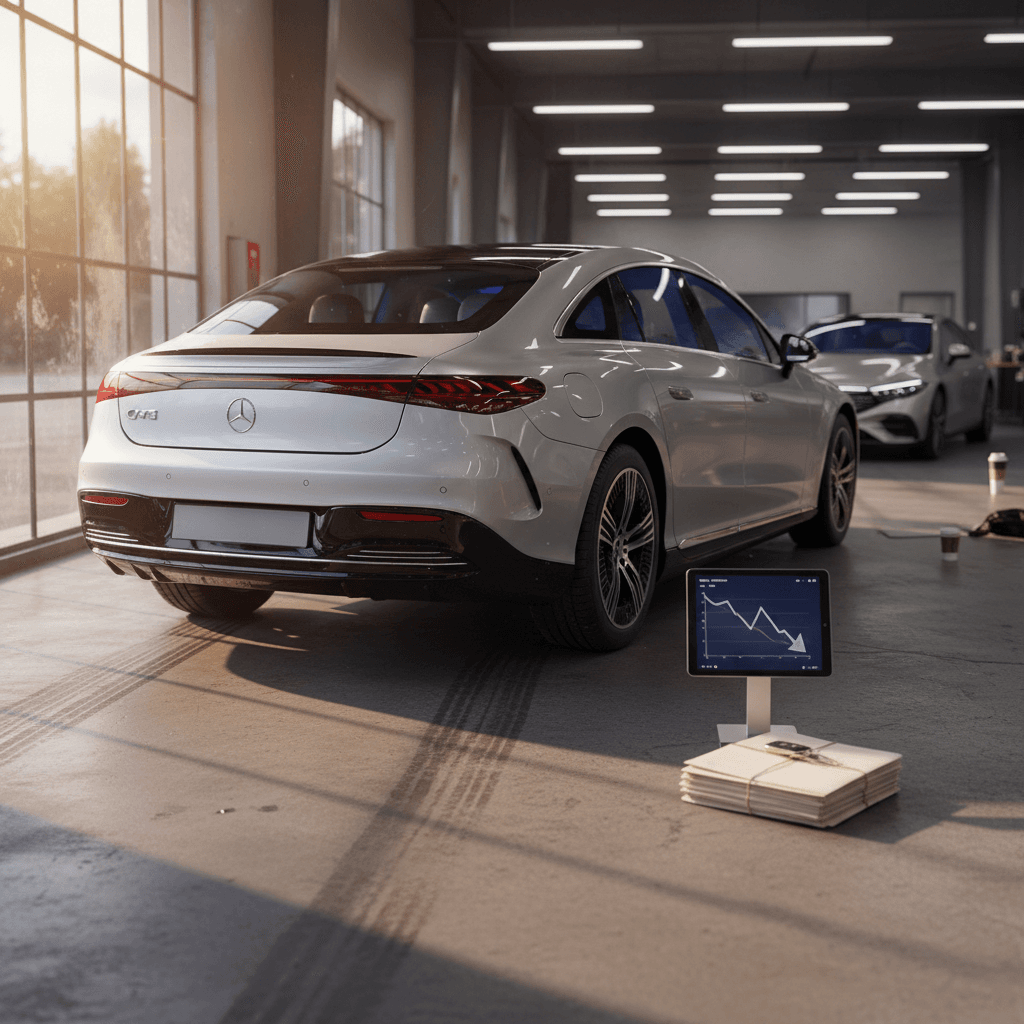
On paper, the Mercedes EQS trade in value in 2026 looks like the punchline to a bad joke: a three‑year‑old EQS that stickered at $120,000 can easily appraise in the $55,000–$70,000 range. That’s not because your particular car is cursed; it’s because several macro forces are all pushing the same way.
- Early EQS models launched at very high MSRPs just as EV incentives, interest rates, and buyer sentiment started whipsawing.
- Luxury EV sedans in general, EQS, Lucid Air, Model S, have depreciated harder than comparable gas S‑Class or 7‑Series sedans.
- Tech is moving fast: newer EQ models and rival EVs add range and software at lower prices, making early EQS builds look old before their time.
- Fleet and lease returns are hitting the market in volume around 2025–2026, flooding dealer lots with nearly‑new EQSs at wholesale prices.
Don’t take it personally
What a Mercedes EQS is worth in 2026: real‑world number ranges
Valuation sites don’t agree on an exact number, but they rhyme. Cost‑to‑own models from major guides show an EQS shedding roughly half to nearly three‑quarters of its value over five years, with the steepest loss in the first 2–3 years. Used‑car indices and classifieds in early 2026 regularly show recent EQS sedans transacting in the $50,000s and $60,000s, with some high‑mileage or lower‑spec 2022s dipping under $50,000.
Mercedes EQS value snapshot for 2026 (big‑picture ranges)
Trade‑in vs private‑party vs retail
How depreciation works on the EQS
Most mainstream valuation tools now model the EQS as one of the harder‑hit large luxury EVs over a five‑year window. A common pattern looks like this:
Illustrative Mercedes EQS depreciation curve
This table shows a simplified, ballpark curve for a well‑optioned EQS with an original MSRP of $115,000. Your car’s actual value will vary, but the shape of the curve is what matters.
| Age | Approx. value | Typical story at this stage |
|---|---|---|
| Year 1 (2023–2024) | $80,000–$90,000 | Immediate new‑car hit, heavy incentives, and early lease deals drag down values. |
| Year 2 (2024–2025) | $60,000–$75,000 | First wave of off‑lease and demo cars slam the market; owners feel whiplash. |
| Year 3 (2025–2026) | $50,000–$65,000 | Depreciation slows a bit, but the car now competes with newer, cheaper tech. |
| Year 5 (2027–2028) | $35,000–$50,000 | Luxury EV settles into used‑car reality; values hinge more on battery health and condition. |
Use this as a mental model, not as a personalized quote.
Think in percentages, not dollars
What dealers look at when they price your EQS trade‑in
When you roll your EQS onto the trade‑in pad, the appraiser isn’t thinking about how delighted you were with the massaging seats. They’re thinking about what happens if that car lands at auction next week. Here’s what drives the number they slide across the desk:
The five big levers on your 2026 EQS trade‑in
You can’t control all of them, but you can control more than you think.
Mileage & usage
Condition & history
Trim & options
Battery & charging
Local market demand
The deal you’re doing
Battery health: the hidden line item in your 2026 EQS trade‑in
By 2026, dealers and savvy buyers have learned the hard way that not all used EVs age the same. Two EQSs with the same mileage can have very different real‑world range and fast‑charging behavior. That’s why battery health has become the quiet tiebreaker in a sea of discounted luxury EVs.
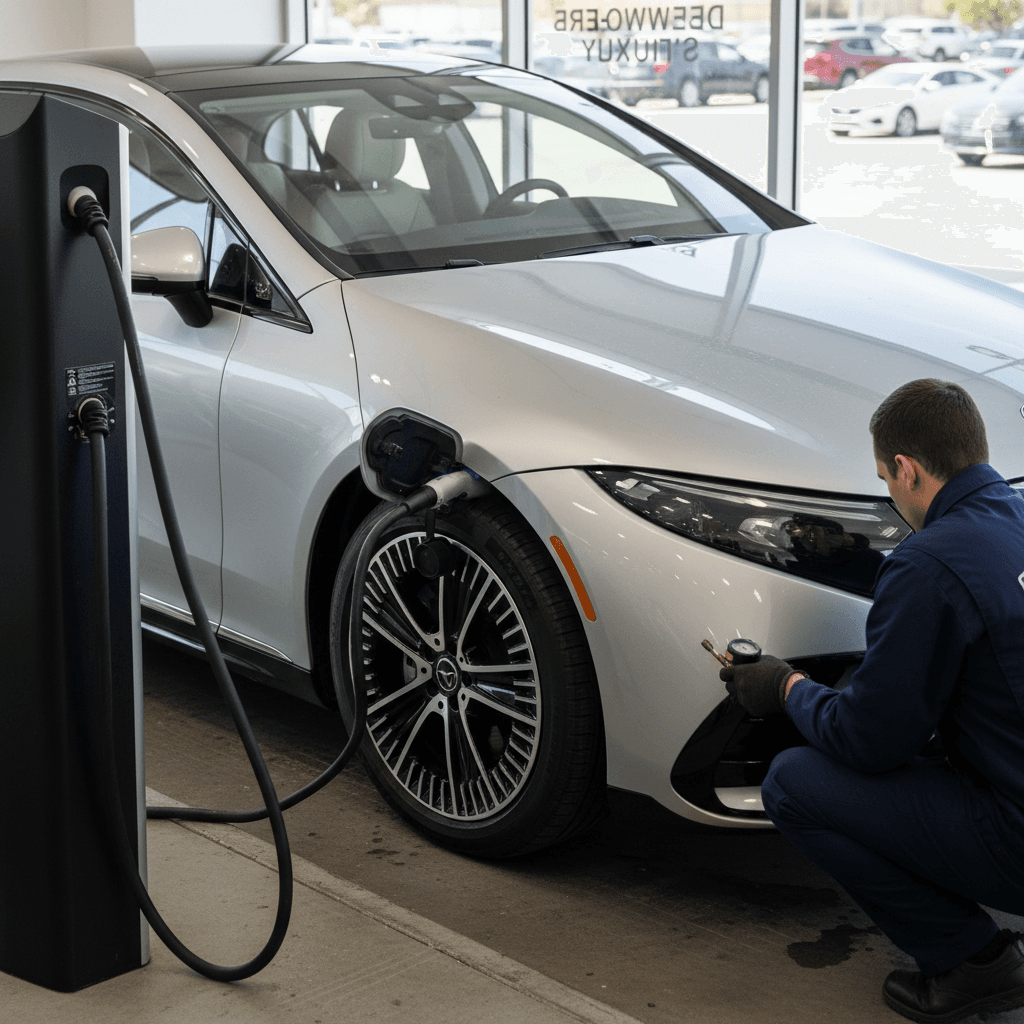
Most EQS packs are holding up well so far, but if your car shows unusually rapid range loss, slow fast‑charging, or fault codes, a dealer will assume the worst and price accordingly. Conversely, credible evidence that your pack is healthy gives the used‑car manager confidence to bid closer to the top of the range.
Where Recharged fits in
Ready to find your next EV?
Browse VehiclesHow to estimate your 2026 Mercedes EQS trade‑in value (step‑by‑step)
You’ll never hit the exact dollar a dealer offers, but you can absolutely bracket a realistic number before you start taking calls. Here’s a simple way to ballpark your Mercedes EQS trade in value 2026 from your couch.
DIY EQS trade‑in estimate in under an hour
1. Gather the basic facts
Write down your VIN, exact trim (450+, 450 4MATIC, 580, etc.), major options, current odometer, and any accident or repair history. Dealers will ask for all of this.
2. Price your car three ways online
Run your EQS through at least two major valuation tools as a trade‑in, private‑party, and dealer retail vehicle. That gives you a low‑to‑high band instead of one magic number.
3. Look at real listings, not just guides
Check large classifieds for EQSs within 250 miles that match your year, trim, and mileage. Focus on actual transaction‑ish prices, not just the outlier dreamers at either end.
4. Adjust for mileage and condition
If you’re well under the typical 12,000 miles per year, shade your estimate up a bit; if you’re over, or the car needs tires, brakes, or cosmetic work, shade it down.
5. Back into a dealer trade‑in number
Take realistic retail and subtract 10–20% for reconditioning, auction risk, and profit. For a $60,000 retail EQS, that often translates into a <strong>$48,000–$54,000</strong> trade‑in reality.
6. Sanity‑check with a real offer
Before you lock in expectations, get at least one live appraisal, online instant offer, local dealer, or both. Treat that as data, not destiny, while you shop your options.
Ways to sell your EQS in 2026: trade‑in vs private sale vs marketplace
Traditional trade‑in
If you’re buying or leasing something else from the same store, trading in is the fastest and least painful way to get out of an EQS in 2026. You’ll usually leave money on the table compared with a private sale, but you gain:
- Tax benefits in many states (you pay sales tax on the difference).
- No strangers, no test drives, no wire‑fraud nightmares.
- One signature and you walk away from negative‑equity headaches.
For owners who are upside‑down on their EQS loans, the dealer is often the only practical exit ramp.
Private sale or modern marketplace
Listing your EQS yourself or through a curated marketplace can squeeze out extra value, especially on a well‑optioned, low‑mile car. In a soft EV market, buyers want transparency on battery health and fair pricing, not just pretty photos.
Recharged, for example, focuses on used EVs only, pairs each car with a Recharged Score battery report, and offers options like instant offers, consignment‑style selling, and nationwide exposure. That can help your EQS stand out from the pile of anonymous auction metal.
Beware the private‑sale mirage
Strategies to boost your EQS trade‑in value before you get quotes
You can’t reverse three years of market physics, but you can absolutely move your EQS toward the top of its trade‑in range instead of the bottom.
Quick wins that can move the needle
Most of these take an afternoon and hundreds of dollars, not thousands.
Detail it properly
Fix cheap, obvious issues
Organize service records
Update software & maps
Document charging habits
Get a third‑party battery report
Using a soft luxury EV market to your advantage
Here’s the paradox of the 2026 EQS: it’s financially brutal if you’re selling one, but fantastic if you’re buying a used luxury EV. Depreciation is a zero‑sum game; somebody else’s misfortune is your bargain.
If you’re trading out of an EQS into another EV, say, a more efficient sedan, a crossover, or something from a different brand, the key is to optimize the delta, not the headline. Taking $52,000 instead of $55,000 on your EQS trade‑in stings less if you’re buying a meticulously inspected used EV that’s already absorbed its worst depreciation years.
One practical play
FAQ: Mercedes EQS trade‑in value in 2026
Frequently asked questions about EQS trade‑in value in 2026
Bottom line: should you trade in your Mercedes EQS in 2026?
If you’re staring at a 2026 trade‑in offer that feels 30 grand short of justice, you’re not wrong to be annoyed. The Mercedes EQS launched into a once‑in‑a‑generation experiment in luxury EV pricing, and your car is now the case study. But you still have agency. Understand how depreciation works on the EQS, get multiple real‑world appraisals, and clean up every detail you can control, from curb rash to battery‑health documentation, before you negotiate.
Most importantly, zoom out from the single number on your trade‑in sheet and look at the full equation: what you’re giving up, what you’re getting, and how both sides age over the next five years. In a 2026 market full of deeply discounted, tech‑rich EVs, your best move may be to take a sharp but honest trade‑in on the EQS and land in a used EV that’s already ridden the worst of its depreciation curve. That’s where a specialist marketplace like Recharged earns its keep, by turning a painful exit from one luxury EV into a smarter, better‑understood entrance into the next one.