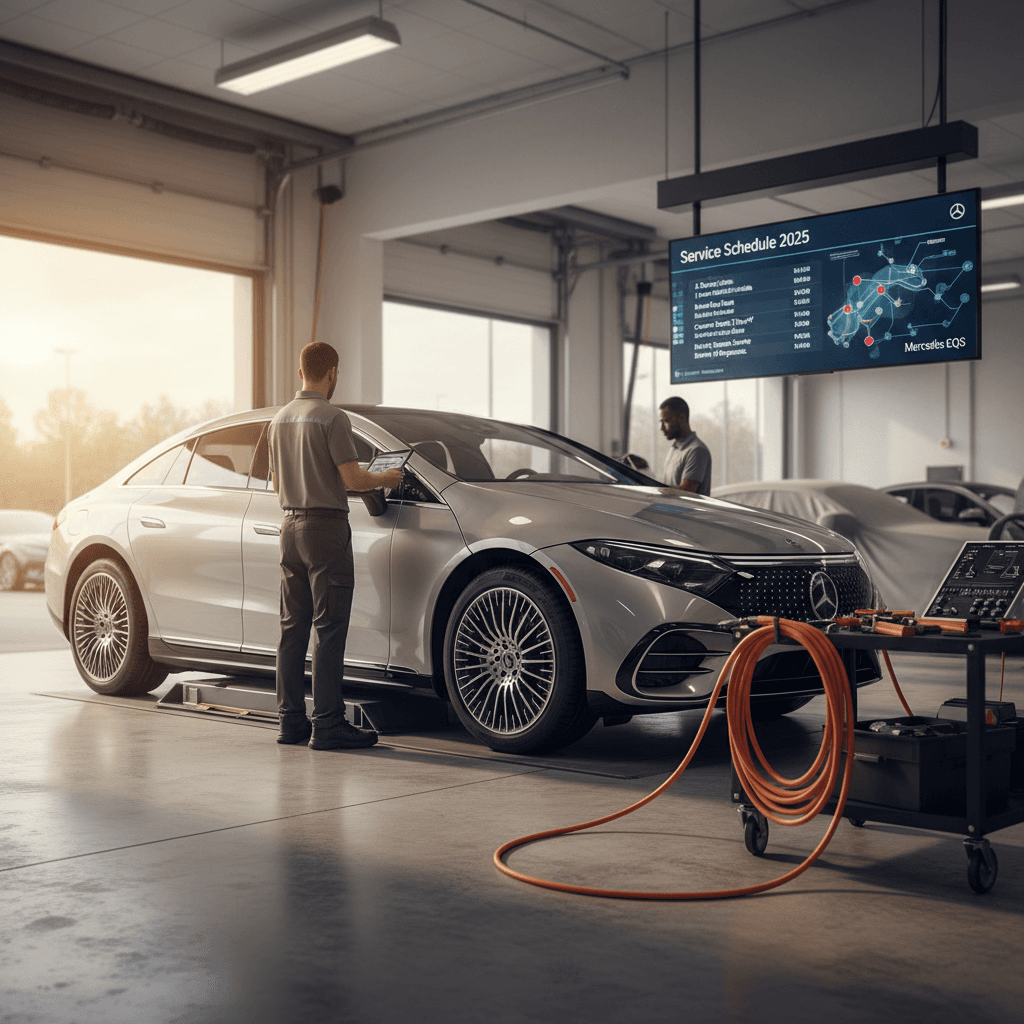
If you’re hunting for the **Mercedes EQS service schedule**, you quickly discover there isn’t a neat one-page chart like you’d get with a gas S‑Class. There’s no oil to change, the drivetrain is simpler, and yet the EQS is a six‑figure flagship packed with hardware that absolutely does need attention on a schedule. This guide translates the factory guidance into something you can actually use, especially if you’re cross‑shopping or buying a used EQS.
Quick EQS service snapshot
Why the Mercedes EQS service schedule looks different
Mercedes built the EQS on a clean‑sheet EV platform. That means **no engine oil**, no spark plugs, no exhaust, and far fewer moving parts than a V8 S‑Class. But it’s still a 5,000‑plus‑pound luxury car with adaptive suspension, massive tires, and a battery pack that costs more than some compact cars. The maintenance schedule shifts away from engine work toward **fluids that protect safety systems** and **checks that keep the high‑voltage hardware healthy**.
- No more: engine oil/filter changes, spark plugs, fuel system service, exhaust repairs, emissions checks.
- Still required: brake fluid, cabin filters, tire rotations and alignments, suspension and steering inspections.
- EV‑specific: high‑voltage battery and cooling system checks, desiccant and refrigerant service at longer intervals.
Don’t skip service because “it’s just an EV”
How often does a Mercedes EQS need service?
Mercedes uses its **ASSYST Plus** flexible service system on the EQS. In practice, for North American cars, you’ll typically see:
- A first visit around **1 year or 10,000–15,000 miles**, whichever comes first.
- Ongoing inspections and tire rotations about **every 10,000–15,000 miles**.
- A more complete EV service (including brake fluid and high‑voltage checks) about **every 2 years / ~20,000–25,000 miles**.
- Multi‑year checks of the **battery cooling system, desiccant, and refrigerant**, typically at 4+ year intervals.
Think in years, not just miles
Mercedes EQS service schedule at a glance
Mercedes EQS maintenance in one view
Approximate Mercedes EQS service schedule (first 10 years)
Owner‑friendly view of typical EQS maintenance intervals. Always confirm your exact schedule in the Mercedes me app or owner’s manual for your VIN.
| Mileage (approx.) | Time (approx.) | What usually happens | Notes |
|---|---|---|---|
| 10k–15k miles | Year 1 | Inspection, software updates, tire rotation, cabin filter check/replace, fluid level checks | Often the lightest and least expensive visit. |
| 20k–25k miles | Year 2 | Inspection, **brake fluid change**, cabin filter, tire rotation and alignment check, basic high‑voltage system check | First real EV‑specific service; budget a bit more. |
| 30k–35k miles | Year 3 | Inspection, cabin filter, tire wear/rotation, underbody and suspension check | Many owners start to see noticeable tire wear here. |
| 40k–50k miles | Year 4 | Inspection, **brake fluid change**, cabin filter, cooling system check, possible desiccant or refrigerant service per manual | Heavier “major” service compared with early visits. |
| 60k–70k miles | Years 5–6 | Repeat inspections, brake fluid at 2‑year rhythm, more frequent tire and suspension attention, high‑voltage checks | Real‑world wear items, tires, bushings, start to dominate. |
| 80k–120k miles | Years 7–10 | Brake fluid every ~2 years, high‑voltage cooling system service at prescribed interval, suspension components as needed | Battery is usually inspected and monitored rather than replaced. |
Time‑based intervals assume normal use in a typical North American climate.
Service names vs. electric reality
EQS maintenance by interval: what happens when
Year 1 / 10k–15k miles
Think of the first visit as a long post‑delivery check:
- Multi‑point inspection (suspension, steering, brakes, underbody)
- Tire rotation and pressure check
- Cabin filter inspection or replacement
- Software and navigation updates
- Visual check of high‑voltage cabling and connectors
This is usually the cheapest scheduled service you’ll see on an EQS.
Year 2 / ~20k–25k miles
The second service is where the EV‑specific work starts:
- Brake fluid change (time‑based, even at low miles)
- Cabin filter replacement (often standard by now)
- Full chassis and underbody inspection
- High‑voltage and cooling‑system checks per booklet
- Tire rotation and alignment check
If you’re buying a 2–3‑year‑old used EQS, proof this visit happened is a big trust signal.
Years 3–4 / 30k–50k miles
By now the car has lived through several winters and summers:
- Repeated inspections and tire rotations
- Another brake fluid change at the 4‑year mark
- More detailed checks of suspension, steering, and bushings
- Cooling system inspection; some manuals flag HVAC desiccant or refrigerant service in this window
This is often when owners face their first full set of replacement tires, especially on 21–22" wheels.
Years 5–10 / 60k–120k miles
Later in life, routine visits repeat, but wear items matter more:
- Brake fluid every ~2 years
- Cabin filters at 10k–20k mile intervals
- High‑voltage battery and cooling inspections on multi‑year cadence
- Suspension components, control arms, and bushings as needed
- HV battery coolant service at the long interval specified in your booklet
For long‑term owners, staying on top of these services is cheaper than chasing problems later.
Key maintenance items that still matter on an EQS
The big recurring EQS maintenance items
This is where your money actually goes over 10 years of ownership.
Brake fluid
EVs are heavy, and when you do need the friction brakes, you really need them. Mercedes typically calls for brake fluid around every 2 years to control moisture and prevent internal corrosion.
Cabin and HEPA filters
With an EQS, you’re often breathing through an advanced filtration system. Those filters clog over time, straining the blower and hurting air quality. Expect replacements on the 10k–20k mile rhythm.
Tires and alignment
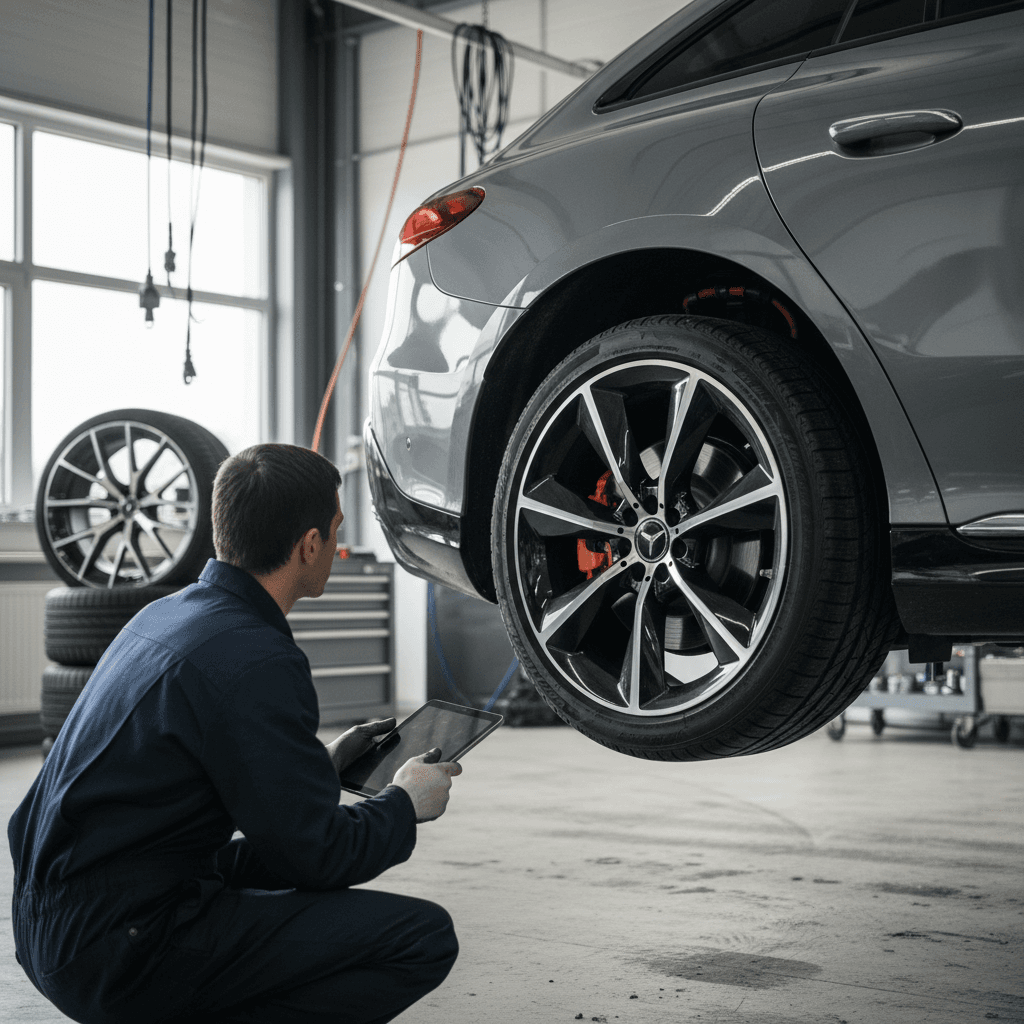
Instant torque and big wheels can chew through tires faster than you’re used to. Rotations every **10k miles** and alignment checks keep wear even and protect those very expensive 21–22" sets.
Don’t ignore tire wear
Battery and cooling system care
The high‑voltage battery is the EQS’s beating heart and biggest line item on the balance sheet. The service schedule builds in **periodic checks** to catch issues early and keep the thermal management system doing its job.
- Visual inspections of high‑voltage cabling and connectors at regular services.
- Cooling system checks bundled into 2‑year or multi‑year services.
- Long‑interval coolant replacement and HVAC desiccant service, often at 8–12 years depending on model year and market.
- Diagnostic scans to verify the battery management system isn’t flagging hidden faults.
Software is part of maintenance now
Costs: what to budget for EQS service
Sticker shock is part of the luxury‑EV experience, but the EQS is still cheaper to maintain over time than a comparable S‑Class. Most scheduled visits are about **time and inspection**, not replacing long lists of parts. Where owners feel it is in labor rates, tires, and the occasional big ticket service.
- Light annual/10k‑mile inspections are often at the **lower end of luxury‑brand pricing**, especially if bundled into pre‑paid maintenance.
- 2‑year services that include **brake fluid and more extensive checks** typically sit a tier higher.
- Tires can easily run **four figures** a set on 21–22" wheels, and high‑performance rubber may not last long under a heavy EV.
- Out‑of‑warranty repairs to air suspension, steering, or charging hardware can be costly, which is why a clean maintenance history matters if you’re buying used.
Good news vs. a gas S‑Class
Using the EQS service schedule when you’re buying used
If you’re looking at a used Mercedes EQS, the service schedule becomes a lie detector. You’re not hunting for a thick stack of oil‑change receipts; you’re verifying that the high‑value, time‑based services actually happened more or less on time.
Used EQS maintenance records: what to look for
1. First service within ~1–2 years
Look for an inspection/tire‑rotation visit around the first 10k–15k miles or within the first year. A car that missed its very first checkup raises questions about the rest of its life.
2. Brake fluid at least every 2–3 years
You want to see documented **brake fluid changes** roughly at the 2‑year and 4‑year marks. If the fluid has never been changed on a 4‑year‑old EQS, budget to do it immediately.
3. Regular cabin filter and tire notes
Service invoices that mention cabin filters, tire rotations, and alignment checks suggest the owner, and their shop, understood how heavy EVs eat tires and filters.
4. High‑voltage or coolant inspections logged
On later visits, look for mentions of battery or cooling‑system checks, even if nothing was replaced. It shows the car has been treated like the complex EV it is, not an oversized smartphone.
5. No long gaps in time
If the car went three, four, or more years with **no service entries at all**, ask why. Low mileage is not a reason to ignore brake fluid and cooling‑system checks.
6. Alignment and suspension work
Done right, this is a good sign. A heavy, long‑wheelbase sedan inevitably needs some attention here. The red flag is unexplained, repeated repairs or accident repair with no alignment afterward.
Beware of “dealer stamped, nothing done”
How Recharged evaluates Mercedes EQS maintenance
At Recharged, every EQS we list goes through our **Recharged Score** process, which includes a battery‑health diagnostic and a sanity check against the **expected service schedule for its age and mileage**. We’re less interested in dealer‑branded marketing packages and more interested in whether the unglamorous work actually happened.
What we scrutinize on a used EQS
The goal is simple: help you avoid a six‑figure car with a five‑figure surprise.
Service records vs. timeline
We line up the car’s in‑service date, current mileage, and recorded services. Are there gaps where a 2‑year brake‑fluid change or coolant inspection should be? Were early services delayed or skipped?
Battery health & thermal checks
Our Recharged Score includes **battery‑health diagnostics** and a visual inspection for leaks, damage, or abuse. We’re looking for cars that have been charged and cooled the way Mercedes intended, not hammered on DC fast chargers 24/7.
We combine that with **expert EV‑specialist inspections** and, where possible, digital data from the car to build a transparent story. The result: you see not just a mileage number and a Carfax, but a clear view of how well the EQS has been maintained.
Mercedes EQS service schedule FAQ
Frequently asked questions about the Mercedes EQS service schedule
Bottom line on the Mercedes EQS service schedule
The **Mercedes EQS service schedule** is less about constant tinkering and more about **showing up on time for a small handful of critical jobs**: brake fluid, filters, tires, suspension checks, and periodic battery‑cooling inspections. If you’re shopping used, those items tell you far more about the car’s future than any AMG body kit or ambient‑lighting package.
Follow the schedule, and the EQS behaves like what it is: a serene, quietly brutal luxury spaceship that just asks to be charged and occasionally looked after. Ignore it, and you’re rolling the dice on very expensive hardware. If you’d rather skip the gamble, browse EQS listings on Recharged, every car comes with a **Recharged Score battery‑health report, verified maintenance story, and expert EV‑specialist support** from first click to delivery.