Buy an EV

  • EVs for sale
  • Learn about EVs
  • Articles
  • Charging

Sell or trade

  • How it works

Financing

  • Get pre-qualified
  • Credit application

Contact us

  • Book a consultation
  • Call us at (804) 390-5910
  • Email us at hello@recharged.com
  • Visit our Experience Centers
    • Richmond, VA
    • Fairfax, VA
    • Charlotte, NC

© 2025 Recharged. All Rights Reserved.

7-Day Return Policy·Privacy Policy·SMS Opt-In·Do Not Sell or Share My Information·
TikTokYouTubeInstagramLinkedInFacebook
    Mercedes EQS Safety Ratings & Crash Tests: Complete 2025 Guide
    Safety·9 min read·By Recharged Editorial Team

    Mercedes EQS Safety Ratings & Crash Tests: Complete 2025 Guide

    mercedes-eqsev-safetycrash-test-ratingsdriver-assistancebattery-safetyluxury-evused-ev-buyingrecharged-score

    Table of Contents

    • Overview: How Safe Is the Mercedes EQS?
    • What Official Crash Tests Exist for the EQS?
    • European crash tests: EQS and EQE results
    • Active safety & driver-assistance tech on the EQS
    • Passive safety: crash structure and battery protection
    • Real‑world safety: where the EQS shines (and where it doesn’t)
    • Safety checklist for shopping a used Mercedes EQS
    • How Recharged evaluates EQS safety for used buyers
    • FAQ: Mercedes EQS safety rating & crash tests
    • Bottom line: Should you trust the EQS on safety?

    If you’re looking at a Mercedes-Benz EQS, new or used, it’s fair to ask how this big electric flagship holds up in a crash. The phrase “Mercedes EQS safety rating crash test” gets searched a lot, but the answers aren’t as simple as a single 5‑star number, especially in the U.S. Let’s unpack what we do (and don’t) know from crash tests, how the EQS is engineered to protect you, and what that means if you’re comparing it with other luxury EVs or shopping used.

    Quick safety snapshot

    The Mercedes EQS is engineered to a very high safety standard, shares much of its safety DNA with the 5‑star‑rated EQE in Europe, and includes a deep roster of standard driver-assistance features. In the U.S., however, there are still no published NHTSA star ratings or IIHS crash-test results specifically for the EQS sedan as of early 2025, so you need to read the available evidence carefully.

    Overview: How Safe Is the Mercedes EQS?

    Mercedes EQS safety at a glance

    5★ (analog)
    Euro-style safety
    The smaller, related EQE earns a 5‑star Euro NCAP rating, and the EQS uses similar structures and systems.
    10 yr/155k
    Battery warranty
    High-voltage components typically covered up to 10 years or ~155,000 miles on recent EQS models.
    “Very Good”
    ADAS grade
    Mercedes’ EQE, with a similar driver-assistance suite, scored a top ‘Very Good’ assessment in Euro NCAP assisted-driving tests.
    Full suite
    Active safety
    Standard automatic emergency braking, lane keeping, blind‑spot monitoring, adaptive cruise with lane centering, 360° camera and more.

    Mercedes builds the EQS on a dedicated EV architecture with a strong safety cage, multiple crumple zones, and sophisticated restraint systems. You also get an expansive list of active safety tech, automatic emergency braking, adaptive cruise control with lane centering, blind‑spot monitoring, and 360‑degree cameras are standard on most trims. For a buyer, the practical takeaway is that the EQS sits near the top of the class on engineering intent and feature content, even if the U.S. lab data isn’t fully filled in yet.

    Key limitation for U.S. shoppers

    As of early 2025, the Mercedes EQS sedan has not yet been fully rated by NHTSA or IIHS. When you see references to “5‑star EQ safety,” they’re usually pointing to related models (like the EQE) or European tests, not a U.S.-specific EQS star rating.

    What Official Crash Tests Exist for the EQS?

    In the U.S., the two big names you’ll see in searches for “Mercedes EQS safety rating crash test” are NHTSA and IIHS. Here’s the current landscape for the EQS sedan:

    U.S. crash-test status for the Mercedes EQS sedan

    What NHTSA and IIHS have published as of early 2025.

    AgencyModel/Body StyleOverall RatingNotes (as of early 2025)
    NHTSAMercedes-Benz EQS sedanNot yet ratedNo public 5‑star overall rating published for the EQS sedan as of early 2025.
    IIHSMercedes-Benz EQS sedanNot yet ratedEQS does not yet appear in IIHS crash-test result pages; only other Mercedes models are listed.
    IIHS / NHTSAComparable Mercedes models (e.g., E‑Class)Top-tier scoresGas E‑Class and other Mercedes sedans perform very well, which is a useful reference point but not a substitute for EQS‑specific data.

    Always double‑check NHTSA and IIHS websites for the latest EQS ratings, as new tests can be added mid‑model‑year.

    Why no U.S. EQS crash ratings yet?

    The EQS is a relatively low‑volume flagship. NHTSA and IIHS focus their test budgets on higher‑volume vehicles first. That doesn’t mean the EQS is unsafe, it simply means we don’t have U.S. lab numbers yet and must lean more on Mercedes’ engineering track record and European test programs.

    European crash tests: EQS and EQE

    While the EQS sedan hasn’t been the headline car in Europe’s Euro NCAP crash program, its sibling, the Mercedes EQE, has, and the two cars share Mercedes’ latest safety philosophy, battery layout concepts, and driver-assistance tech. That gives you meaningful clues about how the EQS is likely to behave.

    • Euro NCAP five‑star performance (EQE): The EQE earned a full 5‑star rating in Euro NCAP testing, with very strong scores for adult occupant protection and outstanding marks for its driver-assistance systems.
    • Top ADAS assessment: In Euro NCAP’s separate assisted‑driving evaluation, the EQE’s system achieved a “Very Good” overall grade, the best in its test group, thanks to consistent lane keeping, effective adaptive cruise, and robust safety backups if the driver doesn’t respond.
    • Shared underpinnings and safety tech: The EQS and EQE are built on the same EVA platform, using a rigid passenger cell, extensive crash zones, and similar restraint concepts. Mercedes applies its “Integral Safety” approach across the whole line, not just one nameplate.

    What this implies for the EQS
    You should think of the EQS as operating in the same safety league as the EQE: a large, heavy EV with a stiff passenger cell, sophisticated side‑impact and battery protection, and best‑in‑class assisted‑driving performance in independent European tests. It’s not proof of EQS numbers, but it’s reassuring context.
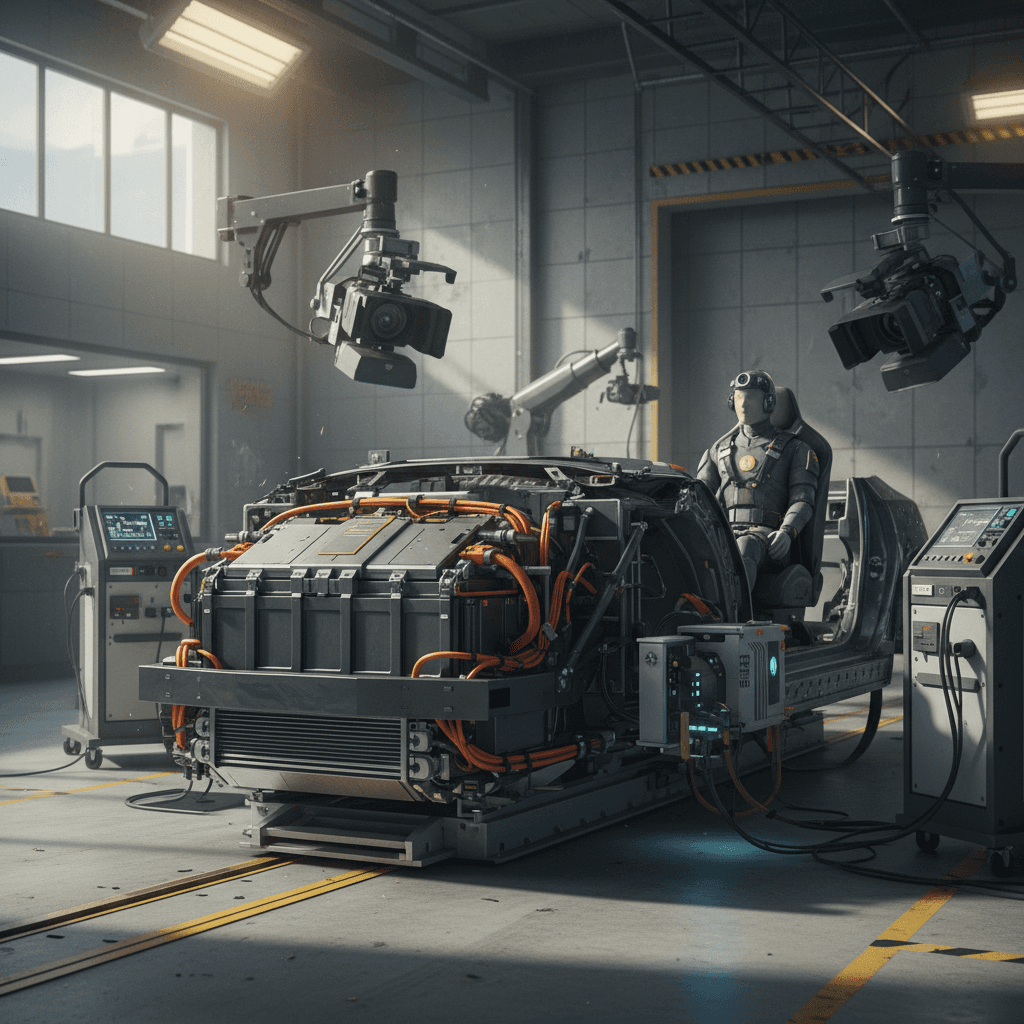
    Mercedes EQS electric sedan after a frontal crash test with crash dummies visible inside
    Euro‑style crash testing of large EVs highlights how a rigid battery tunnel and strong passenger cell work together to protect occupants.

    Active safety & driver-assistance tech on the EQS

    One reason many shoppers search for “Mercedes EQS safety rating crash test” is to understand whether the software side of safety, automatic braking, lane centering, etc., is as strong as the physical crash structure. On the EQS, the answer is yes: Mercedes loads this car with standard active‑safety gear, and the broader system has already been validated on the EQE in Europe.

    Core active-safety systems on the Mercedes EQS

    Exact availability can vary by model year and trim, but this is the typical lineup you’ll see when shopping.

    Automatic emergency braking

    Standard Active Brake Assist can detect vehicles, many pedestrians, and cyclists and apply the brakes to avoid or mitigate a collision. Later software updates improve performance and add scenarios like turning and cross‑traffic.

    Lane keeping & centering

    Lane‑departure warning and lane‑keeping assist nudge the EQS back toward the lane center. With adaptive cruise active, a lane‑centering function helps keep you in the middle of the lane on highways.

    Driver monitoring

    The EQS uses attention and camera‑based monitoring to check that you’re watching the road when assistance features are on, and it can escalate warnings or even slow the vehicle if you’re unresponsive.

    Adaptive cruise control

    Adaptive cruise can automatically match the speed of traffic, adjust gap distance, and sometimes adapt to upcoming curves or speed limits when paired with navigation data.

    360° cameras & parking aids

    A surround‑view camera, parking sensors, and automated parking assist make low‑speed maneuvers safer, helping you avoid obstacles and pedestrians in crowded lots or tight garages.

    OTA safety refinements

    Because the EQS supports over‑the‑air updates, Mercedes can refine braking behavior, driver‑assist logic, and detection algorithms throughout the vehicle’s life, though, as with any brand, new software can occasionally introduce quirks that require follow‑up updates.

    How to use EQS driver assistance safely

    Think of these systems as co‑pilots, not chauffeurs. They’re excellent at reducing fatigue, smoothing traffic flow, and responding faster than you can in some emergencies, but you’re still responsible for steering, braking, and staying alert at all times.

    Passive safety: crash structure and battery protection

    Active safety helps you avoid a crash; passive safety helps you survive one. On a large EV like the EQS, two questions dominate: how it protects occupants and how it protects (and isolates) the battery pack in a severe impact.

    Rigid passenger cell & crumple zones

    The EQS follows Mercedes’ long‑standing "Integral Safety" playbook: a very stiff passenger compartment surrounded by carefully engineered front, rear, and side crumple zones. In a crash, those outer structures deform in a controlled way, absorbing energy before it reaches the cabin.

    • High‑strength and ultra‑high‑strength steel in key load paths
    • Multiple front crash beams and deformable crash boxes
    • Side structures designed to direct impact forces around the cabin

    Battery protection and underbody layout

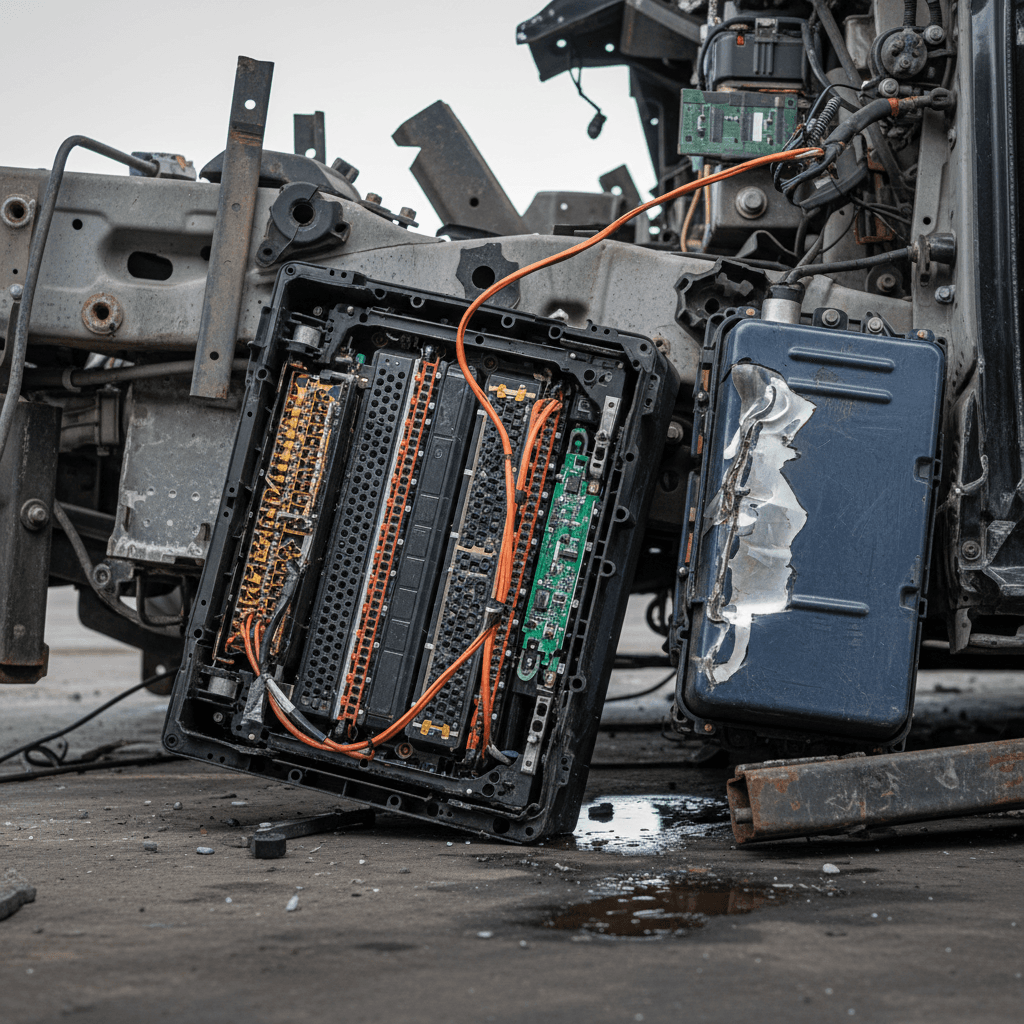
    The EQS’s large battery pack is mounted low in the floor, protected by a reinforced housing and cross‑members. In a severe impact, crash rails are designed to divert energy away from the battery and passenger cell.

    • Armored battery casing to resist intrusion and puncture
    • Automatic high‑voltage shutoff in serious crashes
    • Underbody shields to protect against debris and curb strikes

    On higher‑trim cars with advanced packages, you’ll also find PRE‑SAFE® and PRE‑SAFE® Impulse Side. These systems can detect an imminent side impact and pre‑tension belts, close windows, and even inflate bolsters in the seat to push you slightly away from the impact zone, essentially creating a virtual crumple zone around you before the crash actually happens.

    What about EV fire risk?

    High‑profile EV fire stories can be alarming, but statistically they’re rare compared with gasoline‑vehicle fires. The EQS battery is heavily protected and monitored. If you are ever in a severe crash, treat it like any modern car: get clear of the vehicle when it’s safe to do so, and let first responders manage the scene.

    Real‑world safety: where the EQS shines (and where it doesn’t)

    Lab tests are useful, but real‑world safety also depends on vehicle size, mass, technology behavior, and how owners actually use the car. Here’s how the EQS stacks up in day‑to‑day protection.

    Real‑world safety pros and tradeoffs

    Big luxury EVs do some things extremely well, and carry a few tradeoffs you should understand.

    Mass and crash compatibility

    The EQS is a heavy car thanks to its large battery. In a multi‑vehicle crash, that weight generally favors occupants of the EQS versus those in smaller vehicles. The flip side: more mass means longer stopping distances if you’re not paying attention, another reason to keep those driver‑assist systems active and your focus on the road.

    Driver distraction risk

    Huge touchscreens, advanced infotainment, and hands‑free features can tempt any driver to tune out. The EQS’s driver monitoring helps, but long highway stretches with active assistance engaged are exactly where you should fight complacency. Treat the tech as a backup, not an excuse to multitask.

    Weather and lane-keeping

    Like any camera‑ and radar‑based system, the EQS’s lane‑keeping and sign‑recognition features can struggle in heavy snow, salt spray, or poor lane markings. The underlying vehicle dynamics remain very stable, but you shouldn’t expect perfect lane centering in the worst conditions.

    Software updates & recalls

    Over‑the‑air updates let Mercedes refine safety features over time, but they can also introduce bugs that need follow‑up patches. When you buy used, it’s wise to verify that outstanding safety recalls and critical software campaigns have been completed.

    Test safety systems on your test drive

    When you drive an EQS, especially a used one, take 10 to 15 minutes on a safe stretch of road to gently exercise automatic braking (by closing in on a stopped car while ready to brake), lane‑keeping, blind‑spot alerts, and the 360° camera. You’re not just checking gadgets; you’re confirming your future co‑pilot actually works.

    Safety checklist for shopping a used Mercedes EQS

    If you’re considering a used EQS, you care about two things: the car’s built‑in safety and how well that safety has been preserved by previous owners. Here’s a focused checklist to run through before you sign.

    Used Mercedes EQS safety checklist

    1. Scan the VIN for recalls and campaigns

    Ask the seller or dealer for a current recall and service campaign printout tied to the EQS’s VIN. Pay special attention to software updates related to airbags, automatic emergency braking, or driver-assistance packages.

    2. Review crash and insurance history

    Pull a full vehicle history report. Look for any <strong>structural damage</strong>, airbag deployment, or “salvage/rebuilt” branding. A high‑end EV with poorly repaired crash damage may not perform as designed in a future collision.

    3. Inspect ADAS hardware

    Walk around the car and look for cracked radar covers in the grille, damaged bumper sections where sensors live, misaligned cameras behind the windshield, or broken side‑mirror housings. These are all critical to modern safety systems.

    4. Confirm software is current and error‑free

    During a test drive, scan the instrument cluster and infotainment for persistent warning messages about collision‑avoidance, lane‑keeping, or driver‑assist functions. Ask the seller to show the software version and update history if available.

    5. Check tire condition and load rating

    The EQS’s weight means you really need the correct <strong>XL / EV‑rated tires</strong> with proper speed and load ratings. Uneven wear can hint at prior suspension damage or alignment issues after a curb strike or crash.

    6. Evaluate seatbelts and airbags

    Check that all belts retract crisply and latch securely. During your inspection, confirm that the airbag warning light comes on at startup and turns off promptly, staying lit can signal stored crash codes or unresolved airbag issues.

    Don’t ignore minor warning lights

    On a modern EV like the EQS, a small yellow icon for a radar sensor or lane‑keeping system isn’t “just a nuisance.” It can mean the car won’t respond the way you expect in an emergency. Budget time and money to fix these issues, or walk away.

    How Recharged evaluates EQS safety for used buyers

    At Recharged, we treat safety as a first‑class topic, right alongside battery health and fair pricing, when we list a used Mercedes EQS on our marketplace. That philosophy is baked into the Recharged Score Report that accompanies every vehicle on our site.

    What Recharged looks at on a used EQS

    Safety isn’t just star ratings. It’s how the actual car in front of you has been cared for.

    Structural & accident checks

    We review accident history, look for structural repairs, verify that airbag systems are clear of crash codes, and check that doors, hood, and hatch close cleanly, often a giveaway of prior heavy damage.

    Battery & high‑voltage integrity

    Our Recharged Score battery diagnostics and visual inspections help confirm that the high‑voltage system is healthy, properly sealed, and free of warning messages that could point to impact or corrosion issues.

    Driver‑assist and sensor validation

    We road‑test safety systems, automatic braking, lane keeping, blind‑spot monitoring, parking aids, and verify that related sensors and cameras aren’t obstructed or throwing faults.

    Transparent condition & pricing

    Because safety repairs on a flagship EV can be expensive, our pricing factors in the true condition of the vehicle, not just mileage and model year, so you’re not surprised by hidden safety work later.

    Delivery-ready and supported

    If you buy an EQS through Recharged, we can arrange nationwide delivery and walk you through key safety and driver‑assist features during your digital handoff or at our Richmond, VA Experience Center.

    EV‑specialist guidance

    Our EV specialists can help you compare EQS safety with other luxury EVs, talk through crash‑test nuances, and decide whether features like PRE‑SAFE or specific driver‑assist packages are must‑haves for your situation.

    Ready to find your next EV?

    Browse Vehicles

    FAQ: Mercedes EQS safety rating & crash tests

    Common questions about Mercedes EQS safety ratings

    Bottom line: Should you trust the EQS on safety?

    If you clicked on this article searching for “Mercedes EQS safety rating crash test” hoping for a neat 5‑star U.S. score, you won’t find one, yet. What you do find is a large luxury EV built on a state‑of‑the‑art platform, backed by Mercedes’ long safety pedigree, closely related to the 5‑star‑rated EQE in Europe, and packed with modern crash‑avoidance technology.

    For many buyers, that combination is more than enough to feel comfortable putting family and clients in an EQS, especially if you’re buying a car with documented history and up‑to‑date software. If you’d like help comparing EQS safety with other used EVs, or want a deeper dive on a specific VIN, Recharged can pair you with an EV specialist, a Recharged Score battery and condition report, financing options, and even nationwide delivery, so you can focus on what matters: finding a safe, comfortable EV that fits the way you actually drive.


    EVs on Recharged

    See all →
    2023 Ford Mustang Mach-E

    2023 Ford Mustang Mach-E

    GT•24K mi•257 mi range
    4.8/5Recharged Score
    $36,597
    2024 BMW iX

    2024 BMW iX

    xDrive50•41K mi•308 mi range
    4.8/5Recharged Score
    $45,997
    2025 Ford Mustang Mach-E

    2025 Ford Mustang Mach-E

    Premium•8K mi•300 mi range
    Pending Recharged Score
    $39,997

    Related Articles

    EV Tire Wear: Why It’s Different and How to Make Tires Last
    Ownership & Costs·9 min

    EV Tire Wear: Why It’s Different and How to Make Tires Last

    Learn why EV tire wear is faster than gas cars, how it affects range and costs, and practical steps to extend tire life on your electric vehicle.

    ev-tire-wearev-maintenanceused-ev-buying
    2024 Cadillac Lyriq Reliability: What Owners Are Really Seeing
    Reviews & Comparisons·10 min

    2024 Cadillac Lyriq Reliability: What Owners Are Really Seeing

    How reliable is the 2024 Cadillac Lyriq? See real-world owner issues, recalls, software glitches, and what to check if you’re shopping for a used Lyriq EV.

    cadillac-lyriq2024-model-yearev-reliability
    What Does an Electric Car Really Cost in 2025? A Complete Guide
    Buying Guides·10 min

    What Does an Electric Car Really Cost in 2025? A Complete Guide

    Learn the true cost of an electric car in 2025, including purchase price, home charging, maintenance, insurance and incentives. See how EVs compare to gas cars.

    ev-total-cost-of-ownershipev-vs-gasused-ev-buying