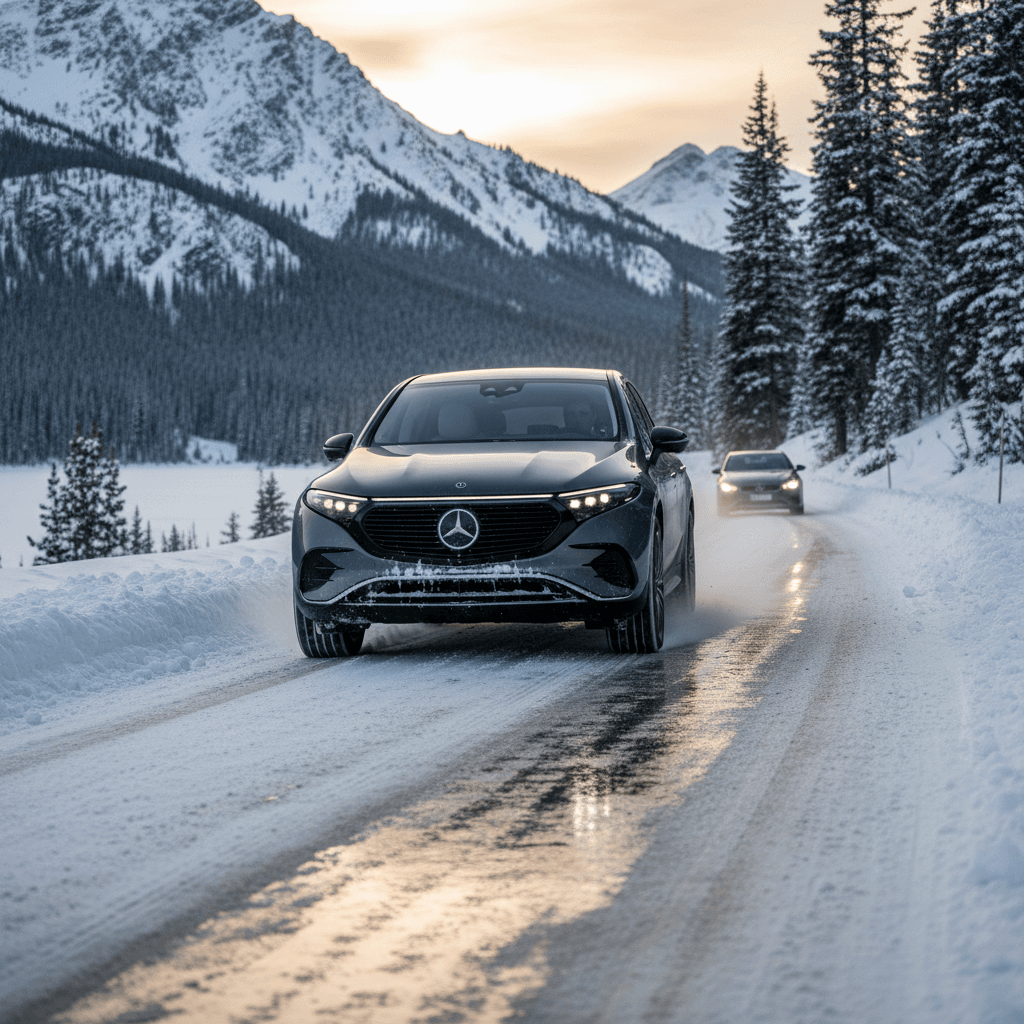
If you live where roads turn white for months at a time, you’re probably wondering whether the Mercedes EQS is best for snow and ice or if you should look elsewhere. The honest answer: a well‑equipped EQS can be a confident winter car, but only if you choose the right version and set it up correctly. Get that wrong, and you’ve just bought 6,000 pounds of very expensive curling stone.
Quick verdict
Mercedes EQS in winter: the short story
Key EQS numbers that matter in winter
On paper, the EQS has several things going for it in winter: instant torque that can be metered out very precisely, sophisticated stability control, and available 4MATIC all‑wheel drive. The battery pack in the floor lowers the center of gravity, helping stability in slippery corners. Where it struggles is the combination of low ground clearance, heavy curb weight, and performance‑oriented OEM tires, especially on the sedan.
It’s not a snowplow
EQS sedan vs EQS SUV: which is better for snow?
EQS sedan: slippery but low-slung
- Ground clearance: roughly 5.0–5.3 inches on recent models – fine for plowed roads, marginal in deep snow.
- Aero focus: Extremely smooth underbody for efficiency can cause the car to "ski" on packed snow.
- Driving feel: Owners report good traction control but more scraping and high‑centering risk in ruts.
- Best use case: Mild to moderate winter climates with well‑plowed roads.
EQS SUV: the winter-friendlier choice
- Higher ride height: More clearance than the sedan, so it copes better with rutted or slushy surfaces.
- Standard 4MATIC on many trims: Dual motors send power to all four wheels, improving traction on slick launches.
- Owner reports: Mixed when on stock performance all‑seasons, but very solid behavior once fitted with true winter tires.
- Best use case: Regular snow, icy hills, ski trips on maintained roads.
Snow‑belt recommendation
4MATIC vs RWD EQS: drivetrain choice matters
Mercedes sells the EQS in both rear‑wheel‑drive (RWD) and 4MATIC all‑wheel‑drive layouts, depending on trim and year. On a sunny day you might prefer the smoother, slightly more efficient RWD models. In February, on that glassy on‑ramp? You’ll want 4MATIC every time.
How EQS drivetrains behave in snow and ice
Same body, very different personalities when the road turns white
RWD EQS (450+, some 350 trims)
- Pros: More efficient, less complex, often cheaper on the used market.
- Cons: Puts all torque through the rear tires, which is exactly what you don’t want on ice.
- Real‑world behavior: Owners report decent traction control, but more wheelspin on hills or slick intersections, especially on all‑season tires.
- Suitable if: Winters are light, roads are well‑cleared, and you run dedicated winter tires.
4MATIC EQS (SUV and higher trims)
- Pros: Dual motors send power to both axles, giving much stronger traction off the line and when pulling out of deep, wet snow.
- Cons: Slight efficiency penalty and added weight.
- Real‑world behavior: With winter tires, owners in New England and the Midwest report stable, confident behavior even in storms.
- Best choice if: Snow and ice are a fact of life where you live.
Don’t forget regen settings
Ground clearance, weight and traction on snow and ice
On a spec sheet, the EQS’s low center of gravity looks like a winter advantage: the heavy battery keeps the car planted. That’s true in corners. Where physics turns on you is when you need to stop. A sedan that weighs around 5,600 pounds, or an SUV north of 6,000, carries a lot of momentum, and ice does not care how many LEDs are in your headlights.
- EQS sedan ground clearance around 5.0–5.3 inches means it will drag its belly in unplowed driveways or rutted side streets.
- The EQS SUV sits higher, but it’s still a luxury crossover, not a lifted off‑roader; deep, heavy snow will eventually pack under the body.
- Extra weight can help the tires bite on packed snow at low speed, but it significantly lengthens stopping distances on ice.
- Air suspension can raise the car slightly in some modes, which helps with ruts, but it’s no substitute for a true SUV ride height.
Don’t be fooled by how planted it feels
Why tires matter more than badges in snow and ice
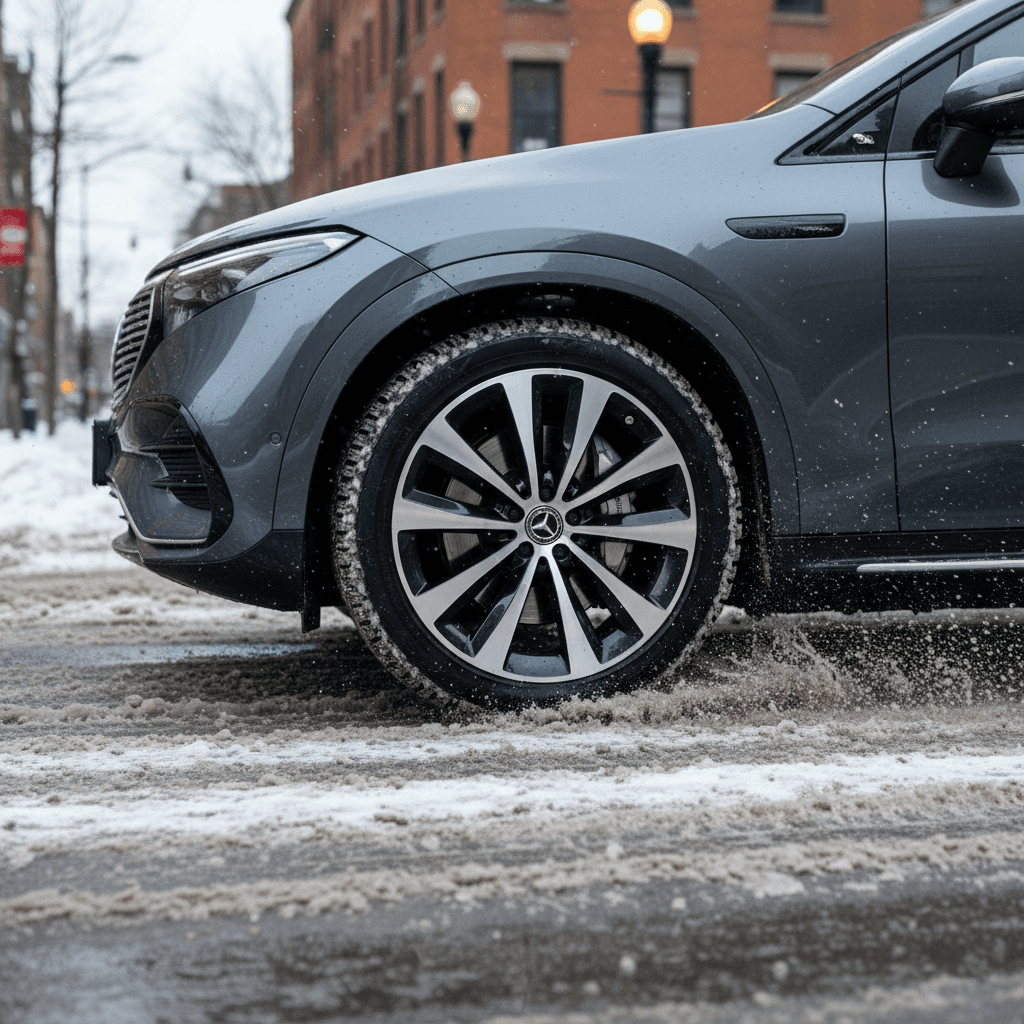
Here’s the unglamorous truth: when we talk about whether the Mercedes EQS is best for snow and ice, we’re really talking about rubber chemistry. The stock ultra‑high‑performance all‑season, or even summer‑biased, tires that come on many EQS models are tuned for quietness and low rolling resistance in warm weather. In real cold they harden, grip falls off a cliff, and all the 4MATIC software in the world can’t save you.
Tire choices for Mercedes EQS in winter
Picking the right tire type will do more for your winter safety than any drive mode.
| Tire type | Temperature focus | Snow/ice grip | Typical fitment on EQS | Best for |
|---|---|---|---|---|
| Summer performance | Above ~45°F | Very poor | Some AMG‑line sedans and SUVs | Warm climates, never snow |
| All‑season (touring/UHP) | Year‑round compromise | Mediocre in real cold | Common OEM choice | Light winters, mostly wet roads |
| All‑weather (3PMSF rated) | Four‑season including cold | Good, but not best | Aftermarket option | Mixed climates, shoulder seasons |
| Dedicated winter (3PMSF) | Below ~40°F | Excellent | The right answer for snow belt | Regular snow, ice and slush |
Always mount four matching winter tires on an EQS if you regularly drive in snow or ice.
Look for the mountain‑snowflake symbol
The major tire brands all sell winter patterns in EQS‑friendly sizes for both the sedan and SUV. Some even sell complete winter wheel‑and‑tire packages so you’re not wrestling with low‑profile rubber twice a year. Yes, it’s an investment. It’s still cheaper than a body shop deductible.
Winter range, preconditioning and charging an EQS in the cold
Every EV loses range in winter, and the EQS is no exception. Between cabin heating, battery chemistry, and snow‑covered roads, most owners see a 20–40% drop in effective range when temperatures sit below freezing. That means a 300‑mile rating can feel more like 180–220 miles on a bitter day with highway speeds and snow tires.
Three ways to make an EQS happier in winter
Simple habits that protect range and comfort when it’s below freezing
Use preconditioning
Start cabin and battery preconditioning while the EQS is still plugged in. The car uses grid power to warm itself instead of draining the pack.
Plan shorter legs
In deep winter, plan DC fast‑charge stops 20–30% sooner than you would in summer. Cold packs take longer to fast‑charge.
Drive smoother, a bit slower
Harsh acceleration and high speeds waste energy and reduce grip. A relaxed pace saves range and makes the car more controllable on slick surfaces.
Charging at home in the snow
Best Mercedes EQS configurations for snow and ice
If you’re shopping new or used and winter is a major part of your life, don’t just ask whether the Mercedes EQS is *capable* in snow and ice. Ask which specific configurations give you the fewest compromises when the forecast turns ugly.
EQS trims and setups that shine in winter
Prioritize traction, clearance and tires over 0–60 times
EQS SUV 450 4MATIC / 580 4MATIC
- Standard 4MATIC all‑wheel drive.
- More ground clearance than the sedan.
- Feels natural in snow once fitted with proper winter rubber.
- Ideal for families in snowy suburbs and ski‑country road trips.
EQS sedan 4MATIC (where available)
- Lower and sleeker, but dual‑motor traction still helps a lot.
- Works well for city and highway use in plowed conditions.
- Needs winter tires even more urgently due to performance‑oriented stock sizes.
EQS sedan RWD (450+ and similar) with winters
- RWD can be acceptable if you commit to dedicated winter tires.
- Best only if your winters are moderate and roads are well‑maintained.
- Not recommended for steep driveways or unplowed rural routes.
What to avoid if you hate white‑knuckle drives
Shopping used? This is where a marketplace like Recharged can help. We focus on used EVs and can walk you through which EQS trims pair best with your local climate, what winter wheel setups fit, and how cold weather may affect the Recharged Score battery‑health picture you see on each listing.
Winter setup checklist for EQS owners
Dial in your EQS for snow and ice
1. Pick the right tires
Install a full set of <strong>3PMSF‑rated winter tires</strong> on all four corners if you regularly drive in snow or on ice. All‑seasons are a compromise; summer tires are a non‑starter.
2. Check tread depth and pressures
Winter tires losing tread depth lose their snow‑biting edges. Aim for at least 5/32" before another winter. Set pressures to the door‑jamb spec when tires are cold.
3. Configure drive and regen modes
Before a storm, experiment with the EQS’s drive modes and regenerative braking settings. Many drivers prefer a calmer throttle map and moderate regen on slick days.
4. Update navigation & charge planning
Use the built‑in navigation or a planning app to route via dependable DC fast chargers. Winter is not the time to find out a random charger on a back road is offline.
5. Pack a winter kit
Include a compact shovel, brush/scraper, gloves, small traction mats, and a backup charging cable if you have one. An EV is still a car, it needs the same basic winter gear.
6. Protect the charge port area
Regularly clear snow and salt from around the charge port door and seals to prevent it from freezing shut. A light silicone spray on seals (approved for automotive use) can help.
Common EQS winter mistakes to avoid
- Trusting 4MATIC to overcome bad tires. AWD helps you go; only grip helps you stop and turn.
- Relying on range estimates learned in summer. Expect less in January, especially at highway speeds with heaters and seat warmers on.
- Using max‑regen on glare ice. Sudden deceleration at one axle can break traction just like a panic brake pedal stab.
- Assuming ground clearance equals an old‑school SUV. The EQS SUV is still a luxury crossover with vulnerable underbody aero panels.
- Skipping a test drive in bad weather. If you can, drive the exact EQS model you’re considering on a truly foul day before you sign.
Test before you commit
Mercedes EQS winter driving FAQ
Frequently asked questions about the EQS in snow and ice
Should you buy a Mercedes EQS if you live with snow?
Taken as a whole, the Mercedes EQS is not a magic carpet that floats above physics, nor is it helpless the moment flakes fall. The question isn’t just whether the Mercedes EQS is best for snow and ice, but whether you’re willing to choose the right trim, tires and habits to make it shine. Get an EQS SUV 4MATIC, put it on proper winter rubber, respect its weight, and it becomes a quiet, plush, electrically heated sanctuary that shrugs off most storms you’ll actually drive through.
If you’re cross‑shopping used EQS models and trying to balance winter safety against budget, range and comfort, this is exactly the kind of trade‑off Recharged is built to simplify. Every car on our marketplace comes with a transparent Recharged Score battery‑health report, EV‑savvy guidance on real‑world winter range, and financing and trade‑in options that let you get into the right car, not just the shiniest one on the lot. In cold‑weather country, that difference really shows up around the third snowstorm of January.