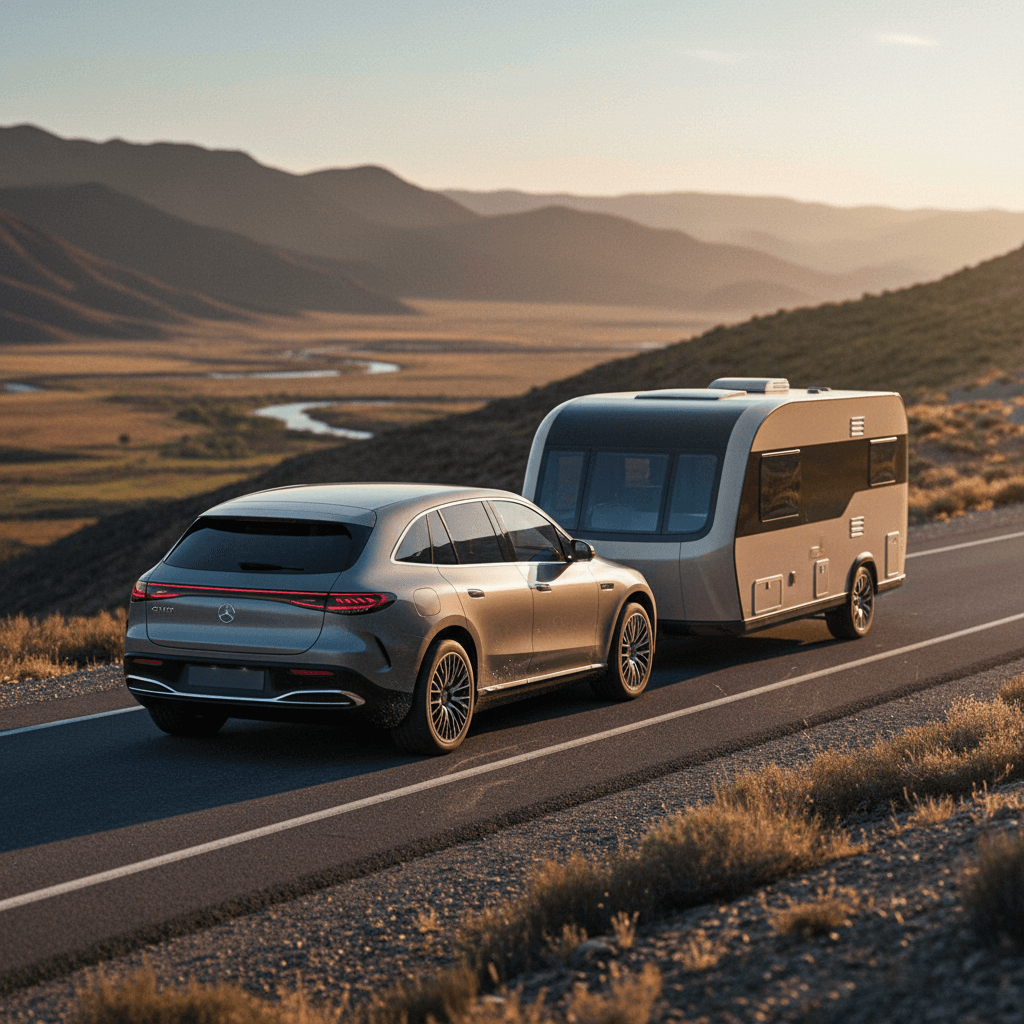
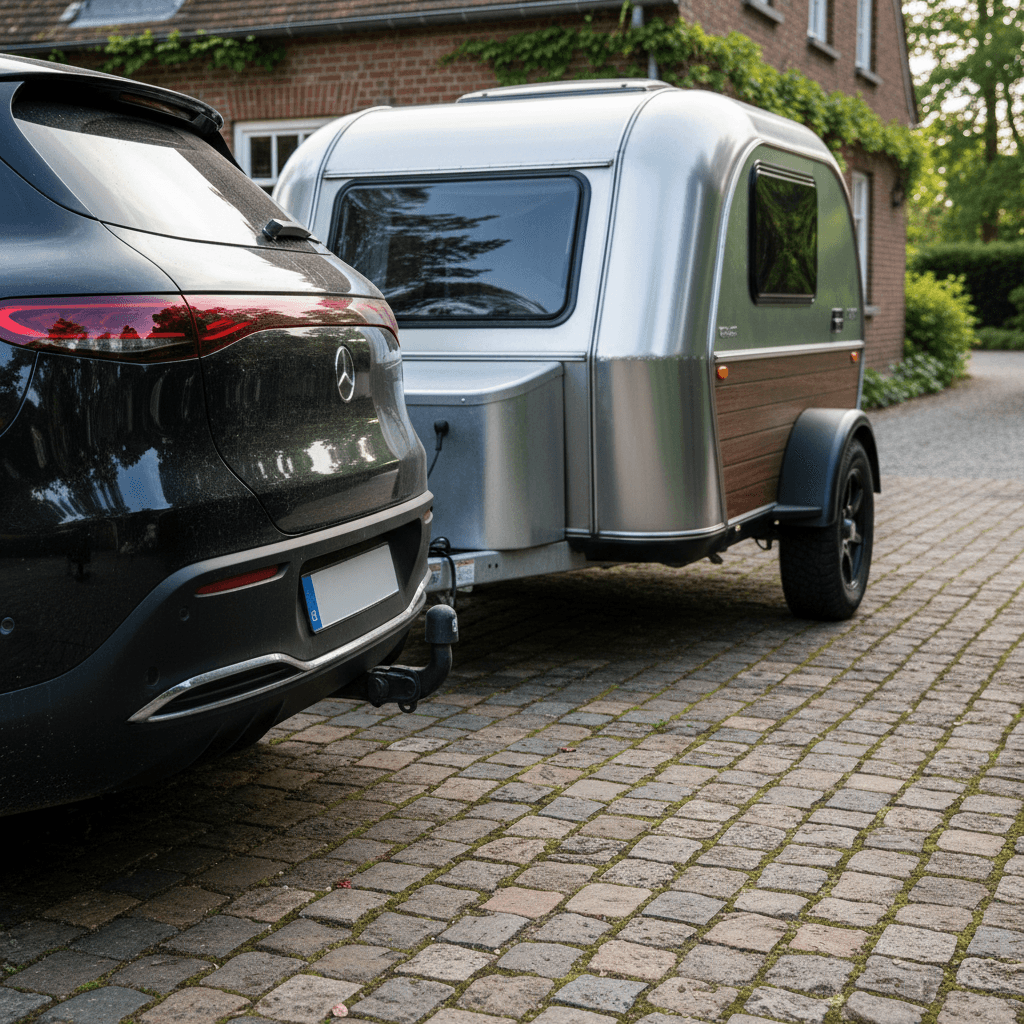
If you’re eyeing a Mercedes EQE SUV and plan to tow a small camper, boat, or utility trailer, you need straight answers on towing capacity and range. The EQE can absolutely tow, but like every electric SUV, hitching a trailer has a noticeable impact on how far you can travel between charges.
Quick takeaway
Mercedes EQE towing capacity & range at a glance
Mercedes EQE SUV: Key towing & range numbers
Mercedes doesn’t market the EQE as a heavy-duty tow vehicle. Instead, it’s positioned as a luxury electric SUV that can comfortably handle light recreational towing, think small campers, single-axle utility trailers, and lightweight boats, while still delivering quiet, effortless acceleration.
Mercedes EQE SUV towing capacity by trim
When you see "EQE" in the U.S. market, you’re usually looking at the EQE SUV, not the sedan. The SUV is the version that’s commonly tow-rated. Official numbers vary a bit by source and market, but they consistently land right around 3,500 pounds when properly equipped.
Mercedes EQE SUV towing capacity (U.S.-market guidance)
Approximate tow ratings for major EQE SUV variants when equipped with the factory towing package. Always confirm your specific vehicle’s rating on its certification label and in the owner’s manual.
| Model | Drive | Typical max towing capacity* | Notes |
|---|---|---|---|
| EQE 350 4MATIC SUV | Dual-motor AWD | ≈3,500 lb | Most U.S. references list 3,500 lb when equipped with towing package. |
| EQE 500 4MATIC SUV | Dual-motor AWD | ≈3,500 lb | Similar 3,500 lb (≈1,588 kg) rating with towing package. |
| AMG EQE SUV | Performance AWD | ≈3,500–4,000 lb | Some guides quote up to ~4,000 lb; treat 3,500 lb as the safe baseline. |
| EQE 350+ SUV (RWD) | Single-motor RWD | ≈3,500 lb (where rated) | Check your VIN and manual, towing availability can vary by region. |
| EQE sedan (all versions) | RWD/AWD | Often not tow-rated in U.S. | European-market sedans may have ratings; many U.S. sedans are “no towing.” |
These figures are for orientation only; your individual vehicle’s rating may differ slightly by model year and market.
Always verify your specific EQE
If you’re shopping used, it’s common to see EQE 350 and 500 SUVs advertised with a 3,500 lb tow rating. Some AMG EQE SUV listings mention up to 4,000 lb, but unless you can verify that in official documentation, you’re better off respecting the 3,500 lb threshold.
EPA range and real-world range for the EQE SUV
Towing capacity is only half the story. With any EV, you also need to understand range, both EPA-rated and what you can really expect with a trailer behind you. For the EQE SUV, official EPA combined range estimates generally fall between the mid-200s and just over 300 miles, depending on trim.
Typical EPA range figures for Mercedes EQE SUV
Numbers will vary slightly by wheels, options, and model year, but these ballparks are useful when planning to tow.
EQE 350+ SUV (RWD)
Approx. EPA range: up to around 300–307 miles on 20-inch wheels for recent model years.
Best case for long-distance efficiency if you plan to tow only occasionally.
EQE 350 4MATIC SUV (AWD)
Approx. EPA range: mid-260-mile range (around 260–270 miles) depending on year.
AWD adds traction and power but costs a bit of range vs. the rear-drive 350+.
EQE 500 4MATIC SUV
Approx. EPA range: high-270s to low-280s (around 280 miles) with the larger battery.
More power and torque with only a modest range penalty.
AMG EQE SUV
Approx. EPA range: low-to-mid-200s, often in the 230–250 mile window.
Huge performance, but not the ideal EQE trim if range while towing is your top priority.
Battery and charging basics
How towing affects Mercedes EQE range
Hook up almost any trailer and your EQE’s range will drop. That’s true for gas, diesel, and electric vehicles, but EV drivers feel it more because they notice every mile between fast-charging stops. The good news: for the types of light trailers the EQE is designed to pull, your range hit is predictable and manageable if you plan around it.
- For a small, low-profile utility trailer or lightweight boat, it’s common to see a 25–35% range reduction at highway speeds.
- For a compact, boxy travel trailer (single-axle camper), range reductions of 35–50% are realistic, especially at 65–75 mph.
- Headwinds, cold temperatures, and higher speeds can stack up, pushing you toward the higher end of those losses.
- Conversely, slowing down to 55–60 mph and choosing a more aerodynamic trailer can significantly improve your towing efficiency.
A simple rule-of-thumb for EQE towing range
Example 1: Light utility trailer
You’re driving an EQE 350 4MATIC SUV rated around 265 miles EPA combined. You hitch a lightly loaded 5x8 utility trailer weighing ~2,000 lb total.
- Assume ~30% range loss at highway speeds.
- Practical highway leg: roughly 180 miles before you’ll want a fast charge.
- In good weather and at 60 mph, you might stretch that a bit farther.
Example 2: Small camping trailer
Same EQE 350 4MATIC SUV, but now you’re towing a 3,200 lb single-axle camper with a taller, boxy profile.
- Assume 40–50% range loss.
- Practical highway leg: closer to 120–150 miles.
- Plan on more frequent stops and shorter charging sessions.
What you can realistically tow with an EQE SUV
The EQE SUV’s tow rating puts it in the "light-duty" towing camp. That’s not a knock, it’s simply a recognition that this is a luxury crossover, not a heavy-duty pickup. Stay within the rating, pay close attention to tongue weight, and you’ll find the EQE well-suited for plenty of weekend and vacation duties.
Typical loads within Mercedes EQE SUV towing limits
Exact numbers depend on your specific model’s rating, always weigh your trailer.
Small travel trailers
- Teardrop campers
- Compact single-axle campers (often 2,000–3,000 lb loaded)
- Pop-up campers
Keep a close eye on loaded weight, and watch that tongue weight.
Boats & personal watercraft
- Small fishing boats on a trailer
- Single or pair of jet skis
- Light aluminum boats
Boat trailers are usually more aerodynamic than box campers, which helps range.
Utility & cargo trailers
- 5x8 or 6x10 utility trailers
- Small enclosed cargo trailers
- Home-improvement runs and landscaping gear
Try to keep the trailer low and streamlined when possible.
Loads that are poor EQE matches
Towing package, hitches, and setup for the EQE
From the factory, the EQE SUV needs to be properly equipped for towing. On many trims, that means ordering or finding a vehicle with the towing package, which typically includes the hitch receiver, wiring, and software to integrate trailer stability systems.
EQE towing setup checklist
1. Confirm factory tow rating
Before anything else, verify in the owner’s manual and door jamb sticker that your EQE SUV is approved for towing and note the exact maximum capacity.
2. Look for the OEM towing package
The cleanest solution is a factory-installed hitch and wiring. It’s designed around the cooling, stability control, and software logic of the EQE platform.
3. Use a reputable hitch installer
If you’re adding a hitch after purchase, use a shop with EV experience. Incorrect mounting points or wiring can damage the vehicle or compromise safety.
4. Check tongue weight
Keep tongue weight in the typical <strong>10–15% of trailer weight</strong> window unless Mercedes documentation specifies otherwise, and don’t exceed the tongue limit in the manual.
5. Verify lights and brakes
Confirm trailer lighting works correctly and that any required trailer brakes are functional and properly adjusted for your load.
6. Enable trailer stability features
If your EQE offers trailer stability or specific towing modes, make sure they’re turned on and configured before you hit the highway.
Trip-planning tips for EQE owners who tow
Once you’ve sorted out hardware and capacity, the bigger challenge is planning road trips around charging stops. This is where towing an EQE differs most from towing with a gas SUV.
- Plan legs at 50–60% of your normal solo range when you tow anything with a tall profile.
- Favor DC fast chargers along major corridors and avoid long detours up steep grades when possible.
- Aim to fast charge from roughly 10–20% up to 60–80% instead of all the way to 100%; it’s faster overall and easier on the battery.
- If your trailer height allows it, look for charging stations that are pull-through or have room to park across spots without blocking others.
- Build in extra time during cold weather trips, both range and charging speeds are affected by low temperatures.
- Use route-planning tools or apps that let you adjust for higher consumption so you’re not caught short between chargers.
How the EQE actually feels when towing
Mercedes EQE vs other electric SUVs for towing
If towing is mission-critical, you might be cross-shopping the EQE with other electric SUVs like the Tesla Model X, Kia EV9, or Rivian R1S. The EQE isn’t the class leader in pure tow rating, but it does land in a practical middle ground that will satisfy many families and weekend adventurers.
How the EQE SUV stacks up against other electric SUVs for towing
Approximate manufacturer ratings for popular electric SUVs. Always verify exact specs for the model year and configuration you’re considering.
| Model | Max towing capacity | Approx. EPA range (non-towing) | Towing focus |
|---|---|---|---|
| Mercedes EQE SUV | ≈3,500 lb | Mid-200s to 300+ miles | Balanced luxury and light-duty towing. |
| Tesla Model X | Up to 5,000 lb | Up to mid-300-mile range | Higher tow rating but more expensive. |
| Kia EV9 | Up to 5,000 lb | Mid-to high-200-mile range | Family SUV with solid tow chops. |
| Rivian R1S | Up to 7,700 lb | Low-to mid-300-mile range | Serious tow machine, but range drops sharply when loaded. |
| Hyundai Ioniq 5 / Kia EV6 | Up to 2,300–3,500 lb | Mid-200s to 300 miles | Capable for lighter trailers, more compact overall. |
These figures are for comparison only and may vary by market, trim, and options.
How to choose if you tow a lot
Buying a used Mercedes EQE for towing
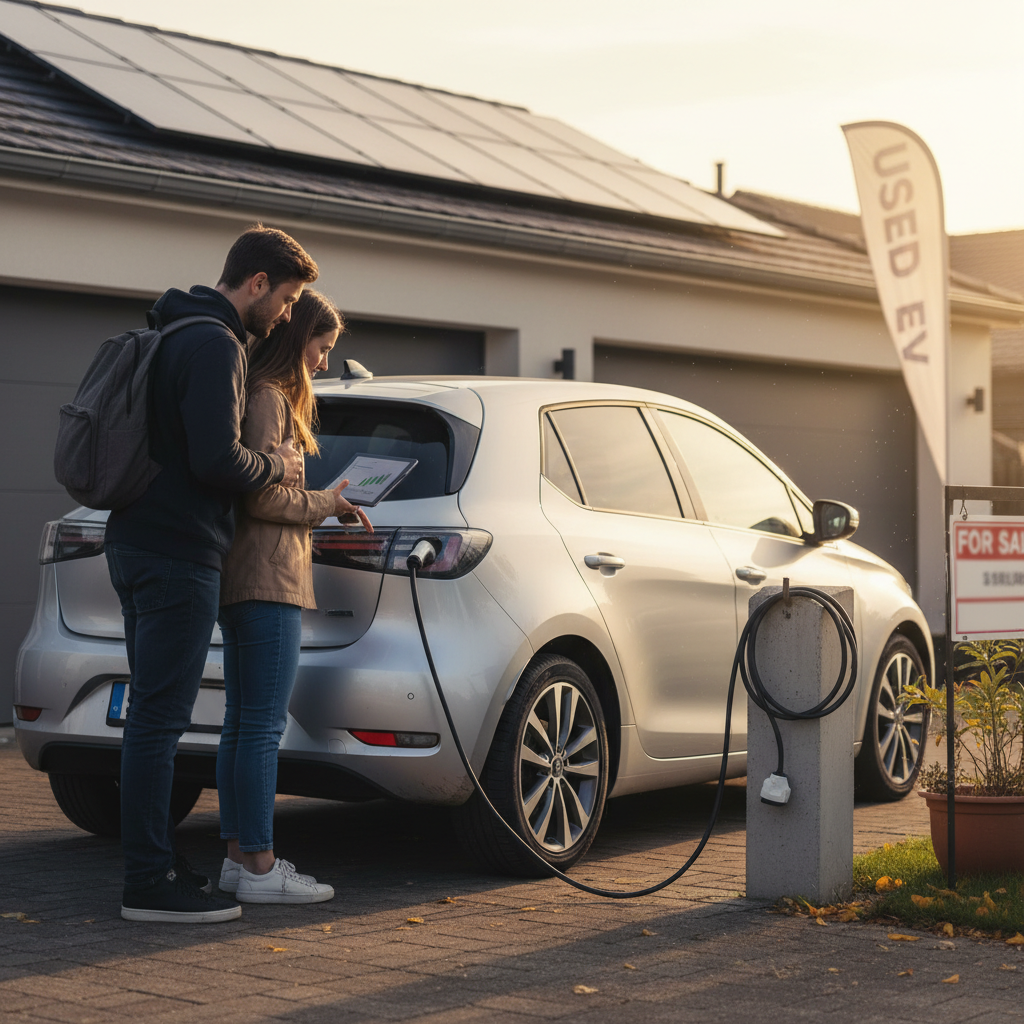
On the used market, the EQE SUV is becoming more attractive as Mercedes adjusts pricing on new EVs and early leases return. If towing is on your checklist, you’ll want to look beyond the usual cosmetic and feature considerations and focus on battery health and hardware configuration.
Used EQE SUV towing checklist
Confirm it’s the SUV, not the sedan
Only the EQE SUV is commonly tow-rated in the U.S. The EQE sedan may not be approved for towing here, even if similar European versions are.
Verify tow rating and hitch equipment
Check for a factory hitch receiver and wiring. If a hitch was added later, ask for installation records and make sure it uses approved mounting points.
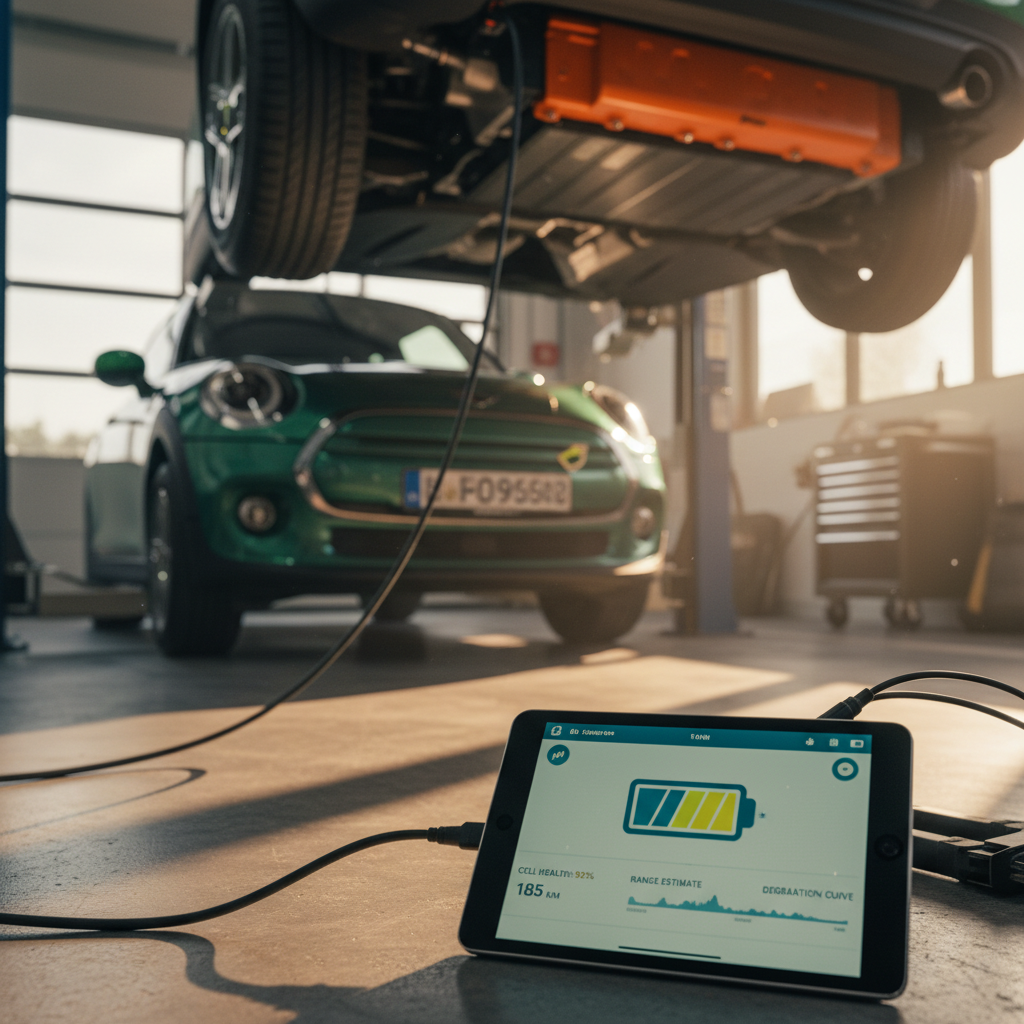
Get a clear picture of battery health
Towing can increase energy usage but doesn’t inherently ruin a pack. Still, you want a documented view of battery condition to understand real-world range.
Test drive with load, if possible
Bringing a small trailer to a test drive is ideal. If that’s not realistic, at least pay attention to how the EQE feels under hard acceleration and on hills.
Run the numbers on your use case
Be honest about your trailer’s loaded weight and how often you’ll tow. If you’re near or over 3,500 lb frequently, the EQE may not be your best fit.
How Recharged can help with a used EQE
Mercedes EQE towing capacity & range: FAQ
Frequently asked questions about EQE towing and range
Is the Mercedes EQE a good tow vehicle?
If your goal is pulling a large multi-axle camper across the country, the Mercedes EQE isn’t the right tool. But if you’re looking for a luxury electric SUV that can commute during the week and tow a small camper, boat, or utility trailer on weekends, the EQE SUV hits a useful middle ground. Its typical 3,500 lb towing capacity and mid-200s-plus EPA range make it practical for light-duty towing, as long as you respect the limits and plan your charging stops carefully.
As the used EV market matures, more EQE SUVs are showing up with attractive pricing. That’s where buying through a dedicated EV retailer like Recharged can help: you get transparent battery-health data, fair market pricing, and experts who understand how towing and range intersect in the real world. If you match the right EQE to the right trailer, and build your trips around realistic range expectations, you can enjoy quiet, comfortable electric towing without guesswork.