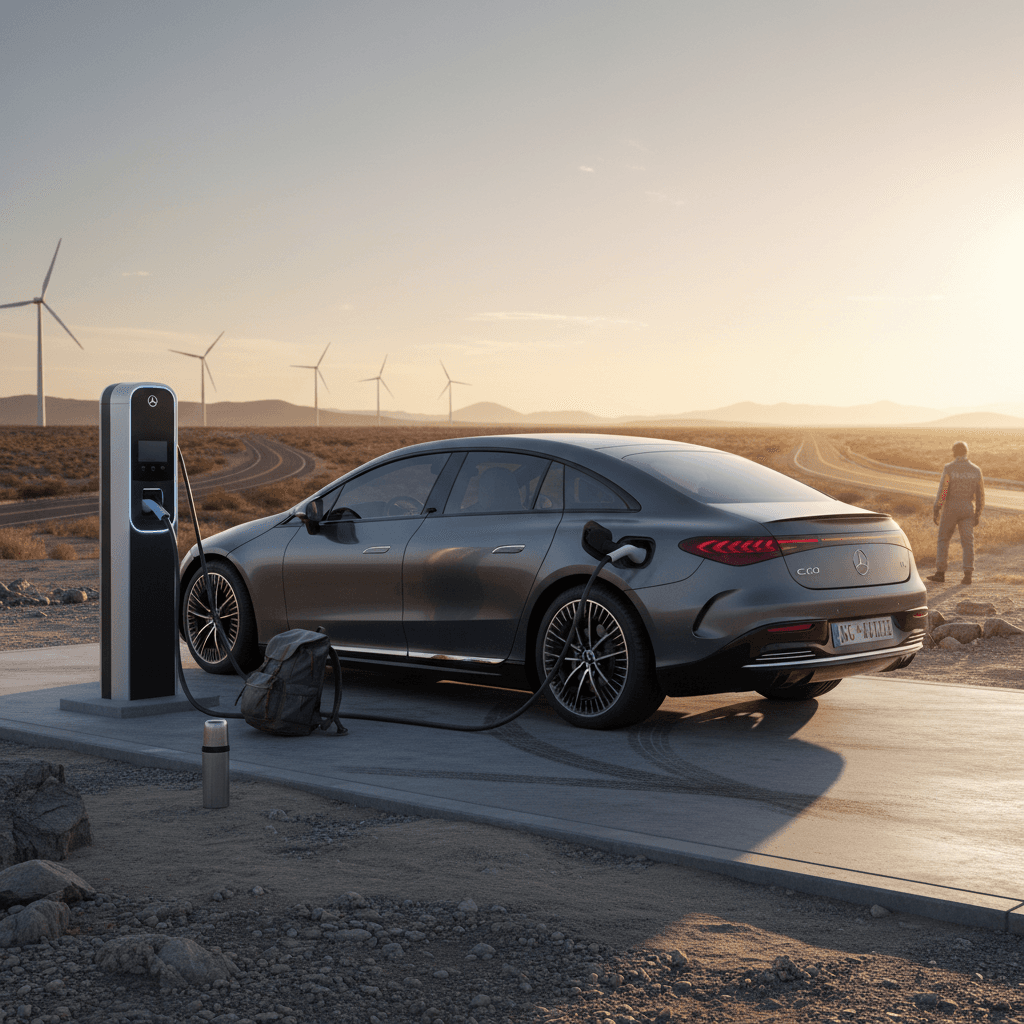
The Mercedes EQE was built with real distance in mind: a big battery, quiet cabin, and a charging system that can comfortably knock down long highway days. But if you want your Mercedes EQE to shine on a road trip, you’ll need a slightly different playbook than you used in a gasoline E‑Class. These Mercedes EQE long distance driving tips will help you understand your **real-world range**, pick smart chargers, and arrive relaxed instead of range‑anxious.
Sedan vs. SUV: the tips apply to both
Why the Mercedes EQE is a strong road‑trip EV
Mercedes EQE road-trip numbers at a glance
On long drives, the EQE’s **large battery pack** and strong mid‑range charging performance are your best friends. The sweet spot for this car is cruising between about 10–80% state of charge (SoC) and using DC fast chargers along major corridors. Think of it as a luxury train: steady speed, planned stops, and no drama, if you know how to work with the charging curve.
Think in legs, not in full batteries
Know your real-world EQE highway range
Mercedes publishes impressive WLTP and EPA figures for the EQE, and some rear‑drive EQE 350+ sedans post big numbers in ideal conditions. Real life on an American interstate is messier: 70–80 mph cruising, climate control running, passengers and luggage on board. Most EQE sedans and SUVs end up in a similar ballpark for **comfortable highway range**.
Typical real-world highway range by EQE type
Approximate ranges for steady 65–75 mph driving in mild weather, starting around 90% and arriving near 10–15% SoC. Your results will vary with speed, temperature, wheels, tires, and elevation.
| Vehicle | Drivetrain | Conservative highway planning range | When to start looking for a charger |
|---|---|---|---|
| EQE 350+ sedan | RWD | 260–290 miles | Around 220–240 miles into a leg |
| EQE 350 4MATIC sedan | AWD | 240–270 miles | Around 200–220 miles |
| EQE SUV 350+ | RWD | 240–270 miles | Around 200–220 miles |
| EQE SUV 350 4MATIC / 500 | AWD | 220–260 miles | Around 190–210 miles |
| AMG EQE sedan/SUV | AWD performance | 200–240 miles | Around 170–190 miles |
Use these as conservative planning numbers, not records to beat.
Don’t chase the last 10–15%
- Before your first big trip, take a **local highway test loop**: drive 50–80 miles at your usual speed, note energy consumption (mi/kWh or kWh/100 mi), and extrapolate.
- If your EQE shows dramatically less range than expected, check for high speeds, strong headwinds, under‑inflated tires, or winter temperatures before you panic about the battery.
- Remember that wheel size and tire type matter; 19‑inch aero wheels will do noticeably better than 21‑inch performance tires.
Plan your Mercedes EQE route like a pro
Navigation is where a lot of EQE owners either fall in love with their car, or get frustrated. Mercedes’ **Navigation with Electric Intelligence** can propose charging stops along your route, but it’s not infallible, and in North America fast‑charger reliability is still uneven. The best strategy is to use multiple tools and sanity‑check every stop before you bet your family vacation on it.
Best tools for planning EQE road trips
Combine in-car navigation with third‑party apps for backup options.
In-car "Electric Intelligence"
Pros: tight integration with your EQE, automatic battery preconditioning when a DC fast charger is set as destination, and live state-of-charge estimates at arrival.
Watch for: occasional detours to chargers that are slower, off-route, or poorly reviewed. Always zoom in and inspect each suggested stop.
Charging apps (PlugShare, Chargeway, etc.)
Use third-party apps to cross-check station ratings, recent check-ins, and photos. Look for nodes with multiple DC fast chargers and amenities (restrooms, food, lighting).
Mark two options per leg: a primary stop and a backup 20–40 miles further down the road.
Automaker & network apps
Mercedes me Charge, Electrify America, ChargePoint, EVgo and others all have their own apps. They’re helpful for live status (in-use vs. available) and starting sessions smoothly.
Set up accounts and payment methods at home so you’re not creating logins in a windy parking lot.
Build in margin at the ends of your day
Smart charging strategy for long drives
On a road trip, you’re not trying to hit 100% at every stop, you’re trying to move the car and the people inside it down the map efficiently. The EQE’s DC fast‑charging curve is strongest from low state of charge up through about 50–60%, then it gradually tapers. Your strategy should work with that pattern, not fight it.
EQE DC fast charging: where it’s fastest
Typical behavior for many EQE sedans and SUVs on a healthy 150–350 kW DC fast charger in mild temperatures.
| State of charge range | Approximate power | What it means for trips |
|---|---|---|
| 10–20% | 150–170 kW (peak burst) | Best time to plug in; you’ll see the biggest numbers on the screen. |
| 20–50% | 120–140 kW | Strong, efficient charging; great time to grab food and stretch. |
| 50–70% | 80–110 kW | Still worthwhile on the highway, but minutes per mile added are creeping up. |
| 70–90% | 40–70 kW | Useful only if your next leg is very long or chargers are sparse ahead. |
| 90–100% | Below 40 kW | Painfully slow; avoid unless you absolutely need every mile. |
The goal is to spend most of your time in the "fast" part of the curve, not parked at a charger nursing the last 15%.
A simple pattern that works
Using DC fast chargers with the EQE
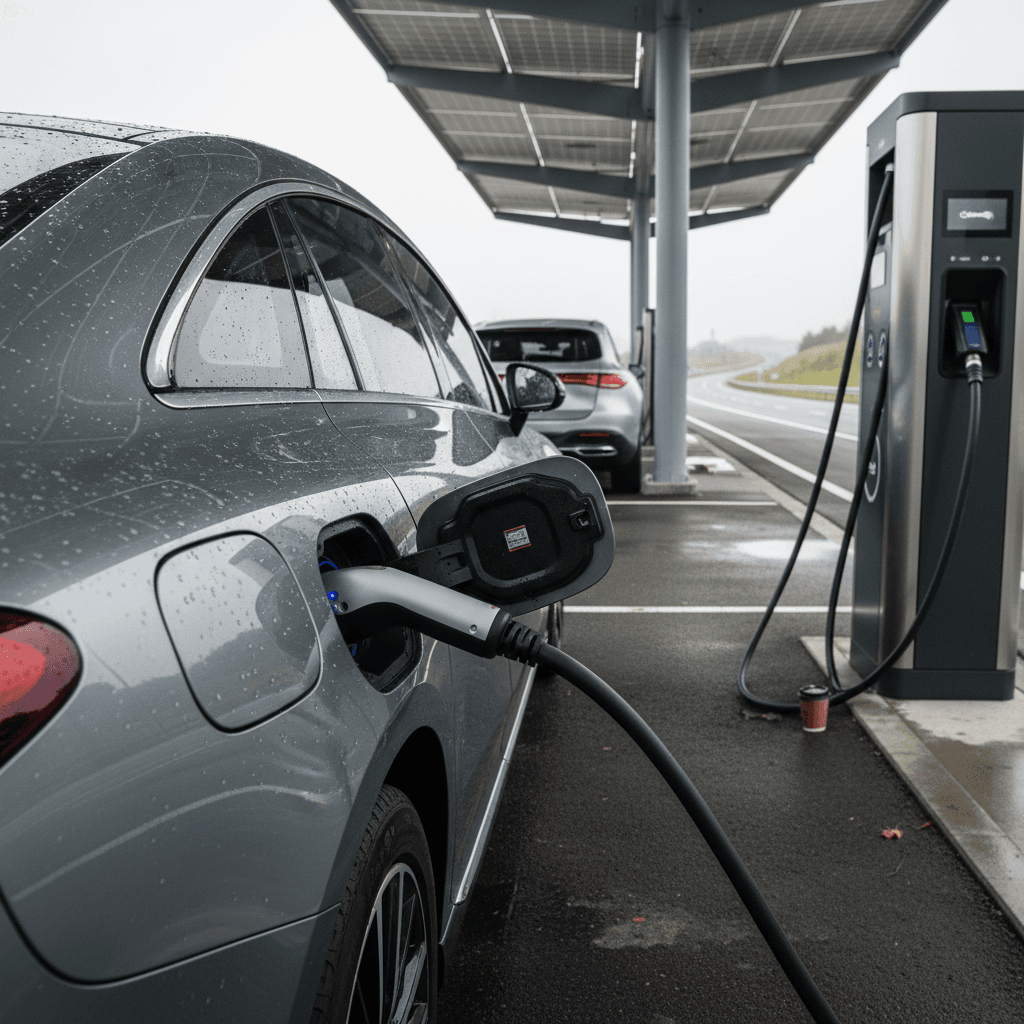
Most U.S.-market EQE models use the CCS1 fast‑charging inlet today, and newer cars are gaining access to Tesla’s Supercharger network via approved NACS adapters and Mercedes’ own partnerships. No matter where you plug in, a few habits make sessions smoother and faster.
- Whenever possible, choose **150 kW or 350 kW stations** over 50–75 kW units. The EQE’s peak is around 170 kW, but the real win is a strong, stable 100–130 kW average.
- Arrive with the battery **warmed up**. Use navigation to set the charger as your destination so the car can precondition on the way.
- When you plug in, confirm that your session has actually started in the app or on the station screen before you walk away.
- If you’re using a network app, start the session from your phone rather than fighting with touchscreens in the rain.
- Watch the charging rate. Once it falls under roughly **60–70 kW** and you have enough buffer for the next leg plus 20–30 miles, it’s usually time to unplug and go.
Safety and etiquette still matter
Drive settings that boost long-distance range
You bought an EQE for its quiet luxury, not to crawl in the right lane with trucks. The trick is finding a balance between comfort and consumption. A handful of settings in the EQE’s drive modes and regenerative braking can add meaningful miles without making the car feel hobbled.
EQE settings that pay off on the highway
Small tweaks that make a big efficiency difference on long trips.
Drive mode: Comfort or Eco
Comfort is a great starting point, responsive enough for passing but not as thirsty as Sport. If you’re stretching between sparse chargers or driving into a headwind, Eco dials back power and climate use to protect range.
Regenerative braking levels
Use strong regen in traffic or hilly terrain to recapture more energy, and a lighter setting on flat, steady freeway runs where you can use cruise control. Learn how your EQE’s paddles change regen so you can adjust on the fly.
Climate & seat settings
Cabin heating and cooling are big power draws. On cold days, rely more on heated seats and steering wheel and a slightly cooler cabin temp; in summer, keep A/C at a reasonable setting and use ventilation instead of full blast.
Precondition while plugged in
Weather, terrain, and load: how they hit range
Every EV driver learns the same lesson sooner or later: not all miles are created equal. The EQE is efficient for its size, but physics still has a vote. Cold batteries, steep grades, high speeds, heavy cargo, and headwinds can all carve big chunks out of your displayed range.
Cold and heat
- Cold weather thickens battery chemistry and increases cabin-heating demand. Expect noticeably shorter legs until the pack is warm.
- Use seat and wheel heaters first, then modest cabin heat. Precondition before departure whenever you can.
- In desert heat, high A/C loads and battery thermal management draw power too; don’t be afraid to turn it down a notch once the cabin is cooled.
Hills, wind, and weight
- Long climbs at highway speed use far more energy than flat driving. Budget extra margin when crossing mountain passes.
- Headwinds behave like invisible hills; if your consumption spikes on a flat day, check the wind direction.
- Roof boxes, bike racks, and heavy cargo all increase drag or weight. Secure your gear, but understand you’re paying a range penalty for it.
Respect mountain passes
Battery health and fast charging on road trips
EQE packs are designed to handle DC fast charging, and an occasional cross‑country run won’t suddenly destroy your battery. What matters is how you treat the pack over years, not whether you used the 350 kW station on last summer’s vacation. A few habits will keep your long‑distance fun from turning into long‑term degradation.
- Use DC fast charging primarily **for trips**, not as a daily habit. At home or at work, a 240 V Level 2 station that fills the EQE overnight is kinder to the pack.
- On the road, avoid bouncing from **0% to 100%**. Living in the 10–80% window is easier on the chemistry and faster for you.
- If you’ll park for many hours or days, try to leave the EQE around **40–60% SoC**, not full or nearly empty.
- Don’t obsess over a few percent of health. Small variations in predicted range can come from software, weather, and driving style as much as battery aging. Look for consistent, long‑term trends instead.
How Recharged looks at EQE battery health
Comfort and cabin tips for arriving fresh
Long-distance driving isn’t just about electrons; it’s about how you feel after 500 miles with kids, snacks, and podcasts. The EQE has the bones of a great tourer, quiet cabin, supportive seats, and high‑end driver assistance, but a few choices can turn it from "nice" into "I could do another 200 miles."
Make your EQE feel like a rolling living room
Little adjustments that reduce fatigue on big days.
Dial in seating & lighting
Spend a few minutes on seat position and lumbar support before you leave town. Use ambient lighting that’s easy on your eyes at night, and keep reflective surfaces dimmed.
Use driver assists wisely
Adaptive cruise and lane centering can reduce mental load on boring stretches, but stay engaged. Think of them as helpers, not chauffeurs.
Plan entertainment & breaks
Create playlists or download podcasts ahead of time so you’re not hunting for content on the move. Align your charging stops with meals and restrooms instead of stopping twice.
Sync breaks with charging stops
Road trip checklist for your Mercedes EQE
Pre-trip checklist for Mercedes EQE long drives
1. Verify software, maps, and charging accounts
Update your EQE’s navigation maps and infotainment software before departure. Make sure your Mercedes me app, major charging network apps, and payment methods are set up and tested at a local station.
2. Inspect tires and adjust pressures
Check tire tread and set pressures to the door‑jamb recommendations, not the sidewall max. Slightly higher pressures within the recommended range can help efficiency and steering feel on the highway.
3. Pack charging essentials
Bring your portable Level 2 or Level 1 cable, any approved adapters, and a compact extension cord rated for EV use if you’ll be charging at cabins or relatives’ houses.
4. Build a primary and backup charging plan
For each long leg, choose a primary DC fast charger and a backup farther down the route. Save both in your apps and in the EQE’s navigation in case cell coverage is spotty.
5. Plan overnight charging
Confirm that your hotel or rental has a compatible outlet or Level 2 charger. If not, identify a nearby public station you can use in the evening while you eat or walk.
6. Do a shakedown run
A week before the trip, take a half‑day drive that includes at least one DC fast‑charge stop. You’ll catch any quirks with accounts, cables, or navigation while you’re still near home.
FAQ: Mercedes EQE long distance driving
Frequently asked questions about EQE road trips
Thinking about a used Mercedes EQE for road trips?
If you set it up right, the Mercedes EQE is an excellent long‑distance companion: quiet, quick, and capable of knocking out big days with only a handful of calm, predictable charging stops. The key is understanding your **real‑world highway range**, planning smart legs between reliable chargers, and treating the battery the way you’d treat any high‑end mechanical part, with respect, not fear.
If you’re shopping for an EQE specifically as a road‑trip machine, buying through Recharged adds an extra layer of confidence. Every used EQE we list comes with a Recharged Score battery health report, fair market pricing analysis, and EV‑specialist support that can talk you through real charging times and trip planning before you ever sign. Pair the right car with the tips in this guide, and your next long drive in a Mercedes EQE should feel less like an experiment, and more like a very comfortable routine.