If you own, or are eyeing, a Mercedes EQE, the high‑voltage battery is the single most expensive component in the car. The good news: with smart habits, you can **maximize Mercedes EQE battery life** and treat that big lithium‑ion pack like a long‑term investment instead of a ticking time bomb. Let’s translate the engineering and fine print into simple, real‑world steps you can start today.
What this guide covers
Why Mercedes EQE battery care matters
Mercedes engineered the EQE’s underfloor pack for long life, and in the U.S. most EQE models carry around a 10‑year / 155,000‑mile high‑voltage battery warranty. That’s reassuring, but it doesn’t mean the pack is invincible. The warranty is written around defects or excessive capacity loss, not every mile of range you feel you’ve lost over the years. Your charging and driving habits still play a huge role in how the battery ages, especially once the warranty clock runs out or if you’re the second (or third) owner.
Mercedes EQE battery at a glance
Those numbers are the starting point. Your goal as an owner is to keep the pack as close to that original health as possible for as long as possible, so that the car still feels like a proper luxury EV in year 8 or 10, not a science project limping between chargers.
EQE battery basics: what you’re working with
Chemistry and buffers
The EQE uses a high‑energy lithium‑ion pack with active liquid cooling and a built‑in energy buffer. That means when the dash reads 0% or 100%, the cells themselves are not truly at their chemical limits. Mercedes keeps a margin at both ends to reduce stress and slow down degradation.
Still, living at those extremes, especially 100% for long periods, nudges the battery toward faster aging. The software buffers help, but they’re not magic.
Onboard charging and DC limits
- AC charging: Around 9.6 kW Level 2 in most U.S. EQE trims, enough for a full overnight recharge on a 40‑amp circuit.
- DC fast charging: Up to roughly 170 kW peak when conditions are right, pack warm, low state of charge, and a healthy charger.
For battery longevity, it’s not just how fast you can charge, but how often and under what conditions.
Heat is enemy number one
Daily charging habits to maximize EQE battery life
Most EQE owners don’t hurt their batteries on wild road trips; they do it quietly, in the driveway, over years of small, repeated habits. Here’s how to stack those habits in your favor.
Five golden rules for everyday EQE charging
Simple routines that give your battery an easy life
1. Aim for 30–80% for routine use
For daily commuting, try to keep your EQE between about 30% and 80% state of charge. That’s the sweet spot where cell stress is lowest.
If your typical day only uses 20–30% of the battery, there’s no reason to start every morning at 100%.
2. Save 100% for trips
Charging to 100% occasionally will not ruin the pack. It’s long holds at 100% that hurt.
Use full charges mainly before long drives, especially highway trips, so the car doesn’t sit at 100% for hours or days.
3. Plug in regularly, not constantly
Mercedes recommends charging the high‑voltage battery on average, not running it down to the bottom and back to the top every time.
Let it dip into the 20–40% range, then bring it back toward your target (say 70–80%) overnight.
4. Use scheduled charging
Use departure timers so the car finishes charging shortly before you leave, instead of sitting full for 8–10 hours.
That’s especially helpful if you need a higher state of charge for an early‑morning drive.
5. Prefer Level 2 at home
At home, stick to Level 2 charging. It’s gentler on the battery than constant DC fast charging and plenty quick for overnight top‑ups.
If you only have Level 1 (120V), that’s slower but perfectly safe, it just takes longer.
6. Don’t obsess over every percent
The EQE’s battery management system protects the cells in the background. You don’t need to micromanage every charge.
Focus on the big picture: fewer long stints at 0% or 100%, avoid heat, and use moderate charging rates when you can.
Set a comfortable “everyday” target
Smart use of DC fast charging
Mercedes built the EQE to handle DC fast charging, and the cooling system is designed to keep the pack in a happy temperature window. Still, heavy, frequent fast‑charging is harder on the chemistry than Level 2 at home. Think of DC fast charging as a power tool: great when used wisely, overkill as an everyday hammer.
DC fast‑charging habits that protect your EQE battery
Use this quick comparison as a road‑trip sanity check.
| Habit | Better for battery | Worse for battery | Why it matters |
|---|---|---|---|
| Arrival state of charge | Arrive between 5–30% | Arrive above 60% | Lower SoC lets the car take high power briefly without lingering at stressful charge levels. |
| Session length | Charge from ~10% to 60–70% | Sit from 10% to 100% | The last 20–30% fills slowly with more cell stress and modest range gain per minute. |
| Frequency | Trips, occasional top‑ups | Daily DC sessions for commuting | Repeated high‑power sessions add up as extra wear compared with AC charging. |
| Battery temperature | Preconditioned and warm in cold weather | Repeated fast‑charging a hot battery on summer days | Extreme cold or heat while fast‑charging increases stress on the electrodes. |
| Charger choice | Well‑maintained, branded sites | Unknown or repeatedly faulting stalls | Glitchy chargers can cause repeated start/stop cycles and extra heat. |
You don’t have to avoid DC fast chargers, just use them strategically.
Don’t sit at 100% on a fast charger
Using Mercedes EQE software to protect the battery
Mercedes quietly built several battery‑friendly tools into the EQE. Learn them once, and they’ll work for you every day.
EQE settings that quietly extend battery life
Once you dial these in, you can mostly forget about them
Eco Charging / charging limits
Many EQE models include an Eco Charging mode or similar restriction that slightly reduces DC charging power. That slows the session a bit but reduces cell heating, especially at higher states of charge.
On AC, set a charge limit (for example, 80%) in the car or the app so it automatically stops instead of creeping to 100% overnight.
Departure timers & preconditioning
Use departure times so the car times charging to finish just before you leave. You can also pre‑condition the cabin, using wall power instead of the battery for the first blast of heat or A/C.
Route to a fast charger in the navigation so the EQE pre‑warms the battery in cold weather for quicker, more efficient DC sessions.
Mercedes me app
The Mercedes me app lets you adjust state‑of‑charge targets, monitor sessions, and sometimes enable or disable eco‑charging and charging programs.
It’s worth a half hour of poking around the menus so you’re not hunting for these settings on a cold night in a parking lot.
Driving modes and regen
Efficiency‑oriented drive modes and stronger regenerative braking reduce how many times you cycle the battery deeply.
The less often you swing from nearly empty to nearly full, the gentler your usage pattern will look over a decade.
Don’t fight the car’s protections
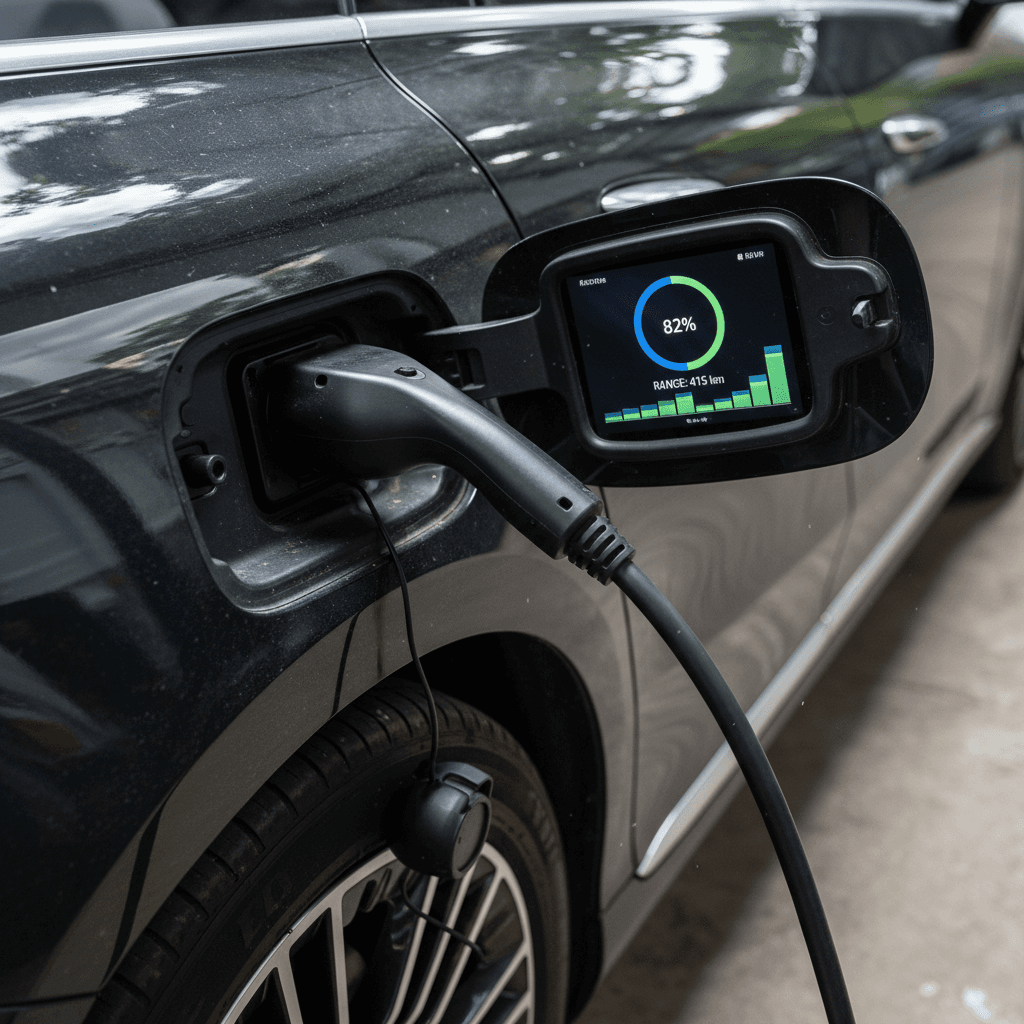
Temperature, driving style, and range
Even if you treat the battery gently, the EQE will feel like a different car in January than it does in June. That’s normal lithium‑ion behavior, not evidence that your pack is dying in front of your eyes.
- Cold weather: You may see 20–40% less range in winter due to cold cells and cabin heating. Using pre‑conditioning while plugged in, and driving a few miles before judging the gauge, will give a truer read.
- Hot weather: The cooling system works hard in summer. Give the car a little shade, avoid parking at 100% in direct sun, and don’t be surprised if the fans run after you shut down.
- Speed and aero: Big wheels and highway speeds chew through range on any EV. If you’re trying to preserve long‑term health, think of 75–80 mph and constant hard accelerations as a “sport tax” on the battery.
Judge your battery over weeks, not one bad day
Long-term storage and infrequent use
If your EQE is going to sit, seasonal use, extended travel, military deployment, how you park it matters just as much as how you charge it.
Storing your EQE the battery‑friendly way
1. Park around 40–60% state of charge
For multi‑week or multi‑month storage, aim to leave the EQE at a mid‑pack charge, roughly 40–60%, instead of 100% or near empty. That’s the least stressful zone for long naps.
2. Avoid leaving it plugged in at 100%
If your home charger keeps topping the car up to 100% every time the pack dips a few percent, the cells stay near their upper limit for weeks. Lower the charge limit or unplug once you hit your storage target.
3. Protect it from extreme heat
A climate‑controlled garage is ideal. If that’s not an option, aim for shade and ventilation. Long, hot summers at high state of charge are where degradation really accelerates.
4. Mind the 12‑volt system
On some modern EVs, parasitic drain from the low‑voltage systems can nibble at the high‑voltage pack as the car wakes up to top off the 12‑volt battery. If you’re storing the car for months, ask your service advisor whether a 12‑volt maintainer is recommended.
5. Check in occasionally
If you can, open the Mercedes me app every few weeks to confirm the state of charge isn’t plunging unexpectedly. A slow, steady drop is normal; a sudden cliff suggests something is waking the car up too often.
Storage and your warranty
Signs your EQE battery is healthy, or struggling
Batteries age slowly and quietly. Instead of staring at one number in the app, look for patterns in how the car behaves over time.
Healthy EQE battery signs
- Real‑world range is still in the same ballpark as when the car was newer, adjusted for season and wheel size.
- Fast‑charging curves look normal: strong power early in the session that tapers predictably as you pass 50–60%.
- No persistent warnings or derating messages related to the high‑voltage system.
- Energy consumption (mi/kWh or kWh/100 mi) is stable across similar routes and conditions.
Red flags to investigate
- Sudden, unexplained range loss that doesn’t track with weather or driving changes.
- Repeated warnings about the high‑voltage battery or powertrain limitations.
- Chronic problems reaching normal DC fast‑charge power across multiple chargers and locations.
- Confirmable capacity loss far beyond what you’d expect for the age and mileage of the car.
If you see these, it’s time for a dealer or qualified EV specialist to run diagnostics, and, if you’re within the EQE’s battery warranty window, to document the behavior properly.
How Recharged helps on used EQEs
Ready to find your next EV?
Browse VehiclesExtra tips if you’re shopping a used Mercedes EQE
If you’re not the first owner, you’re inheriting someone else’s habits. You can’t rewrite their history, but you can reduce your risk and start better habits from day one.
Used EQE buyer checklist for battery health
What to look for before you sign anything
1. Confirm battery warranty coverage
Ask for documentation of the EQE’s high‑voltage battery warranty term and mileage limit. Many U.S. cars carry up to 10 years / 155,000 miles, but details can vary by year and region.
Get the VIN and have a dealer or seller pull the official warranty status.
2. Test a full day of driving
On a long test drive, note energy use and realistic range. You want behavior that makes sense for the car’s age, tires, and weather, not a mystery drain you can’t explain.
If you can, include some highway and city miles to see both sides of the consumption story.
3. Observe a charge session
Watch how the EQE charges on Level 2 and, if possible, a DC fast charger. Does it reach expected power briefly and then taper normally, or is it sluggish from the start?
One bad charger doesn’t prove anything; consistent weirdness across sites is more telling.
4. Ask about charging habits
Many owners will happily tell you how they charged: nightly to 80% in a garage is very different from constant 100% fast‑charges.
Take stories with a grain of salt, but patterns matter.
5. Look for software anomalies
Chronic app glitches, stuck eco‑charging modes, or repeated charging errors should be resolved before you buy. They can mask or complicate true battery health.
6. Get independent battery data
Ideally, get a battery health report. On Recharged, every EQE listing includes a Recharged Score with verified pack diagnostics, so you’re not buying blind.
FAQ: Mercedes EQE battery life and charging
Frequently asked questions about EQE battery life
Bottom line: how to make your EQE battery last
The Mercedes EQE’s battery pack is a serious piece of engineering, backed by a long warranty and wrapped in sophisticated software. But like any lithium‑ion battery, it responds to how you treat it. Live in the middle of the gauge when you can, save 100% for the days you really need it, treat DC fast charging as a tool rather than a lifestyle, and give the car a break from extreme heat and long storage at full charge. Do that, and your EQE will feel like the luxury EV you fell for, whether you’re the original owner or you met it later in life on a used‑car listing.
If you’re shopping used, especially, don’t guess. Look for transparent battery health data and sellers who understand EVs. On Recharged, every EQE comes with a Recharged Score battery health report, pricing that reflects real pack condition, and EV‑specialist support to walk you through what the numbers mean, so you can focus on enjoying the drive, not worrying about what’s happening under the floor.