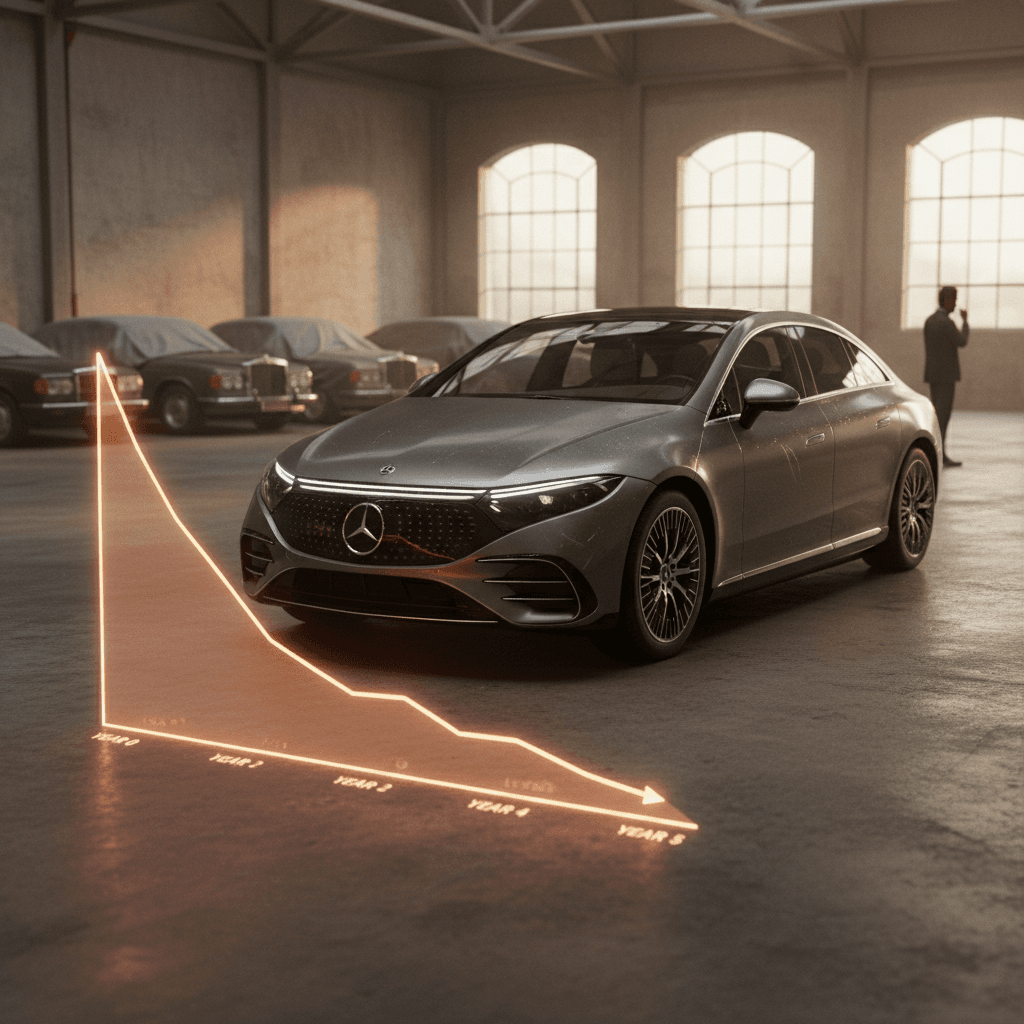
If you’re eyeing a used Mercedes EQE or wondering what your new one will be worth in a few years, you’re really asking one question: what does the Mercedes EQE depreciation curve over 5 years look like? For a six‑figure luxury EV, the answer can mean the difference between a smart buy and an expensive science experiment.
Quick snapshot
Why the Mercedes EQE depreciation curve matters
Depreciation is the single biggest line item in your EV’s total cost of ownership. With the EQE, list prices often start in the high-$70,000s and climb into the $90,000–$100,000+ range when you add AMG performance or big‑ticket options. If that car is worth half of that in five years, you’ve quietly spent more on lost value than on energy, insurance, and maintenance combined.
- Helps you decide whether to buy new, buy used, or lease an EQE.
- Tells current owners when it’s smartest to sell or trade in.
- Lets you compare the EQE against rivals like the Tesla Model S, BMW i5/i7, or Audi e‑tron GT.
- Clarifies whether a discounted used EQE is a bargain or a money pit.
Value hunter’s shortcut
How fast does a Mercedes EQE depreciate over 5 years?
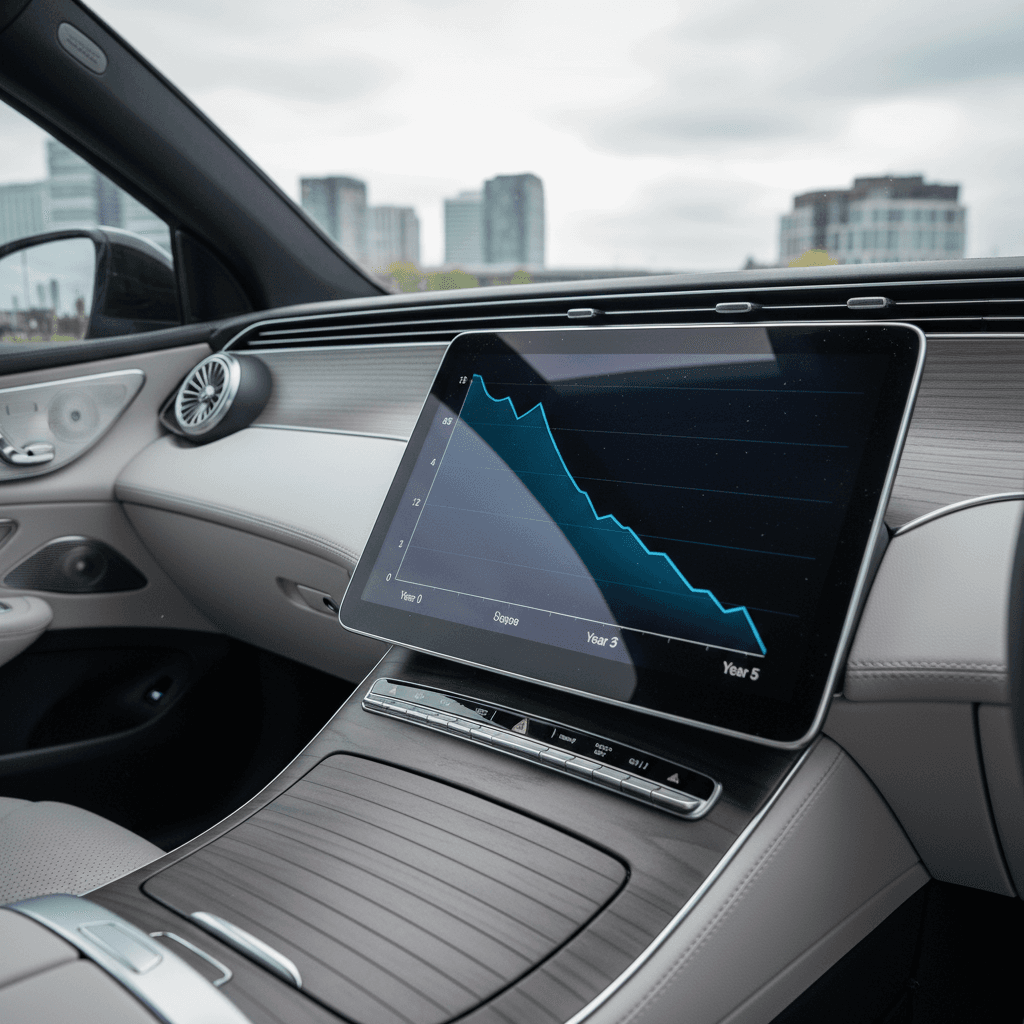
The Mercedes EQE is still a relatively new model, so we don’t have decades of resale data. But between early used listings, what we know from other Mercedes EVs, and the way luxury sedans behave in general, we can sketch a realistic 5‑year EQE depreciation curve.
Mercedes EQE estimated 5‑year value snapshot
In more everyday language: if you buy a $90,000 EQE well-equipped today, it’s reasonable to expect that it could be worth somewhere in the $40,000–$50,000 ballpark after 5 years, give or take condition, mileage, and market swings. That’s painful if you bought new, but very attractive if you’re the second owner.
Estimated 5‑year depreciation curve by EQE trim
Not all EQEs are created equal in the used market. The way the car was priced new, the trim’s performance, and how desirable the equipment is all bend the curve. Below is a hypothetical but realistic depreciation profile for core trims based on typical U.S. luxury EV behavior.
Illustrative 5‑year Mercedes EQE depreciation curve by trim
Estimated retained value as a percentage of original MSRP for common EQE variants under average mileage (12,000–15,000 miles/year) and good condition.
| Model / Year | New (MSRP) | End of Year 1 | End of Year 3 | End of Year 5 |
|---|---|---|---|---|
| EQE 350+ (RWD) | 100% | 82–85% | 62–68% | 48–55% |
| EQE 350 4MATIC | 100% | 80–84% | 60–66% | 46–53% |
| EQE 500 4MATIC | 100% | 80–83% | 58–64% | 44–52% |
| AMG EQE Sedan | 100% | 78–82% | 55–62% | 40–50% |
These are directional estimates, not guarantees. Local market conditions, incentives, and battery health can shift values up or down.
About those percentages…
How the curve feels if you buy new
If you purchase an EQE at or near sticker, the first 12–24 months are when you’ll feel the most pain. Discounts on new cars, updated trims with better range or tech, and demo units all drag used prices down quickly. By year three, the curve flattens: the car is still depreciating, but no longer falling off a cliff.
How the curve feels if you buy used
Step in around year three, and you’re buying on the flatter part of the curve. The previous owner absorbed the worst of the value drop, while you enjoy a still‑modern interior, robust tech, and most of the battery’s useful life, especially if you can verify its health with tools like a Recharged Score report.
What actually drives Mercedes EQE depreciation?
Six big forces shaping EQE resale value
Some you can control, some you can’t, but all are worth understanding.
1. Original pricing & discounts
Luxury EVs that launched with high MSRPs and then got aggressive discounts later tend to show rougher early depreciation. If EQEs in your area were heavily incentivized, used values will mirror that deflation.
2. Range & efficiency
As newer EQE variants or rivals arrive with longer range and better efficiency, earlier cars can look dated on spec sheets. A 10–15% range gap can move buyers to the newer model, pressuring used prices.
3. Performance & trim mix
Some buyers want the entry EQE 350+ for its comfort and efficiency; others pay up for the AMG. Historically, middle and performance trims lose a little more of their original price percentage‑wise because they were so expensive to begin with.
4. Tech obsolescence
MBUX infotainment, driver‑assist systems, and charging speeds all age. When a facelift brings faster charging or better ADAS, earlier EQEs can see a step down in perceived value, even if they still drive beautifully.
5. Battery health & warranty
Buyers pay more for cars with verified battery health and warranty coverage. An EQE approaching the end of its high‑voltage battery warranty, or one with unexplained range loss, will have a bent curve downward.
6. Regional demand & policy
In EV‑dense states with strong charging infrastructure and incentives, used EQEs are easier to sell and command better prices. In regions where EV adoption lags, you may need to price more aggressively to move the car.
Use the market to your advantage
Battery health, range loss, and the EQE
With EVs, resale value lives and dies on the quiet chemistry happening beneath the floor. The EQE starts with a large, sophisticated battery pack, and like all modern EVs it’s designed to retain most of its capacity for many years. But the used market isn’t buying brochure copy; it’s buying confidence.
- Most owners can expect roughly 10–20% usable capacity loss over the first 8–10 years with normal driving and mostly AC charging.
- Fast‑charging heavily, living in extreme heat, or letting the car sit at 100% state of charge regularly will speed up degradation.
- A car that’s down only ~10% after 5–6 years looks great to buyers; a car down 20% that early will be punished on price.
Where Recharged fits in
For buyers, that kind of transparency can justify paying a little more for the right EQE. For sellers, proving that your battery is healthy can pull you up the value curve instead of down.
Leasing vs buying a Mercedes EQE when depreciation is steep
When leasing makes sense
- You want the latest tech and range and plan to swap cars every 3 years.
- You’re wary of how fast high‑end EVs can fall in value and prefer the bank to take that risk.
- There are strong lease incentives or tax structures that the dealer can pass through on a lease but not on a purchase.
In those cases, a lease can effectively "cap" your depreciation risk; you hand the keys back just as the curve begins to flatten.
When buying (especially used) shines
- You buy a 3–4‑year‑old EQE that already lost 35–40% of its sticker price.
- You verify battery health and history, so you understand the risk you’re taking.
- You plan to keep the car for 7–10 years and enjoy low running costs after the loan is paid.
Here, you’re riding the shallow part of the curve. Depreciation per year is far lower, and your dollars buy a lot of car.
A used‑EQE sweet spot
Ready to find your next EV?
Browse VehiclesHow to shop a used Mercedes EQE without getting burned
A sleek EQE with a glowing ambient‑light strip can seduce you into ignoring the spreadsheet. Don’t. Here’s how to keep your head while shopping.
Used Mercedes EQE buying checklist
1. Start with the depreciation curve, not the paint color
Look at what similar EQEs are actually selling for, not just what they’re listed for. That tells you where on the curve the car really sits and whether the asking price makes sense.
2. Demand objective battery‑health data
Ask for a <strong>battery‑health report</strong>, not just a range estimate from the dash. On Recharged, every EQE comes with a Recharged Score that translates pack diagnostics into plain‑English insights and fair pricing.
3. Check charge history & usage pattern
City car with lots of Level 2 charging and moderate mileage? Great. Highway warrior hammered on DC fast‑chargers? Price should reflect that. Service records and telematics can tell a story if you ask.
4. Confirm remaining warranty coverage
Verify how much <strong>battery and powertrain warranty</strong> is left. A car with several years of coverage remaining will usually sit higher on the resale curve than one about to age out.
5. Look for standard, boring damage
Tires, brakes, suspension bushings, luxury EVs are heavy, and that wear adds up. A car that needs $3,000 in rubber and repairs on day one is more expensive than it looks.
6. Compare total cost of ownership, not just price
Run the numbers on financing, insurance, energy, and expected depreciation. Sometimes a slightly more expensive car with better health and options is the cheaper one to own long‑term.
Red flags that bend the curve down
How to protect your Mercedes EQE’s future resale value
If you already own an EQE, you can’t rewrite the depreciation curve, but you can nudge your car toward the top of it, the one buyers fight over rather than bargain‑hunt around.
Owner habits that keep your EQE high on the curve
A few small decisions today can protect thousands in future value.
Be kind to the battery
Favor Level 2 charging over fast‑charging when you can, avoid leaving the car at 100% for long stretches, and don’t run it to zero. Those habits slow degradation and look better in diagnostic reports.
Document everything
Keep meticulous service and repair records, including software updates. A clean, documented history is catnip for used‑EV buyers and helps justify a price above the rough‑average comps.
Protect the cosmetics
Luxury buyers are unforgiving about scrapes, curb rash, and worn interiors. Fix minor damage promptly and consider paint‑protection film or ceramic coatings if you’re in a harsh climate.
Think about your exit early
If you plan to sell around year 5, keep an eye on new EQE variants and competitor launches. When a major update is announced, it can be wise to sell slightly early before values reset.
Trade‑in vs private sale vs marketplace
Where the EQE depreciation curve could go next
Predicting the future of any EV’s resale is a fool’s sport, but you can at least know which way the wind is blowing. For the EQE, there are cross‑currents.
- EV adoption is rising, which generally supports used values as more buyers look for affordable ways into the segment.
- Charging infrastructure keeps improving, making ownership easier in more regions and reducing one major objection to used EVs.
- At the same time, new EV prices are under pressure as competition heats up, which can drag on used values.
- Any major update, longer‑range batteries, faster charging, new interior tech, will tend to push older EQEs down a notch on the curve.
Luxury EVs are living through a compressed version of what smartphones went through: the technology curve is so steep that yesterday’s flagship can feel oddly old, oddly fast. The EQE is not immune, but neither is anything else in its class.
In that environment, the smartest move is not to try to out‑guess the market, but to buy the right car at the right point on the curve, with eyes open about how quickly the goalposts move.
Mercedes EQE depreciation: FAQ
Frequently asked questions about Mercedes EQE depreciation
The bottom line on Mercedes EQE 5‑year depreciation
The Mercedes EQE is a deeply capable, impressively refined electric sedan, and a depreciating asset like any other luxury car. Over five years you can expect it to lose roughly half of its original MSRP, with the steepest fall in the first 2–3 years and a calmer glide path thereafter.
If you insist on owning the very latest thing, accept that you’re paying handsomely for the privilege. If you’re willing to let someone else endure that first plunge, a well‑chosen used EQE, ideally with a verified battery‑health report and fair, transparent pricing, can be one of the savviest buys in the luxury EV world.
Either way, the smart move is to treat the Mercedes EQE depreciation curve over 5 years as a tool. Let it guide whether you buy new or used, how long you keep the car, and when you step aside for the next owner. And if you want help turning those curves and charts into a car you actually love driving, Recharged is built to walk you through every step, from browser tab to driveway.