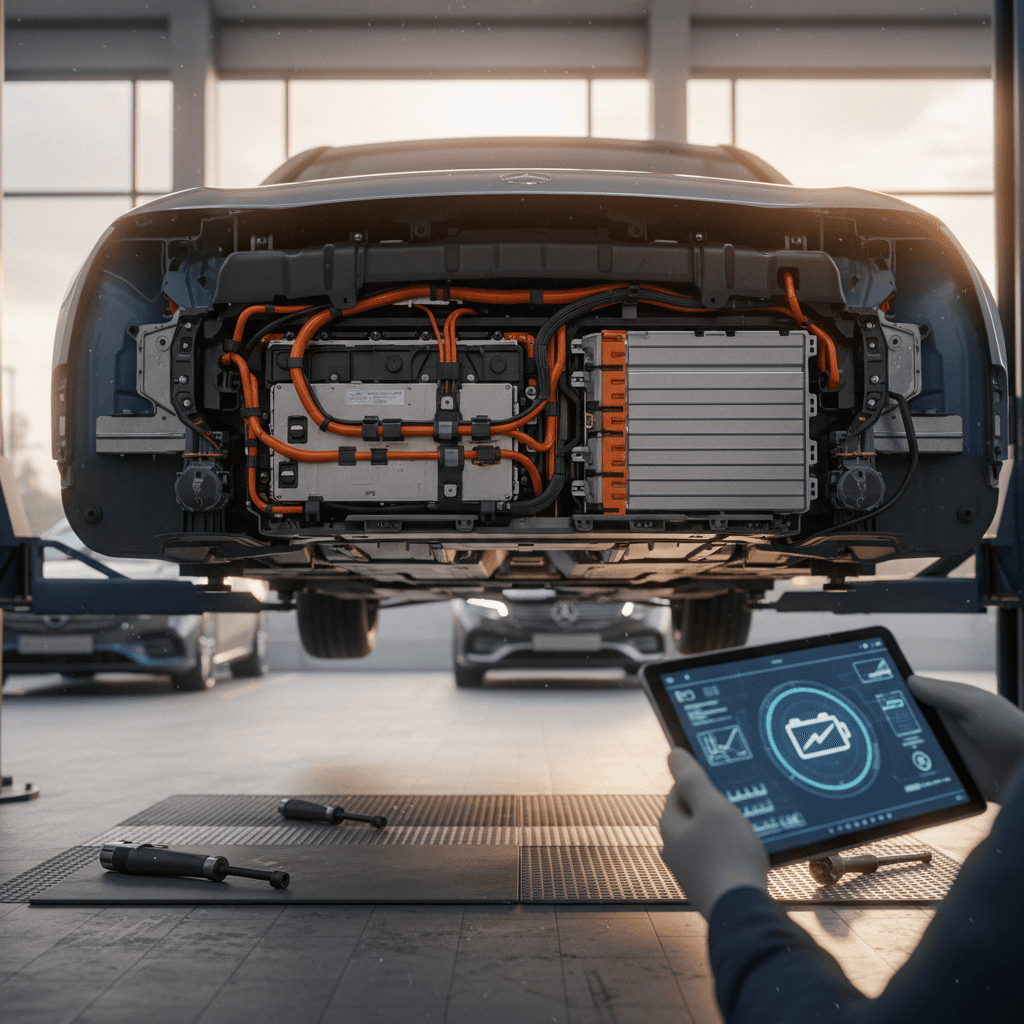
If you’re driving or shopping for a Mercedes EQE, sedan or SUV, the single most expensive component you’re betting on is the high‑voltage battery. Understanding the Mercedes EQE battery warranty details isn’t just fine print; it’s the difference between a confident long‑term purchase and an anxious, six‑figure gamble. Let’s unpack what Mercedes actually promises, how long that promise lasts, and what it means if you’re considering a used EQE.
Short answer
Mercedes EQE battery warranty overview
Mercedes wraps the EQE in two overlapping layers of coverage in the U.S. market:
- New Vehicle Limited Warranty: 4 years / 50,000 miles, bumper‑to‑bumper, including the electric drive system components.
- High‑Voltage Battery Warranty: 10 years / 155,000 miles (whichever comes first) on the EQE’s traction battery, with specific terms around capacity and defects.
EQE warranty numbers at a glance
Exact language varies slightly by model year and region, but if you’re shopping a 2023–2026 EQE in the U.S., you should assume a 10‑year / 155,000‑mile high‑voltage battery warranty unless a specific dealer or country brochure clearly says otherwise.
Always confirm for your VIN
How long the EQE battery warranty lasts
With any EV, you care about years and miles. For the EQE, you can think of the coverage like this:
EQE warranty timelines (typical U.S. coverage)
Approximate coverage windows for Mercedes EQE models sold in the U.S.
| Coverage type | What it covers | Term (years) | Mileage limit |
|---|---|---|---|
| New Vehicle Limited Warranty | Most components, including motors, electronics, interior, suspension | 4 | 50,000 |
| High‑Voltage Battery Warranty | Traction battery pack and related components | 10 | 155,000 |
| Corrosion Warranty | Rust perforation of body panels | 4 | 50,000 |
| Roadside Assistance | Towing, basic roadside support | 4 | 50,000 |
Always verify exact terms in the warranty booklet for your specific EQE and model year.
Both clocks start when the EQE is first put into service, not when you buy it used. So if you’re looking at a 2023 EQE first sold in October 2023, its high‑voltage battery warranty typically runs until around October 2033 or 155,000 total miles, whichever comes first.
How used buyers should think about it
What the EQE battery warranty actually covers
The high‑voltage battery warranty is not a blank check for any drop in range. It’s targeted at two broad categories: defects and abnormal capacity loss.
Two pillars of EQE battery coverage
Defects and excessive degradation are treated differently.
1. Manufacturing defects
If the EQE’s high‑voltage battery has a production defect, for example, a faulty module, coolant leak, or internal wiring failure, the battery warranty is designed to cover diagnosis and repair or replacement, as long as the failure occurs within the 10‑year / 155,000‑mile window.
In practice, that can mean anything from replacing a single module to an entire pack, depending on how Mercedes has structured repairs for that model year.
2. Abnormal capacity loss
Like most OEMs, Mercedes ties the warranty to a minimum level of usable energy capacity. If the EQE’s battery drops below a specified state‑of‑health threshold (typically around 70% of original capacity) within the warranty term, and the decline isn’t due to misuse, Mercedes may repair or replace components.
The exact threshold and test procedure are defined in the warranty booklet and service documentation.
Repair vs. replacement
Typical components covered
- Battery modules and cells inside the high‑voltage pack
- Battery housing and integrated cooling circuits
- High‑voltage contactors and internal wiring within the pack
- Battery management system (BMS) electronics, where integrated in the pack
What “capacity loss” usually means
- Measured energy capacity compared with a new EQE pack of the same spec
- Factory‑defined state‑of‑health (SoH) threshold (often ~70%)
- Standardized test method (charging/discharging at specific temperatures and rates)
- Verification performed by an authorized Mercedes‑Benz dealer or service center
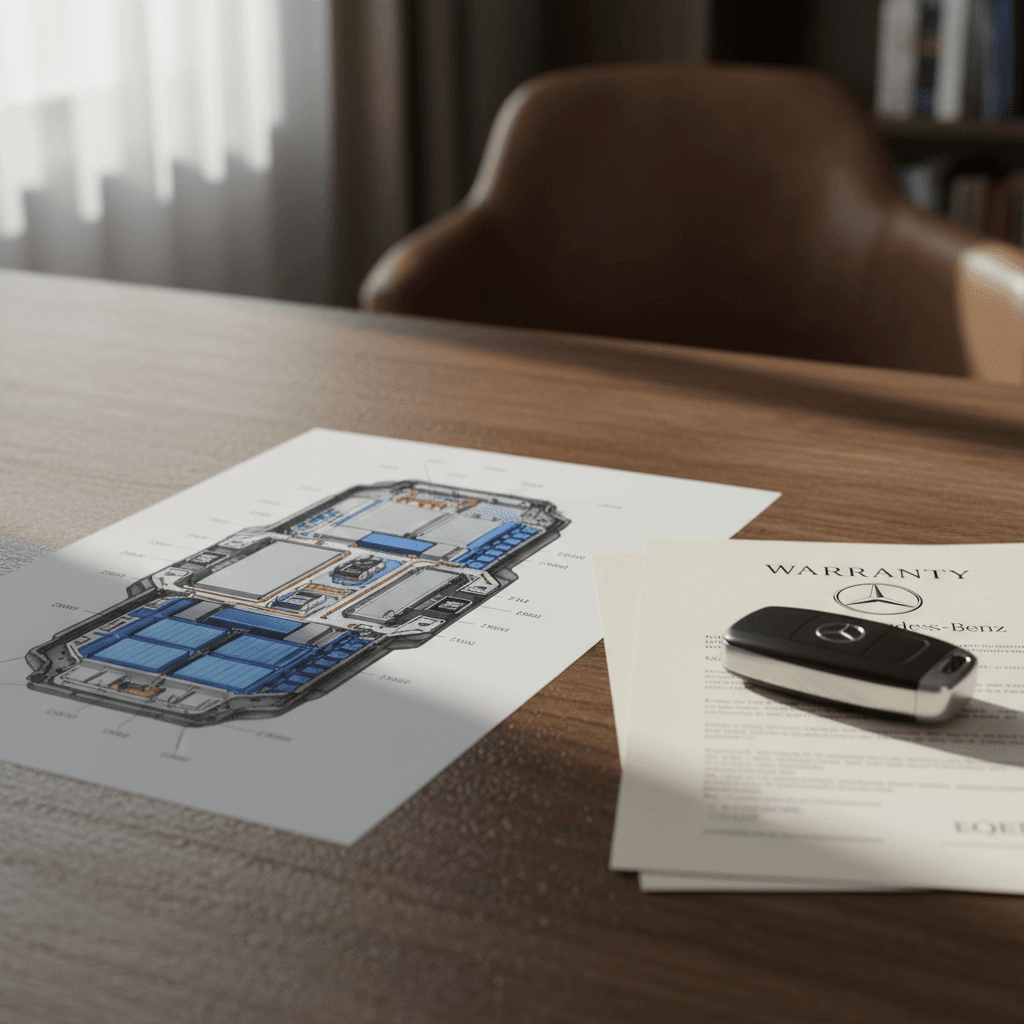
What’s not covered: common surprises
This is where expectations often collide with the fine print. An EQE battery warranty is generous in duration, but it isn’t a guarantee that your range will always look like the window sticker.
EQE battery warranty limitations you should know
Normal, gradual degradation
All lithium‑ion batteries lose capacity over time. A slow, steady drop in range, say 5–10% over several years, is generally considered normal wear and <strong>is not</strong> a warranty failure.
Damage from abuse or misuse
Deep‑discharging the pack repeatedly, overheating it, ignoring warnings, or modifying cooling systems can fall under “abuse.” If Mercedes can reasonably link the damage to misuse, coverage may be denied.
Unauthorized repairs or modifications
Third‑party battery repairs, aftermarket BMS tinkering, or retrofitted performance mods can give Mercedes grounds to limit or deny battery warranty coverage, especially if they affect safety or thermal management.
Accident, flood, or fire damage
Damage from collisions, submersion, or external fires is handled by insurance and collision coverage, not the high‑voltage battery warranty.
Incorrect charging equipment or wiring
Using damaged cables, non‑compliant adapters, or improperly installed home wiring can cause failures that Mercedes considers <strong>outside</strong> normal use.
Don’t ignore warning messages
Sedan vs. SUV and model‑year differences
Both the EQE sedan and EQE SUV share the same EVA2 platform and broadly similar battery technology. From a warranty lens, things are more alike than different, but there are some nuances worth understanding.
EQE sedan vs. EQE SUV: battery and warranty basics
What matters for warranty is pack type and in‑service date, more than body style.
EQE sedan (350+, 350 4MATIC, 500, AMG)
- Usable pack around 90–96 kWh, depending on trim and year.
- Typical U.S. HV battery warranty: 10 years / 155,000 miles.
- Some 2025+ models gained a larger 96.0‑kWh pack, but warranty duration stayed similar.
EQE SUV
- Battery architecture and pack chemistry closely aligned with the sedan.
- High‑voltage battery warranty terms generally match the sedan in each market.
- Check the SUV’s warranty booklet, the same 10‑year / 155,000‑mile pattern typically applies.
Model‑year & policy shifts
- Mercedes has adjusted trims, pack sizes, and pricing between 2023 and 2026.
- Warranty basics have remained stable, but documentation can change wording.
- Always verify the exact terms for your VIN and production year.
Battery upgrades ≠ shorter warranty
Maintenance and owner responsibilities
One quiet advantage of EVs like the EQE is that there’s very little scheduled battery maintenance. But that doesn’t mean you can ignore the car and still expect full warranty protection.
- Follow the factory maintenance schedule in the owner’s manual, especially software updates and inspections that mention the high‑voltage system.
- Keep proof of regular service visits, even if they’re mostly tire rotations and multipoint inspections. Documentation matters in warranty disputes.
- Use approved charging equipment and have 240‑volt circuits installed by qualified electricians, ideally with documentation.
- Avoid persistent operation outside normal limits: ignoring over‑temperature warnings, repeatedly deep‑discharging to 0%, or parking fully charged in extreme heat for long periods.
Good news: no special battery service intervals
How the battery warranty affects used EQE value
For used shoppers, the Mercedes EQE battery warranty is more than a line item, it’s a pricing lever. A 7‑year‑old EQE with three years of battery coverage left is simply worth more than a similar car that aged out of its high‑voltage warranty last month.
Why buyers care so much
- Battery replacement is expensive. A full pack can be a five‑figure repair; most owners will never pay for it out of pocket.
- Warranty tail = confidence. Remaining years and miles of coverage act like an insurance policy against early‑life defects.
- Lenders notice. Lenders and leasing arms are more comfortable with vehicles that still have OEM battery coverage during the loan term.
How Recharged helps de‑risk used EQEs
Every EV on Recharged comes with a Recharged Score Report that includes verified battery health diagnostics, odometer and history checks, and fair‑market pricing analysis. For EQE shoppers, that means:
- Independent confirmation of pack health, not just a dash estimate.
- Clear view of how much warranty coverage is left.
- EV‑specialist guidance on whether the car’s degradation looks normal.
If you’re considering trading in or selling your EQE, a strong battery health report can also support higher offers.
Leverage warranty in negotiations
How to protect your EQE battery, and the warranty
You can’t change cell chemistry, but you can absolutely influence how quickly your EQE’s battery degrades, and how strong your position is if you ever need a warranty claim.
Practical habits that help your EQE battery last
1. Treat 20–80% as your daily comfort zone
For daily use, especially if you’re not using the full range, aim to keep the battery between roughly 20% and 80% state of charge. Reserve 100% charges for road trips or occasional use.
2. Avoid sitting at 0% or 100% in heat
Short stints at a full or nearly empty battery are fine. Long periods, like days, parked at either extreme, especially in hot weather, accelerate degradation.
3. Use DC fast charging thoughtfully
The EQE can charge quickly on DC fast chargers, but relying on rapid charging multiple times a week for years can add wear. For most owners, <strong>Level 2 home charging</strong> is the healthiest default.
4. Keep software up to date
Mercedes releases updates that can improve thermal management and range estimates. Staying current helps keep the battery management system operating as designed.
5. Document everything
Save service invoices, EV‑specific diagnostics, and even photos of warning messages. A paper trail strengthens your case if you ever need to pursue a marginal warranty claim.
6. Get independent battery health checks
Before the factory warranty gets close to expiring, or before you buy used, consider an independent <strong>battery health assessment</strong> like the Recharged Score. It can catch early issues while coverage still applies.
Mercedes EQE battery warranty FAQs
Frequently asked questions about the EQE battery warranty
Key takeaways for EQE owners and shoppers
When you strip away the marketing, the Mercedes EQE battery warranty is fairly straightforward: about 10 years and 155,000 miles of protection against defects and excessive degradation in the most expensive part of the car. That makes the EQE’s long‑term economics far more predictable, especially if you’re buying used and can see exactly how much coverage is left.
Your job as an owner or shopper is to verify the VIN‑specific terms, keep your charging and usage patterns within common‑sense limits, and document service history so you’re on solid footing if anything goes wrong. If you want an extra layer of confidence, especially with a used EQE, buying through a platform like Recharged, where every car comes with a Recharged Score battery health report, expert EV guidance, and transparent pricing, can turn a complex warranty into a simple, informed decision.