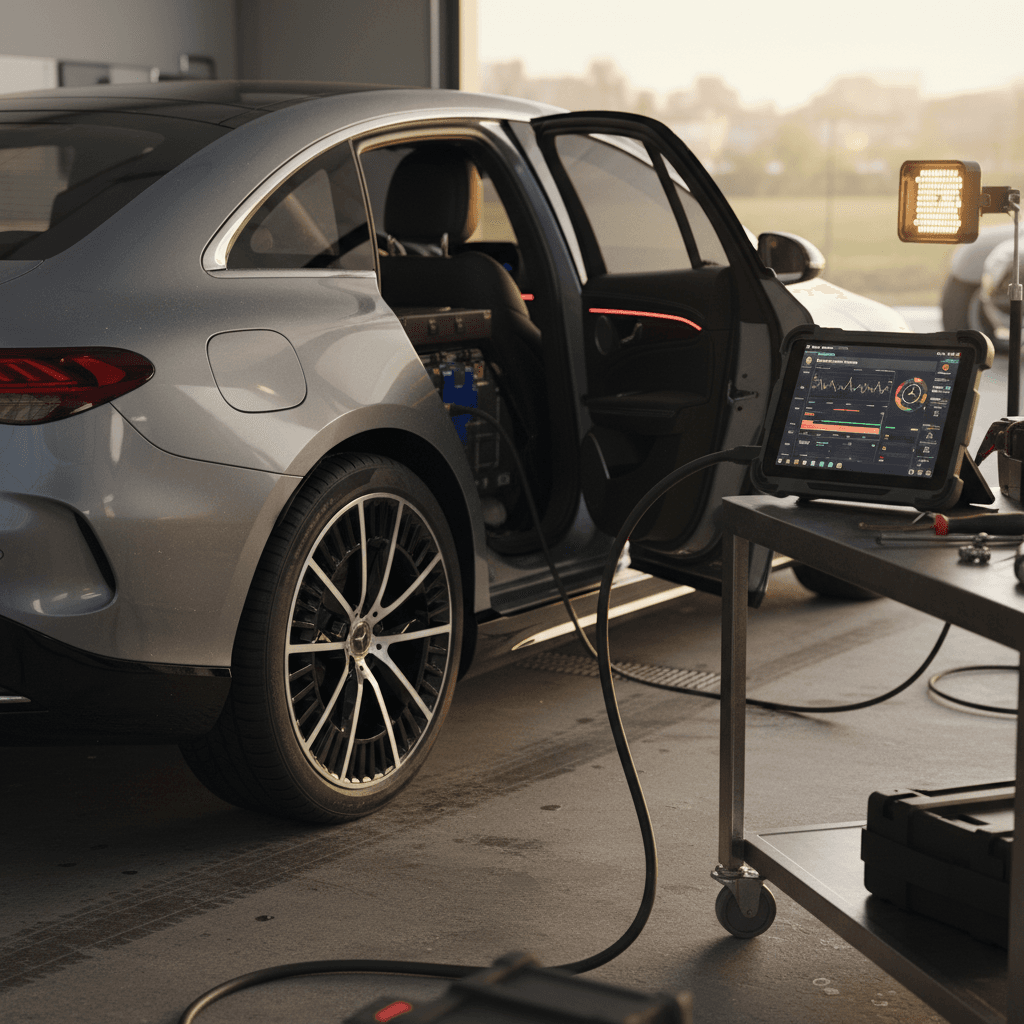
If you’re drawn to the quietly quick, ultra‑refined Mercedes EQE, you’re probably wondering the same thing every EV shopper asks: how long does the Mercedes EQE battery actually last, and what happens as the years and miles add up, especially if you’re looking at a used EQE?
Short answer
How long does a Mercedes EQE battery really last?
Mercedes doesn’t publish an official “expiration date” for the EQE’s battery, but between the engineering targets, warranty coverage, and what we’ve learned from earlier EVs, there’s a clear picture:
- Design target: Roughly 70% or more of original capacity after about 8–10 years of typical use.
- Real‑world expectation: Many EQE packs should be capable of 10–15 years of daily driving before range loss becomes a major limitation for most owners.
- Mileage ballpark: Think in the neighborhood of 150,000–200,000 miles or more, assuming the car isn’t driven unusually hard or abused by fast‑charging every day.
Think in terms of range, not just years
EQE battery life at a glance
Mercedes EQE battery basics: size, chemistry, and design
To understand Mercedes EQE battery lifespan, it helps to know what’s under the floor. All EQE variants sold in the U.S. use a large, liquid‑cooled lithium‑ion battery with modern, EV‑specific chemistry and a lot of protective engineering baked in.
What’s inside a Mercedes EQE battery pack?
Big energy, careful engineering, and lots of protection measures
Large usable capacity
Liquid cooling and heating
Protected operating window
Mercedes has been building plug‑in hybrids and full EVs long enough to know that luxury buyers expect years of stress‑free ownership. The protections in the EQE’s pack, software limits, cooling, and conservative fast‑charge behavior, are there to make the pack feel invisible for as long as possible.

What the Mercedes EQE battery warranty actually covers
Mercedes backs the EQE’s high‑voltage battery with a warranty that’s competitive with other luxury EVs. Exact terms can vary slightly by market and model year, but in the U.S. you’ll typically see something close to:
Typical Mercedes EQE high‑voltage battery warranty (U.S.)
Check your specific model year and region, but these numbers describe the general pattern.
| Coverage element | Typical value | What it means |
|---|---|---|
| Time limit | 8 years | Battery is covered for a fixed number of calendar years from in‑service date. |
| Mileage limit | 100,000–125,000 miles | Whichever comes first between years and miles will end the coverage. |
| Capacity threshold | ~70% remaining | If the pack falls significantly below this level within the term, you may qualify for repair or replacement. |
| Defects & failures | Yes | Manufacturing defects and certain failures are generally covered under the high‑voltage warranty. |
Always confirm your own car’s warranty language in the owner’s documentation.
Always read your specific warranty
How fast does an EQE battery degrade in the real world?
All lithium‑ion batteries lose capacity over time. The question is how much and how fast. Early EVs have shown a pretty clear pattern, and modern packs like the EQE’s tend to behave even better:
- Year 1–2: It’s common to see a small, early drop, maybe a few percent, as the pack settles in. Many drivers never even notice.
- Years 3–6: For most owners who charge mainly at home and don’t run the battery to 0% regularly, capacity loss often slows to a gentle, almost linear drip each year.
- Years 7–10: This is when the warranty guardrails matter. If the pack slips much below the promised threshold while still under coverage, Mercedes can step in with repair or replacement options.
Main factors that age an EQE battery faster
- Heat: Living in very hot climates or parking in the sun constantly accelerates wear.
- Frequent DC fast charging: Occasional fast charging is fine, but relying on it daily warms and stresses the cells.
- Deep cycles: Regularly running from near 100% to near 0% is harder on the pack than staying in the middle.
- High mileage in short time: 30,000 miles a year with lots of high‑speed driving will age any pack faster.
Habits that help the EQE age gracefully
- Home Level 2 charging: Slower, gentler overnight charging is ideal.
- Moderate state of charge: Keeping daily use between roughly 20–80% is very battery‑friendly.
- Using battery pre‑conditioning: Especially before fast charging or in extreme cold.
- Software updates: Mercedes can refine thermal strategies over time; staying up to date helps.
Climate matters more than brand
Common signs your Mercedes EQE battery is aging
Most EQE batteries won’t suddenly “fail” like a 12‑volt car battery. Instead, you’ll usually see a slow shift in how the car behaves over the years. Keep an eye out for:
- Noticeable range loss: Your typical commute now ends with 10–15% less charge left than it used to, under similar conditions.
- More frequent charging stops: Road trips that once took two fast‑charging stops now need three.
- Slower DC fast charging: If the car’s software sees an older or less‑healthy pack, it may reduce peak charge rates to protect the cells.
- Warning messages: The car may display battery‑system alerts or suggest service if it detects abnormal behavior.
- Uneven state of charge behavior: The percentage gauge may drop quickly at certain points, then linger at others, hinting at cell imbalance or recalibration.
Don’t ignore warning lights
How to extend your EQE battery lifespan
The engineering work is already done; your job is simply not to make the battery’s life any harder than it has to be. A few habits go a long way toward squeezing the maximum lifespan from a Mercedes EQE battery.
EQE battery‑friendly habits
1. Favor home Level 2 charging
Whenever possible, charge at home with a Level 2 charger instead of relying on DC fast chargers. It’s easier on the pack and usually cheaper per kWh.
2. Avoid living at 100%
Charging to 100% for a trip is fine, but don’t leave the car parked at full charge for days. For daily driving, 70–80% is usually plenty.
3. Don’t regularly run down to 0%
The EQE has a buffer, but deep discharges still add stress. Try to recharge around 10–20% instead of nursing the car to the last mile.
4. Use scheduled departure & pre‑conditioning
Let the car warm or cool the battery while it’s plugged in, especially in extreme temperatures. That’s easier on the cells and improves performance.
5. Keep the car cool when you can
Garage parking is ideal. If that’s not an option, shaded spots help keep pack temperatures in a friendly range over the long term.
6. Stay on top of software updates
Battery‑management and thermal‑control updates can improve longevity and charging behavior. Don’t postpone those over‑the‑air updates indefinitely.
The quiet benefit of gentle habits
Mercedes EQE battery replacement cost and options
Most EQE owners will never need a full battery replacement during normal ownership. But if you’re planning to keep the car for a very long time, or you’re eyeing a high‑mileage used example, it’s smart to understand the possibilities and the price tags.
What happens if your EQE battery needs major work?
From warranty repairs to full pack replacement, here’s the lay of the land.
Module‑level repairs
Full pack replacement
Future reman packs
Why most owners never see this bill
Buying a used Mercedes EQE? How to judge battery health
The EQE is squarely in luxury‑EV territory, which means depreciation can be your friend, if you’re sure the battery still has plenty of life left. Here’s how to size that up when you’re shopping used.
- Check odometer and climate history: A low‑mileage EQE that’s lived in a cooler region is usually an easier bet than a high‑mileage car from a very hot climate.
- Look for charging habits clues: A car that spent most of its life home‑charging slowly is ideal. Frequent DC fast‑charging receipts or heavy road‑trip use aren’t deal breakers, but they matter.
- Compare displayed range to original EPA figures: If a full charge now shows, say, 230 miles where the original rating was around 270, that’s roughly 15% loss, normal for a several‑year‑old EV if the rest of the story checks out.
- Review service history: Battery‑system warnings, high‑voltage component repairs, or software campaigns related to the pack are worth understanding before you commit.
- Get an independent battery test: A proper state‑of‑health report is far more helpful than guessing from a dashboard range estimate.
Why a simple test drive isn’t enough
How Recharged helps you shop used EQE with confidence
This is exactly the puzzle Recharged was built to solve: taking the mystery out of used EV batteries so you can focus on finding the right car, not worrying what’s lurking under the floor.
What you get with a used Mercedes EQE from Recharged
Battery transparency, fair pricing, and EV‑savvy support from start to finish.
Recharged Score battery health diagnostics
Fair pricing, financing, and trade‑in options
Ready to find your next EV?
Browse VehiclesNationwide, digital‑first experience
You can browse used EVs, including luxury models like the EQE, entirely online, review detailed photos, battery reports, and pricing, and then arrange nationwide delivery right to your driveway.
EV‑specialist support
Recharged’s team lives and breathes EVs. If you’re unsure whether a specific EQE’s battery health, range, or warranty window fits your lifestyle, an EV specialist can walk you through the numbers in plain language.
Mercedes EQE battery lifespan: FAQs
Frequently asked questions about EQE battery life
Key takeaways on Mercedes EQE battery lifespan
The Mercedes EQE’s battery was engineered to fade into the background of your life for years, quietly doing its work while you enjoy the refinement, tech, and effortless torque. In broad strokes, you’re looking at 10–15 years and well over 100,000 miles of useful service before range loss feels like a real constraint, with the first 8 years backed by a high‑voltage battery warranty.
Your choices still matter. Gentle charging habits, moderate states of charge, and smart use of thermal features can stretch that lifespan noticeably. And if you’re shopping the used market, especially for a luxury EV like the EQE, demanding real battery data, not just a quick test drive, is the difference between a bargain and a bad surprise.
Recharged was built to make that easy, with Recharged Score battery diagnostics, transparent pricing, financing, trade‑in options, and EV‑savvy support from first click to delivery. Whether you’re planning to drive your EQE for a decade or just want the next three years to be worry‑free, understanding its battery is the smartest place to start.