If you’re considering a Mercedes EQE, you’re probably not just asking what it costs to buy, you want to know **how much it costs to own a Mercedes EQE per year** once you factor in depreciation, electricity, insurance, and maintenance. The answer depends heavily on whether you buy new or used, how much you drive, and what you pay for electricity and insurance where you live.
Quick answer
Overview: What it costs to own a Mercedes EQE per year
Typical annual Mercedes EQE ownership costs (U.S.)
Those headline numbers can feel abstract, so let’s break them down into real‑world buckets you actually pay: **depreciation**, **electricity**, **insurance**, **maintenance and tires**, **taxes/registration**, and (if you finance) **interest**. Once you understand each piece, you can make smarter choices, especially around buying used versus new and how you charge.
The 6 key cost drivers of Mercedes EQE ownership
Where your EQE money really goes each year
Every dollar you spend on an EQE fits into one of these categories.
1. Depreciation
The EQE is a premium EV, and like many luxury EVs it **loses value quickly in the first 3–4 years**. This is often your single largest cost.
2. Electricity & charging
Instead of gas, you’re buying kWh. Your yearly cost depends on your **electricity rate**, how much you DC fast charge, and your driving style.
3. Insurance
Luxury badge, advanced tech, and expensive bodywork mean **higher‑than‑average premiums**, often similar to or above a comparable gas E‑Class.
4. Maintenance & repairs
No oil changes, fewer moving parts, but you’ll still pay for **tire wear, brake service, alignment, and out‑of‑warranty repairs**.
5. Taxes & registration
State sales tax (if you buy new), plus **annual registration and possible EV/weight surcharges** depending on your state.
6. Financing costs
If you finance or lease, **interest and lease charges** are part of your annual cost, especially given current rate levels.
Why used EQE math is different
1. Depreciation: your single biggest EQE expense
Depreciation is simply the difference between what you could sell the car for today and what you paid for it. For modern luxury EVs like the EQE, that curve is steep early and then flattens out. Kelley Blue Book’s cost‑to‑own modeling for similar Mercedes‑EQ products shows **five‑year depreciation in the $40,000–$60,000 range**, or **roughly $8,000–$12,000 per year**, depending on MSRP and incentives you captured.
Illustrative EQE depreciation scenarios
These simple examples use rounded numbers to show how much value an EQE can lose each year. Real numbers depend on exact trim, incentives, mileage, and market conditions.
| Scenario | Purchase Price | Value After 5 Years | Total Loss (5 yrs) | Avg. Loss Per Year |
|---|---|---|---|---|
| New EQE sedan, well equipped | $80,000 | $35,000 | $45,000 | $9,000 |
| New EQE SUV, higher MSRP | $95,000 | $40,000 | $55,000 | $11,000 |
| 3‑year‑old EQE bought used | $45,000 | $25,000 | $20,000 | $4,000 |
Depreciation is where new‑car EQE ownership gets expensive. Buying used reduces this line item dramatically.
Mind the first-owner penalty
This is where marketplaces focused on used EVs, like Recharged, can tilt the math in your favor. Every vehicle listed includes a Recharged Score report with battery health and fair‑market pricing, so you can see whether you’re paying in line with how similar EQEs are actually depreciating in today’s market.
2. Electricity & charging costs per year
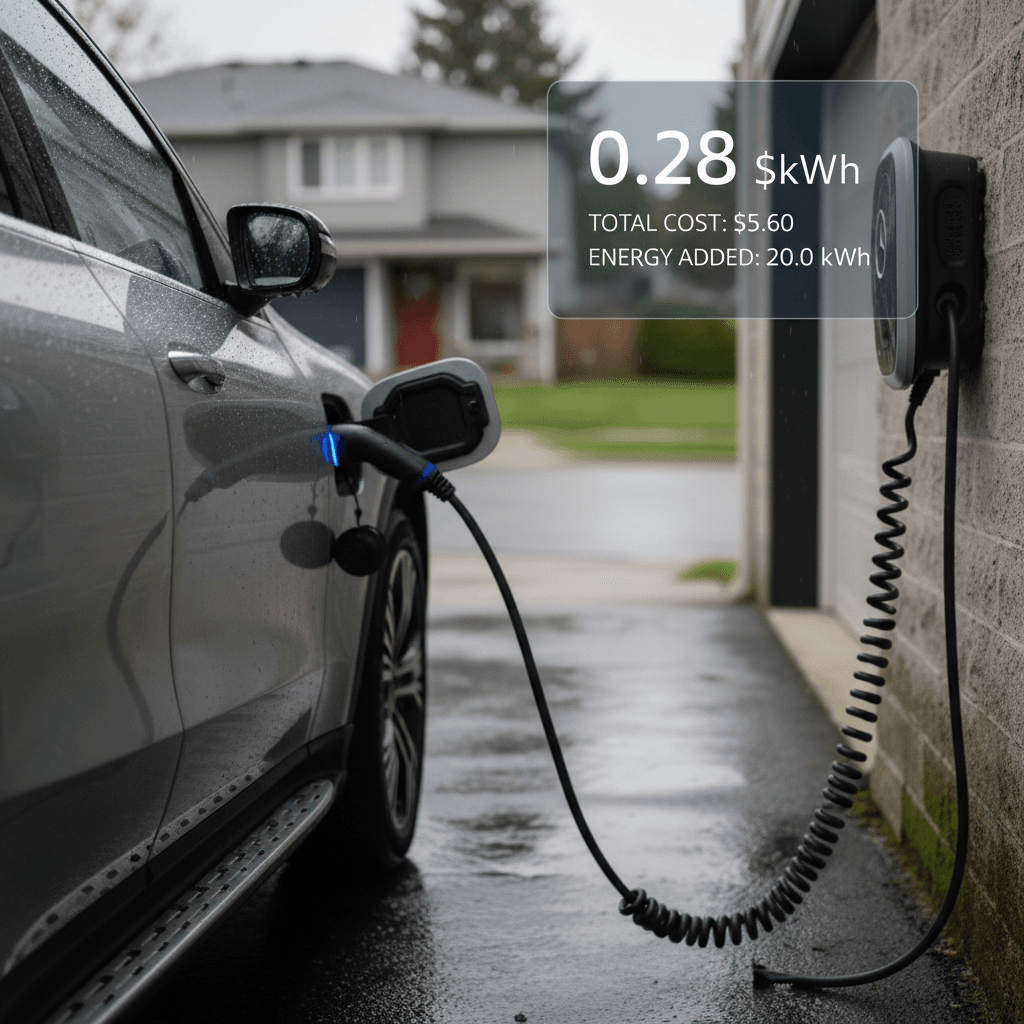
The Mercedes EQE is reasonably efficient for a comfort‑tuned luxury EV, but it’s not a hyper‑miler. EPA data for the EQE 350 4MATIC shows around **39 kWh per 100 miles**, which works out to about **2.6 miles per kWh** in mixed driving. Real owners often see something in the mid‑2s to low‑3s depending on speed, climate, and wheel/tire choice.
- Typical consumption to use for planning: **2.6–2.8 miles/kWh**
- Typical U.S. home electricity price in 2025–2026: around **$0.17 per kWh** nationally (some states much higher, some lower)
- Annual mileage in most ownership cost studies: **12,000–15,000 miles**
Let’s build a simple home‑charging example using 12,000 miles per year, 2.7 miles per kWh, and $0.17 per kWh:
Mercedes EQE annual electricity cost example (home charging)
Assumes 12,000 miles per year, 2.7 miles per kWh, and $0.17 per kWh residential electricity rate. Your numbers will vary with speed, climate, wheels, and local rates.
| Item | Formula | Result |
|---|---|---|
| kWh used per year | 12,000 miles ÷ 2.7 mi/kWh | ≈ 4,445 kWh |
| Annual electricity cost | 4,445 kWh × $0.17 | ≈ $756 / year |
| Cost per 100 miles | $756 ÷ 120 (hundreds of miles) | ≈ $6.30 per 100 miles |
Even at higher electricity prices, the EQE’s energy cost typically undercuts a similar gas Mercedes on fuel.
What if your electricity is expensive?
Home charging (Level 2)
- Lowest cost per kWh, especially on time‑of‑use or off‑peak plans.
- Most EQE owners can cover daily driving needs just by charging overnight.
- Plan to install a 240‑volt Level 2 charger in any long‑term home.
Public DC fast charging
- Great for road trips and occasional top‑offs, but **more expensive per kWh**.
- Frequent DC use can add 50–100% to your annual energy bill compared with home‑heavy charging.
- Best used as a supplement, not your primary refueling strategy.
Use off-peak rates to your advantage
3. Insurance costs for a Mercedes EQE
The EQE is a complex luxury EV with advanced driver‑assist tech and a lot of aluminum and high‑strength steel. That combination usually means **above‑average comprehensive and collision premiums**. Insurers are still building data on long‑term EV repair costs, and they price in the risk that a battery or high‑voltage component might be involved in a claim.
Typical EQE insurance ranges in the U.S.
Exact numbers vary by driver profile, state, and coverage limits.
Good-risk driver, suburban area
Clean record, 40‑something driver in a typical suburban ZIP code, full coverage with reasonable deductibles.
- Ballpark: **$1,800–$2,800 per year**
- Comparable to a loaded E‑Class or GLE, sometimes a bit higher.
Younger driver or high-cost market
Under 30, dense urban area, or state with very high insurance rates (for example, parts of Florida, New York, or California).
- Ballpark: **$3,000–$4,500+ per year**
- Luxury EV status plus location and age can stack quickly.
Don’t estimate insurance off your last car
4. Maintenance, repairs, and tires
On the maintenance side, the EQE benefits from the same basic EV advantages as any battery‑electric car, no oil changes, no spark plugs, no multi‑speed transmission to service. But it’s still a Mercedes, which means **premium parts and labor rates** when something does need attention.
- Brake wear is usually light thanks to strong regenerative braking.
- You still have **brake fluid, cabin filters, coolant, and other fluids** that need periodic service.
- The EQE rides on **large, heavy wheels and performance‑oriented tires**, those aren’t cheap and they wear faster than all‑season rubber on a compact SUV.
- Out‑of‑warranty repairs on air suspension, infotainment, or driver‑assist sensors can run into four figures quickly.
Estimated annual EQE maintenance & wear costs (after warranty)
These are rough averages for a well‑maintained EQE out of the free‑service window, assuming no major accidents or rare component failures.
| Item | Frequency | Typical Cost | Annualized Estimate |
|---|---|---|---|
| Routine service (fluids, inspections, filters) | Every 12–24 months | $400–$700 | $300–$500 / yr |
| Tires (20–21" performance sets) | Every 25k–35k miles | $1,200–$1,800 per set | $400–$700 / yr (at 12k mi/yr) |
| Unexpected repairs (post‑warranty average) | Varies | $0 some years, $2,000 others | $300–$600 / yr over time |
EVs save on routine maintenance vs. gas cars, but premium tires and complex tech keep annual costs from dropping to zero.
Battery and high-voltage components
When you’re shopping used, this is where a **battery‑health report** starts to matter. Recharged’s Score report, for example, measures real pack health on every used EV it lists, so you can see if an EQE has been fast‑charged hard or shows unusual degradation before you commit.
5. Taxes, registration, and finance charges
These costs don’t get as much attention as depreciation and electricity, but they add up. How much you’ll pay depends heavily on your state and how you finance the car.
What to include in your annual EQE budget
State sales tax (year 1)
If you’re buying new or used from a dealer, state and local sales taxes can add **6–10%** to the transaction price, effectively front‑loading part of your cost of ownership into year one.
Registration and plate fees
Many states base annual registration fees on vehicle value, weight, or both. Some also add **extra EV surcharges** to replace lost gas‑tax revenue.
Property or excise tax
A few states and counties levy ongoing taxes on vehicle value, which can be substantial for late‑model luxury EVs like the EQE.
Finance or lease charges
At today’s interest rates, financing $60,000–$80,000 can mean **$2,000–$4,000 per year** in interest during the early years of the loan. Leasing hides this in your monthly payment but the cost is still real.
How buying used helps here, too
6. New vs. used EQE: annual cost comparison
Now let’s put the pieces together. Below is a simplified comparison for a typical U.S. owner driving 12,000 miles per year, using reasonable mid‑range assumptions for each cost bucket. These are not quotes, just working examples to show the **shape** of EQE ownership costs.
Illustrative Mercedes EQE annual cost to own (12,000 miles/year)
Rounded estimates combining depreciation, electricity, insurance, maintenance/tires, and finance/taxes. Your actual numbers will depend on location, driving profile, trim, and how you buy the car.
| Cost Category | New EQE (example) | 3‑Year‑Old EQE Bought Used (example) |
|---|---|---|
| Depreciation | $9,000 / yr | $4,000 / yr |
| Electricity (mostly home charging) | $800 / yr | $800 / yr |
| Insurance | $2,500 / yr | $2,300 / yr |
| Maintenance & tires (avg. over time) | $1,200 / yr | $1,200 / yr |
| Taxes, fees, finance charges | $2,000 / yr | $1,200 / yr |
| , , , | , , , | |
| Estimated total annual cost | ≈ **$15,500 / yr** | ≈ **$9,500 / yr** |
Buying used tends to shift the EQE from a mid‑teens annual cost to something closer to a well‑equipped gas luxury sedan.
Where Recharged fits in
Ready to find your next EV?
Browse VehiclesHow to lower your Mercedes EQE cost of ownership
You can’t change the price of aluminum or the cost of a high‑voltage battery pack, but you have more influence over your yearly EQE costs than you might think. Focus on the levers that move the biggest numbers: depreciation, insurance, and energy.
Five smart ways to reduce your EQE’s annual cost
1. Shop 2–4-year-old EQEs with verified battery health
This is the biggest single lever. Let the first owner eat the steepest depreciation, but make sure the car you’re buying has a **healthy pack** and no hidden charging abuse. Recharged’s battery‑health diagnostics and Score report are designed exactly for this step.
2. Prioritize home charging and off-peak rates
Design your life so that **80–90% of your charging happens at home** on Level 2. Then talk to your utility about off‑peak or EV‑specific rate plans. The combination can cut your energy cost per mile by half versus heavy public DC fast‑charging use.
3. Right-size wheels and tires
Those 21‑inch aero wheels might look great, but they cost more to replace and usually hurt both efficiency and ride quality. If you have a choice, consider **smaller wheels with higher‑profile tires** to improve comfort, range, and replacement cost.
4. Shop insurance aggressively
Don’t just let your current carrier write the policy and move on. Get quotes from at least **three insurers**, and experiment with deductibles and mileage estimates. Ask how they treat **EV repairs and battery‑related claims** specifically.
5. Think about your exit strategy on day one
Before you buy, decide how long you realistically plan to keep the EQE. If you’re a three‑year‑and‑out person, structure the deal, price, incentives, financing, so you’re not surprised by the **residual value**. A strong trade‑in offer or consignment support through Recharged can soften the landing when you’re ready to move on.
FAQ: Mercedes EQE annual ownership costs
Frequently asked questions about Mercedes EQE yearly costs
Bottom line: Is the Mercedes EQE expensive to own?
Viewed strictly by the numbers, a **brand‑new Mercedes EQE is an expensive car to own each year**, largely because you’re riding the steepest part of the depreciation curve on a high‑MSRP luxury EV. But when you shift the conversation to a **carefully chosen used EQE**, one with verified battery health, a fair purchase price, and mostly home charging, the annual cost starts to look much more like other upscale sedans and SUVs, while your energy and maintenance bills stay pleasantly low.
If you like the EQE’s blend of comfort, tech, and quiet EV torque, the smartest move is usually to **let someone else be the first owner**, then step in once values have settled. That’s exactly the niche a marketplace like Recharged serves: curated used EVs, transparent battery‑health data via the Recharged Score, EV‑savvy support, and nationwide delivery. Put those pieces together, and owning a Mercedes EQE doesn’t have to be a financial leap of faith, it can be a well‑understood, budget‑friendly way to drive a modern luxury EV.