If you drive in a real winter climate, you’ve probably heard horror stories about Mercedes EQB winter range loss. The truth is less dramatic, but it’s something you absolutely need to understand, especially if you’re considering a used EQB and want realistic expectations for cold-weather driving.
Key takeaway up front
Mercedes EQB winter range loss: the short version
- The 2024 Mercedes EQB’s EPA-rated range runs from about 205–251 miles, depending on trim and wheels.
- In real-world winter driving around freezing (20–32°F), most EQB owners can realistically expect about 170–210 miles on a full charge when driven sensibly.
- That translates to roughly 15–30% winter range loss in typical cold conditions. In harsher cold (single digits or below), losses can climb toward 35–40%.
- This kind of winter range loss isn’t unique to Mercedes. Large real‑world studies show EVs of all brands average about 20% less range in freezing weather, with some models doing better or worse.
- The good news: smart habits, preconditioning, right drive mode and tires, smarter charging, can claw back a surprising amount of that lost range.
Think in “winter range,” not just EPA range
Mercedes EQB EPA range vs real-world starting point
Before we talk about winter losses, you need a solid grip on the EQB’s starting point. The current U.S.‑market Mercedes‑Benz EQB uses a 70.5 kWh (usable) battery pack and has different EPA ranges depending on configuration.
2024 Mercedes EQB EPA-rated range (baseline before winter)
These are official combined EPA estimates in ideal test conditions, not what you’ll see in January in Minnesota.
| Model year & trim | Drivetrain | Wheels | EPA-rated range |
|---|---|---|---|
| 2024 EQB 250+ | FWD | 18-inch | 251 miles |
| 2024 EQB 300 4MATIC* | AWD | 18-inch | ~205 miles* |
| 2024 EQB 350 4MATIC | AWD | 19-inch | 207 miles |
Use these EPA numbers as a starting point, then adjust down for winter and your specific driving pattern.
About the 300 4MATIC
If you’re looking at a used EQB from 2022–2023, expect very similar ranges with minor differences by year, software, and wheel size. What matters most for winter is your starting EPA number, your battery’s actual health, and how you use the car.
How much winter range loss is normal for the Mercedes EQB?
Let’s translate those official numbers into what you’re likely to see in the real world when the temperature drops. Multiple large‑scale studies and cold‑weather tests in North America and Europe show that EVs, on average, lose about 20% of their rated range in freezing weather. Some models lose less, some much more, but that 20% figure is a solid starting point.
Typical winter range loss patterns for EVs (including EQB)
Apply that to the EQB 250+ at 251 EPA miles and you get quick mental math: in a typical U.S. winter, think roughly 175–200 miles of practical winter range on a full charge. The higher‑power 350 4MATIC starts with 207 EPA miles, so its winter planning range looks more like 140–170 miles, depending on conditions and how you drive.
Short trips hurt more than the cold itself
Why your EQB loses range in cold weather
1. The chemistry of cold batteries
Lithium‑ion batteries don’t like the cold. At low temperatures, internal resistance rises and the battery simply can’t deliver energy as efficiently. The EQB’s pack has thermal management, but it still needs to use some of its own energy to warm itself to an efficient operating window.
The result: even before you touch the climate controls, you’re losing some range to lower battery efficiency and self‑heating.
2. Cabin heat is electric, not “free”
In a gas car, you get cabin heat as a by‑product of an inefficient engine. In an EV like the EQB, every bit of heat comes directly from the battery. If your EQB uses a resistance heater often or aggressively, it can easily consume several kilowatts just to keep the cabin warm, energy that can’t go to the wheels.
Add heated seats, steering wheel, defrosters, and you have a recipe for noticeable winter range loss.
3. Thicker air, snow, and rolling resistance
Cold air is denser, which increases aerodynamic drag at highway speeds. Snow‑covered or slushy roads add rolling resistance. Winter tires, strongly recommended for safety in snow belts, also have slightly higher rolling resistance than low‑rolling‑resistance all‑seasons.
That all adds up to more energy per mile just to maintain your usual cruising speed.
4. Charging slows down too
While it’s not technically “range,” cold weather also affects how quickly your EQB can charge, especially on DC fast chargers. If the pack is cold, the car may limit charging speeds to protect battery health. That means longer stops and more time planning around chargers on winter road trips.
Don’t panic about range = don’t ignore traction
Trim, wheels, climate and where you drive all matter
What really changes EQB winter range in the real world
Same battery, very different experience depending on how and where you drive.
EQB 250+ vs 300/350 4MATIC
The EQB 250+ is front‑wheel drive and tuned more for efficiency; it starts with the highest EPA range. The EQB 350 4MATIC offers much stronger performance and standard AWD but pays for it with higher consumption, especially at highway speeds.
Wheel and tire choice
Smaller 18‑inch wheels with efficient tires help range. Move up to 19‑inch wheels with wider, stickier rubber and you’ll see higher consumption. Add aggressive winter tires and you may lose another few percent versus eco‑oriented tires.
Climate & terrain
Flat, moderate‑cold areas (mid‑Atlantic, Pacific Northwest) are kinder to winter range than long highway drives in single‑digit temps at high altitude. Hills, high speeds, and strong winds all chip away at what your EQB can do on a charge.
If you live in somewhere like Arizona or coastal California, your “winter” range will be much closer to EPA figures; in parts of New England or the Upper Midwest, a winter planning range closer to 70% of EPA is more realistic for daily use.
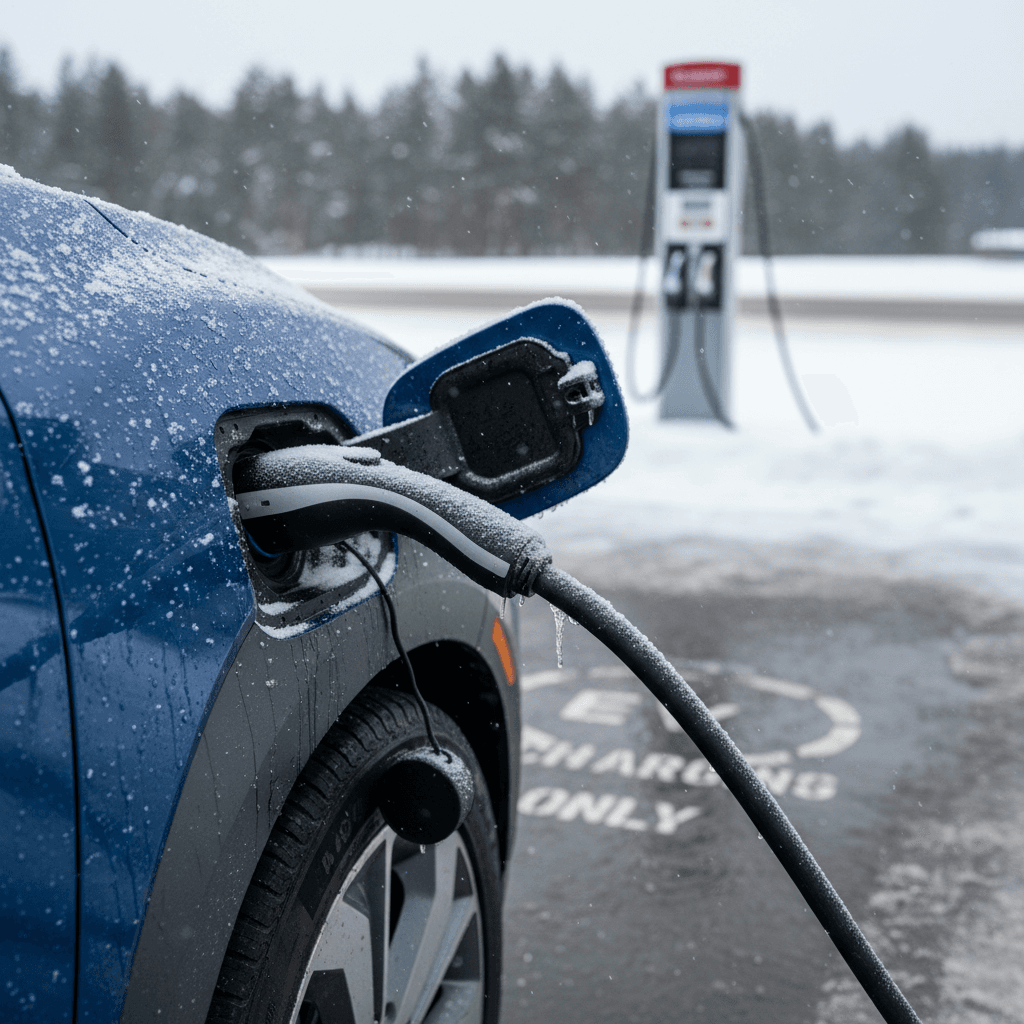
10 ways to minimize EQB winter range loss
Practical steps to protect your Mercedes EQB winter range
1. Precondition while plugged in
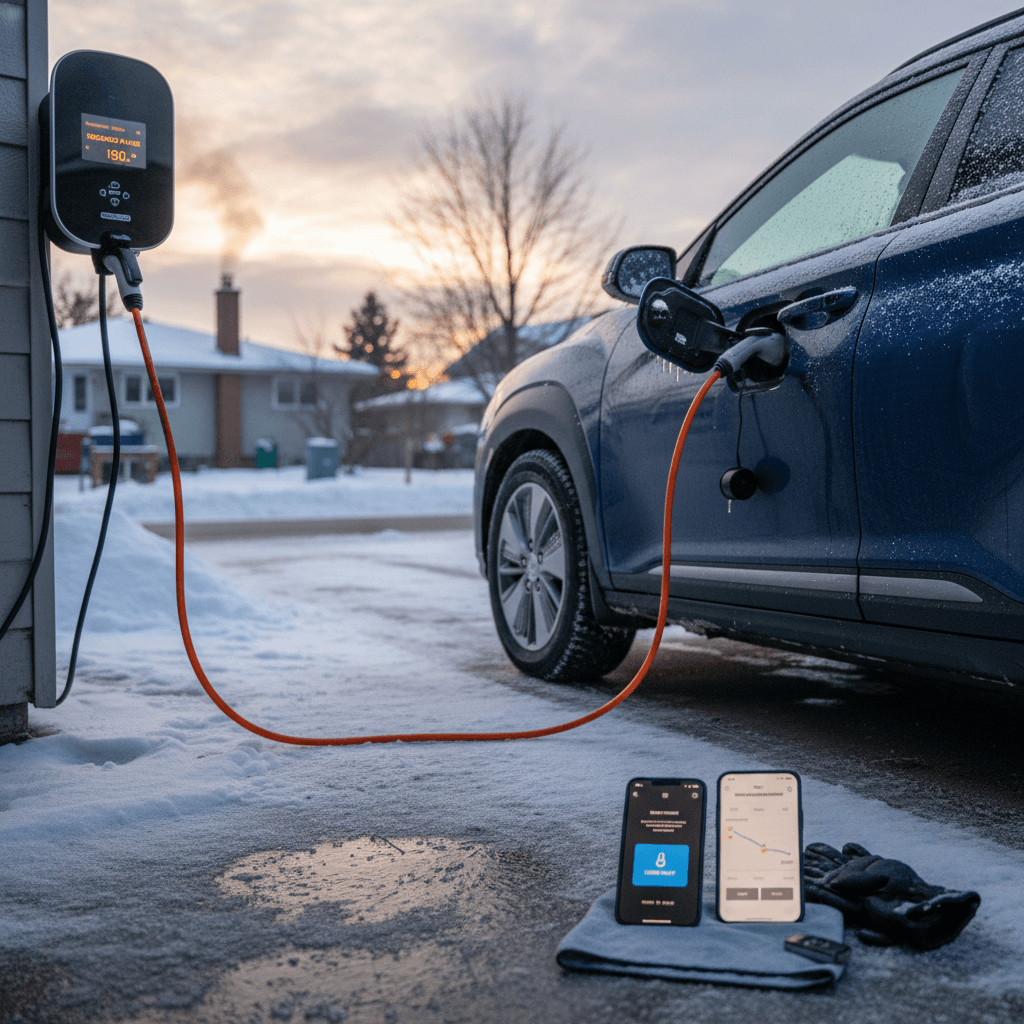
Use the Mercedes me app or in‑car timer to warm the cabin and, when possible, the battery while the EQB is still connected to your home charger. That way, most of the heating energy comes from the grid, not your battery.
2. Favor heated seats and wheel over blasting HVAC
Seat and steering‑wheel heaters use far less energy than heating the whole cabin air. Set the cabin temperature a bit lower, rely more on seat heaters, and you’ll see noticeably better winter efficiency.
3. Avoid repeated short hops in deep cold
If you can combine errands into one longer trip, do it. Every cold start forces the EQB to spend energy warming the cabin and pack again. One 40‑minute drive is much easier on range than four 10‑minute drives from a cold soak.
4. Use Eco or Comfort drive modes in winter
High‑performance modes sharpen throttle response and can increase consumption. In bad weather, <strong>Eco or Comfort mode</strong> not only smooths power delivery but also helps the car manage climate and drivetrain more efficiently.
5. Check tire pressure often
Tire pressure drops as temperatures fall. Under‑inflated tires increase rolling resistance and reduce range. Follow the door‑jamb recommendations and check pressures monthly in winter.
6. Choose the right tires, then accept the trade‑off
If you need winter or all‑terrain tires for safety, use them and accept a modest range hit. The extra grip is worth it. Just fold that consumption into your winter planning range and charging schedule.
7. Precondition before fast charging
If you’re heading to a DC fast charger on a cold day, navigate to it in the EQB’s built‑in nav so the car can warm the battery on the way. A warmer pack charges faster and more efficiently.
8. Park indoors when possible
A simple garage can keep the car much warmer overnight than a driveway, even if it’s unheated. Starting from a less‑frozen battery and cabin reduces the warming energy needed each morning.
9. Don’t chase 100% charge every day
Daily charging to 80–90% is easier on battery health over the long term. Reserve full 100% charges for longer trips, winter or summer. Healthy batteries hold their range better year after year.
10. Learn your own "winter number"
Reset a trip meter on a cold day, drive normally, and see your average consumption in kWh/100 miles or mi/kWh. Do this a few times and you’ll quickly learn how much winter trims from your real‑world range.
Where Recharged fits in
Ready to find your next EV?
Browse VehiclesBuying a used EQB? How to judge winter range and battery health
Winter range loss and long‑term battery degradation are two different things. Cold weather makes any EV temporarily less efficient, but a healthy EQB battery will bounce back when temperatures warm up. What you want to avoid is a used EQB whose pack has significantly lost capacity before you even get to winter.
Checklist for evaluating a used Mercedes EQB’s winter readiness
Whether you’re buying from a dealer, private party, or online marketplace, ask these questions.
Ask about real‑world range history
Ask the seller what they typically see in summer vs winter. A healthy EQB that’s rated around 230–250 miles new should still be delivering well over 80% of that on mild‑weather highway runs after a few years.
Check the in‑car range estimator with a full charge
A single guess from the car isn’t gospel, but if the EQB shows far less than you’d expect at 100% charge, and you confirm it with a test drive, that can be a sign of meaningful degradation or very inefficient driving history.
Look for documented service and software updates
Well‑maintained EQBs should have records showing high‑voltage system checks and software updates. These can improve thermal management and range prediction, especially in newer model years.
Get third‑party or marketplace battery data
Buying through Recharged gets you a Recharged Score battery health report, which uses diagnostic data to estimate remaining capacity and real‑world range. That takes the guesswork out of how the car will behave when the mercury drops.
Leasing vs buying a used EQB in cold states
Planning winter trips in an EQB: practical ranges to use
Long winter drives are where you really feel the difference between brochure range and reality. The EQB’s DC fast‑charging capability (up to about 100 kW, 10–80% in roughly half an hour in good conditions) helps, but you still need to be conservative when you’re staring at sub‑freezing temps and a long stretch between chargers.
Conservative winter planning ranges for EQB road trips
These are rough planning numbers assuming typical winter temps, mixed driving, and a comfortable margin before you reach 0%.
| EQB version | EPA range | Mild winter planning range (30–40°F) | Cold winter planning range (0–25°F) |
|---|---|---|---|
| EQB 250+ (FWD, 18") | 251 mi | 190–200 mi | 160–175 mi |
| EQB 300 4MATIC (18") | ~205 mi | 155–170 mi | 135–150 mi |
| EQB 350 4MATIC (19") | 207 mi | 155–175 mi | 135–155 mi |
Aim to stop charging when you’ve used 60–70% of your battery, not every last mile.
On a road trip, it usually makes sense to start charging when you’re down to 15–20% rather than pushing to single digits, especially in winter. That gives you a cushion for detours, headwinds, or unexpected charger outages.
Don’t rely on summer energy‑use history in January
How the EQB compares to other EVs in the cold
Viewed against the broader EV market, the Mercedes EQB is neither a winter superstar nor a problem child. Its boxy, upright shape and modest battery size mean it won’t match the winter road‑trip legs of a big‑battery sedan or SUV, but it also doesn’t suffer from the very steep cold‑weather penalties that some less‑efficient models see.
- Large multi‑brand studies across tens of thousands of EVs in North America show an average winter range loss of about 20% in freezing temperatures.
- Some of the best‑performing EVs in the cold retain close to 85–90% of their rated range; the worst can fall into the mid‑60% range.
- In practice, EQB drivers typically land somewhere in the middle: roughly 70–85% of EPA depending on configuration, driving style, and how well they use preconditioning and climate settings.
- The EQB doesn’t currently set the benchmark for efficiency or cold‑weather range, but it offers predictable, manageable winter behavior if you plan around its true capabilities.
“All cars lose range in winter. What matters is whether you can plan around it easily and whether the car gives you predictable behavior. For most EQB owners, the answer to both is yes, if you know your numbers and charge smart.”
Mercedes EQB winter range loss: FAQ
Common questions about Mercedes EQB winter range
Bottom line: is Mercedes EQB winter range a deal-breaker?
The Mercedes EQB isn’t the longest‑range EV on the market, and winter doesn’t do it any favors. But the range you lose to cold weather is predictable and manageable once you understand the numbers. If you size the car to your actual needs, plan around a realistic winter range, and use simple tools like preconditioning and smart charging, the EQB can be a confident four‑season family hauler rather than a source of range anxiety.
If you’re considering a used EQB, this is where buying through a specialist matters. Recharged pairs each vehicle with a Recharged Score battery health report, transparent pricing, EV‑savvy support, and available financing and nationwide delivery. That way you’re not guessing how much winter range you’ll have, you’re starting ownership with your eyes wide open, and with an EV that fits your climate and your life.