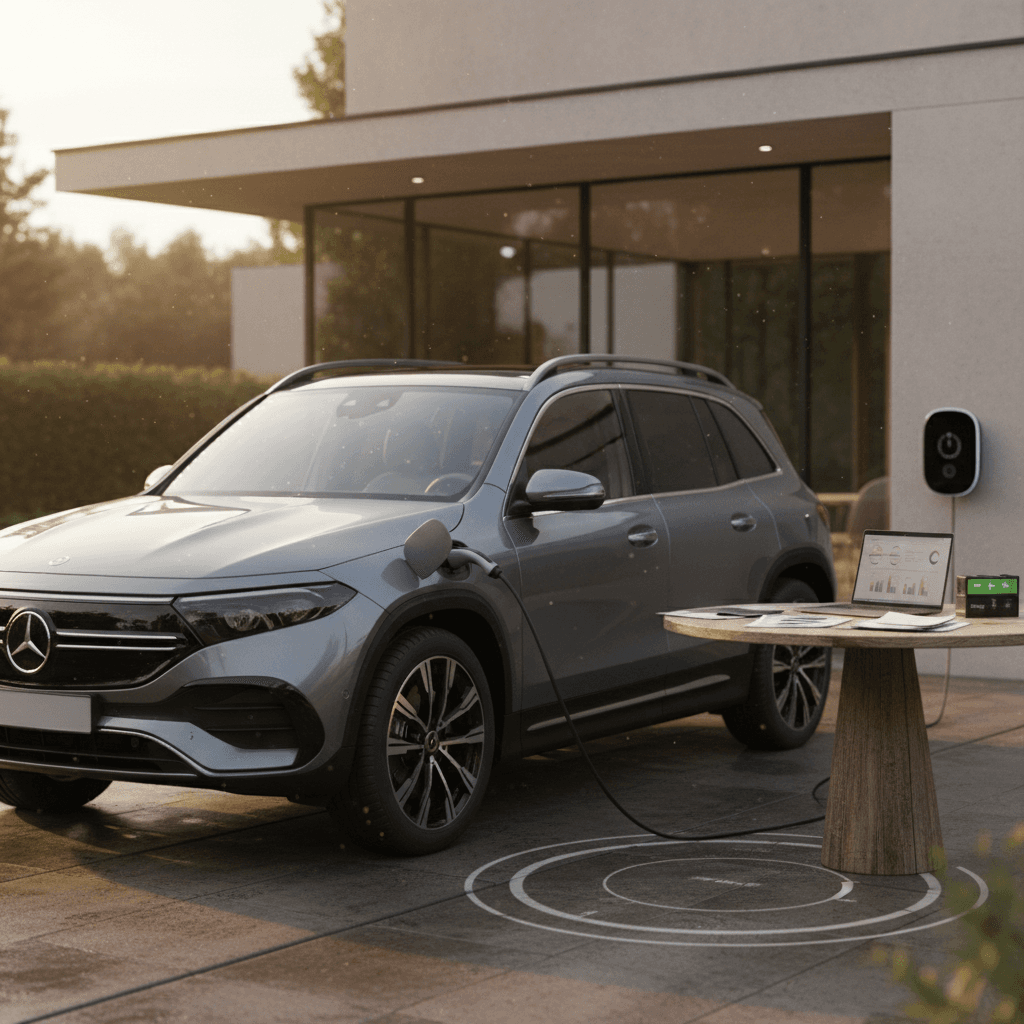
If you’re eyeing a Mercedes EQB, you’re probably not just wondering how it drives, you want to know the true cost of ownership over 5 years. Luxury EVs can be cheaper to run than gas SUVs, but higher prices and depreciation can erase those savings if you’re not careful. Let’s walk through what the EQB is likely to cost you over a typical 5‑year ownership window, and how buying used through Recharged can tilt the numbers back in your favor.
What this guide covers
Why 5‑Year EQB Ownership Costs Matter
Most buyers focus on the monthly payment, but with a vehicle like the EQB, depreciation and operating costs are what really determine if it’s a smart buy. The first five years are when: - The steepest depreciation happens. - You get the bulk of any tax credits and incentives. - You feel the difference between electricity and gasoline costs. Looking at the total cost of ownership over 5 years puts all of that into one clear picture, so you can compare the EQB to other luxury SUVs with your eyes open.
Estimated 5‑Year Mercedes EQB Ownership Snapshot (New Purchase)
Baseline Assumptions for Our 5‑Year EQB Calculation
No two ownership stories are identical, but to compare apples to apples we need a consistent set of assumptions. Here’s the framework we’ll use for a new Mercedes EQB purchased in 2026:
- Model: Mercedes EQB 300 4MATIC or similar, mid‑trim with common options
- Purchase type: Cash or traditional finance (we’ll look at total cost, not just payment)
- Purchase price: Around $60,000 out‑the‑door for a new, reasonably optioned EQB (MSRP plus taxes/fees)
- Annual mileage: 12,000 miles per year (U.S. average), so 60,000 miles over 5 years
- Energy efficiency: Roughly 3.0 mi/kWh in mixed driving
- Electricity cost: $0.15 per kWh blended rate (home‑focused, some public charging)
- Insurance: Typical U.S. driver with clean record, living in a suburban area
- Time horizon: Own the vehicle from year 0 to year 5, then sell or trade it
Your numbers will differ
Purchase Price and Depreciation: The Big Line Item
For any luxury vehicle, depreciation is the single biggest ownership cost, and the Mercedes EQB is no exception. EVs, especially new‑to‑market models, often depreciate faster than equivalent gas models because technology and incentives move quickly.
Illustrative 5‑Year Depreciation Curve for a New Mercedes EQB
Approximate retained value as a percentage of the original transaction price.
| Year | Estimated Value | % of Original Price | Notes |
|---|---|---|---|
| Purchase (New) | $60,000 | 100% | Typical out‑the‑door price with taxes/fees |
| End of Year 1 | $48,000 | 80% | Early‑life drop as the vehicle becomes "used" |
| End of Year 3 | $39,000 | 65% | Tech and incentive changes weigh on EV resale |
| End of Year 5 | $30,000–$32,000 | 50–53% | Healthy, well‑maintained EQB with average miles |
These are ballpark figures, not guarantees. Real‑world values depend on mileage, condition, market trends, and battery health.
On those assumptions, you might see roughly $28,000–$30,000 in depreciation over five years on a new EQB. That’s about $5,600–$6,000 per year disappearing in value, comfortably more than you’ll spend on electricity.
How Recharged helps with depreciation
Electricity vs. Gas: Fuel Costs for the Mercedes EQB
One of the key reasons people move into an EV like the EQB is to shed painful fuel bills. Let’s put some realistic estimates around what you’ll actually spend to power an EQB for 5 years compared with a similar gas luxury SUV.
Mercedes EQB Electricity Costs
Using our baseline assumptions:
- Annual miles: 12,000
- Efficiency: 3.0 mi/kWh
- Energy needed: about 4,000 kWh per year
- Electricity price: $0.15 per kWh
Annual electricity cost ≈ $600.
Five‑year cost ≈ $3,000.
Comparable Gas Luxury SUV Fuel Costs
Compare that with a similar‑size gas luxury SUV (think GLB‑class or BMW X3‑class) doing:
- Combined fuel economy: around 24 mpg
- 12,000 miles/year → 500 gallons/year
- Gas price: assume $3.75 per gallon over time
Annual gasoline cost ≈ $1,875.
Five‑year cost ≈ $9,375.
Fuel savings add up
Maintenance and Repairs: What the EQB Really Costs to Keep Running
EVs like the Mercedes EQB typically cost less to maintain than gas vehicles because there’s no engine oil, spark plugs, or complex exhaust system. But luxury hardware and software can still be expensive if something fails out of warranty.
Typical 5‑Year Maintenance & Repair Costs for a Mercedes EQB
These are broad estimates for planning purposes.
Routine Maintenance
What’s included: cabin air filters, brake fluid changes, tire rotations, inspections.
Estimated 5‑year total: $1,000–$1,500 if you follow Mercedes’ schedule.
Wear Items
What’s included: tires, wiper blades, maybe brake pads (EVs use regeneration, so pads last longer).
Estimated 5‑year total: $1,500–$2,500 depending on wheel size and driving style.
Repairs & Software
What’s included: out‑of‑warranty repairs, infotainment glitches, sensors, etc.
Estimated 5‑year risk: $1,000–$2,000 set aside as a contingency fund.
All‑in, a reasonable planning number for 5‑year EQB maintenance and repair costs is in the $3,500–$6,000 range, depending on how gently you treat the tires and how long your warranty coverage lasts. That’s generally lower than a comparable gas Mercedes because you’re not dealing with engine‑related services.
Don’t ignore tires on heavy EVs
Insurance, Registration, and Taxes on a Mercedes EQB
Insurance is highly personal, but luxury EVs often cost more to insure than mainstream gas vehicles because of higher repair costs and complex technology. Many states also tie registration fees and property taxes to vehicle value.
Illustrative 5‑Year Insurance and Fee Costs for a Mercedes EQB
Approximate ranges for a typical U.S. driver with good credit and a clean record.
| Category | Annual Estimate | 5‑Year Estimate | Comments |
|---|---|---|---|
| Insurance | $1,800–$2,400 | $9,000–$12,000 | Varies by state, driver profile, and coverage limits |
| Registration & Title | $150–$400 | $750–$2,000 | Some states charge more for EVs or high‑value vehicles |
| Property / Excise Tax (where applicable) | $300–$700 | $1,500–$3,500 | Based on vehicle’s declining value in many states |
Use your own quotes and local DMV data to refine these numbers.
Combine those lines and it’s reasonable to expect $11,000–$17,000 in insurance and government‑related costs over 5 years for a new EQB, with the biggest variable being your insurance premium.
Tax Credits, Incentives, and Fees That Affect EQB Cost
Federal and state policies change frequently, but they strongly influence the true cost of ownership of a Mercedes EQB over 5 years. Depending on how you buy and where you live, you may see any of the following:
- Federal clean vehicle tax credit or point‑of‑sale incentive (if the EQB and your income qualify at the time you buy). Some situations favor buying used with a used‑EV credit instead of new.
- State and local rebates for EV purchases or leases, which can shave thousands off the effective price.
- Home charger rebates from utilities or states, offsetting the cost of installing a Level 2 charger.
- EV registration surcharges in some states, which add an annual fee to replace gas tax revenue.
New vs. used incentive angle
5‑Year Mercedes EQB Ownership Cost: Side‑by‑Side Summary
Let’s roll everything together into a simplified 5‑year picture for a new Mercedes EQB versus a comparable gas luxury SUV of similar price. These are planning figures, not promises, but they show where the money actually goes.
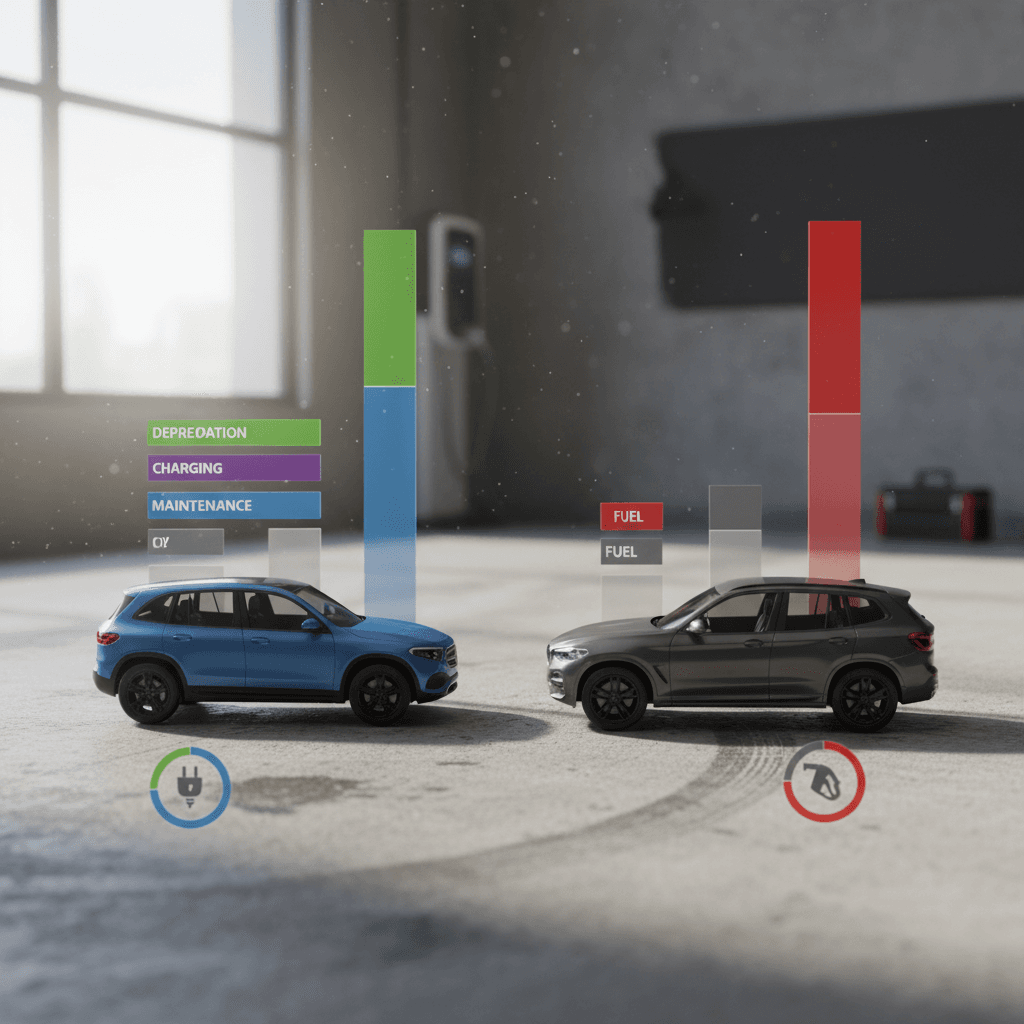
Illustrative 5‑Year Cost of Ownership: New Mercedes EQB vs. Gas Luxury SUV
High‑level comparison using the assumptions we’ve discussed.
| Category | Mercedes EQB (New) | Comparable Gas SUV (New) | Comments |
|---|---|---|---|
| Depreciation | $28,000–$30,000 | $24,000–$28,000 | Luxury EVs can depreciate slightly faster today |
| Energy / Fuel | $3,000 (electricity) | $9,000–$10,000 (gas) | EQB enjoys major fuel savings |
| Maintenance & Repairs | $3,500–$6,000 | $5,000–$8,000 | EV advantage on routine maintenance |
| Insurance & Fees | $11,000–$17,000 | $10,000–$16,000 | Similar ballpark; EV repairs can be pricier |
| Total 5‑Year Spend (Before Incentives) | ≈$45,500–$56,000 | ≈$48,000–$62,000 | Wide ranges reflect insurance, mileage, market swings |
All numbers are approximate and will vary with your driving, deals, and location.
Notice the pattern: the EQB’s fuel and maintenance savings often offset its slightly higher depreciation and comparable insurance costs. Over five years, the total cost picture can look remarkably similar to a good gas luxury SUV, sometimes better, sometimes a touch worse, depending on incentives and resale value when you exit.
How Buying a Used Mercedes EQB Changes the Math
Where things get interesting is when you skip the first owner’s depreciation hit and focus on a 3‑year‑old used Mercedes EQB. At that point, a big chunk of the value drop has already happened, but the vehicle may still be under warranty with plenty of battery life left.
Scenario A: New EQB, Owned 0–5 Years
- Buy at ~$60,000 out‑the‑door.
- Sell or trade at end of year 5 for ~$30,000–$32,000.
- Depreciation cost: ≈$28,000–$30,000.
Scenario B: 3‑Year‑Old EQB, Owned 3–8 Years
- Buy at around $38,000–$42,000 depending on miles and condition.
- Sell at end of your 5‑year stint (vehicle age 8) for maybe $20,000–$22,000.
- Depreciation cost: ≈$16,000–$22,000.
Potential used‑EQB savings
This is where Recharged shines. Every EQB we list comes with a Recharged Score Report that shows verified battery health, fair market pricing, and a detailed condition summary. That transparency matters when you’re betting on a used EV to carry you another five years.
5 Ways to Lower Your EQB 5‑Year Cost of Ownership
Practical Strategies to Spend Less Owning an EQB
1. Let someone else take the first depreciation hit
Shop for a <strong>2–4‑year‑old Mercedes EQB</strong> with solid service history and verified battery health instead of buying new. You’ll often cut your 5‑year depreciation cost dramatically.
2. Maximize home charging
Rely on <strong>off‑peak home charging</strong> with a Level 2 charger instead of expensive DC fast charging. Check if your utility offers time‑of‑use rates to slash your per‑kWh cost.
3. Right‑size your insurance
Review coverage levels, deductibles, and optional add‑ons annually. Staying loyal to one insurer doesn’t always mean you’re getting the best deal, especially when adding a luxury EV.
4. Watch tire choices and alignment
Aggressive wheel and tire packages look great but can be costly. Choose long‑wear tires, keep them properly inflated, and stay on top of alignments to avoid premature replacement.
5. Buy with transparency on battery health
Battery condition drives future resale value. A used EQB with a <strong>strong battery health report</strong>, like the Recharged Score provides, will generally hold value better and reduce your long‑term cost.
Is a Mercedes EQB Worth It Over 5 Years?
When you add everything up, the true 5‑year cost of ownership for a Mercedes EQB isn’t dramatically lower than a comparable gas luxury SUV, but it isn’t wildly higher, either. For many buyers, it’s a near‑wash financially, with some important differences in how and when you spend the money.
Where the EQB Wins
- Day‑to‑day running costs are lower thanks to cheap electricity and simpler maintenance.
- Driving experience: smooth, quiet, instant torque, hallmarks of a modern EV.
- Potential access to HOV lanes, lower emission zones, and preferred parking in some areas.
- You’re less exposed to fuel‑price shocks over your 5‑year ownership window.
Where You Need to Be Thoughtful
- Depreciation risk: luxury EV values can swing with technology and incentive changes.
- Charging access if you don’t have reliable home or workplace charging.
- Insurance and repair costs for advanced safety and infotainment tech.
- Future battery health and range if you’re planning to keep the vehicle long after year five.
If you value the EV driving experience and can charge conveniently at home, the EQB stacks up well over five years, especially as a carefully selected used example. Buying through a marketplace like Recharged, with verified battery diagnostics, expert EV guidance, and nationwide delivery, can help you capture the benefits of EQB ownership while minimizing the financial surprises that sometimes come with early‑generation luxury EVs.