If you’re considering a Mercedes-Benz EQB as your next family EV, safety is probably at the top of your list. The good news is that the **Mercedes EQB safety rating and crash test results** are among the strongest in the compact electric SUV class, but there are a few nuances you should understand before you sign anything, especially if you’re shopping used.
Key takeaway on EQB safety
Mercedes EQB safety overview
The EQB is Mercedes’ compact three‑row electric SUV, closely related to the gasoline GLB. For safety shoppers, what matters most is that the EQB was engineered from the start to meet modern crash standards and to house a high‑voltage battery safely under the floor. Add in a long list of airbags and driver‑assistance tech, and you’re looking at a small SUV that’s been designed with family duty in mind.
Mercedes EQB crash test highlights
About U.S. IIHS & NHTSA data
Crash test results: Euro NCAP rating for the EQB
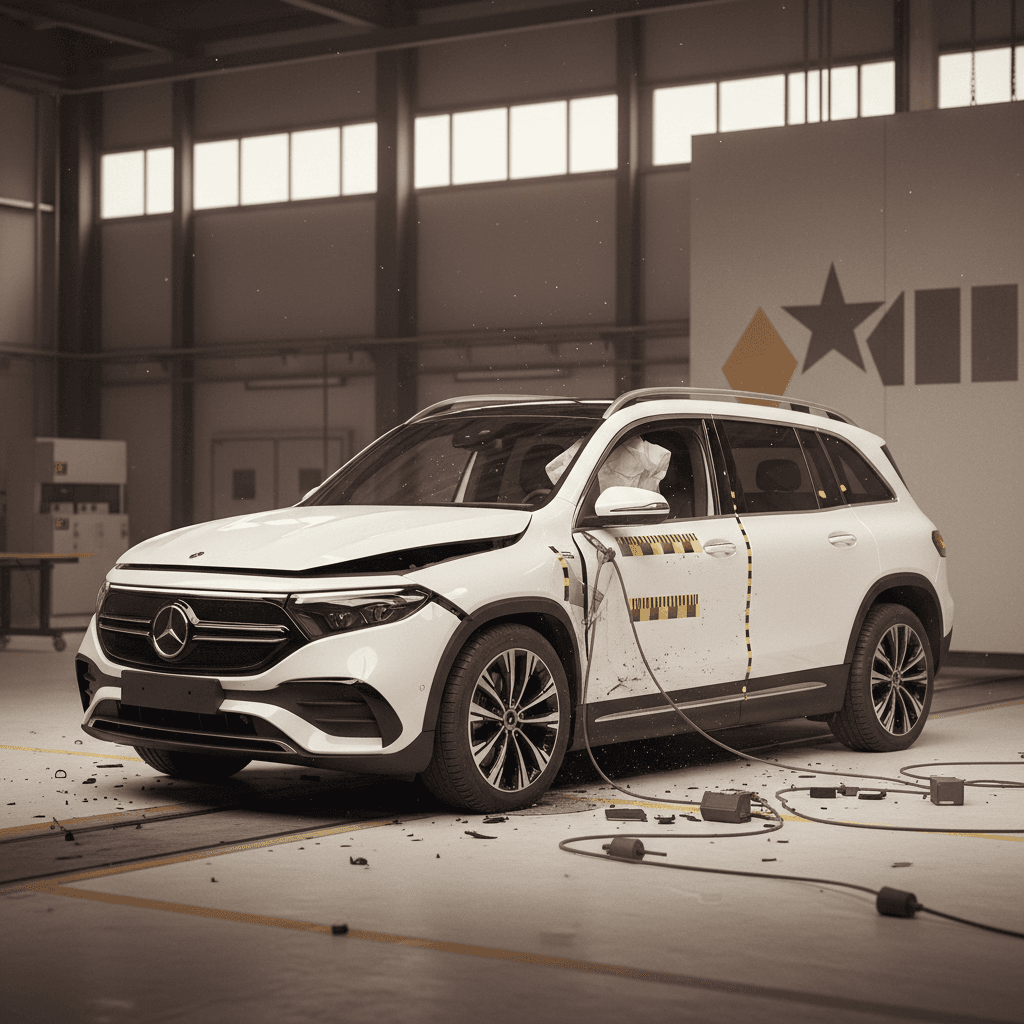
The most complete **Mercedes EQB crash test** data comes from Euro NCAP, Europe’s independent safety testing organization. The EQB was tested as a small SUV and received the program’s top five‑star overall rating.
Mercedes EQB Euro NCAP crash test scores
How the EQB performed in Euro NCAP’s main safety categories.
| Category | Score | What it means |
|---|---|---|
| Adult Occupant | 95% | Very high protection for the driver and front passenger in frontal and side impacts. |
| Child Occupant | 91% | Excellent performance with child seats in both frontal offset and side‑impact tests. |
| Vulnerable Road Users | 78% | Good protection for pedestrians/cyclists plus effective automatic emergency braking. |
| Safety Assist | 74% | Solid set of active safety systems; some advanced functions depend on options. |
Rating originally published for models introduced around 2019 and still applicable to current‑shape EQB models sold in Europe and North America.
Under the skin, the EQB performed especially well in the frontal offset, full‑width, and side‑impact tests. The structure remained stable in the offset barrier test and provided **good chest and head protection** in most scenarios. Side‑impact scores were near‑maximum thanks to strong door structures and curtain airbags that extend the length of the cabin.
Rating vs. model years
How the EQB’s safety compares to other electric SUVs
EQB vs. other compact electric SUVs
Where the Mercedes EQB stands in the safety pecking order
Versus Tesla Model Y
The Model Y also earns top crash ratings and is a benchmark for active safety. The EQB matches it on passive protection and offers a more traditional SUV layout, but some advanced assists that are standard on Tesla may be optional on the EQB.
Versus Hyundai Ioniq 5 / Kia EV6
Like the Mercedes EQB, Hyundai and Kia’s compact EVs perform strongly in Euro NCAP and IIHS evaluations. The EQB’s edge is in three‑row seating and Mercedes’ PRE‑SAFE® features; the Korean rivals may offer newer computing platforms and highway driving aids.
Versus VW ID.4 and others
ID.4, Mustang Mach‑E, and similar EVs also score well. The EQB sits comfortably in the top tier of this safety‑focused set, especially for child‑seat performance and its long list of optional assists.
Strengths
- Five‑star Euro NCAP rating with outstanding adult and child scores.
- Extensive airbag coverage, including curtain airbags that protect all rows.
- Battery pack protected by a rigid frame and underbody shielding.
- Available high‑end driver assists such as adaptive cruise, lane centering, and more.
Watch‑outs
- Some features that rival brands include as standard may be optional packages on the EQB.
- U.S.‑specific crash ratings from IIHS/NHTSA are limited, so most data comes from Europe.
- Early build vehicles may have a different mix of standard vs. optional safety tech.
Passive safety: structure, airbags and child protection
Crash test scores tell you how the car behaves in a controlled lab environment, but it’s worth understanding how the **EQB protects you passively** before a single electronic sensor gets involved.
- High‑strength steel safety cell around the passenger compartment with engineered crumple zones front and rear to absorb energy.
- Rigid frame around the under‑floor battery pack to protect it from intrusion in a serious crash.
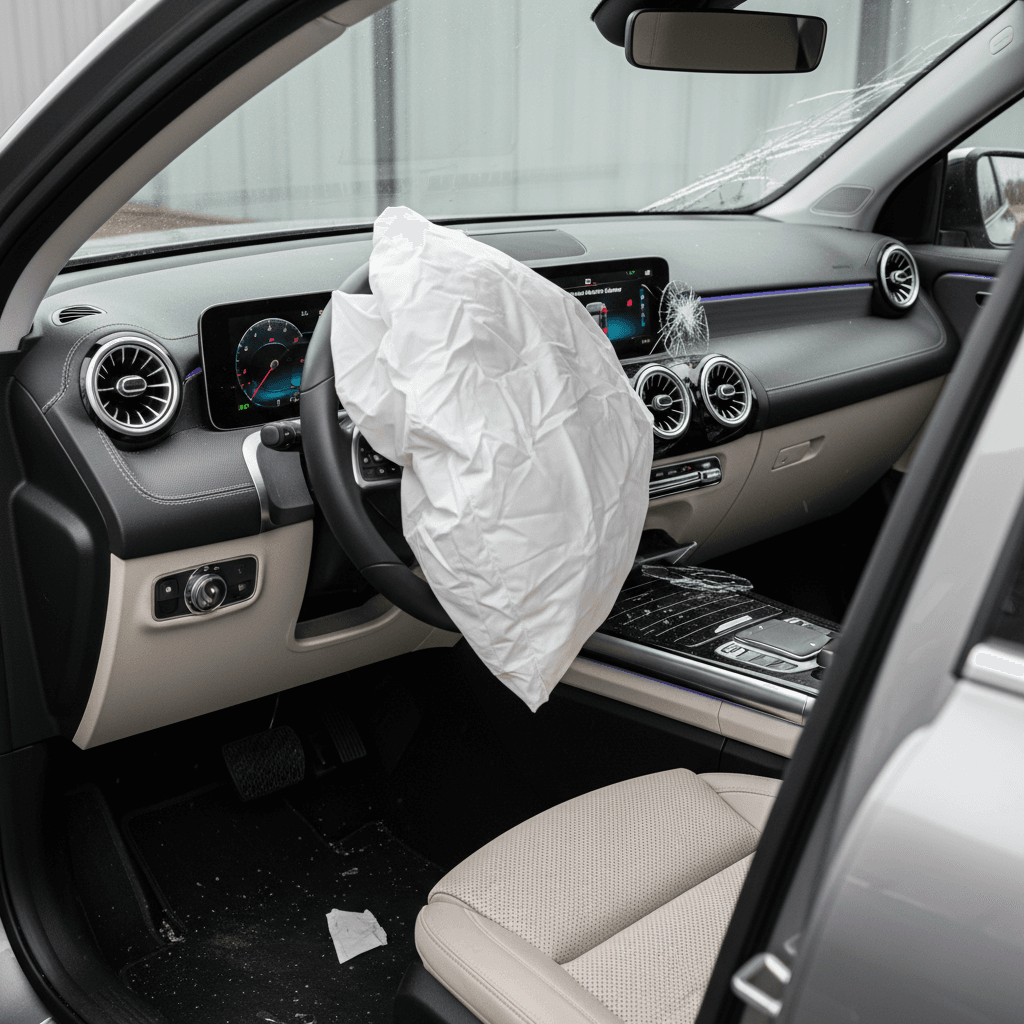
- Multiple airbags: dual front, side thorax airbags, full‑length side‑curtain airbags covering all rows, and a driver’s knee airbag in most trims.
- Three‑point belts with pretensioners and load limiters in key seating positions.
- Head restraints designed to reduce whiplash risk in rear‑impact scenarios.
Child safety in the EQB
For U.S. buyers, the EQB includes LATCH anchors on the outboard second‑row seats and top tether anchors for additional positions, making it easier to install child seats correctly. Third‑row seating is best reserved for older kids or smaller adults, not bulky rear‑facing seats.
Active safety and driver-assistance tech in the EQB
Where passive safety is about how the EQB behaves in a crash, **active safety** is focused on avoiding the crash in the first place. Mercedes has spent decades refining these systems across its lineup, and the EQB benefits from that investment.
Core active safety systems on most EQB models
Many of these systems are standard; others depend on packages and market.
Autonomous Emergency Braking (AEB)
Monitors traffic ahead, warns you of an imminent collision, and can apply the brakes automatically. Many EQB models can also detect pedestrians and cyclists in front of the vehicle.
Lane‑Keeping and Blind‑Spot Assist
Lane‑keeping assist gently steers the car back toward the center if you drift over a line. Blind‑spot monitoring warns you of vehicles in the adjacent lane, and upgraded systems add active steering/braking to avoid side collisions.
Adaptive Cruise Control
Available on many EQB trims, adaptive cruise maintains distance to the vehicle ahead and can manage stop‑and‑go traffic. In some packages it’s paired with lane‑centering for semi‑automated highway driving.
PRE‑SAFE® and PRE‑SAFE® Sound
When the vehicle senses an impending collision, PRE‑SAFE® can tension seat belts, adjust seats, and close windows to better protect occupants. PRE‑SAFE® Sound emits a special noise that triggers a reflex in your inner ear, potentially reducing hearing damage from the crash.
360° visibility tech
One nuance shoppers often miss: **not every EQB on the lot has the same active‑safety bundle.** European and U.S. markets differ in what’s standard vs. optional, and early model years may lack features that later years add by default. If adaptive cruise or lane‑centering is a must‑have for you, confirm those items are physically present on the specific VIN you’re considering.
EQB safety by trim level and options
The EQB is sold in several trims (for example, EQB 250+, EQB 300 4MATIC, EQB 350 4MATIC) and equipment lines like Progressive, Premium, and AMG Line, depending on market and model year. Structurally, they’re all the same safe SUV. The differences you’ll see relate to **how much driver‑assist tech is baked in vs. added as a package**.
Typical EQB safety equipment by trim/pack (illustrative)
Exact content varies by year and region; always verify the window sticker or build sheet for a given vehicle.
| Feature | Often Standard | Often Optional / Package |
|---|---|---|
| Automatic emergency braking (front) | Yes | Enhanced with cyclist/pedestrian detection |
| Lane‑keeping assist | Yes | Lane‑centering with steering assist |
| Blind‑spot monitoring | Yes | Active blind‑spot assist with steering/braking |
| Rearview camera | Yes | 360° surround‑view camera system |
| Rear parking sensors | On many trims | Front sensors and automated parking assist |
| PRE‑SAFE® system | On many trims | PRE‑SAFE® PLUS and advanced functions in higher packages |
| Adaptive cruise control | Base trims in some markets | Part of Driver Assistance or similar package |
Use this as a checklist when you compare EQB listings, especially on the used market.
How to verify EQB safety features on a specific car
Real‑world safety: visibility, winter driving and batteries
Crash tests are hugely valuable, but living with a vehicle safely day‑to‑day depends on details that don’t always show up in the lab. Here are a few real‑world considerations if you’re planning to put serious miles on an EQB.
Everyday safety factors in the Mercedes EQB
Driving position & visibility
The EQB provides a fairly upright, SUV‑like driving position with a good view over the hood. Large windows help with side visibility, but the thick rear roof pillars mean the rearview camera and blind‑spot monitor pull real weight in parking lots.
Winter traction & stability
All‑wheel‑drive 4MATIC versions can offer better traction in snow and rain. Regardless of drivetrain, electronic stability control, ABS, and traction control are standard, and the battery’s low mounting point gives the EQB a stable, planted feel.
High‑voltage battery protection
The battery is encased in a rigid frame within the floor and monitored by impact sensors. In a serious crash, the system can disconnect the high‑voltage circuit to reduce the risk of electrical hazards, while specialized crash structures protect the pack from intrusion.
Pedestrian & cyclist awareness
Because EVs are quiet at low speeds, the EQB adds an **acoustic vehicle alert** to help pedestrians detect the car. Pair that with the forward‑facing cameras and radar used by AEB, and the EQB is better equipped than older SUVs in urban traffic.
Don’t let safety tech lull you to sleep
Buying a used Mercedes EQB: safety checks that matter
If you’re looking at a used EQB, you not only care that the design is safe, you also want to know that **this particular vehicle** hasn’t had its safety compromised by an accident, poor repairs, or deferred maintenance. That’s especially important as early EQBs enter the used‑EV market in larger numbers.
Used EQB safety inspection checklist
1. Check for prior structural damage
Review the vehicle history report for prior accidents, airbag deployments, or structural damage. Visually inspect panel gaps and paint for inconsistencies that might hint at a less‑than‑perfect repair.
2. Confirm all airbags and sensors are intact
Airbag warning lights should turn off after startup and stay off. Look for signs that bumper covers, front grille, or mirrors were replaced, those areas often house radar and camera sensors critical to AEB and lane‑keeping.
3. Test every driver‑assist feature
On the test drive, verify that adaptive cruise (if equipped), lane‑keeping, blind‑spot monitoring, and parking sensors all behave as expected. A feature that shows as “not available” in the cluster could point to a sensor issue or a mismatched repair.
4. Evaluate tire and brake condition
Tires with uneven wear can compromise grip and indicate alignment problems from a prior impact. Brakes should feel strong and consistent. Regenerative braking is a bonus, not a replacement, for healthy friction brakes.
5. Ask about software updates
Some safety systems rely on current software. Ask the seller when the car last received over‑the‑air or dealer‑performed updates, and consider having a Mercedes dealer or specialist check for outstanding campaigns.
Why battery health also matters for safety
How Recharged helps you shop a safe used EQB
Shopping for a used luxury EV like the EQB can feel intimidating. You’re juggling range, options, and depreciation, and then you add crash tests, driver‑assist tech, and battery health on top of it. That’s exactly the maze Recharged is built to simplify.
What Recharged brings to the table for EQB shoppers
Safety, transparency, and EV‑specific expertise in one place
Recharged Score battery & safety insight
Every vehicle on Recharged includes a Recharged Score Report with verified battery diagnostics and key safety information. You can see how the pack is holding up, whether there are any concerning diagnostic codes, and how that compares to similar EQBs.
Expert EV inspection & history review
Our EV specialists review vehicle history, prior repairs, and equipment lists so you’re not left guessing which safety and driver‑assist features are actually on the car. That’s especially helpful on a model like the EQB where options vary widely.
Financing, trade‑in & delivery support
From financing and trade‑in offers to nationwide delivery and consignment options, Recharged is set up to make going electric as straightforward as possible, without cutting corners on the safety information you need to feel confident.
Ready to find your next EV?
Browse VehiclesWhether you’re trading into an EQB from a gasoline SUV or comparing it to other used EVs, having an objective view of crash‑test performance, driver‑assist equipment, and battery health goes a long way toward peace of mind. That’s the lens Recharged applies from start to finish.
Mercedes EQB safety rating & crash test: FAQs
Frequently asked questions about Mercedes EQB safety
Bottom line: Is the Mercedes EQB a safe choice?
Put simply, the **Mercedes EQB safety rating and crash test performance** make it one of the more reassuring compact electric SUVs you can put your family in today. A five‑star Euro NCAP rating with standout adult and child protection, a robust passive‑safety structure, and a deep bench of available driver‑assistance systems all work in its favor.
The main caveat is that not every EQB is configured the same way. If you’re buying used, you’ll want to pay close attention to which safety and driver‑assist features are actually installed, as well as the vehicle’s accident history and battery health. That’s where tools like a detailed inspection, VIN‑decoded feature lists, and a Recharged Score Report, which combines battery diagnostics with market‑fair pricing, can turn a complicated decision into a confident one.
If a compact, three‑row electric SUV with luxury credentials and serious safety engineering is what you’re after, the EQB deserves a spot near the top of your shopping list, and the right information will help you find the safest example for your driveway.