If you’re shopping the used EV market in 2026, the **Mercedes EQB** looks tempting: compact footprint, upright SUV body, three rows of seating if you want them, and a proper Mercedes badge on the nose. But the phrase “Mercedes EQB reliability 2026” now comes with a giant asterisk: a headline battery recall over potential **fire risk**, plus the usual modern‑luxury mix of software quirks and electronic gremlins.
Scope of this guide
2026 reliability snapshot: is the Mercedes EQB a safe bet?
Mercedes EQB reliability at a glance (2026)
Taken as a whole, the **EQB is not a disaster**, but it is also not a paragon of bulletproof German engineering. Early owner reviews are split: some report trouble‑free daily use and affection bordering on sentimental; others describe long service visits chasing coolant leaks, warning lights, and charging faults. Layer onto that a multi‑stage recall campaign for the high‑voltage battery, and you get a car that demands **due diligence**, not blind faith.
The short version
The big story: EQB battery fire recalls and what they mean
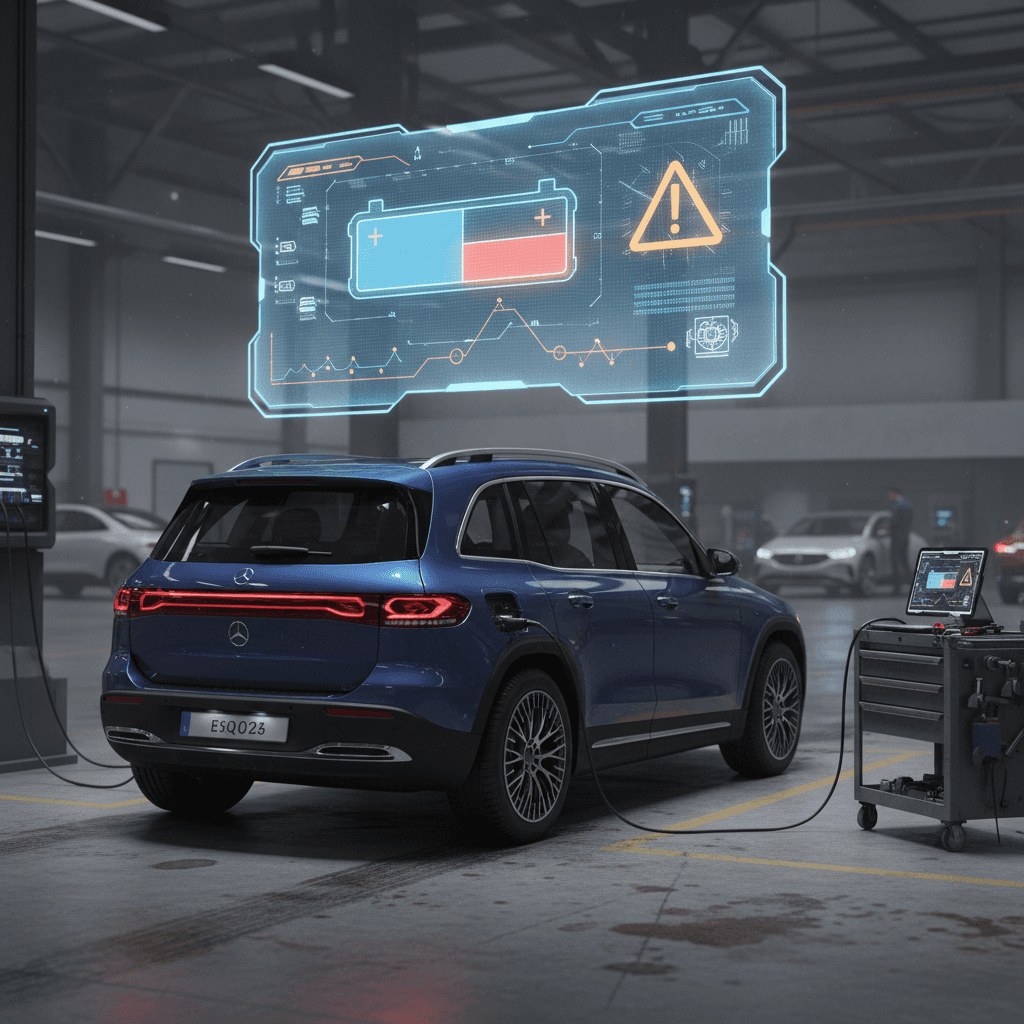
In 2024–2026, the Mercedes EQB was pulled into multiple **NHTSA safety recalls** because its high‑voltage battery could, in rare cases, suffer an internal cell failure and start a fire, parked or driving. The root cause traces back to certain packs built by a supplier where cell robustness at high state of charge wasn’t up to snuff. The result: Mercedes recalled roughly **12,000 EQB SUVs** in the U.S. and instructed owners to charge only to about **80%** and to park outside until repairs were done.
EQB battery recall timeline (simplified)
Key recall waves affecting EQB reliability and safety.
| Period | Model years affected | What went wrong | Interim advice | Final remedy |
|---|---|---|---|---|
| Early 2024 | 2022–2024 EQB 250/300/350 | Battery cells from a specific supplier batch could short internally, potentially causing a thermal event. | Limit charging to ~80%, park outside, watch for warning messages. | Battery‑management software update to reduce risk at high state of charge. |
| Late 2025 | Subset of 2022–2024 EQB | Follow‑up investigation suggested software alone might not fully mitigate long‑term risk. | Same 80% charge cap, park away from structures. | Expanded inspection and monitoring campaign. |
| Early 2026 | Around 11–12k EQBs in U.S. | Evidence that previous fixes didn’t fully solve the fire‑risk issue for some cars. | Owners again told to limit SOC and park outside until repair. | Mercedes moves to **replace the entire high‑voltage battery pack** on affected vehicles with a more robust design. |
Exact recall details vary by VIN; always run a VIN check before you buy.
Why this matters for a 2026 shopper
How to check an EQB for open recalls
- Use the NHTSA VIN lookup or Mercedes’ own recall tool.
- Ask the seller for a **printout of completed recall work**, not just a verbal “it’s done.”
- Look specifically for **high‑voltage battery replacement** and the latest battery‑management software campaigns.
Red flags to walk away from
- Seller can’t produce **service invoices** showing recall work.
- Car still displays an 80% charge‑limit message or recall notice in the infotainment.
- History of “vehicle won’t start” or **high‑voltage malfunction** warnings with no clear resolution in the records.
Other common Mercedes EQB problems owners report
Battery drama gets the headlines, but day‑to‑day reliability is about the stuff you actually live with: warning lights, drivability, how often the car strands you, and how long it sits at the dealer. Across 2022–2025 EQB owner reports, a pattern emerges: **mostly livable**, occasionally exasperating.
Most common EQB problem categories
Patterns seen across 2022–2025 EQB models
1. Warning lights & limp mode
Owners describe episodes where the EQB suddenly lights up the dash like a Christmas tree, then drops into a low‑power “limp mode”. Shutting the car off and back on often clears it, but the underlying cause can be:
- Faulty wheel‑speed or ABS sensors
- Glitchy control modules
- A weak 12‑volt battery
2. Cooling & coolant alerts
A recurring theme in owner reviews is **coolant‑system warnings** on relatively young EQBs. In many cases dealers trace this to:
- Leaky or improperly bled cooling circuits
- Sensor faults around the battery or drive unit
- Overly sensitive diagnostics
Usually covered under warranty, but downtime can be weeks if parts are on back‑order.
3. Driver‑assist & camera quirks
The EQB inherits much of Mercedes’ contemporary driver‑assist stack. Owners report:
- Phantom braking on certain highways
- Camera or parking‑sensor errors after rain or car washes
- Adaptive cruise that disengages unexpectedly
More nuisance‑level EQB issues
Annoying rather than catastrophic, until they stack up
4. HVAC & comfort niggles
Intermittent loss of heating or A/C, inconsistent rear‑seat airflow, and squeaks or rattles from the panoramic roof or rear hatch. Not unique to EQB, but part of the ownership texture.
5. Infotainment & software bugs
MBUX is feature‑rich but not immune to:
- Freezing or slow startup
- Apple CarPlay / Android Auto dropouts
- Features vanishing after an update until the system is reset
6. Charging‑port & communication faults
Some owners note public DC fast chargers that won’t handshake properly, or charging sessions that stop with generic error messages. Often it’s the station, sometimes the car. Either way, it’s aggravating on a road trip.
What this feels like in real life
EQB battery life, warranty, and real‑world degradation
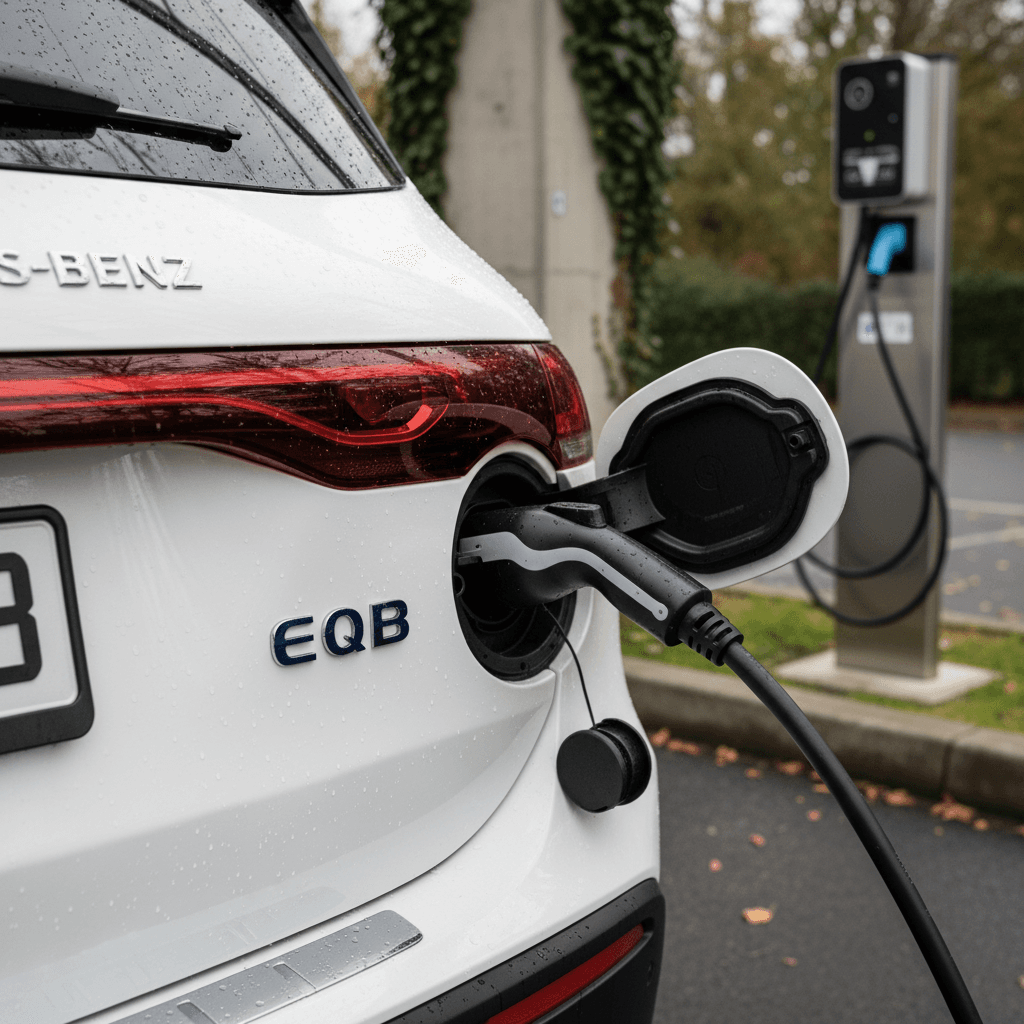
Fire‑risk recalls aside, the EQB’s **long‑term battery health** is broadly in line with other modern EVs. Mercedes backs the pack with about an **8‑year / 100,000‑mile** high‑voltage battery warranty, typically with a capacity floor around **70% state of health**, if the battery falls below that threshold within the term (and you haven’t abused it), Mercedes may repair or replace it.
- Most EQB owners can realistically expect **single‑digit capacity loss** (roughly 5–10%) over the first 3–5 years with normal use.
- Like most EVs, the EQB is happiest living between **20–80%** state of charge for daily driving.
- Frequent DC fast‑charging, regularly charging to 100%, and very hot climates can all accelerate degradation.
- The 12‑volt battery, still the unsung villain of many EV issues, tends to age faster than the big pack and can trigger a cascade of false warnings when it gets weak.
Good news on post‑recall packs
How safe is an EQB to buy used in 2026?
Why the EQB can still make sense
- It’s one of the few **compact luxury EVs** with an optional third row.
- Ride quality, cabin design, and noise isolation are genuinely premium.
- Post‑recall cars with strong service history may see **softened resale values**, which is good news for used buyers.
- The battery warranty and pack replacement programs take some sting out of early‑production missteps.
Why some shoppers should steer clear
- You’re risk‑averse and don’t want to think about words like “thermal event.”
- Your nearest Mercedes dealer has poor reviews, or is hours away.
- You need absolute, Toyota‑like dependability more than you need a mini‑G‑Wagen vibe.
- You’re not willing to read service records or deal with warranty visits if gremlins appear.
How Recharged fits in
What to check on a used EQB: a practical checklist
Pre‑purchase checklist for a used Mercedes EQB
1. Run a full VIN recall check
Confirm **all battery‑related recalls** are marked as completed, and ask the seller for dealer invoices that show what was done, especially whether the entire high‑voltage pack was replaced.
2. Inspect the service history for patterns
One repaired issue isn’t a crime. A pattern of coolant alerts, repeated limp‑mode incidents, or “could not reproduce customer concern” notes is a red flag. Look for at least one comprehensive service visit where issues were resolved, not just cleared.
3. Verify battery health, not just range estimate
Range readouts can be optimistic. At Recharged, we use our <strong>Recharged Score</strong> battery‑health diagnostics to see how the pack is aging under the skin. If you’re buying elsewhere, ask what, if any, independent battery test has been done.
4. Test charging on Level 2 and (if possible) DC fast
On a test drive, plug into a home or public Level 2 and confirm it charges cleanly. If you can, also try a reputable DC fast charger to see if the car handshakes and holds charge without errors.
5. Stress‑test driver assists and infotainment
On a mixed highway/city loop, deliberately use adaptive cruise, lane‑keep, cameras, and parking sensors. Watch for phantom braking, odd steering tugs, or warning pop‑ups. In town, cycle through CarPlay/Android Auto and navigation, and see if anything freezes or lags badly.
6. Listen and feel
On rough pavement, listen for rattles from the panoramic roof, tailgate, or third‑row area. Pay attention to **brake feel**, the transition from regenerative to friction braking should be smooth, not grabby or shuddery.
Ownership costs, downtime risk, and dealer experience
On paper, EVs like the EQB should be cheaper to run than their gasoline peers: no oil changes, fewer moving parts, and excellent efficiency in city driving. In practice, **luxury EV ownership cost** is increasingly about time as much as money. The EQB’s high‑voltage bits are covered for years, but your local dealer’s ability to diagnose EV‑specific issues quickly is the difference between a minor annoyance and a saga.
EQB ownership: what to budget for
Beyond the purchase price
1. Routine service & tires
EVs eat tires if driven hard, instant torque and heavy curb weight. Expect to budget generously for **quality tires** every 25–40k miles, depending on climate and driving style. Routine service is mostly inspections, cabin filters, and brake fluid.
2. Potential downtime
Most EQB fixes are warranty jobs, but they can involve specialist techs and back‑ordered parts. A coolant leak or high‑voltage sensor issue might sideline the car for days or weeks. Loaners help, but only if the dealer actually has them.
3. Out‑of‑warranty risk
Once the 4‑year basic warranty expires, complex electronics and comfort features become your financial problem. The big battery is still covered longer, but infotainment hardware, driver‑assist sensors, and HVAC widgets are all premium‑priced.
Buying from a distance?
Who the EQB suits, and who should look elsewhere
The EQB is a good fit if…
- You want a **compact luxury EV** with a tall seating position and usable back seat.
- You value **quiet, comfortable commuting** more than track‑day acceleration numbers.
- You’re comfortable with the occasional dealer visit if a warning light appears.
- You appreciate Mercedes design and are willing to learn the MBUX interface.
You may be happier in something else if…
- You prioritize **set‑and‑forget reliability** over luxury trimmings.
- You live far from a capable Mercedes dealer or EV specialist.
- You’re sensitive to any history of battery recalls, even if remedied.
- You want blazing DC fast‑charge speeds and road‑trip range above all else, an EQE SUV or a different brand may suit better.
FAQ: Mercedes EQB reliability questions answered
Frequently asked questions about Mercedes EQB reliability
Bottom line: should you buy a Mercedes EQB in 2026?
The Mercedes EQB is a **charming little electric brick** with a complicated backstory. In isolation, it’s a practical, comfortable, modest‑range luxury EV that wears its badge with some justification. In context, you have to reckon with three things: a bruising series of battery recalls, a brand whose quality metrics are merely average, and the realities of modern software‑heavy cars where diagnosis matters as much as hardware.
If you’re willing to do the homework, verify recall completion, interrogate service records, confirm battery health, and keep a realistic budget for tires and the occasional dealer visit, then a well‑sorted EQB in 2026 can be a smart, good‑value entry into luxury EV ownership. If the idea of **any** unresolved risk around batteries or electronics gives you hives, you may sleep better in something simpler, even if it’s less glamorous.
Either way, don’t buy an EQB on looks and leather alone. Buy it with data. Whether you’re browsing EQBs or cross‑shopping other used EVs, **Recharged** can help you decode battery health, pricing, and long‑term ownership risk so that the only surprise you get is how easy the transition to electric can be.