If you’re eyeing a **Mercedes EQB** in 2026, or already have one in the driveway, you’re probably wondering what it really costs to maintain. EVs are supposed to be cheaper to keep on the road than gas SUVs, but this is still a premium Mercedes product with premium service pricing. Let’s break down **Mercedes EQB maintenance cost in 2026**, from routine service to real‑world repairs, so you can budget with eyes open.
Quick take
2026 overview: What Mercedes EQB maintenance really costs
Mercedes EQB maintenance at a glance (2026)
Several 2024–2026 cost‑of‑ownership studies put EV maintenance **around 30–40% lower** than comparable gas vehicles on average, and the EQB generally follows that pattern. At the same time, it’s a compact luxury SUV, so its absolute dollar costs sit higher than mainstream EVs even if the **per‑mile maintenance** still undercuts a gas Mercedes GLB. For budgeting, you’re looking at hundreds of dollars a year, not thousands, unless you run into rare out‑of‑warranty issues.
How much does Mercedes EQB maintenance cost per year and per mile?
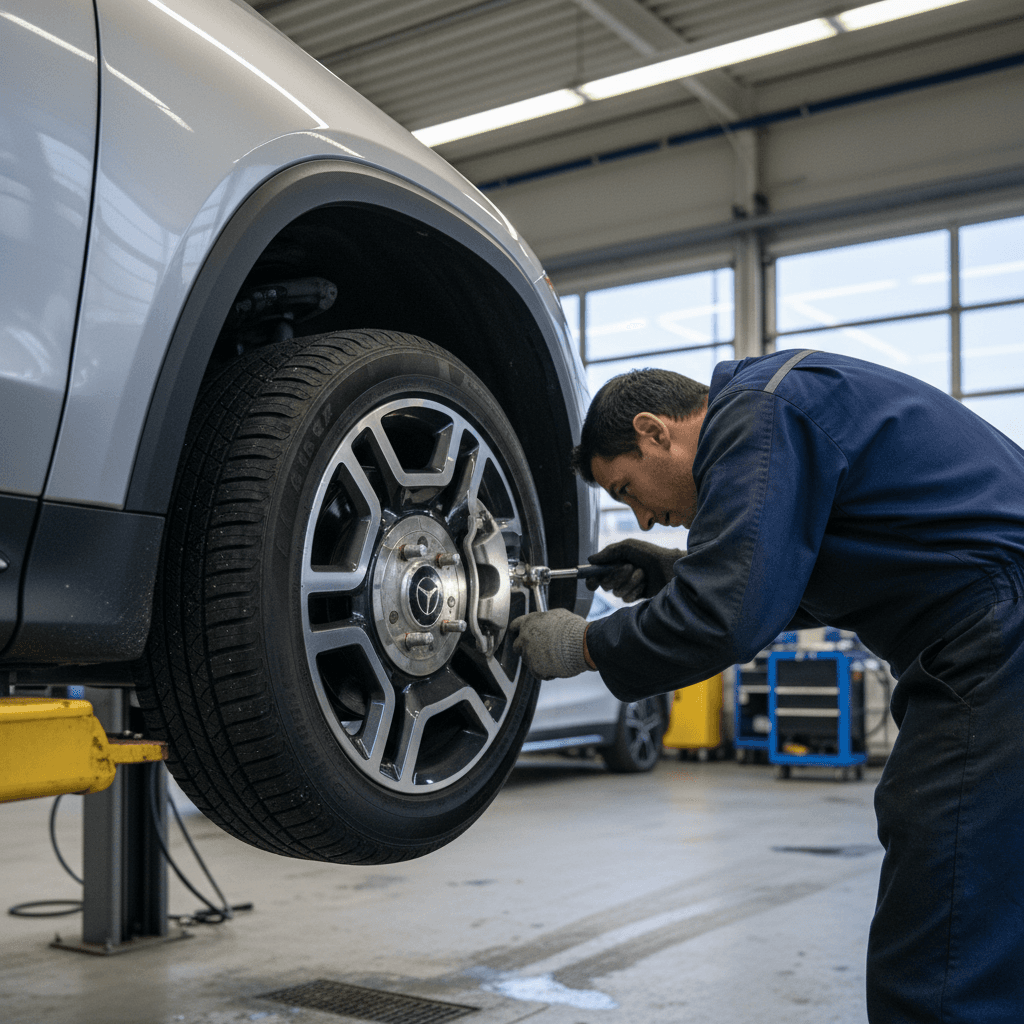
To get a dollar figure for **Mercedes EQB maintenance cost in 2026**, it helps to start with third‑party cost‑to‑own data and then adjust for your driving pattern.
- Recent cost‑to‑own analyses peg **average annual maintenance for a new EQB around the mid‑$700s** over the first five years of ownership, assuming dealer service and typical U.S. mileage.
- Broader EV research suggests **EVs run roughly $0.04–$0.06 per mile** on maintenance, generally 30–40% cheaper than similar gas vehicles.
- Luxury EV SUVs, including the EQB, tend to land **near the upper end** of that EV range because of higher labor rates and parts prices.
Put differently, an EQB driven 12,000 miles per year and serviced mainly at a Mercedes dealer will often cost **$600–$900 per year in 2026** for routine maintenance. Heavy‑mileage owners (15,000+ miles) or those in high‑labor‑rate metros can edge higher; light‑mileage suburban drivers who mix in independent EV‑savvy shops can land lower.
Rule of thumb for your budget
Mercedes EQB maintenance schedule for 2026
The EQB doesn’t follow the old Mercedes "Service A / Service B" pattern in quite the same way as gas cars, but the philosophy is similar: alternating minor and more involved services on a time and mileage basis. Exact schedules vary slightly by region and model year, so always confirm in your owner’s manual or Mercedes app, but here’s what most 2024–2026 EQB owners see.
Typical Mercedes EQB service schedule (North America, 2026)
Always confirm exact intervals in your owner’s manual, this is a representative pattern for recent EQB model years.
| Odometer / Time | Service Type | Key Items |
|---|---|---|
| 10,000–15,000 miles OR 1 year | Minor | General inspection, software checks, tire rotation, cabin filter check, fluid top‑offs |
| 20,000–25,000 miles OR 2 years | Major | All minor items plus brake fluid replacement, cabin filter replacement, more detailed chassis inspection |
| 30,000–35,000 miles OR 3 years | Minor | Similar to first minor service; tire inspection/rotation, alignment check if needed |
| 40,000–50,000 miles OR 4 years | Major | Repeat of major service; possible coolant check for battery/drive system depending on region and bulletin updates |
| Every visit | Wear items as needed | Tires, wiper blades, 12‑volt battery check or replacement later in life |
Time‑based intervals matter just as much as mileage if you’re a low‑mileage driver.
Watch the fine print
Typical Mercedes EQB service pricing in 2026
What does that schedule translate to in real money? Public 2024–2025 Mercedes service‑plan brochures and dealer menus give us a sense of **ballpark EQB pricing** when you stick with franchised stores in 2026.
Common EQB service visit costs at dealers (2026 estimates)
Actual prices vary by dealer, but these ranges are typical in major U.S. markets.
Minor EQB service
Estimated: $250–$450 per visit
- Inspection, diagnostics and software checks
- Cabin filter check or replacement (if due)
- Tire rotation and visual brake inspection
- Fluid top‑offs, washer fluid, basic resets
Real‑world owners often report that the bulk of the invoice is labor time, not parts.
Major EQB service
Estimated: $500–$900 per visit
- All minor‑service items
- Brake fluid flush
- Cabin filter replacement
- Deeper chassis and suspension check
In higher‑cost metros or at flagship dealers, it’s not unusual to see out‑the‑door bills at the upper end of this band.
Tires and alignment
Estimated: $900–$1,400 every 25k–40k miles for a set of quality tires plus mounting, balancing and alignment.
- Heavy EV weight and torque can shorten tire life
- Stick with EV‑rated tires for proper load and noise
12‑volt battery & misc.
Estimated: $250–$500 for a 12‑volt battery replacement at a dealer once the car ages.
Wiper blades, bulbs and other small items usually add $50–$150 when replaced during scheduled visits.
Those numbers line up with prepaid maintenance tables that show three‑ or four‑service EQB plans priced in the **low‑to‑mid‑thousands of dollars** over several years when bought up front. If you drive moderate miles and plan to keep the EQB through its basic warranty, such plans can help smooth your budget, but they’re not strictly required if you’re comfortable paying per visit or using independent shops later.
Prepaid plans vs pay‑as‑you‑go
Mercedes EQB vs gas SUV: Maintenance cost comparison
To know whether the EQB is "expensive" to maintain, you have to compare it to the obvious alternative: a gas compact luxury SUV like the **Mercedes GLB** or a BMW X1/X3. Several 2024–2025 cost‑of‑ownership studies point in the same direction: **EVs cost meaningfully less to maintain**, even when they’re from luxury brands.
Where the EQB saves you money
- No oil changes, spark plugs or timing chains, which make up a large share of gas‑car maintenance.
- Fewer moving parts in the drivetrain mean fewer routine wear items over the first 5–8 years.
- Regenerative braking slows the car using the electric motor, often stretching brake‑pad life to well beyond 60,000 miles.
- EV maintenance averages about 30–40% cheaper than comparable gas vehicles in recent national studies.
Where the EQB still costs like a Mercedes
- Dealer labor rates remain high, and EV‑specific diagnostics take time.
- Premium tires, sensors and body parts cost more than mainstream brands.
- Out‑of‑warranty electrical or electronics issues can be pricey, even if they’re rare.
- Insurance and collision repair costs for EVs can run higher than gas counterparts due to specialized parts.
Big picture: EQB vs gas GLB
Out-of-warranty repairs: What EQB owners actually see
Routine EQB maintenance is predictable; **unexpected repairs** are where your budget can get blindsided. Early‑cycle owner reports and dealer repair menus suggest the EQB is behaving like most modern EVs, fewer mechanical failures early on, but higher individual repair bills if something complex fails out of warranty.
Common non‑routine costs EQB owners should know about
Not every owner will see these, but they’re worth keeping in mind as the vehicle ages.
High‑voltage battery concerns
Covered under long warranty for most U.S. owners (often 8 yrs/100k mi). True pack replacements are uncommon in the first decade but can cost five figures if they occur out of warranty.
Electronics & modules
Control modules, onboard chargers, and infotainment components can run $800–$2,500+ installed if they fail outside warranty. These are rare but not unheard of with any modern premium EV.
Collision & body repair
Accident repair costs on EVs, including the EQB, trend higher than on gas vehicles because of battery‑area inspections, specialized parts and stricter repair standards.
Don’t confuse routine maintenance with rare big‑ticket events
How to lower your Mercedes EQB maintenance costs
You can’t control Mercedes’ labor rate, but you have more levers than you might think when it comes to **what you actually pay** to maintain an EQB in 2026.
Practical ways to keep EQB maintenance affordable
1. Follow the schedule, but don’t overservice
Stick to the time and mileage intervals in the EQB manual. There’s no benefit to doing full dealer visits dramatically more often than recommended, and overservicing just pads costs without adding value.
2. Use independent EV‑savvy shops when warranty allows
Once you’re outside the strict warranty window, or for out‑of‑warranty items, consider reputable independent shops familiar with EVs. Labor rates can be **20–30% lower** than dealer pricing in many markets.
3. Protect your tires
Tire wear is one of the biggest recurring expenses on any EV SUV. Keep pressures set correctly, rotate at recommended intervals, and avoid aggressive launches. Extending a set of tires from 25,000 to 35,000 miles meaningfully cuts cost per mile.
4. Keep software and recalls up to date
Some drivability or efficiency issues get solved by software updates or service campaigns that cost you nothing. Build a habit of checking for updates and visiting the dealer when recall notices arrive.
5. Consider prepaid plans only if the math works
Compare the cost of a **3‑ or 4‑service Mercedes plan** against dealer menu prices. If the plan is cheaper than paying for equivalent visits à la carte, and you’re sure you’ll keep the EQB that long, it can be a sensible hedge against inflation.
6. Avoid modifying the car in ways that affect warranty
Aftermarket suspension, electrical additions, or towing hardware that isn’t approved by Mercedes could complicate warranty claims. Keeping the EQB close to stock can save a lot more than a small performance upgrade is worth.
Buying a used EQB: Maintenance advantages and risks
Used EQBs are starting to show up in meaningful numbers on the U.S. market, often at prices that undercut a new build but still carry **years of battery and drivetrain warranty**. If you understand the maintenance picture, a used EQB can be a savvy way to get into a premium EV while letting someone else eat the steepest depreciation.
Where a used EQB shines on maintenance
- The first owner typically pays for the earliest dealer services, so you inherit a car that’s already had key inspections.
- Battery and high‑voltage components are usually still under long factory warranty, removing the biggest theoretical risk.
- Routine maintenance costs are similar to new, but you’ve paid far less up front, good news for total cost of ownership.
What to watch on a used EQB
- Verify documented service history, especially brake fluid and inspection intervals.
- Check for uneven tire wear or alignment issues that could hint at suspension damage.
- Look for any prior collision damage near the battery area, which can complicate future repairs or insurance.
How Recharged fits in if you’re shopping used
If you already own a gas SUV and are considering trading into a used EQB, combining **lower routine maintenance**, potential **fuel savings**, and a **fair trade‑in offer** can make the monthly math surprisingly close. Recharged can help you line up financing, evaluate a trade‑in or instant offer, and arrange **nationwide delivery** so you don’t have to shop EQBs only in your local dealer network.
FAQ: Mercedes EQB maintenance cost 2026
Frequently asked questions about Mercedes EQB maintenance cost in 2026
Bottom line: Is the Mercedes EQB expensive to maintain?
In 2026, the **Mercedes EQB maintenance cost** story is a tale of two perspectives. Compared with a gas‑powered premium SUV, the EQB is **easier on your maintenance budget**, thanks to fewer moving parts and no engine service. Compared with mainstream EVs, it’s still a Mercedes, dealer labor, premium tires and sophisticated electronics keep the absolute dollar figures in the mid‑pack for the segment.
If you budget **$600–$900 per year** for scheduled service, manage tires carefully and take advantage of remaining battery and drivetrain warranties, the EQB can be a predictable, manageable ownership experience. And if you’re looking at a **used EQB**, pairing a healthy vehicle with a transparent battery‑health report, as you’d get through Recharged, can stack the deck even further in your favor. For many households, that combination of lower maintenance, lower fuel cost and used‑EV pricing is what finally makes a premium electric SUV pencil out.