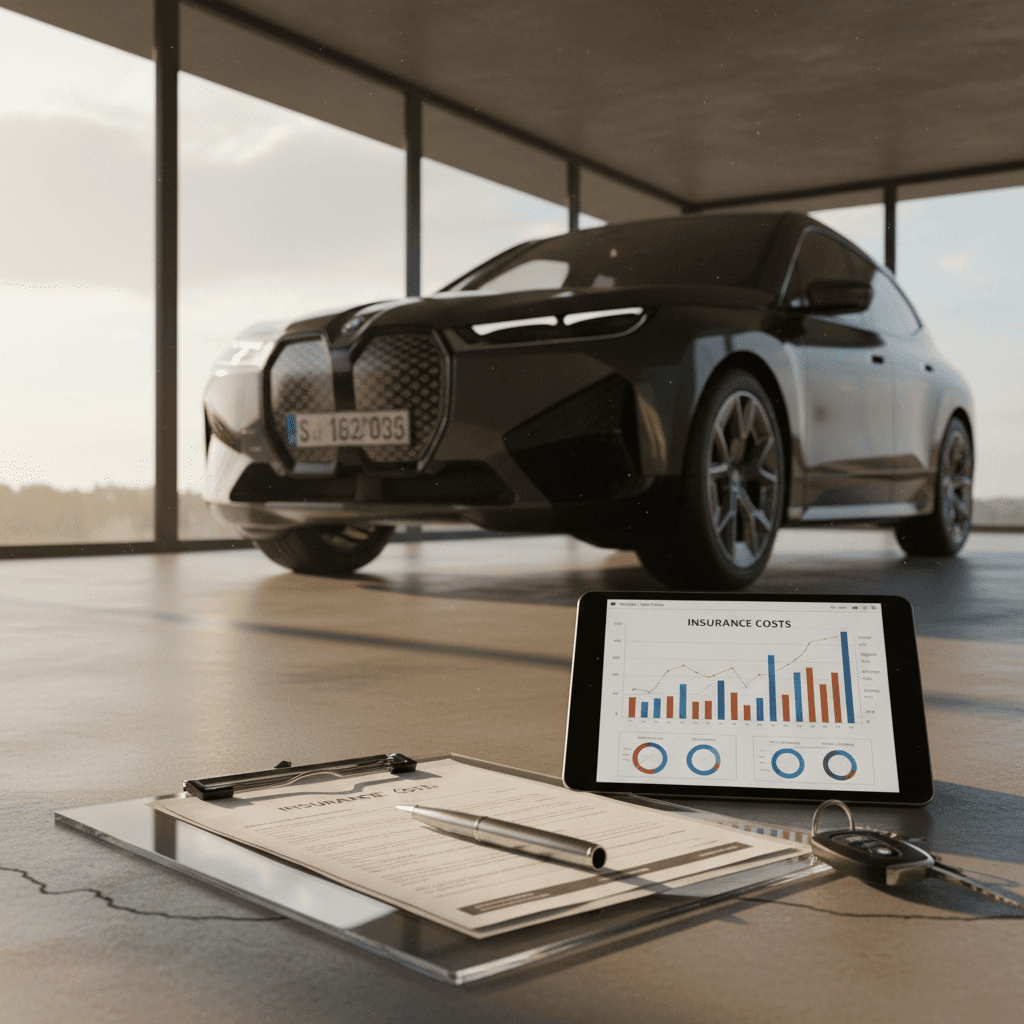
If you’re eyeing a Mercedes EQB, you’re probably doing the math: payment, charging, maintenance, and then the wild card, Mercedes EQB insurance cost. Electric luxury badges aren’t cheap to insure, but the picture is more nuanced than “EVs are expensive.” Let’s unpack real-world numbers and what you can do to keep premiums in check, especially if you’re shopping used.
Quick takeaway
Mercedes EQB insurance cost at a glance
Mercedes EQB insurance snapshot (U.S., 2024–2025 data)
Those numbers are averages across the U.S. Your own Mercedes EQB insurance rate can land hundreds of dollars higher or lower depending on your age, location, driving history, and how plush an EQB you choose. Think of the figures above as a weather report, not a guarantee, but a strong hint at the climate.
How much does it cost to insure a Mercedes EQB?
Let’s put some stakes in the ground so you can sanity‑check any quote you get.
Typical Mercedes EQB insurance cost ranges (full coverage)
Approximate annual costs for a clean‑record driver with standard full‑coverage limits. Your numbers may vary.
| Scenario | Example EQB | Estimated annual premium | Notes |
|---|---|---|---|
| National average, new EQB | 2024 EQB 300 4MATIC | ≈ $2,900 | Based on recent insurer analyses of 2024 EQB full‑coverage rates. |
| Older used EQB | 2022 EQB 300 | ≈ $2,600–$2,800 | Slightly lower because vehicle value is lower, assuming similar coverage. |
| High‑risk profile | Any EQB, at‑fault accident | $3,500+ | Speeding tickets, DUIs, or at‑fault claims push EV rates up fast. |
| Bare‑bones coverage | Liability only on older EQB | $600–$1,200 | Cheaper, but exposes you financially on an expensive electric drivetrain. |
Use this as a benchmark when you start shopping quotes for your EQB.
By comparison, many mainstream compact gas SUVs land closer to $1,800–$2,200 per year for full coverage. The EQB’s extra insurance cost lives in its badge, its battery, and its technology.
Don’t chase the $36/month unicorn
Why is Mercedes EQB insurance often higher than a gas SUV?
Four reasons EQB insurance runs rich
None of them are deal‑breakers, but they’re worth understanding.
1. Expensive battery + drivetrain
2. Luxury tech and sensors
3. Higher overall EV claim costs
4. It’s still a Mercedes
The good news side of the ledger
8 factors that actually change your EQB insurance quote
If you’ve ever stared at two wildly different quotes for the same car and wondered if the companies were looking at the same reality, welcome to auto insurance. Here’s what usually drives the swing for a Mercedes EQB.
Key levers that move your Mercedes EQB premium
1. Your state and ZIP code
Urban, high‑theft, or high‑litigation areas tend to have higher premiums. A 2023 EQB in a quiet Illinois suburb might run around $36/month with one insurer, while the same car in Texas could cost nearly double for similar coverage.
2. Driving history
Clean record? You’re in the insurer’s good graces. Add in at‑fault crashes, speeding tickets, or a DUI and you’ll see the EQB’s already‑above‑average rates climb quickly.
3. Annual mileage and use
An EQB that does 8,000 miles a year on suburban errands is cheaper to insure than one pounding out 18,000 highway miles for work. Some insurers now offer mileage‑based or telematics programs that reward lower risk usage.
4. Coverage limits and deductibles
Higher liability limits and low deductibles equal better protection, but higher premiums. Raising a $500 deductible to $1,000 can trim costs, just make sure you keep enough cash on hand to cover it.
5. EQB trim and options
A front‑drive EQB 250+ is cheaper to repair (and replace) than a fully loaded 350 4MATIC with every package. Insurers price in original MSRP and equipment when they calculate comprehensive and collision coverage.
6. Model year and vehicle value
Newer EQBs cost more to replace, so they’re usually more expensive to insure, though not always dramatically. As the vehicle depreciates, comprehensive and collision portions of your premium tend to drift down.
7. Credit‑based insurance score (in many states)
In most U.S. states, insurers can use credit‑based scores as a risk proxy. Better score, lower rate, though this practice is restricted or banned in a few states.
8. Discounts and how you bundle
Multi‑policy discounts, safe‑driver programs, homeowner status, and anti‑theft features can all trim your bill. With a feature‑rich EQB, make sure your insurer knows about its standard safety tech.
EQB trim, model year & coverage level: what changes
On paper, every Mercedes EQB is the same silhouette: a tall, boxy compact SUV with three‑row seating available. But your EQB 250+, EQB 300, and EQB 350 4MATIC don’t look the same to an underwriter, and neither does a brand‑new 2025 EQB compared to a 2022 example bought used.
Trim & powertrain
- EQB 250+: Front‑wheel drive and the least expensive to buy. All else equal, it’s usually the cheapest EQB to insure.
- EQB 300 4MATIC: Dual‑motor all‑wheel drive. Higher MSRP and more hardware means comprehensive and collision coverage can cost more.
- EQB 350 4MATIC: The quickest, priciest EQB. Insurers see more performance and more content to repair or replace, which nudges premiums up.
If performance isn’t your priority, the 250+ can be a sweet spot for both purchase price and ongoing insurance.
Model year & used vs. new
- 2024–2025 EQB: Newer styling and tech, with average full‑coverage premiums reported near $2,900 per year.
- 2022–2023 EQB: Slightly older, slightly cheaper to replace. Average premiums often dip a few hundred dollars versus an equivalent 2024.
- Financing vs. paid‑off: Lenders almost always require full coverage. Once you own the car outright, you can choose to drop comprehensive or collision, though that’s risky on a relatively young EV.
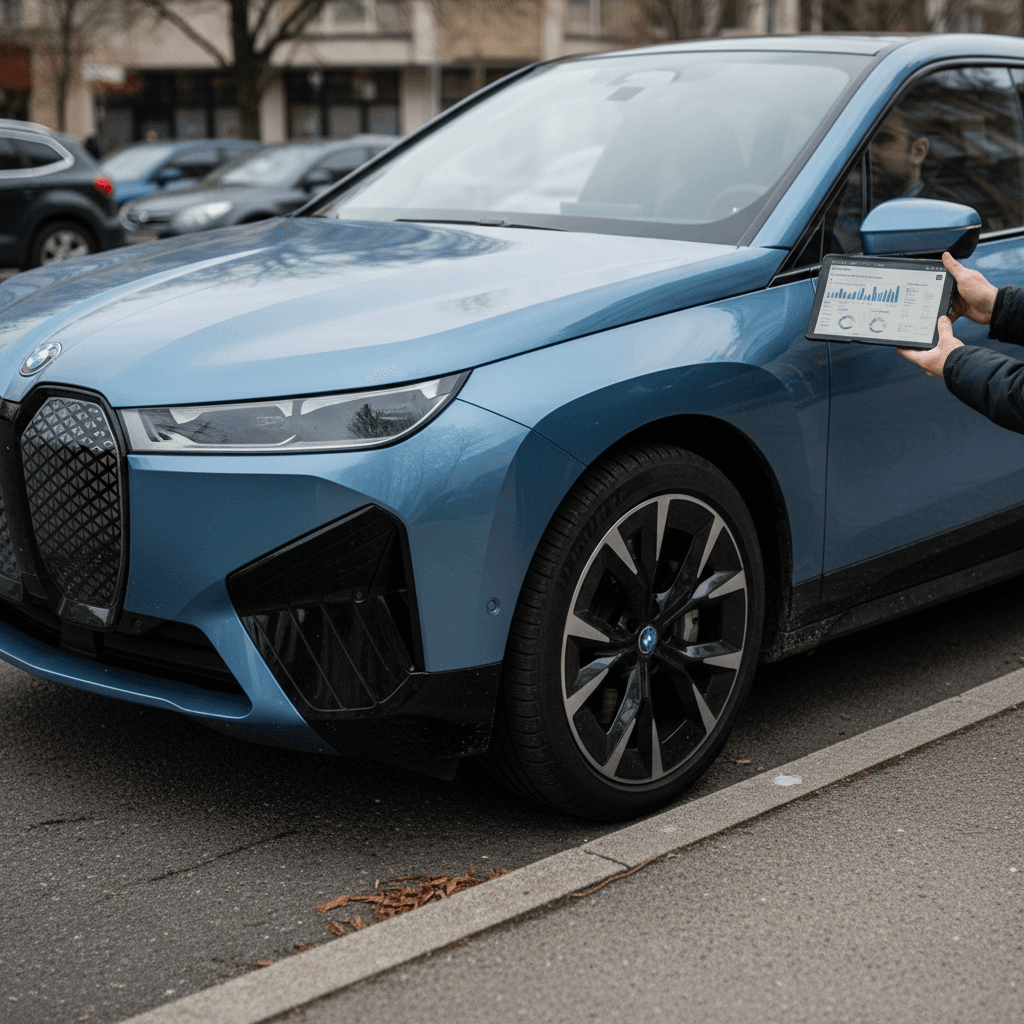
Shopping used can lower both your payment and your insurance bill, without giving up the EQB’s core safety tech.
Smart move for used EQB shoppers
How to lower your Mercedes EQB insurance cost
You can’t change the fact that the EQB is a luxury EV, but you have more control over your premium than you might think. Here’s how EQB owners and shoppers can bend the curve down.
Practical ways to trim your EQB premium
Mix and match these based on your situation.
Right‑size your coverage
Choose a higher deductible thoughtfully
Use telematics or mileage programs
Bundle with home or renters
Lean into safety & anti‑theft
Shop more than one insurer
What not to do
Insuring a used Mercedes EQB: what to know (and how Recharged helps)
If you’re shopping a used EQB, you’re already doing one smart thing for your budget. Depreciation has taken the first big hit, and that usually means lower insurance costs than an equivalent new model. But with EVs, the devil is in the details: battery health, prior damage, and equipment all change how comfortable you, and your insurer, feel about the car.
- Battery health: An EQB with a strong, documented battery pack is a lower‑risk asset than one with unknown or marginal health.
- Accident history: Prior structural repairs or airbag deployments can change how an insurer rates or even accepts the car.
- Equipment level: A loaded EQB 350 4MATIC with panoramic roof and big wheels costs more to fix than a simpler 250+ on smaller wheels.
- Usage plans: If your used EQB will be a second car with low miles, you might qualify for lower‑mileage discounts.
Where Recharged fits in
Ready to find your next EV?
Browse VehiclesBecause Recharged also offers financing, trade‑ins, consignment, and nationwide delivery, you can line up your monthly payment and your expected insurance range before you ever sign, instead of finding out the hard way at the last minute.
Is the Mercedes EQB worth the insurance cost?
The EQB is an interesting paradox: a compact SUV that’s easy to park, wearing a three‑pointed star and powered by a dense layer cake of electronics. Insurers see risk; drivers see quiet, instant torque and a cabin that feels like a scaled‑down EQS.
Where the EQB earns its keep
- Lower running costs: Electricity and routine maintenance usually undercut a gas Mercedes GLB over the same miles.
- Safety tech baked in: Modern driver‑assist features reduce the odds (and often the severity) of crashes.
- Resale appeal: A well‑kept, documented EQB should stay desirable as EV adoption grows.
Where insurance stings
- Premium over mainstream SUVs: You’ll likely pay more to insure an EQB than a Honda CR‑V or Toyota RAV4.
- Luxury repair economics: Body shops and parts for German luxury EVs aren’t bargain‑bin items.
- EV surcharge (for now): Across the market, EVs still cost more to insure than gas cars, though the gap is slowly narrowing.
If you want a compact family SUV with Mercedes comfort and full‑electric running, paying somewhat more for insurance is part of the bargain. The trick is stacking the deck in your favor, choosing the right EQB, buying it with clear battery and damage history, and tuning your coverage intelligently. That’s exactly where a well‑vetted used EQB and a transparent Recharged Score can turn a luxury EV into a rational, predictable monthly expense.