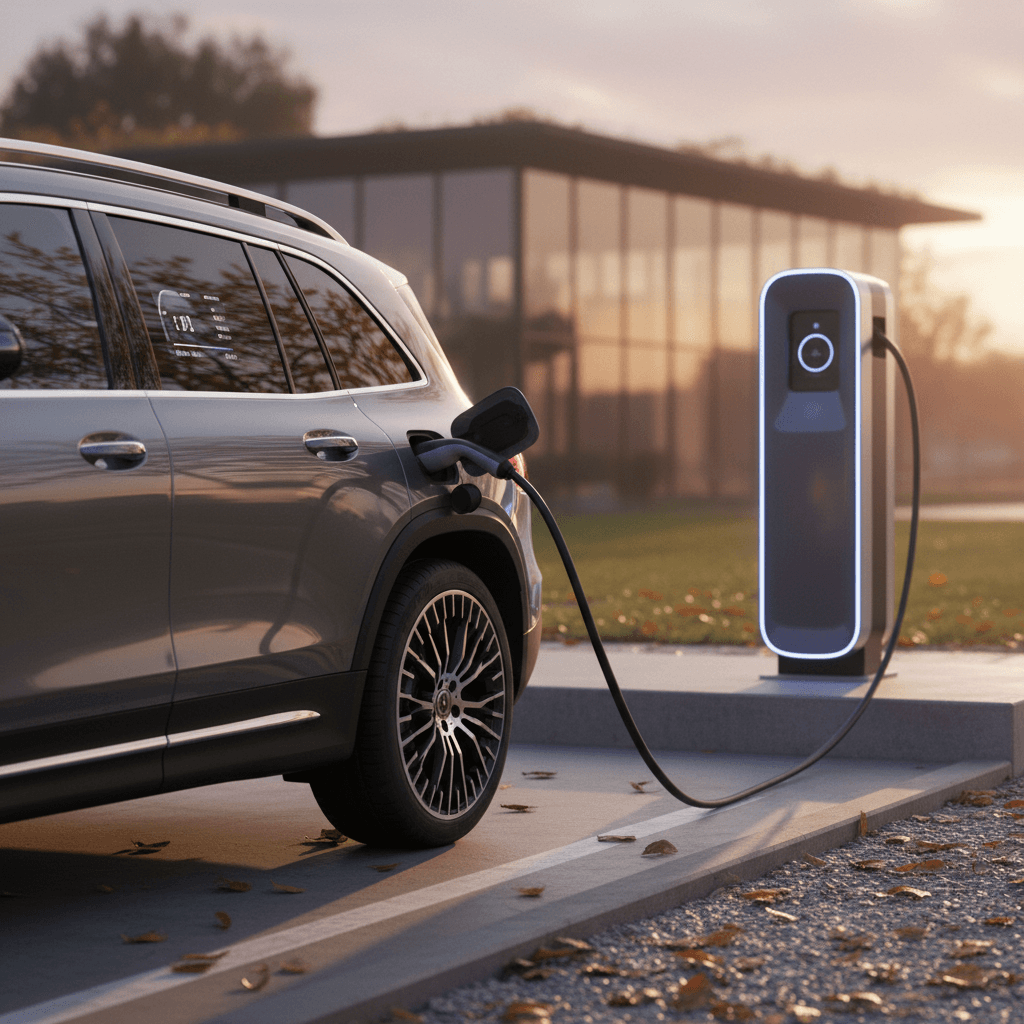
If you’re considering a Mercedes EQB, or already have one, the big question is simple: **how fast does the Mercedes EQB actually charge** at home and on the road? Spec sheets quote kW and minutes, but what matters is how long you’re really parked at a charger and what you can do to speed things up without hurting the battery.
Quick EQB charging summary
Mercedes EQB charging speed at a glance
Mercedes EQB charging snapshot (most trims, U.S.)
Those numbers put the Mercedes EQB solidly in the middle of today’s compact luxury EV pack. It won’t match the wild peaks of the latest 800‑volt flagships, but it’s quick enough that **charging rarely dominates a road trip** if you plan stops well. At home, a properly sized Level 2 charger turns a low battery into a full pack while you sleep.
EQB battery size and charging hardware basics
Before you worry about minutes at the plug, it helps to understand what you’re charging. Most Mercedes EQB models in North America share **essentially the same battery and charging hardware**, even though power and range differ by trim.
- Battery capacity: most EQB 250/300/350 SUVs use a pack with around **70.5 kWh gross and ~66.5 kWh usable** energy.
- Onboard AC charger: newer U.S. EQBs support **up to about 9.6–11 kW** on Level 2 (240V) charging, which is the practical ceiling for home and workplace charging.
- DC fast‑charging hardware: the EQB is rated for **up to about 100 kW DC fast charging** on a capable CCS station.
- Connector type: in the U.S., EQB uses **CCS1** for DC fast charging and **J1772** for AC charging; Mercedes is rolling out access to Tesla Superchargers via an approved NACS adapter in many regions.
Trim differences matter less than you think
DC fast charging the Mercedes EQB: 10–80% in the real world
On a modern DC fast charger (typically 150 kW or 350 kW), the Mercedes EQB will briefly climb toward its 100 kW peak, then taper as the battery fills. For trip planning, you should think in terms of **time from 10–80%**, not the maximum kW number on the screen.
Typical Mercedes EQB DC fast charging profile
Approximate times on a healthy battery, mild weather, and a capable DC fast charger.
| State of charge window | Energy added (approx.) | Time at DC fast charger | Typical use case |
|---|---|---|---|
| 10% → 60% | ~35 kWh | 20–22 minutes | Quick hop between nearby cities |
| 10% → 80% | ~50 kWh | 30–35 minutes | Standard road‑trip stop (bathroom + snack) |
| 20% → 90% | ~50 kWh | 35–45 minutes | When chargers are sparse and you want a larger buffer |
Use these numbers as planning baselines; cold weather, weak chargers, or a very full battery will slow things down.
Don’t chase 100% on DC fast charging
In independent tests and owner reports, a healthy EQB on a strong charger will average **roughly 70–90 kW** across a 10–80% session in good conditions. That’s why you consistently see that 30–35 minute window, enough time to stretch, hit the restroom, grab coffee, and be back on the road with useful range.
Level 1 & Level 2: EQB home and workplace charging
Where the EQB really finds its rhythm is **overnight Level 2 charging**. DC fast charging is for road trips and the occasional emergency; the day‑to‑day experience lives on 120V or 240V power at home or work.
Level 1 (120V household outlet)
If you simply plug into a standard 120V outlet using the included portable charger, you’re looking at:
- 3–5 miles of range per hour of charging
- 30–45+ hours for a deep 10–80% recharge
- Best used for emergencies or very light daily driving
Level 1 works if you drive a short commute and charge every night, but for most EQB owners it’s a fallback, not a primary solution.
Level 2 (240V home or workplace)
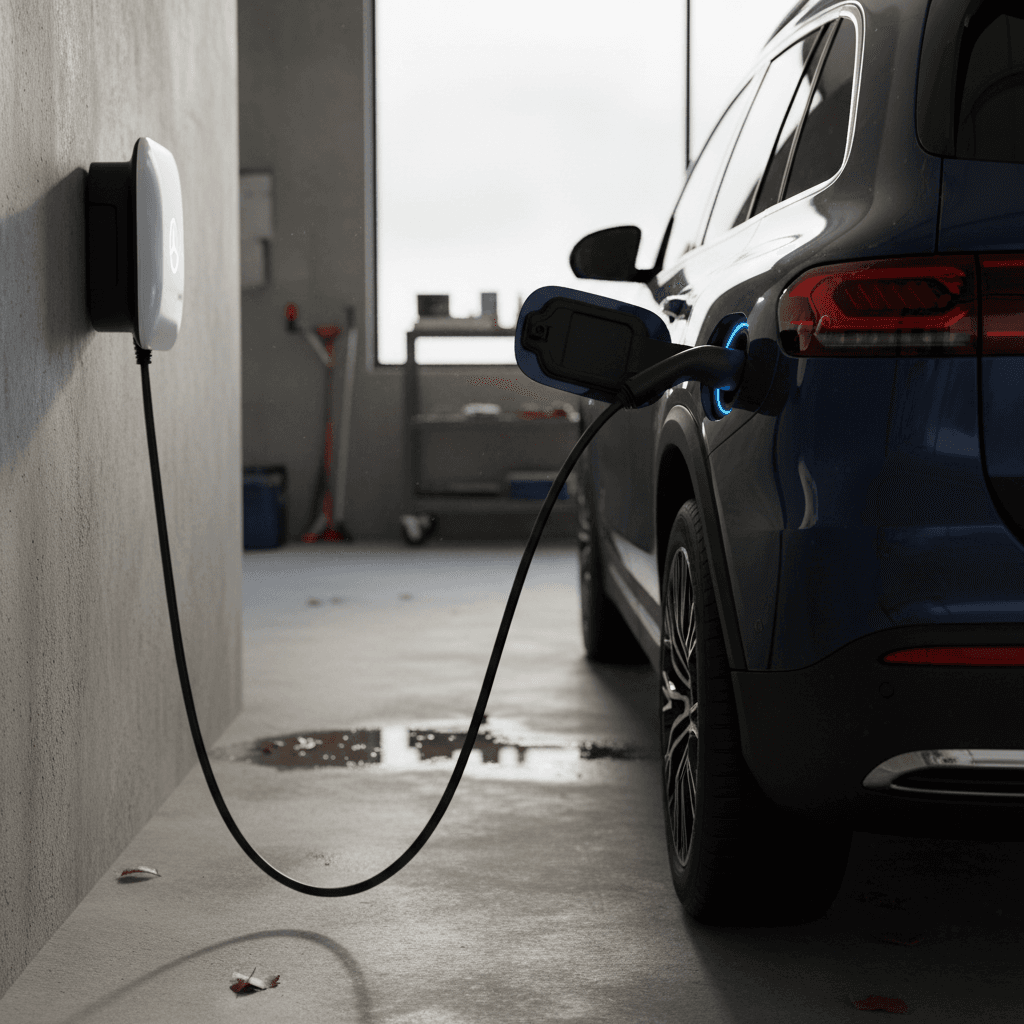
A dedicated 240V circuit and wallbox transform EQB ownership:
- 7.7–11 kW charging power, depending on charger and wiring
- Roughly 25–30+ miles of range per hour at 9.6 kW
- About 7–8 hours for a 10–100% charge, starting near empty
For most households, that means you plug in at night and wake up to a "full tank" long before breakfast.
Target a 40A–48A Level 2 charger
How long does it take to charge a Mercedes EQB? (Quick table)
Approximate Mercedes EQB charging times by charger type
These are ballpark planning numbers for a healthy battery and typical conditions.
| Charger type | Power (approx.) | 10–80% time | 10–100% time | Best use case |
|---|---|---|---|---|
| Level 1 (120V wall outlet) | 1.4–1.9 kW | 33–47 hours | 40–50+ hours | Emergency use or very light driving |
| Level 2, 16A @ 240V | ~3.8 kW | 14–18 hours | 18–20 hours | Occasional overnight top‑ups |
| Level 2, 32A @ 240V | ~7.7 kW | 7–9 hours | 9–10 hours | Good basic home solution |
| Level 2, 40A @ 240V | ~9.6 kW | 5.5–7.5 hours | ~7–8 hours | Ideal everyday home charging |
| DC fast charger (100 kW peak) | Up to 100 kW | ~30–35 minutes | ~45–60+ minutes | Road‑trip stops and quick top‑ups |
Actual times vary with temperature, charger quality, starting state of charge, and your specific EQB trim, but this gives a solid planning baseline.
Take manufacturer numbers as best‑case
5 factors that change your EQB charging speed
Even with the same EQB and the same charger, you won’t always see the same speeds. Five variables do most of the work behind the scenes.
What really controls your Mercedes EQB charging speed
Understanding these makes slow sessions less mysterious, and easier to fix.
1. Battery temperature
Like every modern EV, the EQB slows charging when the pack is too cold or too hot. On a winter morning, you might see 30–50 kW instead of 80–100 kW on DC until the battery warms up.
Using route‑based battery preconditioning (via navigation to a fast charger) helps you arrive in the sweet spot for maximum speed.
2. Starting state of charge
Fast charging works best when you arrive between about **5–30%**. Show up at 60–70%, and the car will immediately taper to protect the pack, even on a 350 kW station.
Plan your stops to arrive low and leave around 70–80% for the best balance of speed and range.
3. Charger power & health
A "150 kW" or "350 kW" label on the pedestal doesn’t guarantee full power. Shared cabinets, old hardware, or limited site power can cap your EQB well below its 100 kW peak.
If you’re consistently slow at one location, try another station or brand before blaming the car.
4. Weather & climate control
Cold ambient temps slow the battery chemistry; extreme heat triggers thermal protection. Running the cabin heater hard at the same time also pulls energy that could otherwise go into the pack.
Pre‑conditioning the cabin while plugged in and using seat/steering‑wheel heat instead of blasting HVAC can help.
5. Your settings & limits
Charging limits in the infotainment system or app, like capping the battery at 80% or limiting current on AC, will change both the speed and when the car starts to taper.
Double‑check your **charge limit** and **max current** settings any time charging seems unusually slow.
What a healthy EQB fast charge looks like
Planning road trips in a Mercedes EQB
If range is the EQB’s ceiling, charging is its floor: not disastrous, but firmly middle‑of‑the‑pack. That just means **good planning matters a bit more** than it does in the longest‑range EVs. Once you understand your charging profile, road trips become predictable and relaxed.
EQB road‑trip charging game plan
1. Start with a full battery from home
Use Level 2 at home to leave with **90–100%** before a long drive. That first leg is your cheapest, easiest energy of the trip.
2. Aim to arrive at fast chargers around 10–20%
You’ll see the best average speeds when you arrive with a low state of charge. Don’t panic if you see 10% on the dash, that’s when the charger does its best work.
3. Target 70–80% instead of 100%
Plan hops between chargers that let you unplug around **70–80%**, even if the next station is closer. That keeps stops in the 25–35 minute range instead of dragging them out.
4. Build charging into natural breaks
Line up fast‑charge stops with meals and bathroom breaks. A 10–80% EQB session often matches the time it takes to walk inside, order, eat, and return.
5. Use multiple networks
The EQB’s CCS port gives you access to Electrify America, EVgo, and many regional providers, and, with an approved NACS adapter, growing access to Tesla Superchargers. Using several networks gives you better coverage and more backup options.
6. Check station status before you detour
Use charging apps and your navigation to confirm that stations are **online and available** before committing to an off‑route stop, especially in rural areas.
Watch your buffer in winter
Charging tips to protect your EQB battery
Modern EQB packs are well‑managed and built to last, but **how you charge still matters**. A few habits go a long way toward keeping capacity strong well into six‑figure mileage.
- Use DC fast charging **when you need it**, not every day. Occasional road‑trip use is fine; daily 350 kW sessions from low to 100% are harder on any pack.
- For daily use, keep your charge limit around **70–80%** and only bump to 100% on days you really need full range.
- Avoid letting the car sit for days at very low (under ~10%) or very high (near 100%) state of charge, especially in hot weather.
- Whenever possible, **pre‑condition the cabin and battery while plugged in** so you’re drawing energy from the grid, not the pack.
- Keep your software up to date; automakers routinely tweak charging curves and thermal management for better performance and longevity.
Good news on EQB battery life
Choosing the right home charger for your EQB
Because so much of your EQB experience depends on home charging, picking the right setup is as important as understanding DC fast‑charge times. The goal is simple: **match your home hardware to what the car can actually use**, without over‑spending on excess capability.
Home charging options for Mercedes EQB owners
Match your driving pattern and electrical panel, not just the number on the box.
Light‑miles driver
If you drive under 25–30 miles per day, a mid‑range Level 2 charger is plenty.
- 32A (7.7 kW) wallbox
- Roughly 25 miles of range per hour
- Comfortable overnight top‑ups even from low states of charge
Heavy commuter or multi‑EV home
If you regularly drive long distances, run two EVs, or want fast turnaround between trips, maximize what the EQB can take.
- 40A–48A wallbox (9.6–11 kW)
- Shortest overnight times
- Best match to the EQB’s onboard charger
Panel‑limited or renting
If your electrical panel is tight or you’re in a rental:
- Consider a **portable 32A Level 2** unit on a 240V outlet
- Look for adjustable‑amp chargers to fit smaller circuits
- Plan for a bit longer to recover from very low state of charge
Where Recharged fits in
Mercedes EQB charging speed FAQ
Frequently asked questions about Mercedes EQB charging speed
Bottom line: Is Mercedes EQB charging fast enough?
The Mercedes EQB isn’t a charging rocket ship, but it doesn’t need to be. In everyday use, a solid Level 2 home setup gives you a full pack overnight, and on the road, a **predictable 30–35‑minute 10–80% DC fast‑charge window** fits neatly into normal rest stops. Once you understand how temperature, charger quality, and state of charge affect speed, and you build your drives around those realities, the EQB becomes easy to live with.
If you’re weighing an EQB against other used luxury EVs, focusing on **real‑world charging behavior and battery health** is more important than chasing headline kW figures. That’s exactly what Recharged was built for: transparent battery reports, fair pricing, and EV‑savvy guidance from first question to final signature, so your next road trip in a Mercedes EQB is memorable for the scenery, not the time you spent at the charger.