If you’re considering a Mercedes EQB or already own one, the big money question is simple: what does it really cost per mile to drive on electricity? In this guide, we’ll turn MPGe and kWh numbers into clear, dollars‑per‑mile examples for the EQB 250+, 300, and 350, using up‑to‑date U.S. electricity prices and realistic driving scenarios.
Quick answer
Overview: Mercedes EQB charging cost per mile
Before we dive into the math, it helps to frame where the Mercedes EQB charging cost per mile usually lands in the U.S. today. Nationally, the average residential electricity price in 2024–early 2026 has hovered in the mid‑teens cents per kWh, with many states clustered around 16–18¢/kWh and some coastal states much higher. That’s the backbone for your home‑charging cost per mile. Public DC fast charging and some urban Level 2 networks can run two to three times that rate.
Mercedes EQB cost-per-mile at a glance
EQB efficiency: MPGe, kWh per 100 miles, and what it means for cost
Cost per mile starts with how much energy the EQB uses to drive a mile. Mercedes offers a few EQB variants in the U.S., and they’re not identical in efficiency.
Mercedes EQB EPA efficiency and range (recent model years)
Approximate EPA figures for popular EQB trims; your real‑world results will vary with speed, temperature, and wheel/tire choice.
| Model | Drivetrain | Combined MPGe (approx.) | kWh/100 mi (incl. charging losses) | Miles per kWh (usable) | EPA range (mi, recent FWD/AWD trims) |
|---|---|---|---|---|---|
| EQB 250+ | FWD | ≈107 MPGe | ≈31.5 kWh/100 mi | ≈3.2 mi/kWh | ≈250 mi |
| EQB 300 4MATIC | AWD | ≈87 MPGe | ≈38–39 kWh/100 mi | ≈2.6 mi/kWh | ≈205–230 mi |
| EQB 350 4MATIC | AWD | ≈86 MPGe | ≈39–40 kWh/100 mi | ≈2.5–2.6 mi/kWh | ≈200–220 mi |
Use these efficiency numbers as a baseline when estimating your own cost per mile.
How to read kWh/100 miles
The EQB 250+ is the efficiency champ. Owners frequently see around 3.0–3.4 miles per kWh in mixed driving when driven reasonably. The EQB 300 and 350, with dual motors and more power, generally fall closer to 2.4–2.8 miles per kWh in similar conditions. That difference matters directly to your cost per mile.
Home charging: Mercedes EQB cost per mile at U.S. electricity rates
Most EQB owners will do the bulk of their charging at home. That’s also where you get the lowest Mercedes EQB charging cost per mile. Let’s walk through the math using a realistic U.S. residential electricity price and the efficiency numbers above.
Step 1: Start with your electricity rate
Grab your utility bill and look for the **$/kWh** line item. If you’re not sure, a fair U.S. planning number for 2024–2026 is around $0.16–$0.18 per kWh for residential customers.
For simple examples below, we’ll use $0.17/kWh as a national “average-ish” figure. If your rate is very different (say, $0.12 or $0.30), you can plug your own price into the same formulas.
Step 2: Convert to cost per mile
The formula is straightforward:
Cost per mile = (Price per kWh) ÷ (Miles per kWh)
So if your EQB averages 3.0 mi/kWh and you pay $0.17/kWh:
$0.17 ÷ 3.0 ≈ $0.057 per mile
Home charging cost per mile: EQB scenarios
Using 17¢/kWh as a representative U.S. residential rate
EQB 250+ (efficient driver)
Assumed efficiency: 3.2 mi/kWh
Cost per mile: $0.17 ÷ 3.2 ≈ $0.053
Cost per 1,000 miles: about $53
EQB 250+ (mixed driving)
Assumed efficiency: 3.0 mi/kWh
Cost per mile: $0.17 ÷ 3.0 ≈ $0.057
Cost per 1,000 miles: about $57
EQB 300/350 (AWD)
Assumed efficiency: 2.6 mi/kWh
Cost per mile: $0.17 ÷ 2.6 ≈ $0.065
Cost per 1,000 miles: about $65
Watch your local rate
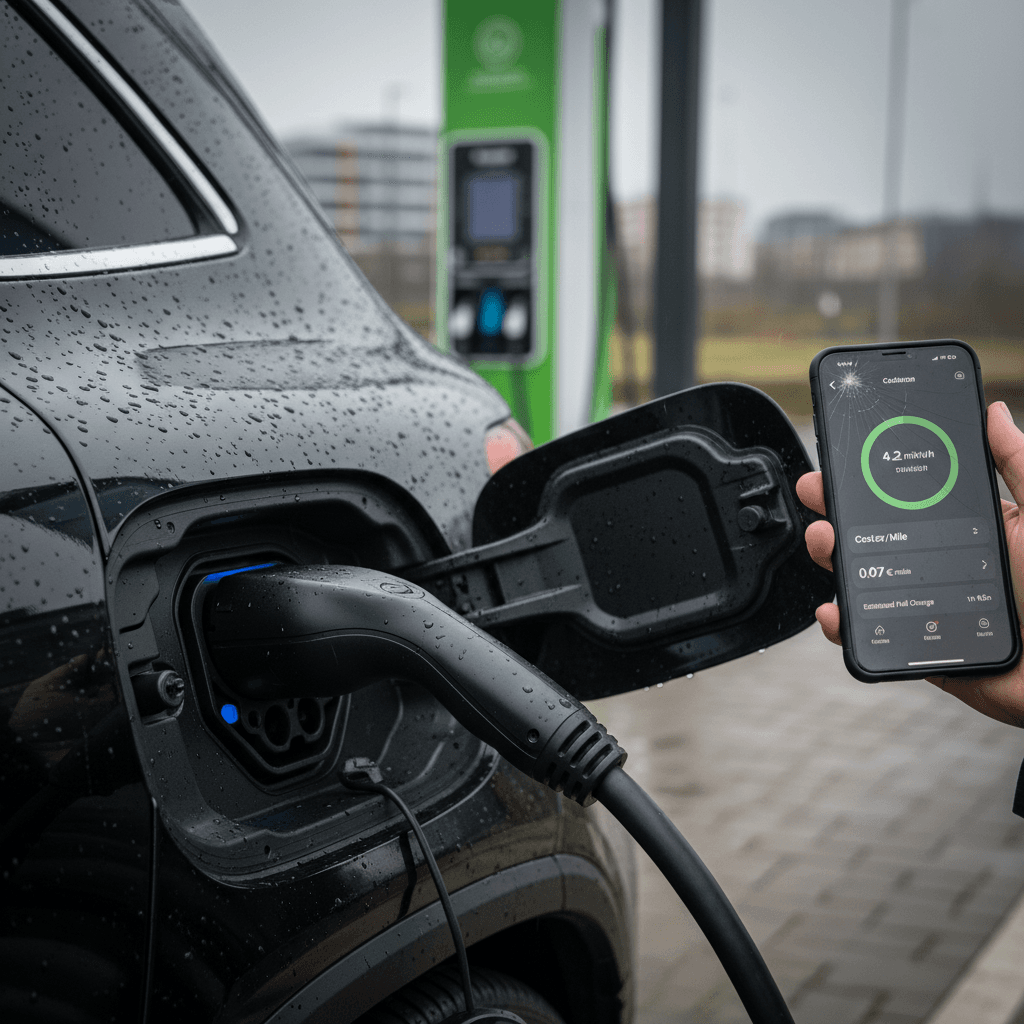
Public DC fast charging: real-world cost per mile
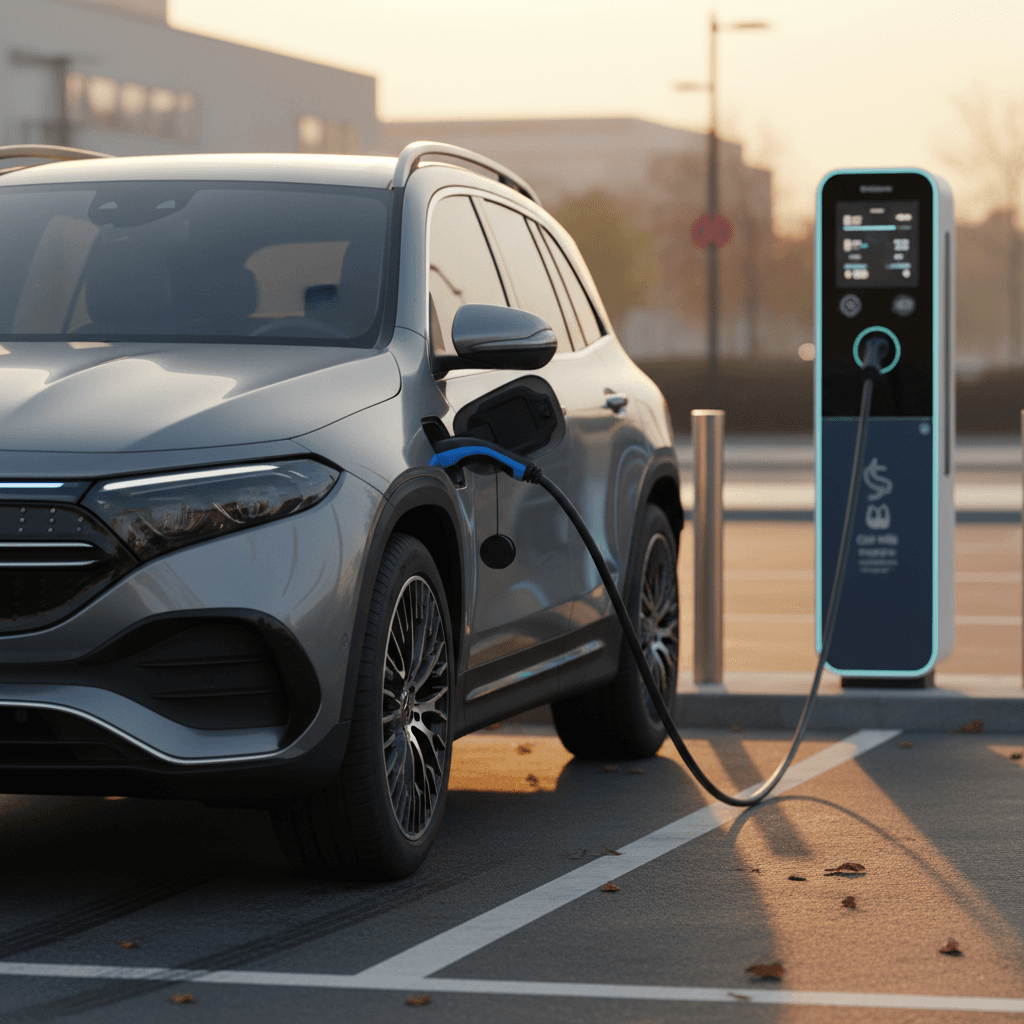
Public charging is convenient, but it’s rarely the cheapest way to drive your EQB. On most big U.S. networks, DC fast charging prices often fall somewhere between $0.30 and $0.60 per kWh, depending on region, time of day, membership discounts, and whether you’re using a highway corridor or an urban station.
Mercedes EQB cost per mile on common DC fast charger prices
Approximate cost per mile for EQB trims at a range of public fast‑charging prices.
| Price per kWh | EQB 250+ (3.0 mi/kWh) | EQB 250+ (3.2 mi/kWh) | EQB 300/350 (2.6 mi/kWh) |
|---|---|---|---|
| $0.30/kWh | $0.10/mi | $0.09/mi | $0.12/mi |
| $0.40/kWh | $0.13/mi | $0.13/mi | $0.15/mi |
| $0.50/kWh | $0.17/mi | $0.16/mi | $0.19/mi |
| $0.60/kWh | $0.20/mi | $0.19/mi | $0.23/mi |
Use this to estimate what your EQB road trip might cost on DC fast charging alone.
Typical road‑trip numbers
For many owners, that still undercuts the fuel cost of a comparable gas SUV, but the gap narrows. If you rely heavily on DC fast charging in an expensive region, your Mercedes EQB charging cost per mile can approach that of a thrifty gasoline crossover.
How speed, weather, and driving style change EQB cost per mile
EPA ratings are useful, but your actual cost per mile in a Mercedes EQB depends heavily on how and where you drive. Three big variables matter: speed, temperature, and your right foot.
Why your EQB cost per mile may differ from the EPA sticker
Same car, very different energy use depending on conditions
Highway vs. city
Like many EVs, the EQB can be more efficient around town than at 75 mph. Expect higher cost per mile on long, fast highway runs than on mixed city driving.
Cold and hot weather
Winter heating and summer A/C both draw power. In freezing temperatures, your miles per kWh can drop 15–30%, temporarily raising cost per mile.
Driving style & load
Hard acceleration, high speeds, roof boxes, and heavy cargo all eat into efficiency. Gentle driving can easily save a few cents per mile over the life of the car.
Use your EQB’s energy screen
How Mercedes EQB cost per mile compares to gas SUVs
To understand what the Mercedes EQB is saving you, or not, it helps to compare its electricity cost per mile to a similar gasoline compact luxury SUV.
Typical gas compact luxury SUV
- Fuel economy: around 20–25 mpg combined
- Gas price assumption: $3.50–$4.50 per gallon (recent U.S. range)
At 22 mpg and $4.00/gal:
Cost per mile = $4.00 ÷ 22 ≈ $0.18/mi
At 25 mpg and $3.50/gal:
Cost per mile ≈ $0.14/mi
Mercedes EQB comparison
- Home charging: ~3.0 mi/kWh at $0.17/kWh ≈ $0.057/mi
- DC fast charging: ~3.0 mi/kWh at $0.40/kWh ≈ $0.13/mi
So an EQB charged mostly at home can easily cut your energy cost per mile by 50–70% versus a comparable gas SUV. On road trips, with heavy DC fast‑charging use, the savings shrink but usually don’t disappear.
Annual savings snapshot
7 ways to lower your Mercedes EQB charging costs
Practical ways to shrink your EQB cost per mile
1. Charge mostly at home
Every kWh you buy from your wall instead of a DC fast charger is money saved. Even in higher‑price states, home kWh usually cost far less than highway fast chargers.
2. Use time-of-use or overnight rates
Many utilities offer cheaper electricity during off‑peak hours. Set your EQB’s charge timer, or your smart charger, to start after the evening peak so you pay less per kWh.
3. Keep speeds reasonable on the highway
Above about 70 mph, aerodynamic drag rises quickly and your EQB’s miles per kWh fall. Dropping 5–10 mph on long trips can save several dollars in charging on a single day.
4. Precondition while plugged in
Use cabin pre‑heat or pre‑cool while the EQB is still plugged in so more of your battery energy goes to driving instead of climate control, especially in extreme temperatures.
5. Check tire pressures regularly
Under‑inflated tires hurt efficiency and raise cost per mile. Follow the pressures on the door‑jamb sticker and check them monthly, more often in big temperature swings.
6. Trim unnecessary roof racks and cargo
Roof boxes and bike racks create drag; heavy cargo adds weight. Removing them when you don’t need them makes your EQB more efficient at highway speeds.
7. Plan charging stops strategically
On road trips, aim to arrive at DC fast chargers with 10–25% battery and leave around 60–80%. That’s where charging is fastest and you get more miles per minute of paid charging.
Buying a used EQB? Cost-per-mile factors to check first
If you’re shopping the used market, where the EQB has become an intriguing value, the same factors that affect cost per mile also affect what you should look at before you buy. This is where a structured battery‑health and pricing view, like the Recharged Score Report, becomes especially useful.
Key cost drivers when evaluating a used Mercedes EQB
These items shape both your cost per mile and long‑term ownership costs
Battery health & usable range
While modern EQB packs are designed for longevity, any loss of usable capacity reduces your real‑world miles per kWh and may push you to charge more often, especially on trips. A verified battery health report helps you predict both cost per mile and resale value.
Home charging situation
An EQB is most economical when you can charge regularly at home on Level 2. If you’ll rely heavily on public charging, your average cost per mile will be closer to the DC fast‑charging numbers in this guide.
Typical driving mix
Ask yourself how you’ll really drive it: mostly city, suburban mixed, or 75‑mph interstate. A used EQB that previously lived its life as a highway commuter might have different real‑world efficiency patterns than a city‑focused car.
Local electricity and charging prices
Put your own utility rate and nearby charging network prices into the formulas here. A used EQB in a cheap‑power state can be dramatically less expensive to run per mile than the same vehicle in a very high‑cost market.
How Recharged can help
FAQ: Mercedes EQB charging cost per mile
Frequently asked questions about EQB charging cost per mile
Bottom line: What you should budget per mile for an EQB
When you boil down all the efficiency charts and rate tables, the Mercedes EQB charging cost per mile is refreshingly simple: if you can charge at home, expect something in the $0.06–$0.09 per‑mile range for everyday driving, and $0.12–$0.18 per mile when you’re leaning heavily on DC fast charging.
Compared with a similar gasoline SUV, that often means cutting your energy spend per mile roughly in half, sometimes more, while enjoying the smooth, quiet drive of a modern Mercedes EV. If you’re looking at a used EQB, pairing these numbers with a verified battery‑health snapshot and fair market pricing, like you get from a Recharged Score Report, turns cost‑per‑mile from a guess into a clear, confident part of your buying decision.