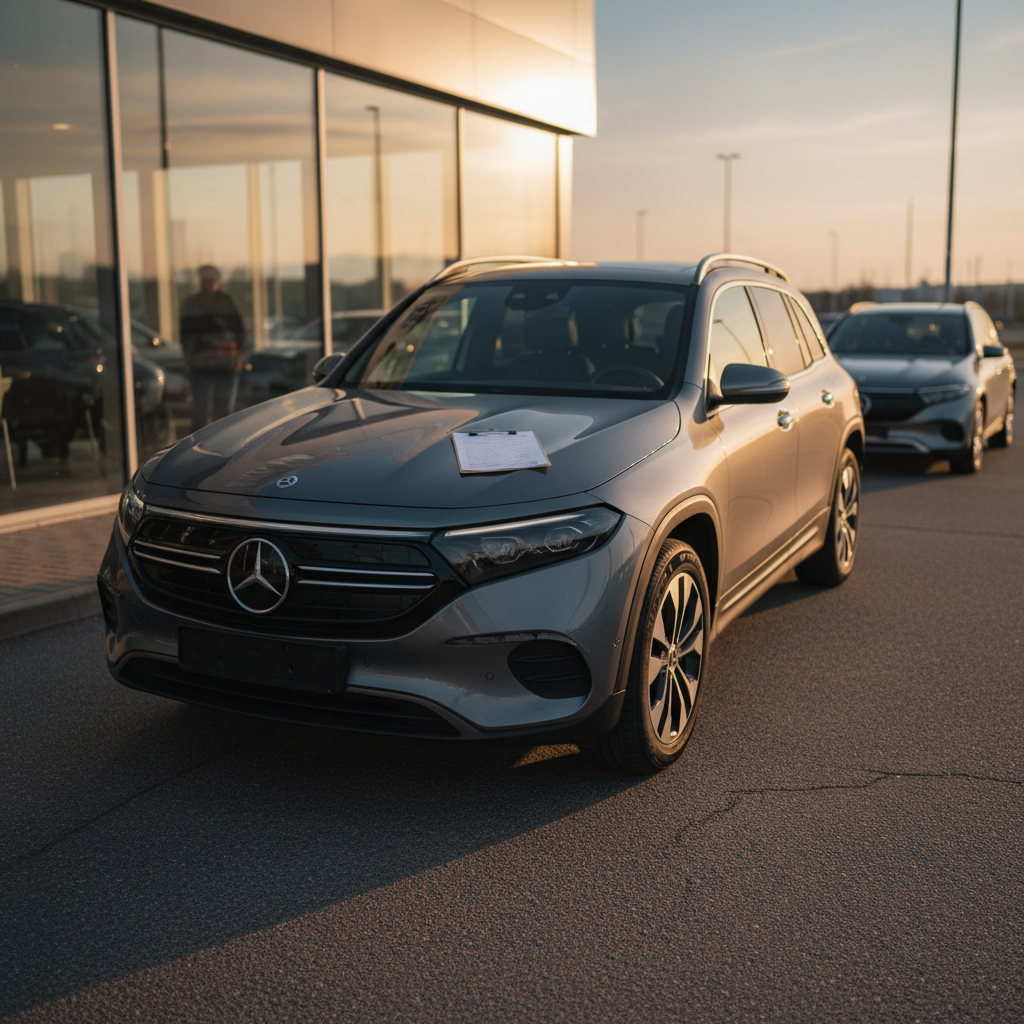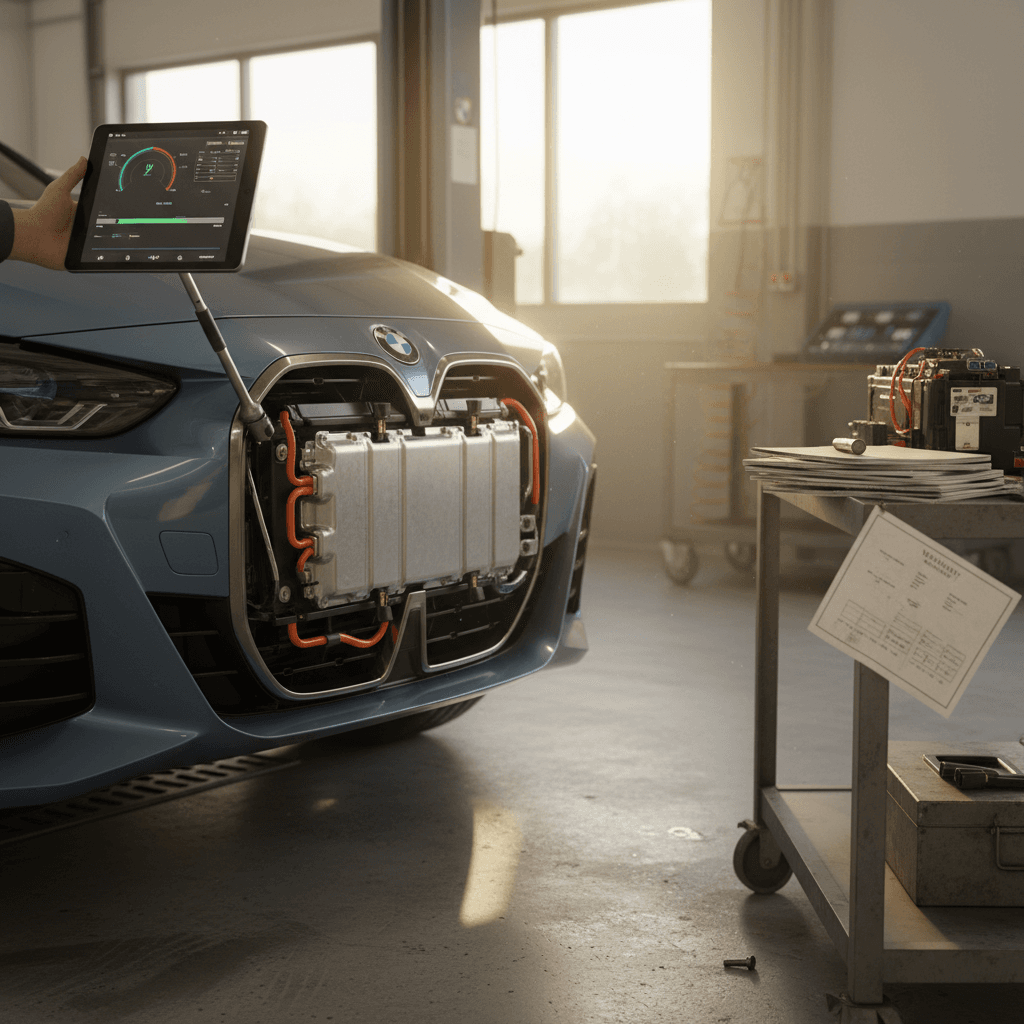
If you’re looking at a Mercedes EQB, especially a used one, the battery warranty details are just as important as the color, options, or trim. The high-voltage battery is the single most expensive component in the car, so understanding how long Mercedes stands behind it, what’s actually covered, and what happens when coverage runs out should shape how much you’re willing to pay and how long you plan to keep the vehicle.
Quick answer
Mercedes EQB battery warranty overview
- High‑voltage battery warranty: typically 8 years / 100,000 miles from the in‑service date
- Covers: manufacturing defects and, in many cases, excessive loss of usable battery capacity
- Separate from: standard new‑vehicle limited warranty (usually 4 years / 50,000 miles)
- Transferability: usually transfers to subsequent owners within time/mileage limits
- Region: details here are focused on the U.S. market; other regions can differ
For U.S. buyers, the Mercedes EQB’s high‑voltage battery warranty is designed to give you a long runway of protection through the vehicle’s early and mid‑life years. It supplements the standard new‑car warranty and typically follows the same basic structure used on the larger EQE and EQS lines, but with details specific to the EQB’s pack and software.
How long does the Mercedes EQB battery warranty last?
EQB battery vs. basic warranty at a glance
Two clocks are ticking when you buy new, battery and bumper‑to‑bumper.
High‑voltage battery warranty
- Duration: Typically 8 years from in‑service date
- Mileage limit: Typically 100,000 miles
- Coverage: Defects and excessive capacity loss
New‑vehicle limited warranty
- Duration: Commonly 4 years
- Mileage limit: Commonly 50,000 miles
- Coverage: Most non‑wear components, excluding the HV battery
The battery warranty clock starts on the vehicle’s original in‑service date, the day it was first sold or leased, not the model year. If you’re buying a used EQB, a 2022 model first sold in early 2023 will usually have coverage until early 2031 or 100,000 miles, whichever comes first.
How to check your exact coverage
What the EQB high-voltage battery warranty actually covers
In broad terms, Mercedes is guaranteeing that the EQB’s high‑voltage battery pack will be free from manufacturing defects and maintain a minimum level of usable capacity for the duration of the warranty period. The specifics vary by market and model year, but there are three big buckets of coverage you should understand.
Core elements of most EQB battery warranties
1. Manufacturing defects
Coverage for defects in materials or workmanship in the high‑voltage battery and associated components (such as the battery management system) that lead to failure before the warranty expires.
2. Excessive capacity loss
Many Mercedes EV warranties include protection if usable battery capacity drops below a specified threshold (often around 70%) within the warranty period. This isn’t a promise of zero degradation, it’s a backstop against abnormal loss.
3. Repair or replacement
If the defect or excessive capacity loss is verified, Mercedes will typically repair the affected modules or replace the pack with a new or remanufactured unit that restores the vehicle to the warranted capacity level.
Good news for used buyers
What isn’t covered: common exclusions and fine print
Like every high‑voltage battery warranty, the EQB’s coverage has clear boundaries. Knowing what’s not covered is just as important as understanding what is, especially if you plan to own the vehicle long term or drive high annual mileage.
Typical exclusions in Mercedes EQB battery warranties
Always read the actual warranty booklet for your vehicle, but these are the themes you should expect.
| Area | Usually NOT Covered | What That Means For You |
|---|---|---|
| Normal degradation | Gradual capacity loss above the warranty threshold | Some loss of range over time is expected and not considered a defect. |
| Abuse or misuse | Racing, overloading, or ignoring warning lights | If the car is used outside its intended design envelope, coverage can be denied. |
| Improper modifications | Non‑approved tuning, hardware changes, or unauthorized repairs | Aftermarket battery or powertrain modifications can void or limit coverage. |
| Lack of maintenance/updates | Skipping required service checks or software updates | If critical updates or service actions are ignored, claims may be impacted. |
| External damage | Collision, flood, fire from external causes | These are typically handled by insurance, not the battery warranty. |
These exclusions are common across most modern EV battery warranties, including the EQB.
Watch for non‑approved repairs
Battery degradation: what to expect from an EQB
Battery degradation is the slow, irreversible loss of usable capacity over time. All lithium‑ion packs degrade, but modern EVs like the Mercedes EQB are engineered so that most owners see modest, manageable capacity loss over the first 8–10 years of normal use.
Realistic expectations for EQB battery life
Your actual results will depend on climate, charging behavior, and mileage. Frequent DC fast‑charging, regular charging to 100%, and extreme heat can accelerate degradation. On the other hand, keeping daily charging in the 20–80% range and using Level 2 charging when possible can help your EQB’s battery age more gracefully.
Habits that are kind to your EQB’s battery
Warranty differences by model year and version
The Mercedes EQB line includes different variants, such as the EQB 250+ (single‑motor) and EQB 300/350 (dual‑motor), and software updates that have rolled out over time. The core high‑voltage battery warranty length is typically the same across these trims in the U.S., but small differences can appear in the fine print based on model year, regional regulations, and running changes in hardware.
Model year matters more than trim
OEMs usually keep the same battery warranty length across trims within a given model year. So an EQB 250+ and EQB 350 from the same year will generally share identical high‑voltage warranty terms, even if their power output and range differ.
In‑service date still rules
The key date is when the car was first put into service, not the model year on the badge. A leftover 2023 EQB sold new in early 2025 will have its 8‑year battery warranty running into 2033, even though it’s a 2023 model.
Always confirm with the actual warranty booklet
Costs once your EQB battery warranty ends
The question lurking behind every EV battery warranty is simple: What happens when it expires? The good news is that outright battery failures tend to be rare after the early "infant mortality" phase. The less‑good news is that if you do need major pack work out of warranty, it’s expensive enough that you want to think about it before you buy.
Life after the EQB battery warranty
You have options besides waiting for a full pack replacement bill.
Module‑level repairs
Technicians can sometimes address issues by replacing individual modules or electronics rather than the entire pack, bringing costs down versus a full replacement.
Full pack replacement
A complete pack swap is one of the most expensive repairs an EV can need. Exact figures vary, but it’s comparable to an engine replacement on a premium ICE vehicle.
Value vs. remaining life
On a high‑mileage, older EQB, it may not make economic sense to fund a full replacement. That’s why understanding battery health and remaining warranty is key at purchase time.
Don’t assume you’ll just "drop in" a cheap pack later
Used Mercedes EQB buying checklist: battery and warranty
If you’re considering a used Mercedes EQB, you want to turn the battery warranty from a source of anxiety into an asset. That means verifying what’s left, understanding current battery health, and pricing the vehicle accordingly.
7 battery‑specific checks before you buy a used EQB
1. Confirm in‑service date and mileage
Ask for documentation (or a VIN lookup) showing when the EQB was first sold and its current odometer reading. This lets you calculate remaining battery warranty down to the month.
2. Get a recent battery health report
Look for an objective report that estimates current state‑of‑health (SOH), not just dash‑displayed range. At Recharged, every EQB comes with a Recharged Score Report that includes <strong>instrumented battery diagnostics</strong>.
3. Review fast‑charging history if possible
Heavy, frequent DC fast‑charging isn’t a deal‑breaker by itself, but if you can see that a car lived almost exclusively on DC fast‑charge, it’s a cue to scrutinize battery health more closely.
4. Check for warranty or software campaigns
Ask if all open recalls, service campaigns, and recommended software updates have been performed. These can affect thermal management and long‑term battery durability.
5. Inspect for flood or collision history
A clean title and bodywork don’t always tell the whole story. Look for evidence of flood exposure or major crash repairs that might have impacted the high‑voltage system.
6. Drive it from a mid‑SOC
On a test drive, start around 50–70% state‑of‑charge and see if the indicated range and consumption seem reasonable for your climate and driving style.
7. Align price with remaining runway
A low‑mileage EQB with 5–6 years of battery warranty left should command more money than a similar car that’s close to aging out of coverage. Don’t treat them as equivalent in your budget.
How Recharged evaluates EQB battery health
Battery warranties are binary, you’re either inside the window or you’re not, but battery health is a spectrum. That’s where objective diagnostics matter. Two EQBs with identical warranty time left can have meaningfully different real‑world range and long‑term prospects.
Recharged Score battery diagnostics
Every EQB sold through Recharged includes a Recharged Score Report that measures battery health using real data, charging behavior, energy throughput, and on‑road performance, rather than guesses based solely on age or mileage.
Transparent pricing & nationwide buying
Because we combine battery health with market data, our pricing reflects both the warranty runway and the actual condition of the pack. You can finance online, trade in your current vehicle, and have a vetted EQB delivered nationwide from our digital storefront or Experience Center in Richmond, VA.
Why this matters more for EVs than ICE cars
FAQ: Mercedes EQB battery warranty questions
Frequently asked questions about the Mercedes EQB battery warranty
Key takeaways on Mercedes EQB battery warranty
The Mercedes EQB’s high‑voltage battery warranty is structured to make long‑term EV ownership practical: around 8 years / 100,000 miles of coverage on the pack, plus a separate bumper‑to‑bumper warranty on the rest of the car. But that warranty isn’t a promise that the battery will never degrade, and it isn’t a blank check for misuse. The smartest EQB buyers, especially in the used market, treat the warranty as a safety net, then focus on the actual battery health and price the vehicle accordingly.
If you’re looking at a used EQB, combine three things: a clear view of remaining battery warranty, an objective health assessment like the Recharged Score Report, and pricing that reflects both. That’s how you turn the EQB from an abstract premium EV into a grounded, low‑surprise ownership decision that fits your budget and your range needs for years to come.