If you own a Mercedes EQB, or you’re shopping for a used one, the phrase “Mercedes EQB battery replacement cost 2026” can feel ominous. High‑voltage packs are the single most expensive component in any EV, and recent EQB battery recalls have only raised the stakes. The good news: most owners will never pay out of pocket for a full pack, and you have more protections and options than you might think.
Key takeaway for 2026
EQB battery basics and why 2026 costs are in the spotlight
The Mercedes EQB is a compact electric SUV built on the GLB platform, sold in versions like the EQB 250+, EQB 300 4MATIC, and EQB 350 4MATIC. All of them use a high‑voltage lithium‑ion battery pack around 70 kWh gross capacity, mounted under the floor to power the front or dual motors. For model‑year 2025 and later EQB 350s, Mercedes lists a 70.5 kWh pack and an 8‑year/100,000‑mile battery warranty, which is typical for modern EVs and carries into 2026.
In late 2024 and into 2025–2026, a major safety recall affecting roughly twelve thousand 2022–2024 EQBs required pack replacements or software limitations. That recall has put EQB battery costs under a microscope, with owners and shoppers suddenly asking, “What would this cost if Mercedes wasn’t paying for it?” This guide focuses on that question and on what those numbers mean if you’re buying or owning an EQB in 2026.
Mercedes EQB battery at a glance
How big is the Mercedes EQB battery and what does it do?
All EQB variants sold in the U.S. share broadly similar battery hardware even if powertrains differ. The front‑drive EQB 250+ uses a single‑motor setup, while the EQB 300 and 350 add a rear motor for all‑wheel drive. Regardless of trim, the high‑voltage pack stores the energy that delivers your range, acceleration, and fast‑charging capability.
- Gross capacity: roughly 70–71 kWh, with about 66–67 kWh usable depending on year and trim
- Chemistry: modern lithium‑ion modules assembled into a structural pack under the cabin floor
- Voltage: around 350–400 V DC, compatible with CCS fast‑charging on 2022–2025 U.S. models and NACS adapter support on 2025+
- Warranty target: keep capacity above a defined minimum (typically ~70% of original) for at least 8 years or 100,000 miles
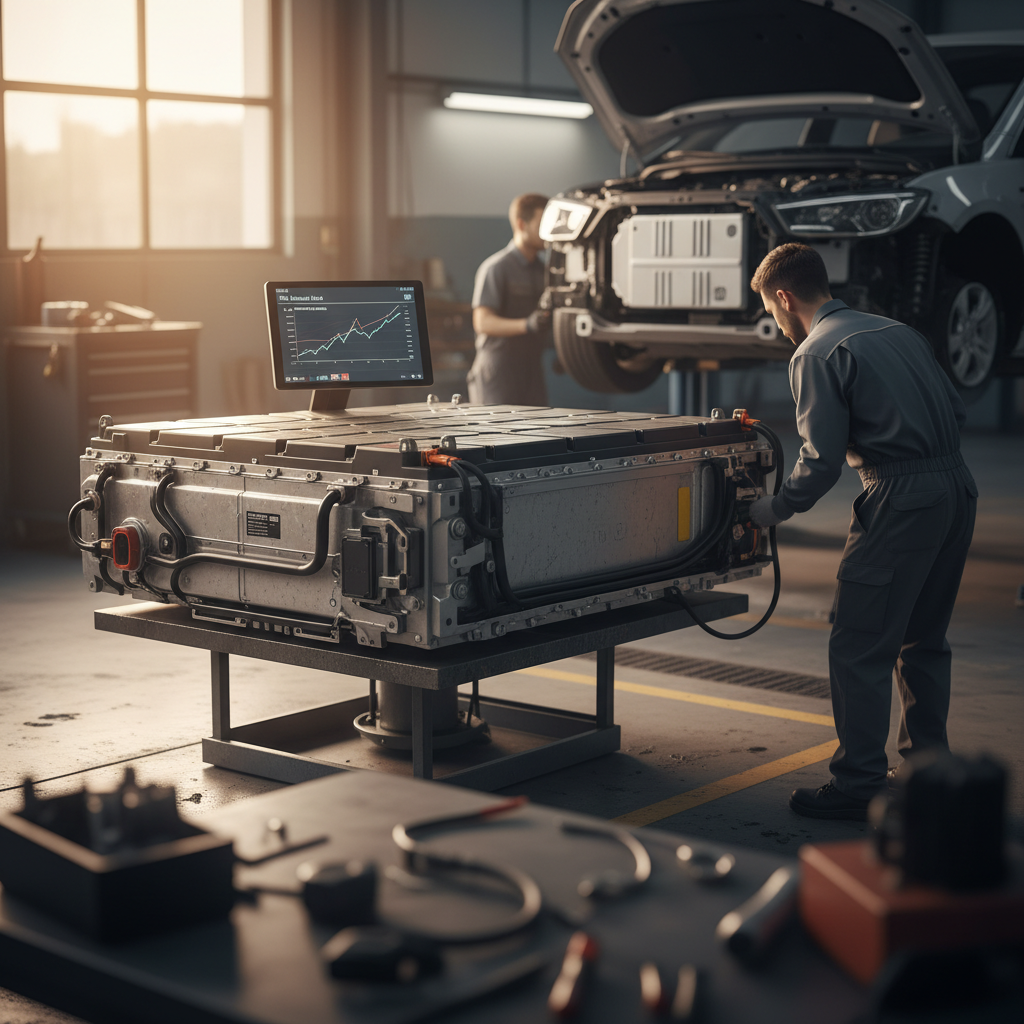
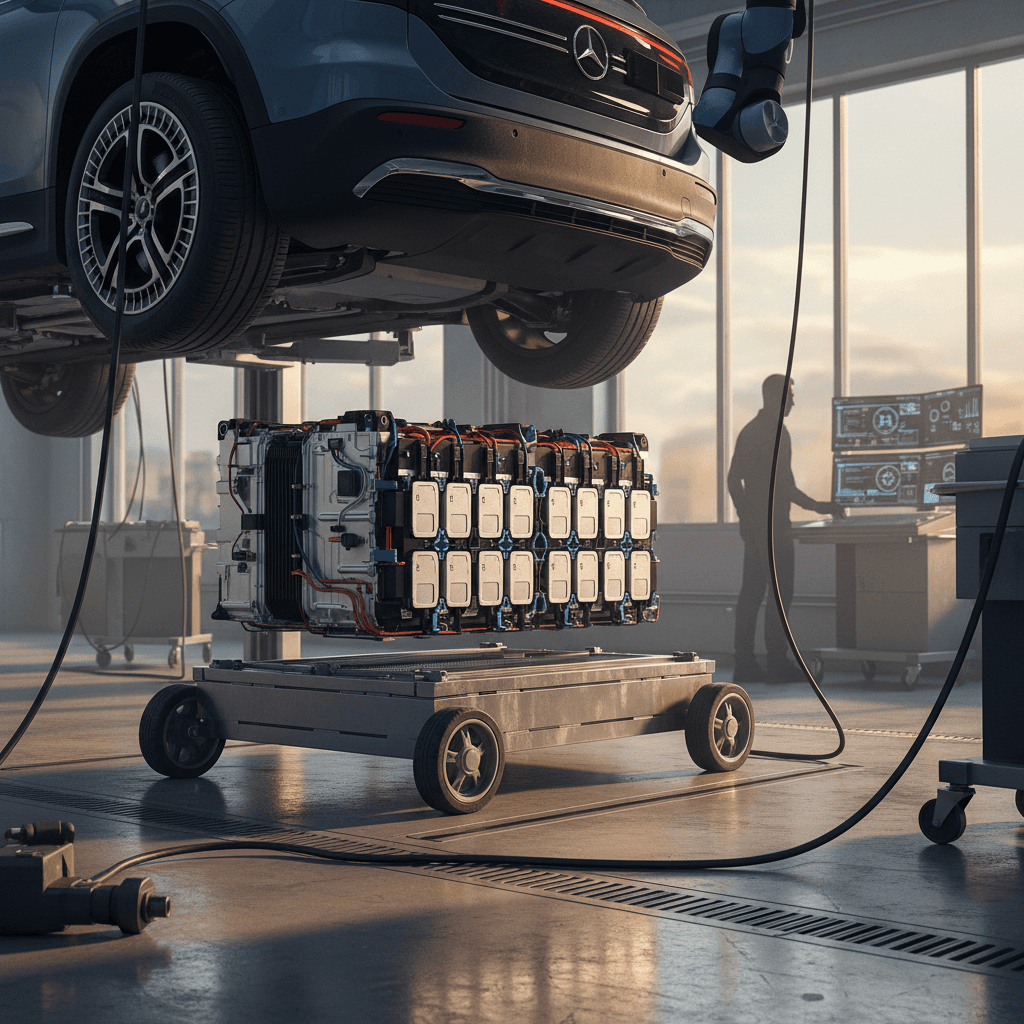
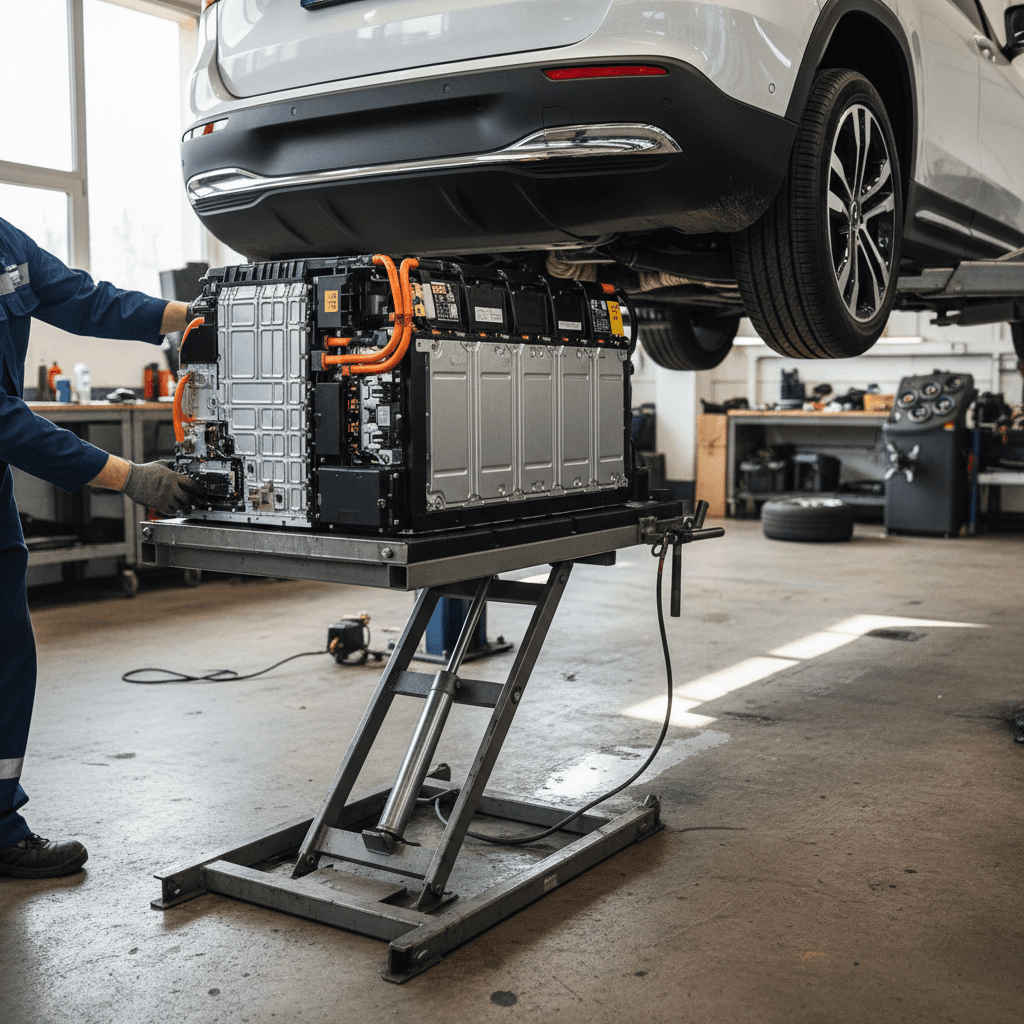
Because the high‑voltage pack is integrated into the EQB’s structure, servicing it is not like swapping a 12‑volt battery. The SUV must be lifted, the pack electrically isolated, coolant lines disconnected, and then the entire assembly lowered with a lift table. That complexity is a big part of why replacement costs look so high on paper.
Mercedes EQB battery replacement cost in 2026
Let’s go straight at the question behind every search for “Mercedes EQB battery replacement cost 2026”: what are we really talking about in dollars?
2026 EQB battery replacement cost ranges (U.S.)
Approximate out‑of‑pocket numbers if you’re outside warranty and recall coverage
Used salvage‑yard EQB pack
Part price: about $3,500–$8,000 for a used EQB high‑voltage battery from a recycler, depending on year, mileage, and seller. Listings in early 2026 show EQB packs changing hands in the high four to mid‑four figures.
Installed cost: once you add independent shop labor and safety procedures, you’re more realistically in the $6,000–$10,000 range, if you can find a shop willing and qualified to do the work.
New OEM pack at a Mercedes dealer
Part price: Mercedes does not publish public MSRP for EQB packs, but internal estimates and recall commentary from 2025–2026 peg the value of a new EQB pack in the $20,000–$30,000+ range at retail when billed as a service part.
Installed cost: once you add dealer labor, shop supplies, and ancillary parts, the real‑world invoice value could easily land in the mid‑20s to low‑30s in thousands of dollars.
Those headline numbers understandably scare people. But there are two crucial realities:
- Almost all EQBs on the road in April 2026 are still within their 8‑year battery warranty window.
- The large‑scale EQB recall for 2022–2024 builds means many packs are being replaced as part of a safety campaign, with Mercedes, not individual owners, footing the bill.
- Battery replacements are still rare events relative to the number of EQBs built. For most owners, degradation is a gradual, manageable process rather than a catastrophic failure.
Sticker price vs. what owners actually pay
What the 8‑year EQB battery warranty actually covers
Mercedes markets the EQB’s high‑voltage battery with 8‑year/100,000‑mile coverage in the U.S. For a typical 2023 EQB sold in late 2022, that means coverage runs roughly until 2030 so long as mileage stays under 100,000. For a 2025 or 2026 EQB, you’re realistically looking at protection extending into the early‑to‑mid 2030s.
What your EQB battery warranty usually does, and doesn’t, cover
Defects in materials or workmanship
If your EQB’s high‑voltage battery fails due to a manufacturing defect, such as internal short circuits, faulty modules, or safety‑related issues, Mercedes is on the hook during the 8‑year/100,000‑mile window. This is the mechanism behind the current recall‑driven pack replacements.
Capacity loss below a defined threshold
Modern EV warranties typically promise that the pack will not fall below a certain percentage of its original usable capacity, often around 70%, during the warranty period. If your range drops dramatically, you may qualify for a warranty replacement even without a safety recall.
Coverage from original in‑service date
The clock usually starts on the day the vehicle was first sold or leased, not when you buy it used. If you purchase a 2023 EQB in 2026, you’re stepping into whatever remains of that original 8‑year/100,000‑mile window.
Exclusions for abuse or improper use
Damage from flooding, severe impacts, unauthorized modifications, or ignoring critical warnings can void battery coverage. Likewise, using non‑approved fast‑charging hardware or tampering with the pack can give Mercedes grounds to deny a claim.
Tip for used EQB shoppers
EQB battery recalls (2022–2024) and what they mean for you
Beginning in late 2024 and accelerating through 2025–2026, Mercedes launched a major recall campaign covering roughly 12,000 EQBs built between 2022 and 2024. The core issue: certain packs had a risk of internal defects that could, in worst‑case scenarios, lead to thermal events. Interim software updates limited usable capacity and charging behavior until replacement packs could be installed.
What this means if you own an affected EQB
- Safety first: The recall is about preventing rare but serious failures. Software updates and eventual pack replacements are there to protect you.
- Reduced range is temporary (in theory): Many owners saw range reduced by around 20% after interim software updates. The promise is that a new pack restores full capability.
- Mercedes picks up the tab: When the pack is swapped as part of the recall, the cost is on Mercedes, not you. This is effectively a free battery replacement, though your warranty end date doesn’t reset.
What this means for battery replacement cost optics
- Reveals the true price of packs: Internal commentary around the recall suggests Mercedes values each EQB pack swap in the $20,000–$30,000 range, making buybacks surprisingly competitive with repair.
- Buybacks vs. replacements: In some high‑mileage or heavily depreciated cases, Mercedes has offered to buy back EQBs rather than replace their packs, again on Mercedes’ dime.
- Used‑market nuance: A recalled EQB with a brand‑new pack can actually be an opportunity if the price reflects earlier depreciation but you get fresh hardware.
Upside of a recall‑driven pack
Out‑of‑warranty scenarios: modules vs. full pack
The scary numbers you hear for “EQB battery replacement” usually assume a complete pack swap at dealer list price. In reality, there are three broad paths if you somehow find yourself outside warranty and recall coverage.
Three paths if your EQB battery fails out of warranty
Not all high‑voltage issues require a brand‑new pack.
| Scenario | What it involves | Typical cost band (2026) | Who it suits |
|---|---|---|---|
| Module‑level repair | Replacing one or more bad modules inside the pack instead of the whole assembly. Requires a highly qualified EV shop and may not be supported by Mercedes dealers. | $3,000–$10,000+ depending on parts and labor | Owners in markets with strong independent EV specialists who want to keep the car long‑term |
| Used or remanufactured pack | Swapping in a used EQB battery sourced from a recycler or a remanufactured unit instead of a new OEM pack. | Around $6,000–$12,000 installed | Owners balancing cost and longevity on older EQBs with limited remaining market value |
| New OEM pack at dealer | Full high‑voltage pack replaced with a brand‑new Mercedes unit at retail list price, plus dealer labor and programming. | Nominally $20,000–$30,000+ | Rare cases where warranty/recall doesn’t apply and the owner is committed to keeping the vehicle at any cost |
Options range from module‑level repairs to full pack replacement or even walking away.
Safety matters more than saving a few thousand dollars
7 factors that drive EQB battery replacement cost up or down
- Warranty status: Inside 8 years/100,000 miles, you’re usually in good shape if a clear defect exists. Outside that, you’re exposed to full retail economics.
- Recall eligibility: If your VIN falls inside a safety campaign, Mercedes is incentivized to fix or buy back the vehicle, not charge you list price for a pack.
- Labor rate and dealer vs. independent: A big‑city Mercedes dealer charging premium labor will quote more than a regional independent EV specialist, if you can find one willing to touch EQB packs.
- New vs. used pack: Salvage‑yard pricing for EQB packs in 2026 spans roughly the mid‑$3,000s to high‑$7,000s. New OEM packs sit far above that on paper.
- Mileage and pack health: A low‑mileage EQB needs a more carefully matched replacement pack than a high‑mileage car that’s already heavily depreciated.
- Availability and lead times: During an active recall, new packs are often prioritized for campaign vehicles, making out‑of‑warranty parts harder to source and more expensive.
- Region and regulations: In some U.S. states, lemon‑law or emissions‑related rules give you more leverage if a battery fails early, nudging Mercedes toward goodwill repairs or buybacks.
How battery health affects used EQB value in 2026
Battery replacement cost matters not just because of the worst‑case bill, but because it underpins how the used EQB market prices risk. In April 2026, you’ll find three broad types of used EQBs on the market:
Three kinds of used EQBs you’ll see in 2026
Each comes with a different battery‑risk profile
1. Early‑build, pre‑recall EQBs
These are 2022–early‑2024 EQBs that have not yet had recall work performed. They often sell at a discount because buyers price in the hassle of software limitations, future downtime, and uncertainty around timing.
Battery risk: Higher perceived risk until recall work is complete. Factor that into negotiation or insist on recall work before buying.
2. Recall‑repaired EQBs with new packs
These are 2022–2024 EQBs that have documentation for a full high‑voltage battery replacement under recall. In effect, you’re buying an older VIN with a newer pack.
Battery risk: Often lower than average, provided paperwork is complete and the repair was done at an authorized facility.
3. Post‑2024 EQBs with updated hardware
Later‑build EQBs, especially post‑refresh models, benefit from incremental hardware and software improvements and are still very early in their battery life.
Battery risk: Low over the next several years, and still deep within warranty.
Where Recharged fits in
Ways to avoid ever paying full price for an EQB battery
Practical strategies to keep EQB battery costs off your balance sheet
1. Stay within the warranty window
If you already own an EQB, keep an eye on both calendar age and mileage as you approach 8 years/100,000 miles. If you notice unusual range loss or charging issues in year 6 or 7, document them and get the car into a Mercedes service center while you’re still covered.
2. Verify recall status before you buy
Run any used EQB’s VIN through Mercedes or NHTSA recall lookup tools. If an open high‑voltage battery recall exists, negotiate around the hassle, and ideally have the seller complete the recall work before you take ownership.
3. Demand battery‑health documentation
Ask for recent battery health reports, fast‑charging history, and state‑of‑health data. When you shop through <strong>Recharged</strong>, this information is captured in the <strong>Recharged Score</strong>, so you’re not flying blind on the most expensive component in the vehicle.
4. Treat DC fast charging as a tool, not a lifestyle
Occasional fast‑charging is fine, but living at 200‑kW stations every day will age any pack faster. Whenever possible, use Level 2 home or workplace charging and avoid sitting at 100% charge for long periods.
5. Insure against catastrophic loss
Standard auto insurance won’t pay for wear‑and‑tear, but comprehensive coverage can step in if a collision or flood damages the battery. Some extended‑warranty products also offer high‑voltage component coverage, just read the fine print carefully.
6. Know when to walk away
If a high‑mileage EQB outside warranty needs a full‑price pack, it may make more economic sense to sell the vehicle as‑is or take a buyback rather than sinking $20,000+ into a depreciated asset.
Frequently asked questions: Mercedes EQB battery costs
Mercedes EQB battery replacement cost 2026 – FAQ
Bottom line: should EQB battery costs scare you away?
On paper, the Mercedes EQB battery replacement cost in 2026 is daunting. A full dealer‑installed pack can be worth as much as a decent used gasoline car. But in the real world, most EQB owners are unlikely to face that bill directly thanks to an 8‑year/100,000‑mile battery warranty and a sweeping recall that’s putting new packs into thousands of vehicles at Mercedes’ expense, not yours.
If you’re shopping used, the key is to separate individual vehicles by battery risk: confirmed recall repair vs. open campaign, documented battery health vs. guesswork, years of warranty remaining vs. an imminent expiration date. That’s exactly the kind of nuance the Recharged Score Report is built to capture, so you can see how battery condition, warranty coverage, and fair‑market pricing line up before you ever sign paperwork.
Viewed through that lens, EQB battery economics in 2026 aren’t a reason to avoid the model; they’re a reason to be selective, data‑driven, and warranty‑aware. With the right information, and the right partner, you can enjoy an EQB’s compact‑luxury EV experience without lying awake worrying about a five‑figure battery bill.