If you live where winters are real, snow, road salt, the whole package, you’re right to wonder how much Lucid Air winter range loss you’ll see once temperatures drop. The Air is a range superstar on paper, but cold weather doesn’t care how pretty the EPA window sticker looks.
The short version
Lucid Air winter range loss at a glance
Cold-weather range in context
Two big forces are working in your favor. First, the Lucid Air’s battery packs are enormous, up to the mid‑100‑kWh range, so even after a 25% hit, you still have more miles in hand than most EVs start with. Second, Lucid uses sophisticated thermal management and a heat‑pump‑based climate system to squeeze more real‑world range out of each kilowatt‑hour.
Think in percentages, plan in miles
Why every EV, including the Lucid Air, loses range in cold weather
Cold weather dents range for every EV, whether it’s a Lucid Air, a Tesla, or a humble commuter hatchback. The chemistry under the floor and the creature comforts in the cabin all conspire to use more energy when it’s freezing.
- Battery chemistry slows down: Lithium‑ion cells don’t like the cold. At low temperatures internal resistance rises, and you can’t extract energy as efficiently, so you see fewer miles for the same state of charge.
- Cabin heat competes with range: A gasoline engine throws off waste heat. An EV doesn’t, so it has to spend battery energy to warm the cabin and the pack. Modern heat pumps help a lot, but they still draw power.
- Everything that moves gets stiffer: Cold air is denser (more aerodynamic drag), tires are stiffer (higher rolling resistance), and lubricants in the drivetrain thicken up. Each adds a small penalty that turns into a noticeable range hit at highway speed.
- Short trips are the worst: Warming a big battery and a big cabin for a 5‑mile errand is a losing deal. You burn through warming energy but barely drive long enough to benefit from it.
Short hops, big penalties
How much winter range loss to expect in a Lucid Air
We don’t yet have the same depth of public, model‑specific winter data for the Lucid Air that we do for long‑running EVs like the Tesla Model 3. But large‑scale cold‑weather studies on thousands of EVs show a consistent pattern: around 20% average range loss at freezing temperatures, with a wide spread depending on model, speed, and use of climate control.
Lucid Air winter range: workable planning assumptions
Approximate planning numbers for Lucid Air trims driven at typical U.S. highway speeds (65–75 mph), assuming a healthy battery. These are not official figures, but conservative rules of thumb for trip planning.
| Lucid Air trim (EPA est.) | Mild winter 40–50°F (~10–15% loss) | Freezing 20–32°F (~20–25% loss) | Deep cold below 20°F (up to ~30–35% loss) |
|---|---|---|---|
| Pure / Touring (~410–430 mi) | 350–380 mi | 310–340 mi | 260–300 mi |
| Grand Touring (up to 516 mi) | 440–465 mi | 380–410 mi | 320–360 mi |
| Sapphire / Performance (~400–430 mi) | 345–380 mi | 300–340 mi | 250–295 mi |
Always adjust for your own driving style, terrain, and weather. When in doubt, plan a bit of extra cushion.
Why these numbers are conservative
In practical terms, if your daily winter driving looks like a 40‑mile round‑trip commute plus errands, you’re barely scratching the surface of an Air’s capability, even with a 30% range hit. Where it matters is on winter road trips at 70–75 mph, where drag, cold, and cabin heat combine to drain charge more quickly.
How Lucid Air trim, wheels, and tires change winter range
Not all Lucid Airs are created equal when snow hits the windshield. The badge on the trunk, the wheels it wears, and the rubber it’s rolling on can all nudge winter range up or down.
What actually changes winter range on a Lucid Air?
Some differences are worth obsessing over. Others aren’t.
Trim & powertrain
Air Pure / Touring: Generous range, lighter than the big‑battery Grand Touring, and more than enough for most winter use.
Grand Touring & above: Huge packs and very long EPA range. Even with aggressive winter losses, they often out‑range many rivals in perfect weather.
AWD vs RWD: All‑wheel drive helps traction and stability in winter but adds some mass and potential parasitic losses. In normal driving the effect on range is modest compared with your speed and heating choices.
Wheels & tires
Smaller wheels help: Lucid’s aero‑optimized 19‑inch wheels will usually deliver noticeably better range than low‑profile 21‑inch performance wheels, especially at highway speeds.
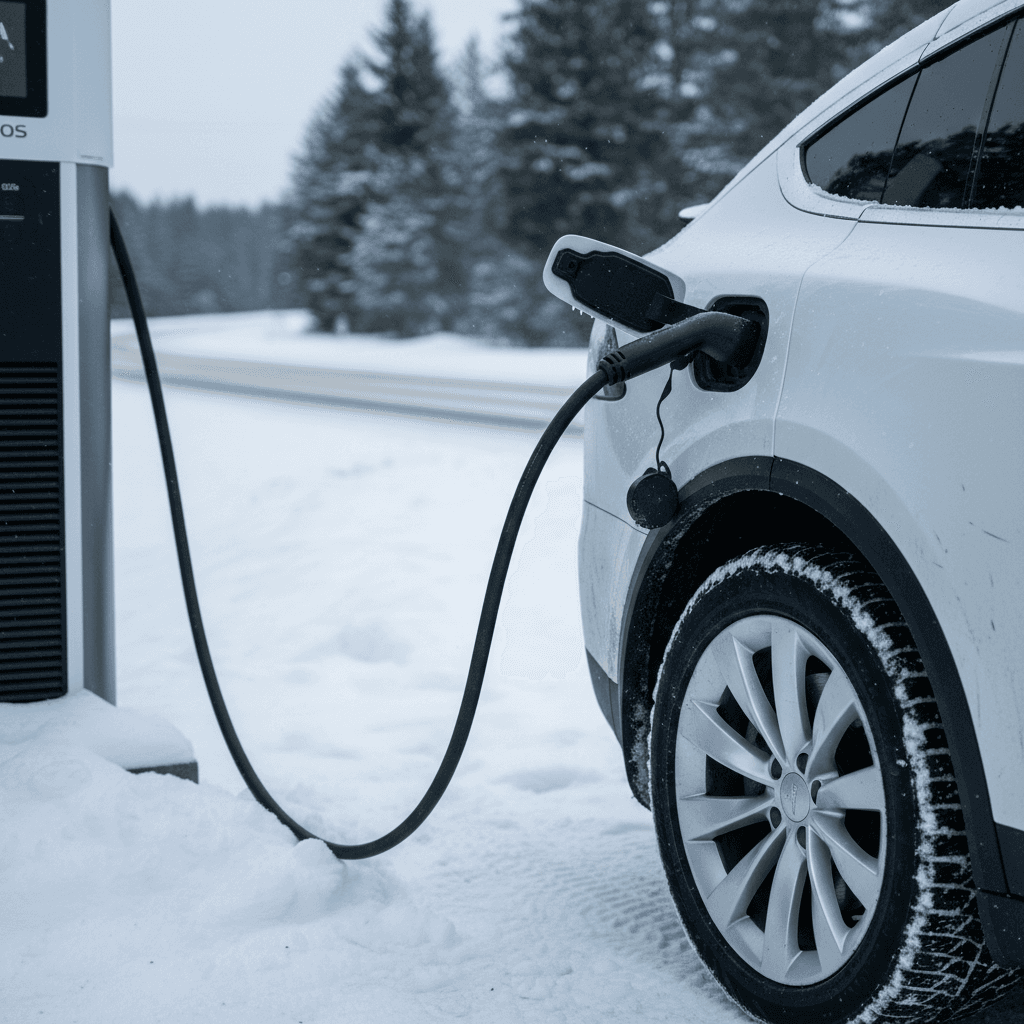
Winter tires vs. range: True snow tires offer dramatically better grip in cold and slush, but they’re usually a bit less efficient. Plan on a small additional range penalty in exchange for a huge safety upgrade.
All‑season compromises: Good all‑season tires with a proper winter rating can be a decent middle ground in milder climates.
Don’t trade safety for a few miles of range
Planning your real‑world winter range in a Lucid Air
The best way to keep winter from feeling like a range roulette wheel is to build a simple planning habit. That starts with accepting that your Lucid Air’s EPA number is a ceiling, not a promise, then working backward for the conditions you actually drive in.
5‑step Lucid Air winter range planning routine
1. Start with your trim’s EPA range
Look up the official rating for your exact trim, wheel size, and year. Use that as your starting point, then forget about hitting it in January.
2. Apply a realistic winter discount
For most drivers, subtract <strong>20–25%</strong> for typical freezing‑point winter highway driving. If you live where it’s routinely below 20°F, plan for up to <strong>30–35%</strong> off the top.
3. Consider your typical speed
If you cruise at 75–80 mph, apply another modest haircut. Aerodynamic drag climbs quickly with speed, and cold dense air makes that worse.
4. Add a buffer for the unexpected
Road closures, detours, headwinds, or a closed charger can all force you to stretch a leg longer than planned. A simple rule: arrive with at least <strong>15–20% state of charge</strong> in winter.
5. Use in‑car data after a few weeks
After a month of winter driving, your Lucid’s energy‑use history becomes your best friend. Base future plans on the watt‑hours‑per‑mile you actually see in your climate and commute.
Trip‑planning tools help
Driving habits that hurt, or help, Lucid Air winter range
Lucid gave the Air world‑class efficiency hardware. What you do with your right foot, your heater, and your charging routine decides how much of that potential you get to keep when it’s icy.
Habits that hurt winter range
- Frequent short drives with full cabin heat, where you warm the car more than you actually travel.
- High sustained speeds (75–80+ mph) in cold, dense air, drag multiplies quickly.
- Cranking the cabin to 75–78°F instead of using heated seats and wheel at a lower air temperature.
- Parking outside unplugged in very low temps, forcing the car to warm the pack repeatedly from scratch.
- Arriving at fast chargers with a cold pack, which slows charge speeds and keeps you out in the cold longer.
Habits that help winter range
- Preconditioning while plugged in so cabin and battery are warm before you set off.
- Using seat and steering‑wheel heaters so you can keep cabin air a bit cooler but still feel comfortable.
- Bundling errands into one longer trip instead of multiple cold starts.
- Using Eco/Efficient drive modes and smoother acceleration to keep power draw reasonable.
- Timing DC fast‑charge stops after some highway driving, when the pack is already warm.
Heat pump advantage
Does winter driving hurt Lucid Air battery health?
Cold weather and battery health get lumped together in a lot of online horror stories. The reality is more nuanced, and generally kinder, especially for a high‑end EV like the Lucid Air.
- Cold slows chemistry, but also slows wear: Low temperatures temporarily reduce available power and range, but they also slow the reactions that age a pack. The car’s thermal management keeps the battery in a safe band, even when it’s bitter outside.
- What really hurts long‑term health: High temperatures, sustained 100% state of charge, and frequent high‑power fast charging are tougher on lithium‑ion packs than winter driving itself.
- Lucid’s software does the heavy lifting: The Air actively warms and cools its pack as needed. You may notice slightly higher energy consumption in the cold because the car is protecting the battery for you.
- Used buyers can check the facts: On a used Lucid Air, a proper diagnostic will show remaining capacity and fast‑charge behavior so you’re not guessing about past winters.
What to avoid in any EV, winter or summer
At Recharged, every used EV we list gets a Recharged Score Report with verified battery health diagnostics, not just an odometer reading and a guess. That includes data on usable capacity and charging behavior, so you can see how previous use and climate have affected the pack before you buy.
Shopping for a used Lucid Air you’ll drive in winter
If you’re eyeing a used Lucid Air and you know winter will be part of the story, you can stack the deck in your favor with a few smart decisions before you ever sign paperwork.
What to prioritize on a winter‑bound used Lucid Air
A little homework now saves a lot of stress when the forecast turns blue.
1. The right wheels & tires
Look for 19‑inch wheels if maximum range matters, and budget for a second set of dedicated winter tires if you live where snow sticks around.
Ask the seller what rubber is mounted now and whether a winter set is included.
2. Charging options at home
Winter is when home Level 2 charging really pays off. Being able to leave the car plugged in and preconditioned turns cold starts into non‑events.
If you don’t have a 240‑volt circuit yet, factor installation into your purchase budget.
3. Verified battery health
Range loss in the cold is temporary. Loss from long‑term degradation is not. Ask for a professional battery health report so you’re not buying someone else’s problems.
Every Lucid Air sold through Recharged includes a Recharged Score Report with pack diagnostics and fair‑market pricing.
Leaning toward a used Lucid Air?
Lucid Air winter range loss: FAQ
Common questions about Lucid Air winter range
Key takeaways for Lucid Air winter driving
- Expect some loss, not a disaster: A Lucid Air will typically lose around 20–25% of its rated range in normal freezing‑point winter driving, more in deep cold with heavy heater use.
- Plan conservatively for trips: Use your trim’s EPA rating, apply a winter discount, then add a 15–20% arrival buffer for peace of mind on cold‑weather road trips.
- Your habits matter: Preconditioning, moderate speeds, bundled errands, and smart use of the heat pump‑equipped climate system can easily swing winter range by tens of miles.
- Battery health is more about heat than cold: Winter range loss is mostly temporary. Avoid extremes of state of charge and unnecessary high‑power fast charging if you want your pack to age gracefully.
- Buying used? Look for verified battery diagnostics, the right wheels and tires for your climate, and a seller who understands EVs. Recharged was built around exactly that kind of transparent, winter‑ready EV ownership.
The Lucid Air’s calling card is long legs, and that doesn’t vanish when winter shows up, it just gets trimmed a bit. If you understand what cold does to any EV and build a few simple habits into your routine, you can treat winter as a season to prepare for, not something to fear. Whether you’re already driving an Air or thinking about buying a used one from a specialist like Recharged, a little planning turns those snowy‑morning range guesses into just another number you know how to manage.