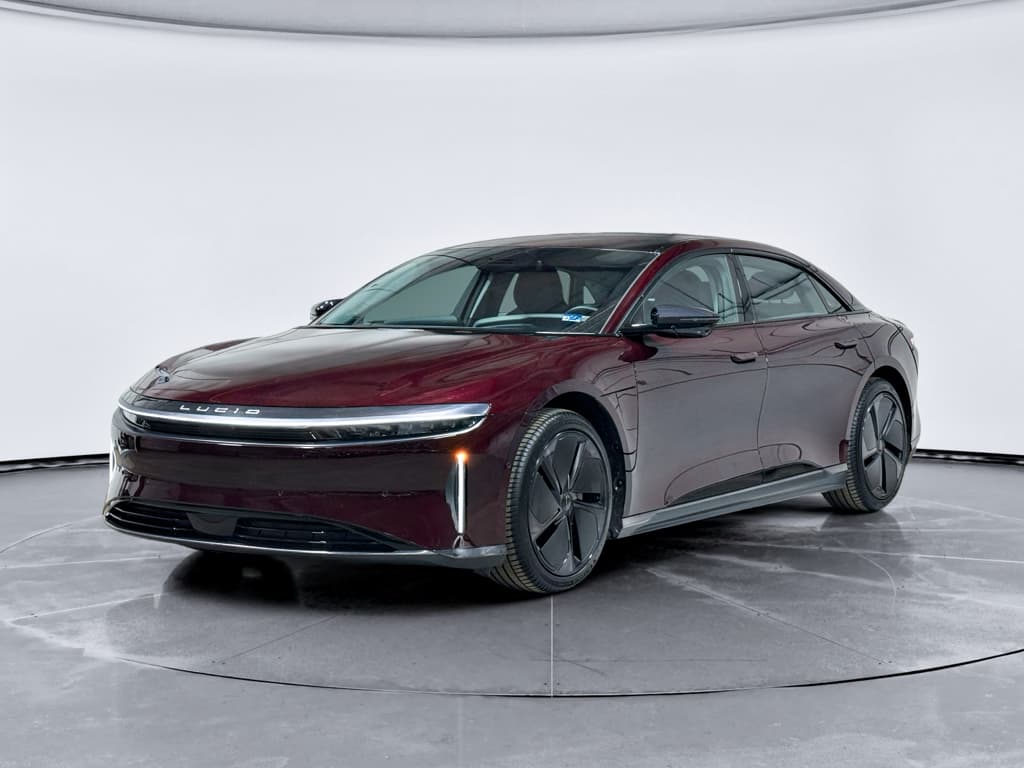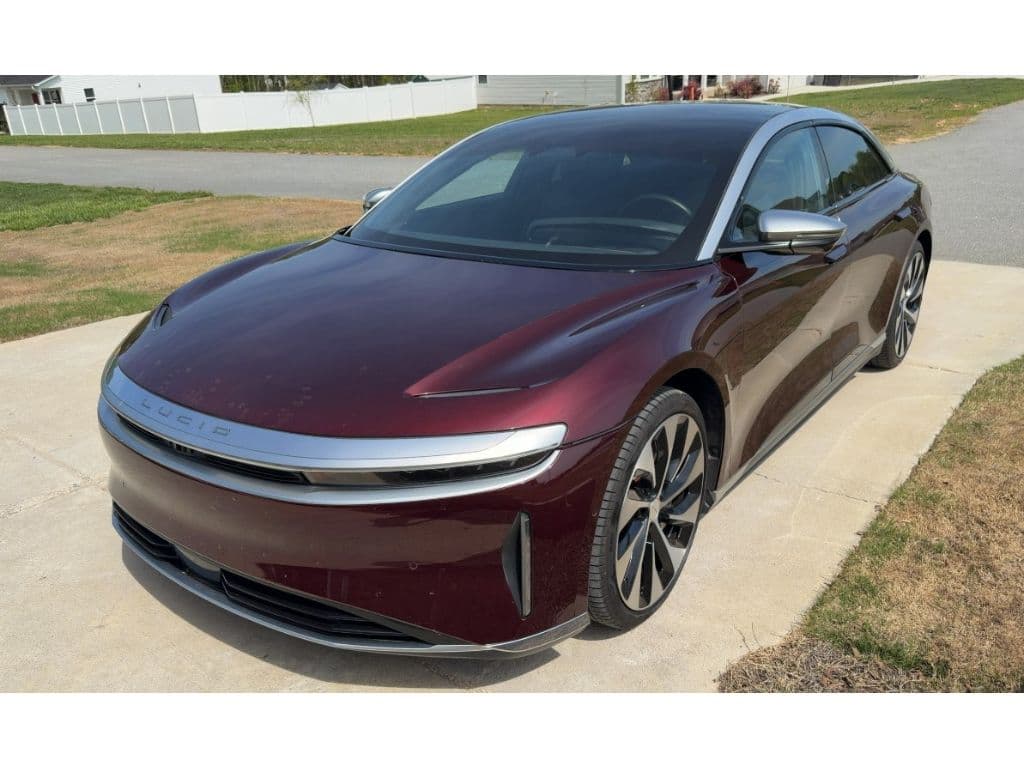
If you own a Lucid Air in 2026, you already know the punchline: this is one of the most spectacularly discounted luxury cars on the used market. The flip side is that your loss can also be your leverage. Understanding Lucid Air trade in value in 2026, what dealers see, what buyers pay, and how battery health plays in, can easily swing your outcome by five figures.
A quick reality check
Lucid Air trade-in value in 2026: quick overview
Lucid Air value snapshot for 2026 (big-picture)
The exact trade-in value for your Lucid Air in 2026 depends on trim, mileage, equipment, remaining warranty and, most of all, battery condition. As a rough reference point, many shoppers are seeing 2023–2024 Lucid Air Pure and Touring models advertised in the high-$30,000s to high-$40,000s, often down from sticker prices that started north of $70,000 when new.

Why Lucid Air depreciation looks so brutal
On paper, the Lucid Air is a masterpiece: huge range, outrageous acceleration, concept-car styling. On a spreadsheet, it’s a classic luxury EV depreciation story. Several forces are kneecapping Lucid Air resale in 2026:
- High original MSRPs. Early Lucid Airs commonly stickered from the $80,000s up into six figures. Losing half of that still leaves a big dollar drop, even if the percentage matches other luxury EVs.
- Fast-moving EV tech. Range, efficiency and driver-assist tech are improving quickly. Newer Lucid software and hardware revisions make early-build cars feel older than their actual model year.
- Niche brand risk. Lucid doesn’t have the baked-in mainstream trust of Mercedes or BMW yet. Headlines about cash burn, production delays, or incentives spook some buyers, even if the cars themselves are excellent.
- General EV headwinds. Broader data in 2024–2026 show EVs, especially luxury ones, often losing a larger share of value over five years than comparable gas models. That perception hits trade-in offers before you even pull into the lot.
Don’t take the first number personally
What Lucid Airs are actually selling for used in 2026
Because Lucid volumes are relatively low, a single auction run won’t tell the whole story. You have to triangulate: look at actual asking prices, recent sold listings, and the direction of the broader luxury EV market.
Typical 2026 used pricing bands for Lucid Air
These are ballpark retail asking ranges in early 2026 for well-kept, clean-title U.S. cars with average miles (not fire sales, not museum pieces). Your specific car could sit above or below these depending on spec and condition.
| Model year & trim | Typical mileage | Common asking range (retail) | Notes |
|---|---|---|---|
| 2022 Air Grand Touring | 20k–40k mi | $55,000–$70,000 | High-spec early cars; heavy MSRP but still draw range-focused buyers. |
| 2023–2024 Air Pure | 10k–30k mi | High-$30,000s to mid-$40,000s | Often the sweet spot for value; buyers like their efficiency and price. |
| 2023–2024 Air Touring | 10k–30k mi | Low-$40,000s to high-$40,000s | More power and options than Pure; values track slightly higher when clean. |
| 2025 Air Pure / Touring | <15k mi | Upper-$40,000s to mid-$50,000s | Still close enough to new that incentives, demos and Lucid’s own CPO cars compete. |
Use these ranges as context, not as a guaranteed price sheet. Local supply, mileage, options and battery health can easily swing value by 10–20%.
A dealer trade-in offer will usually sit thousands below these retail numbers. That’s not (only) greed, it’s risk management. Lucid values are volatile, and a car that sits on their lot for 90 days costs money in interest, transport, and floorplan fees. They want margin to cover that risk.
How to sanity-check an offer fast
How dealers really calculate Lucid Air trade-in value
Every store has its own spreadsheet and superstitions, but the recipe for a Lucid Air trade appraisal in 2026 is fairly consistent. When your car rolls in, they’re thinking about:
The four pillars of Lucid Air trade-in math
What’s running through the appraiser’s head while you’re sipping lobby coffee.
1. Mileage & use pattern
EV shoppers are mileage-sensitive. A three-year-old Lucid Air with 12,000 miles tells a very different story than one with 55,000.
- Under 10k miles/year usually helps.
- High-mile highway cars aren’t toxic, but buyers expect a discount.
2. Condition & history
Repaired accident damage, curb-rashed 21-inch wheels, or neglected service histories all get priced in.
- Cosmetic reconditioning is expensive on a Lucid.
- Accident history narrows your buyer pool.
3. Battery & warranty status
EV-specific: where your car sits in the 8-year/100,000-mile battery warranty window and how healthy that pack appears.
Smart dealers know that a car with a provably healthy pack is easier to sell and worth more.
4. Exit strategy & risk
Can they retail your Air quickly, or will they wholesale it at auction?
- If it’s headed to auction, bids cluster at the low end.
- If they have Lucid traffic, they’ll pay more because they can retail it.
On the desk: guide values
Most dealers will start with digital valuation tools and auction data, the same way many appraisers look at Kelley Blue Book, Black Book, and recent sales. For low-volume models like the Lucid Air, those tools are more like a hazy weather forecast than gospel.
In the real world: "What can I sell this for?"
When the model is this niche, one strong or weak auction run can swing guide values by thousands. A savvy manager will think in terms of their own customer base and local demand, not just what a generic tool says.
Where Recharged fits in
Ready to find your next EV?
Browse VehiclesBattery health is your secret weapon on a Lucid Air trade
With an EV this sophisticated, the marketplace cares less about how shiny the paint looks and more about how many usable miles the pack still holds. Two identical Lucid Airs on paper, same year, trim, and mileage, can be worth very different money if one has a noticeably stronger battery than the other.
- State of health (SoH) is a measure (often expressed as a percentage) of how much capacity your pack retains versus when new.
- A Lucid Air whose pack still tests in the mid-90% range can be far more desirable than one that’s drifted closer to the mid-80s, especially for buyers banking on Lucid’s range advantage.
- In the 2024–2026 luxury EV market, any hint of premature degradation can spook buyers and drag prices down disproportionately. Data calms those fears.
Bring proof, not vibes
When you sell through Recharged, every vehicle includes a Recharged Score battery health report. For Lucid Airs in particular, that transparency helps justify stronger retail pricing, and by extension, makes it easier for us to offer more than a dealer who’s flying blind and assuming the worst.
7 steps to maximize your Lucid Air trade-in offer in 2026
Lucid Air trade-in prep checklist
1. Get a realistic value range first
Before you let anyone appraise your Lucid Air, pull listings for 8–10 similar cars, same year, trim and ballpark mileage. Note the low, middle, and high asking prices. This is your reality check when a dealer prints out a suspiciously low number.
2. Document battery health and charging habits
If you have access to battery-health data or third-party diagnostics, print them. Note that you mostly charged on Level 2 at home and avoided frequent 100% DC fast-charging when possible. Responsible charging habits are a selling point.
3. Clean it like a photo shoot, not a commute
Detail the car, fix obvious curb rash if it’s inexpensive, and remove personal clutter. Buyers shopping a Lucid expect a premium-feeling interior; dealers will mentally subtract reconditioning costs from your offer if the car looks tired.
4. Gather records, especially software and service
Lucid is a software-heavy car. Bring service invoices, recall confirmations and any documentation of over-the-air updates or hardware fixes. A clean paper trail tells the next owner, and the appraiser, that they’re not inheriting someone else’s problems.
5. Time it around demand, not desperation
If you can, avoid trading your Air in the dead of winter in a cold-weather market or when local EV inventory is stacked high. Late spring and early summer, when EV-curious shoppers think about road trips, often yield more competitive offers.
6. Shop multiple offers the same week
Get numbers from at least two different dealers and one EV-focused buyer such as <strong>Recharged</strong>. Values move quickly; compare offers gathered within a few days so you’re not arguing from stale data.
7. Separate the trade-in from the new-car deal
Don’t let a sharp new-car discount distract from a weak Lucid Air trade number. Ask every store to quote your trade as if you were selling it to them outright. That clarity makes real comparisons, and better decisions, much easier.
Trade-in vs selling your Lucid Air privately
With a car like the Lucid Air, the difference between trading in and selling smart can be dramatic. The question is how much time, risk, and hassle you’re willing to accept in return for more money.
Your options for offloading a Lucid Air in 2026
From "take the check and run" to "maximize every last dollar."
Traditional dealer trade-in
Pros:
- Fast, convenient, one set of signatures.
- Can reduce sales tax on the next car in many states.
Cons:
- Often the lowest dollar outcome, especially for niche EVs.
- Many dealers are skittish about stocking Lucids long-term.
Private-party sale
Pros:
- Highest potential sale price if you find the right buyer.
- You control the story, photos, and test drives.
Cons:
- Time-consuming; you field calls from tire-kickers.
- Higher fraud and flaky-buyer risk with a high-dollar car.
Specialist EV marketplace (like Recharged)
Pros:
- EV-savvy pricing and buyers who already want cars like yours.
- Battery health verified via Recharged Score, boosting trust and value.
- Options for instant offer, consignment, or trade.
Cons:
- May take slightly longer than a same-day dealer dump.
- Availability varies by region and marketplace.
How Recharged can help you thread the needle
When to trade your Lucid Air in 2026–2027
Timing your move with a Lucid Air is less about model-year changeovers and more about warranty runway, market cycles, and your own tolerance for risk.
Trade timing playbook for Lucid Air owners
If you bought new in 2022–2023
You’re now 3–4 years into ownership; depreciation has already done its worst damage.
If your mileage is under 40,000 and the battery health checks out well, 2026–2027 can be a smart exit window before buyers start worrying about mid-warranty age.
Consider moving sooner if Lucid announces major hardware changes (e.g., significantly revised pack or drivetrain) that make early cars feel obsolete.
If you bought used in 2024–2025
You likely let the first owner eat the steepest depreciation, good move.
As long as mileage stays reasonable, you can often hold the car longer without catastrophic additional losses.
Think about trading when a life change (move, family, commute) collides with a strong offer, not just because a new trim appears.
If you’re upside-down on a loan
With values this volatile, some owners will owe more than the car is worth in 2026.
Rolling negative equity into another luxury EV rarely fixes the problem; it just hides it in a bigger payment.
Run the math on keeping the Lucid longer versus taking a controlled loss now, especially if your interest rate is high. An EV-literate buyer like Recharged can give you a cleaner view of the real gap.
The mileage cliff to keep in mind
Lucid Air trade-in value 2026: FAQ
Frequently asked questions about Lucid Air trade-in value in 2026
Key takeaways for Lucid Air owners
In 2026, owning a Lucid Air is a bit like owning a low-volume supercar from a niche marque: the experience is extraordinary, the depreciation is punishing, and the difference between a lazy exit and a smart one is measured in five figures. The used market has already decided that early luxury EV sedans are clearance items, which means your job is to prove why your car is the exception, not the rule.
- Know your lane: pull real-world comps so you can tell whether a trade figure is merely tough or outright predatory.
- Treat battery health and warranty status as currency; they’re every bit as important as wheel size or audio packages in a value conversation.
- Time your move around your own life, not just model-year gossip, but be realistic about the extra sting that comes with piling high miles on a luxury EV.
- Don’t assume a traditional dealer is your only option. An EV-focused marketplace like Recharged can often bridge the gap between lowball trade-in offers and the optimistic numbers you see on classified listings.
If you’re considering trading or selling your Lucid Air, start by getting a clean, data-backed picture of its value and battery health. Then let the offers compete. In a market this choppy, information isn’t just power, it’s money back in your pocket.