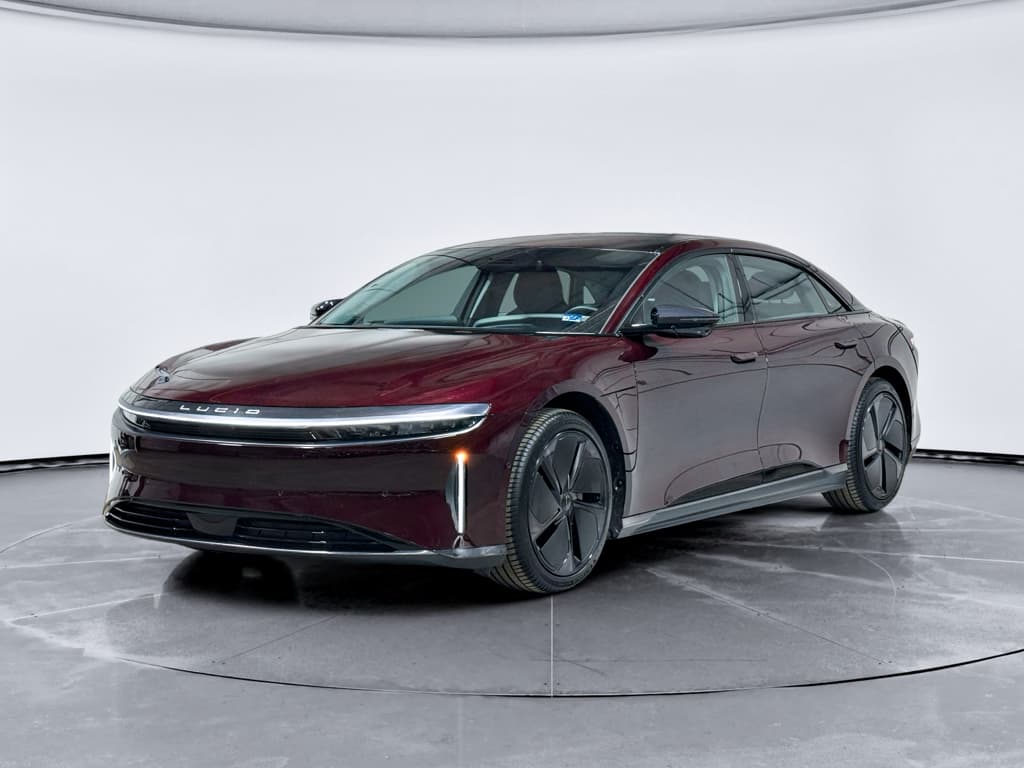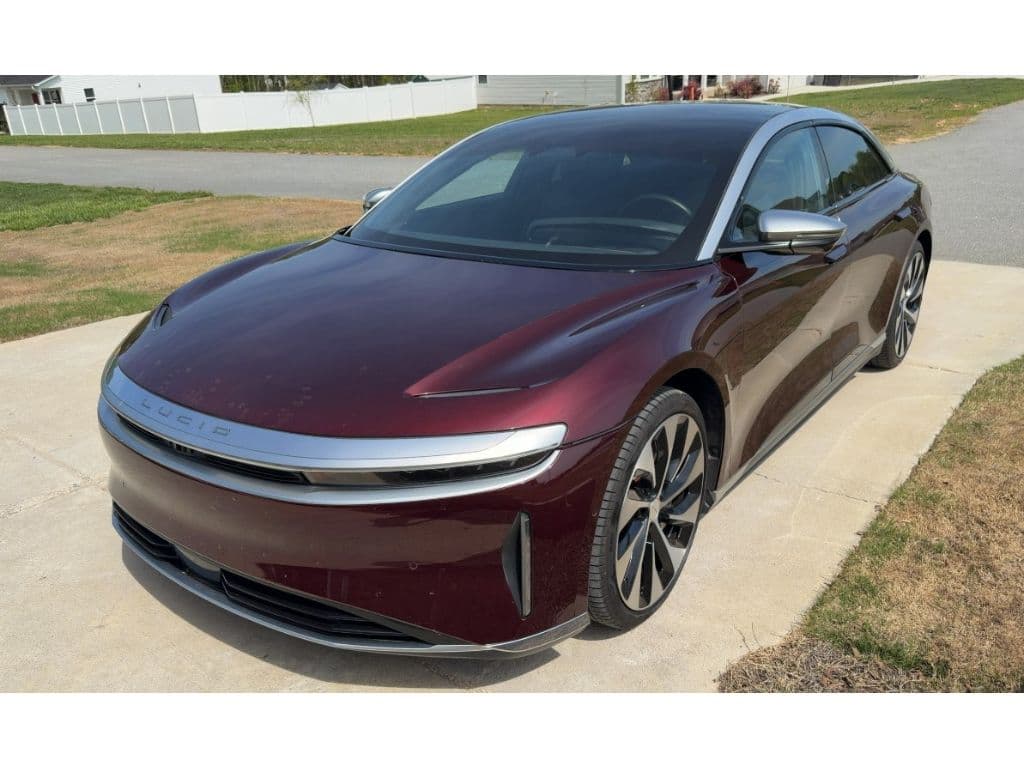
If you’re shopping luxury EVs and care about long-distance comfort, a **Lucid Air road trip review** is probably high on your list. Lucid built the Air around ultra‑long range, fast DC charging, and a serene cabin, but how does that translate when you’re staring down 400–800 miles of interstate instead of a spec sheet?
Key takeaway up front
Why the Lucid Air Is Built for Road Trips
Lucid Air Road Trip Highlights (Grand Touring on 19" wheels)
On paper, the Lucid Air is almost purpose‑built for cross‑country drives. Its **900‑volt electrical architecture** enables very high DC fast‑charging rates, the battery packs are large but efficient, and the suspension tuning leans luxury rather than track‑day stiff. Where many EVs need a charge stop every 180–250 miles, well‑planned Lucid Air road trips can stretch legs to 300–400 miles between sessions, especially in Grand Touring and Sapphire trims.
Trim choice matters
Real‑World Highway Range: What You Can Actually Drive
EPA numbers are helpful, but road‑trip planning lives and dies on **real‑world highway range**. For the Lucid Air, that means looking at sustained speeds of 70–80 mph, weather, elevation, and how often you’re willing to charge from low state of charge (SoC).
Approximate Real‑World Highway Range by Trim (Mild Weather, 70–75 mph)
These are pragmatic planning numbers, not lab results. They assume starting around 90–100% SoC and arriving at your next charger with ~10% remaining.
| Trim (19" wheels) | EPA Range | Conservative Highway Planning Range | Stretch Goal with Careful Driving |
|---|---|---|---|
| Air Pure | ~420 mi | 260–300 mi | 320–340 mi |
| Air Touring | ~406 mi | 250–290 mi | 310–330 mi |
| Air Grand Touring | ~512 mi | 320–360 mi | 380–400 mi |
| Air Sapphire | ~427 mi | 260–300 mi | 320–340 mi |
Use these ranges as conservative planning targets when mapping a Lucid Air road trip.
High speed and bad weather bite hard
- At **typical U.S. highway speeds**, most owners report 3.5–4.0 mi/kWh in normal weather, a bit higher in warm, calm conditions.
- Lucid’s **Distance** charging mode makes it easy to charge to a higher SoC before a long day, then you can revert to the **Daily** limit (around 80%) for local use to preserve long‑term battery health.
- Because the pack is large, you can often **skip chargers** that other EVs must use, which simplifies planning and keeps your day moving.
Road‑trip planning rule of thumb
Charging on the Road: DC Fast Charging and Superchargers
Range is only half the story; **charging behavior** determines whether your road trip feels seamless or choppy. This is where the Lucid Air’s 900‑volt system and DC fast‑charging profile stand out, but there are trade‑offs around network coverage and Supercharger access you should understand, especially if you’re considering a used Lucid Air.
How the Lucid Air Charges on a Road Trip
Fast sessions, high peak power, but network quality matters.
Public DC fast charging
At high‑power CCS stations, Lucid Air can accept up to 250–300 kW depending on trim, adding roughly 200 miles in around 12–17 minutes when starting from low state of charge.
Charging curve sweet spot
Like most EVs, charging is fastest between about 10–60% SoC. Above ~80%, power tapers significantly. On a road trip, it’s often faster overall to charge more often but only to 60–70%.
Battery preconditioning
Using the Lucid navigation to route to a fast charger lets the car precondition the battery, warming or cooling it so it can accept maximum power when you plug in, especially important in winter or extreme heat.
About Supercharger access
Best‑case scenario: strong CCS coverage
On corridors with robust CCS fast charging, major interstates, urban hubs, and some cross‑country routes, a Lucid Air can be a road‑trip monster. Plug into a 350 kW station, arrive around 10–20% SoC, and you can realistically:
- Add ~150–200 miles in 12–20 minutes, depending on trim and conditions.
- Plan two or three short, predictable stops over a 600‑mile day.
- Rely primarily on Electrify America, EVgo and high‑power ChargePoint locations.
Reality check: rural gaps and reliability
Outside dense corridors, CCS coverage thins out and reliability can vary, stalls offline, limited power, or stations blocked. For a Lucid Air owner, that means:
- More time spent planning stops with backup sites pinned.
- Using the Tesla adapter and slower Superchargers as a Plan B, not your primary road‑trip strategy.
- Occasional longer stops at 50–150 kW chargers if that’s all that’s available.
Don’t rely on one network
Comfort, Noise and Tech on Long Drives
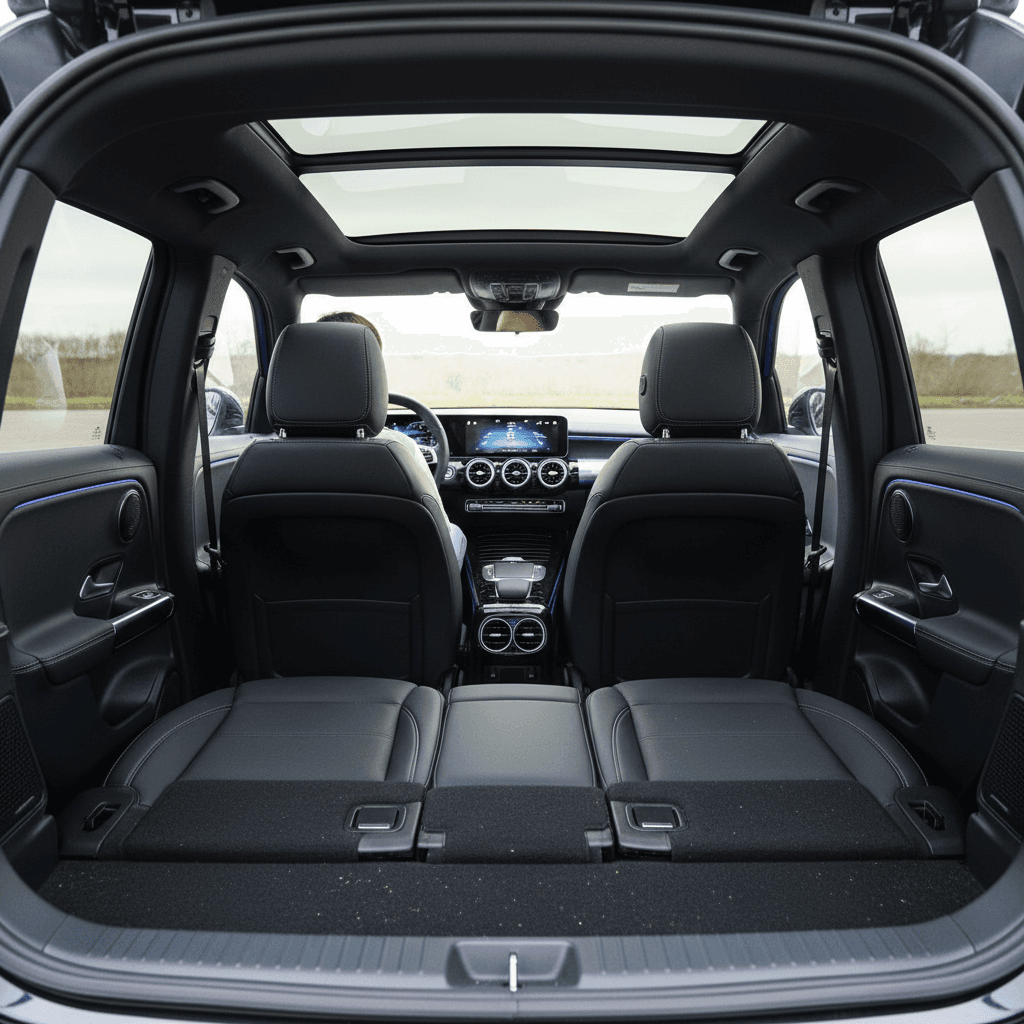
The Lucid Air doesn’t just post big range numbers; it feels like a long‑distance luxury car from behind the wheel. The suspension skews toward comfort, especially on 19‑inch wheels, and the cabin is impressively quiet at 70–80 mph. Wind noise is low, and the dual‑motor versions deliver effortless passing power without constant throttle adjustments.
- **Seats:** Multi‑way adjustable front seats with available ventilation and massage make 3–5 hour stints easy. Taller drivers appreciate the generous legroom and driving position.
- **Cabin noise:** The combination of an aerodynamic body and acoustic glass keeps conversation easy even on rough pavement, which cuts fatigue later in the day.
- **Infotainment:** The split‑screen layout gives you maps up top and trip data below, but there’s a learning curve. Over‑the‑air updates have steadily improved responsiveness and feature sets.
- **Driver assistance:** Adaptive cruise and lane‑centering take the edge off multi‑hour interstate runs, though behavior can vary by software release. As with any system, you must stay alert and ready to take over.
What owners tend to love on road trips
Practicality, Cargo Space and Passenger Room
Road trips are rarely just about the driver. You’ve got passengers, luggage, maybe kids or pets, and all the random gear that follows. The Lucid Air’s long wheelbase gives it a surprisingly roomy rear seat, and the combination of a rear trunk plus a usable frunk helps it play well as a grand‑touring family car.
Lucid Air Practicality Scorecard for Road Trips
Where the big sedan shines, and where it doesn’t.
Cargo capacity
The Air’s trunk opening isn’t as tall as an SUV’s, but combined with the frunk you get plenty of space for 2–3 large suitcases plus soft bags. Seatbacks fold for long items.
Rear-seat space
Adults can stretch out thanks to generous legroom and a flat floor. The sloping roofline slightly compromises headroom for very tall passengers, but most will be comfortable on long legs.
Family & pet duty
Lower ride height than an SUV can make loading big dogs or car seats a bit more cumbersome, but once inside, the cabin feels airy and upscale enough to keep everyone happy on multi‑hour drives.
Think like a wagon, not an SUV
Lucid Air vs. Tesla Model S for Road Trips
Both the Lucid Air and Tesla Model S target the same buyer: someone who wants a fast, comfortable, tech‑heavy electric sedan that can confidently cross states. On a road‑trip scoreboard, the comparison is closer than you might think, and it hinges on how you prioritize **range, charging speed, and network reliability**.
Lucid Air vs. Tesla Model S: Road Trip Comparison Snapshot
High‑level contrast focused on long‑distance use, not just headline specs.
| Factor | Lucid Air (Grand Touring) | Tesla Model S (Long Range) |
|---|---|---|
| EPA Range (best case) | ~512 mi | ~405–410 mi |
| Typical Highway Planning Range | 320–360 mi | 260–300 mi |
| Peak DC Fast Charging | Up to ~300–350 kW depending on charger | Up to ~250 kW |
| Charging Network | Relies on CCS; Supercharger via adapter at lower power | Native, seamless access to large Supercharger network |
| Home AC Charging | Up to ~19.2 kW with Lucid charger | Up to ~11.5 kW |
| Cabin Feel | Airy, ultra‑modern luxury lounge | Minimalist, familiar Tesla aesthetic |
Lucid Air wins on pure range and peak charging speed; Tesla wins on charging network depth and simplicity.
Pick Lucid Air if…
- Your priority is maximum highway range and you like the idea of 300+ mile legs with a big buffer.
- You routinely travel on corridors with solid CCS coverage, and you’re comfortable using multiple charging apps.
- You value a quieter, more luxurious cabin over a minimalist, gadget‑forward interior.
Pick Tesla Model S if…
- You want the simplicity of an integrated charging ecosystem with tens of thousands of Superchargers.
- You prioritize a broader service footprint and longer production track record.
- You’re okay giving up some ultimate range in exchange for **easier plug‑and‑go road‑trip logistics**.
How this plays out on a real trip
Cost of a Road Trip in a Lucid Air
The Lucid Air’s efficiency and big battery pack help keep **per‑mile energy costs** competitive with, and often lower than, a comparable gas luxury sedan, especially if you can charge cheaply at home at the start and end of your trip.
Sample 600‑Mile Road Trip Cost in a Lucid Air
Illustrative math using typical U.S. energy prices. Your actual numbers will vary by region and charging strategy.
| Scenario | Energy Source | Assumptions | Estimated Energy Cost |
|---|---|---|---|
| Home‑heavy strategy | Start and end trip with home charging | Off‑peak home electricity ~$0.12/kWh; ~4.0 mi/kWh average; 600 miles total | ≈$18–$22 |
| Mostly DC fast | Rely on public fast charging at ~$0.35/kWh, same efficiency | ≈$52–$60 | |
| Gas luxury sedan comparison | 25 mpg luxury sedan; regular gas at $3.75/gal | 600 miles / 25 mpg = 24 gal | ≈$90 |
Even with some pricey DC fast charging, long trips in a Lucid Air usually undercut fuel costs for a gas luxury sedan.
Blend home and DC for best value
Used Lucid Air Road Trip Checklist
If you’re considering a **used Lucid Air** specifically because of its road‑trip potential, you’ll want to look beyond the usual paint and tire inspection. Battery health, charging behavior, and software status matter more in a high‑range EV than in most gas cars.
Road‑Trip Readiness Checks for a Used Lucid Air
1. Review verified battery health
Ask for a recent battery health report, ideally from a tool like the <strong>Recharged Score</strong>, which benchmarks remaining capacity and charging behavior so you understand how close the pack is to original performance.
2. Confirm DC fast‑charging performance
Test‑charge the car at a known DC fast charger if possible. You’re checking that the car ramps up to expected power (for example, well over 100 kW when starting low) and doesn’t drop unexpectedly due to faults or thermal issues.
3. Inspect charging hardware and cables
Make sure the CCS port, charge door, and included mobile charger are intact. If the previous owner used an aftermarket wall unit, confirm compatibility and condition, or budget for your own preferred setup.
4. Check software version and OTA history
Lucid continues to refine charging curves, driver‑assist features, and navigation through over‑the‑air updates. Verify that the car is on a recent software build and can still receive updates normally.
5. Validate Supercharger adapter and access
If the seller includes a Tesla NACS‑to‑CCS adapter, confirm that it’s an official unit, registered to the car, and that you understand its current <strong>power limits versus full‑speed CCS</strong> charging.
6. Plan around your real routes
Before you buy, plug one of your typical long‑distance routes into popular charging apps. Make sure there’s a practical combination of CCS and, if needed, Tesla sites to support your annual road‑trip pattern.
How Recharged can simplify this
Ready to find your next EV?
Browse VehiclesWho the Lucid Air Road Trip Champion Is, and Who Should Skip It
After you strip away the hype and look at real‑world use, the Lucid Air emerges as one of the most capable long‑distance EVs on the market, but not automatically the right fit for everyone.
Best for
- Drivers who routinely cover 300–600 mile days and want to minimize charging stops.
- Owners living near strong CCS corridors who don’t mind juggling a few charging apps.
- Luxury shoppers who prioritize quiet comfort and cutting‑edge range over brand familiarity.
- EV‑savvy buyers comfortable with a younger brand and a more boutique service footprint.
Think twice if
- You live in an area with thin CCS coverage and few backup options.
- You’re allergic to planning and prefer “just plug in anywhere” simplicity on road trips.
- You’d stretch your budget uncomfortably to afford the car, leaving little room for maintenance or charging accessories.
- You want maximum dealer‑network density and years of parts availability track record.
If your priorities line up, long legs between stops, quick DC sessions when you do plug in, and a cabin that genuinely reduces fatigue, the Lucid Air is a standout road‑trip companion. For many cross‑country drivers, it feels less like a science‑project EV and more like a modern, electric successor to the classic grand‑touring sedan.