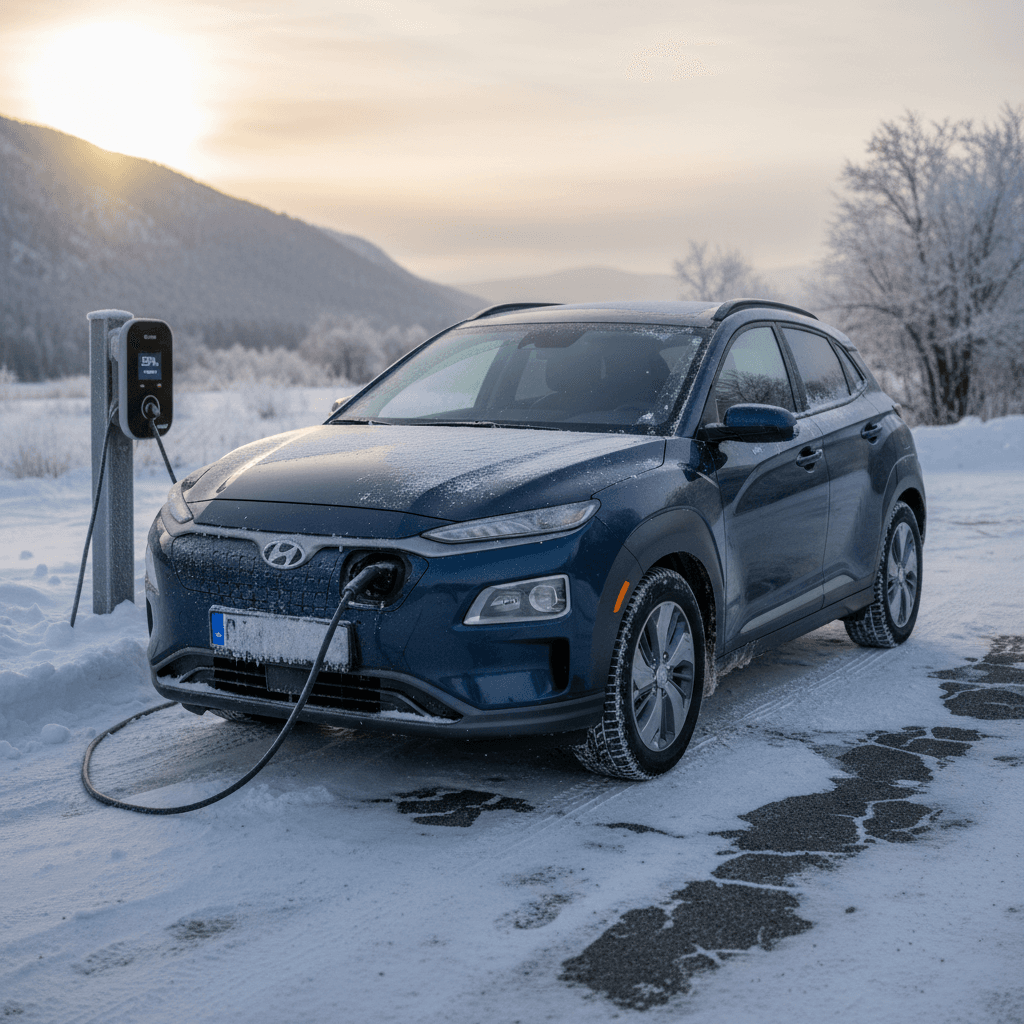
If you’re shopping for a Hyundai Kona Electric, or already own one and live where the roads turn white, you’re probably asking a very specific question: what winter range loss percentage should I realistically expect? Not the marketing brochure version, but the number that decides whether you can make it home on a February night with the heater on and a headwind in your face.
Short version
Hyundai Kona Electric winter range loss: the quick answer
Typical Hyundai Kona Electric winter range loss
The numbers jump around because “winter” is not one single condition. A Kona Electric at 30°F (–1°C) on a dry highway with preconditioning and a heat pump is a very different animal from the same car at –10°F (–23°C) doing 10‑minute errands. In owner forums and winter tests, you’ll see everything from single‑digit percentage loss in mild cold to 40–50% loss when it’s bitterly cold, windy, and you’re running full cabin heat. The good news is that compared with many EVs, the Kona is on the efficient end of the spectrum; it just still has to obey the laws of physics.
Why winter cuts Hyundai Kona Electric range at all
1. Colder battery, less usable energy
Like every lithium‑ion pack, the Kona’s battery doesn’t like the cold. As temperature drops, internal resistance increases. That means:
- The pack can’t deliver power quite as efficiently.
- More energy turns into heat instead of forward motion.
- The management system may hold back some capacity to protect the cells.
The result: you simply get fewer miles per kWh until the pack is thoroughly warmed up.
2. Cabin heat is a new, huge load
Your old gas SUV was cheating. It used waste heat from the engine to warm you up. The Kona Electric has no such free lunch.
- Cars with a heat pump sip energy more gently.
- Cars without one rely more on resistive heaters, which are basically big toasters.
- On short trips, most of your energy goes to warming the cabin and the battery, not turning the wheels.
Throw in winter tires, heavy slush, and headwinds and you have a pretty good explanation for that disappearing range estimate.
Short trips are the silent range killer
How driving style and trip pattern change Kona’s winter loss percentage
Kona winter loss by how you actually drive
Same car, different patterns, very different percentages
Long highway commute
Use case: 35–60 mile one‑way highway drives, steady speeds.
- Battery and cabin fully warm after the first 10–15 minutes.
- Heat load becomes a smaller share of total energy.
- Owners often report 15–25% loss once temps hover around freezing.
Short city errands
Use case: 2–8 mile trips, car parked outside between drives.
- Battery never really warms up.
- Cabin heater has to work hard every time.
- Real‑world loss can feel like 30–40% or more, even at modest temps.
Cold highway + hills
Use case: High‑speed winter highway, elevation changes, maybe a ski trip.
- Higher aero drag and rolling resistance from cold air and snow.
- Heavier use of power on climbs, limited regen on a cold pack on descents.
- Expect roughly 25–35% loss in sustained deep winter conditions.
Watch efficiency, not just percentage
Heat pump vs. non–heat pump Kona: big difference in winter
Hyundai has offered the Kona Electric both with and without a heat pump, depending on trim, model year, and market. That one line on the spec sheet does a lot of quiet work when it’s 10°F and you like feeling your toes.
How a heat pump changes Kona Electric winter range
Approximate real‑world behavior for a healthy, long‑range Kona Electric driven in similar conditions.
| Scenario | No heat pump Kona | Heat pump–equipped Kona |
|---|---|---|
| Mild winter (32°F / 0°C, mixed driving) | ~20–25% loss | ~15–20% loss |
| Cold snap (10°F / –12°C, highway) | ~30–35% loss | ~25–30% loss |
| Lots of short trips below freezing | Up to ~40% loss | ~30–35% loss if preconditioned |
Numbers are illustrative based on independent tests and owner reports, not official Hyundai ratings.
How to tell if your Kona has a heat pump
Real-world winter range examples for different Kona trims
Let’s translate percentages into miles. Below are ballpark expectations for a healthy long‑range Hyundai Kona Electric (around 64 kWh usable battery) with all‑season tires, starting from 100% charge. Your exact results will swing with speed, elevation, passengers, wheels, tires, and how warm you like your cabin.
Approximate Hyundai Kona Electric winter range by scenario
Illustrative examples based on owner reports and winter testing for long‑range Kona Electric models.
| Outside temp & scenario | Summer EPA‑like range | Typical winter loss % | Likely winter range |
|---|---|---|---|
| 35°F (2°C), 50–60 mph highway, heat pump | 260–280 mi | ≈20% | ≈210–225 mi |
| 25°F (–4°C), 65–70 mph highway, heat pump | 260–280 mi | ≈25–30% | ≈185–210 mi |
| 15°F (–9°C), mixed city & suburban, no heat pump | 250–270 mi | ≈30–35% | ≈165–190 mi |
| 0°F (–18°C), short trips, parked outside, no preheat | 250–270 mi | ≈35–40% | ≈150–175 mi |
| Snowy highway with winter tires, 25°F (–4°C) | 250–270 mi | ≈30–35% | ≈165–190 mi |
Use these as planning guardrails, not promises, build in an extra buffer for headwinds, snow, or unexpected detours.
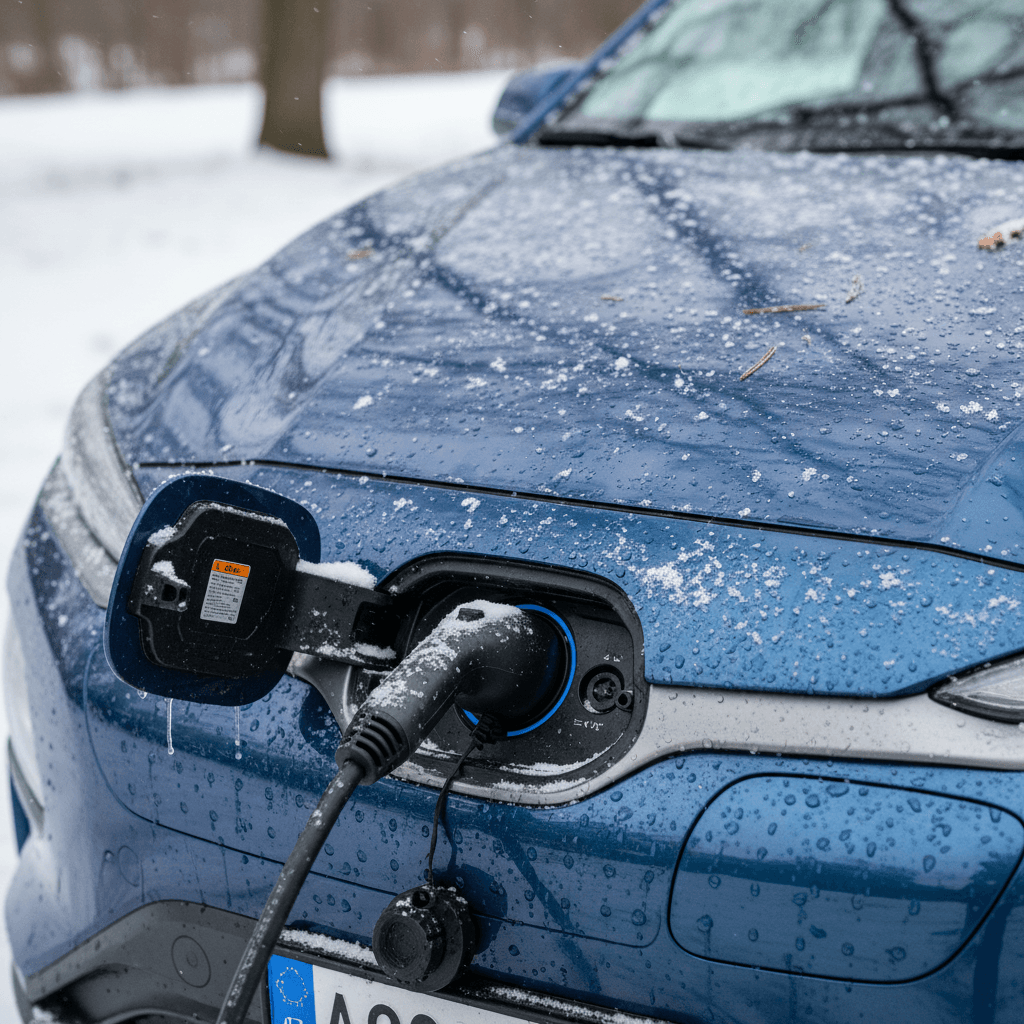
Kona is a winter overachiever (for an EV)
How to minimize Hyundai Kona Electric winter range loss
Seven ways to claw back winter range in your Kona Electric
1. Precondition while plugged in
Use the Hyundai app or in‑car schedule to warm the cabin and battery while the Kona is still on the charger. That way, most of the heavy lifting comes from the grid, not your battery, and you roll out with a warm pack that’s more efficient and ready to accept regen.
2. Dial back cabin temps, use seat and wheel heaters
Resist the urge to turn the cabin into a sauna. Drop the set point a few degrees and lean on the <strong>heated seats and steering wheel</strong>, which use less energy than blasting hot air at the windshield.
3. Choose Eco or Eco+ in real cold
Eco modes soften throttle response and, in some Kona trims, trim back power‑hungry climate settings. You still have enough performance for normal traffic, but the car stops indulging every wide‑open‑throttle impulse.
4. Keep speeds in check
Above about 60 mph, aerodynamic drag ramps up fast. Cruising at 65 instead of 75 mph can easily mean an extra 10–20% range in cold, dense air, often the difference between one charging stop or two on a winter highway run.
5. Watch tire choice and pressure
True winter tires are a smart safety choice on snow and ice, but they do sap a bit of efficiency. Make sure they’re properly inflated for winter temperatures. Under‑inflated snow tires are a double hit: less range, worse handling.
6. Avoid lots of shallow fast charges in the cold
DC fast charging a cold battery is slower and less efficient. When possible, time fast charges after some driving, when the pack is warmer, and favor <strong>longer, deeper charges</strong> over three short splashes.
7. Park indoors or out of the wind
A simple carport or garage can reduce overnight heat loss from the pack and cabin. Even if it’s not heated, being shielded from ambient wind and sky chill can meaningfully improve your morning starting range.
Don’t normalize running near 0% in winter
Planning winter trips with a Kona EV
The Kona Electric’s efficiency gives you more real‑world miles per kWh than many larger crossovers, but winter still demands a different planning mindset. Especially if you’re counting on public fast charging, your trip plan needs to account for both reduced range and slower charging on a cold pack.
Use realistic winter assumptions in route planners
Apps and in‑car navigation are getting smarter about EVs, but many still assume near‑ideal conditions. When you plug your Kona Electric into a planner, try:
- Entering a manually reduced efficiency (for example, 20–30% lower than your summer value).
- Adding an extra buffer stop on longer legs if chargers are sparse.
- Favoring sites with multiple fast chargers in case one station is occupied or out of service.
Think like an airline pilot: you’re planning for contingencies, not best case scenarios.
Be choosy about your charging stops
In deep winter, where and when you charge matters nearly as much as how much you charge.
- Arrive at fast chargers after at least 20–30 minutes of driving so the pack isn’t ice‑cold.
- If your Kona supports it, use DC fast‑charge preconditioning en route so the battery is warm on arrival.
- In heavy snow or bitter cold, prioritize well‑lit, well‑maintained charging plazas over lonely single‑stall stations.
If you’re hunting for a used Kona on Recharged, you’ll see station‑dense regions and typical winter ranges called out in our local market notes.
Buying a used Hyundai Kona Electric for winter driving
If you live in the U.S. snow belt or Canada, the Kona Electric is one of the smarter used‑EV buys precisely because it copes well with winter. But you still want to match the specific car, battery health, equipment, and trim, to your climate and commute.
Winter‑smart checklist for a used Kona Electric
What to look for if snow is part of your life
Verified battery health
Cold hides weak packs. A Kona whose battery has lost significant capacity will feel that loss most brutally in January. Every car listed on Recharged comes with a Recharged Score battery health report, so you’re not guessing how much usable kWh you’re actually buying.
Cold-weather equipment
Look for heated seats, heated steering wheel, heated mirrors, and (if available in your market) a heat pump. These are comfort features, yes, but they’re also range‑preserving tools in winter.
Right range for your route
Be honest about your worst‑case winter use: longest regular drive, typical speeds, access to charging. A Kona that feels generous at 260–280 miles in summer might feel just right, not oversized, once you factor in a 25–30% winter haircut.
Let the market pay for the range you need
FAQ: Hyundai Kona Electric winter range & ownership
Frequently asked questions about Kona Electric winter range loss
Key takeaways on Kona Electric winter range loss
If you boil the data and owner stories down, the Hyundai Kona Electric is one of the more winter‑friendly EVs you can buy. In controlled tests, it can lose as little as the mid‑teens in percentage terms; in the messy reality of snow, wind, and early‑morning coffee runs, you should assume roughly a 20–30% winter range haircut, more in truly harsh climates or with constant short trips.
Design your life around that honest number and the Kona Electric becomes an easy car to live with: compact, efficient, and surprisingly capable on bad‑weather days. Whether you’re cross‑shopping a used Kona against other small EVs or trading out of something that frustrates you every January, Recharged can help you see the real winter picture, battery health, equipment, fair pricing, and match you with a Kona that fits your climate as well as your commute.