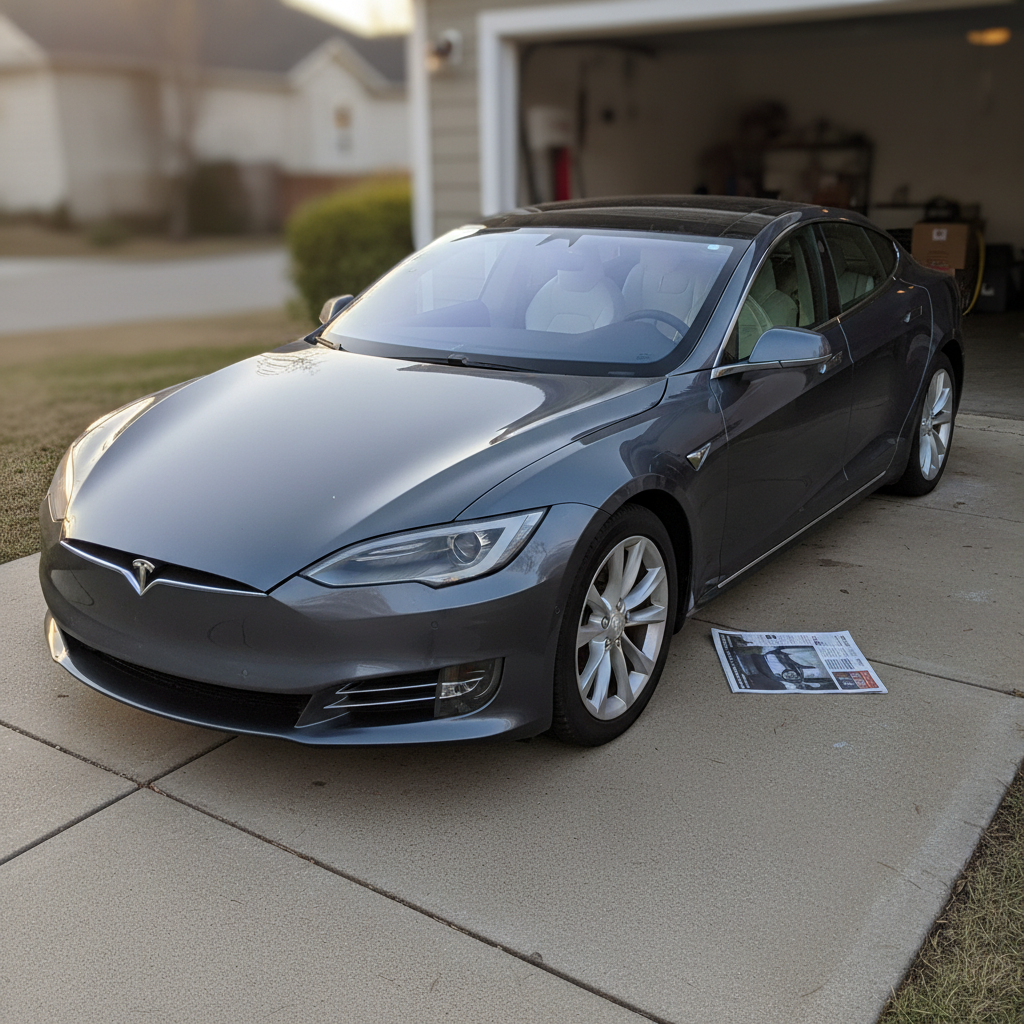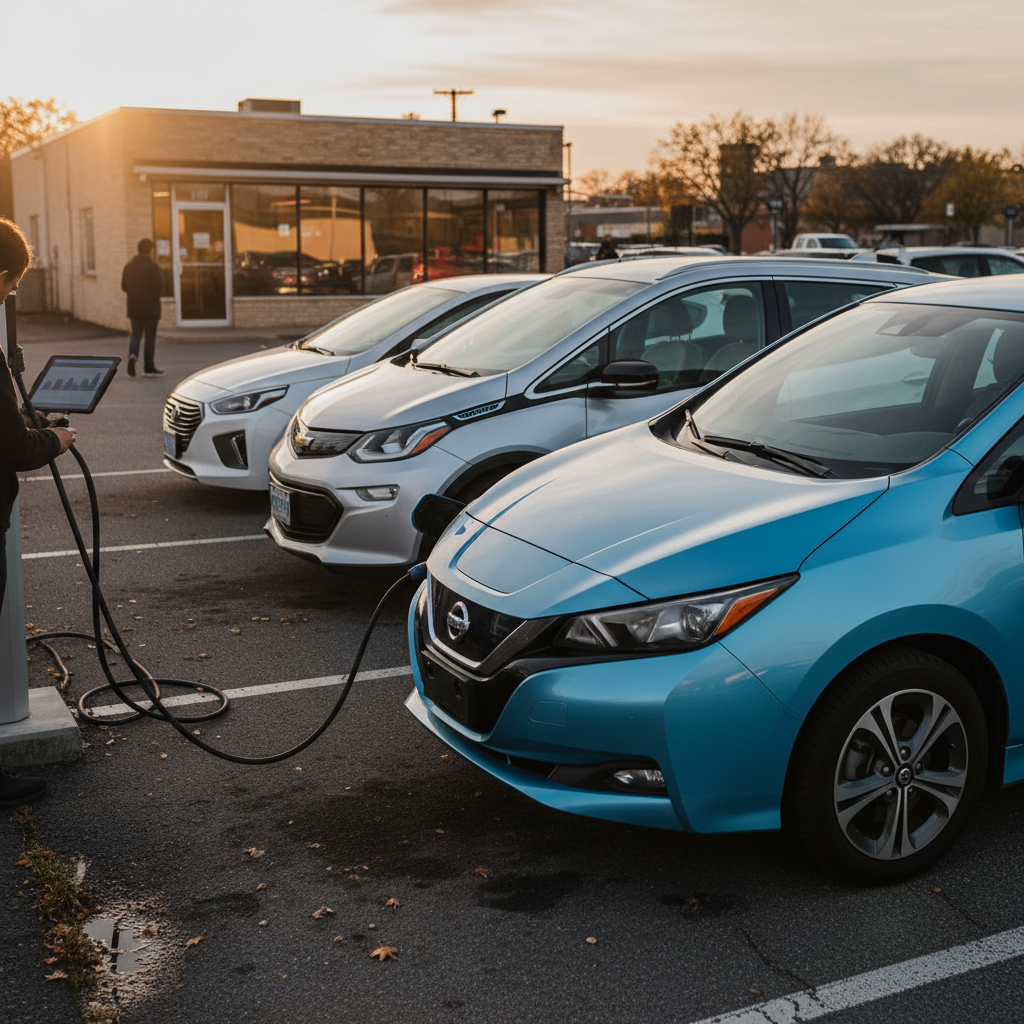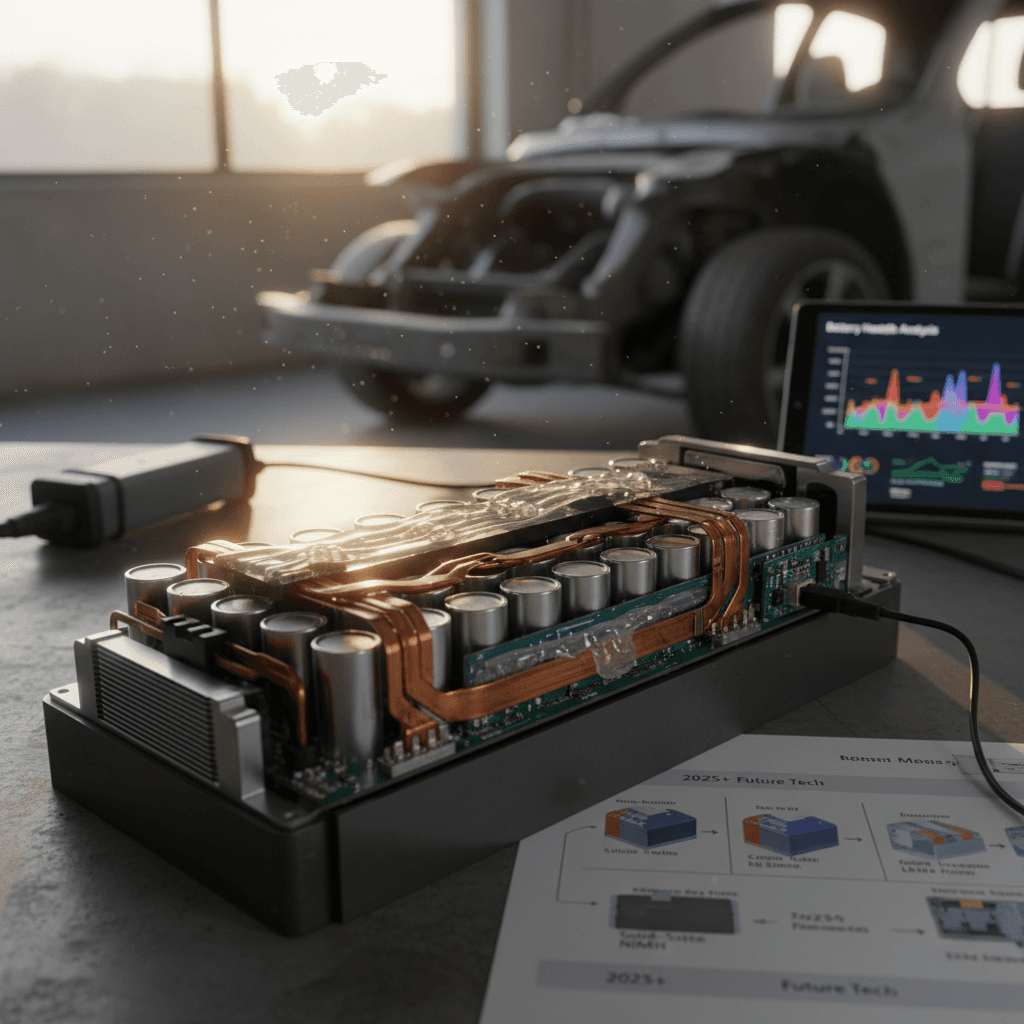
The lithium-ion battery for electric vehicles has quietly become the most important auto component of the 21st century. It determines how far you can drive, how quickly you can charge, how long the car will feel "like new", and in the used market, it’s the single biggest factor behind a fair price. Yet most shoppers only see a kilowatt-hour number on a spec sheet and a range estimate on a window sticker.
Why this matters
How lithium-ion batteries power electric vehicles
From tank to battery pack
In a gas car, energy is stored in a tank of fuel and released by burning it. In an EV, energy is stored in a lithium-ion battery pack and released electrochemically, no combustion, no tailpipe.
The pack itself is a stack of connected modules made from hundreds or thousands of individual cells. Each cell has:
- a cathode (positive side)
- an anode (negative side)
- a liquid electrolyte that lets lithium ions move
- a separator to keep the two sides from touching
How an EV "burns" electricity
When you drive, lithium ions move from anode to cathode and electrons flow through the motor, turning the wheels. When you charge, the process runs in reverse and ions are pushed back into the anode.
This back‑and‑forth motion is why we call it a rechargeable lithium-ion battery. Over thousands of these cycles, the battery gradually loses a bit of usable capacity, this is normal degradation, not a defect.
Lithium-ion EV batteries by the numbers (2024–2025 snapshot)
Key EV battery chemistries: NMC vs LFP and beyond
Most lithium-ion batteries for electric vehicles fall into two big families: nickel‑manganese‑cobalt (NMC/NCM, plus similar blends like NCA) and lithium iron phosphate (LFP). They all use lithium ions, but the exact chemistry changes how the pack behaves in the real world.
Common lithium-ion chemistries in EVs
Different cathode materials = different tradeoffs
NMC / NCA
Where you see it: Many long‑range EVs from legacy brands and performance models.
- High energy density ➝ more miles per kWh
- Great for long‑range highway driving
- Uses nickel and often cobalt (more expensive)
LFP (Lithium Iron Phosphate)
Where you see it: Many newer entry‑level trims and some high‑volume models.
- Slightly lower energy density
- Very robust chemistry, long cycle life
- More tolerant of 100% charges
Emerging chemistries
Automakers and suppliers are experimenting with manganese‑rich and semi‑solid designs to cut cost and boost range.
You’ll mostly see these in press releases and pilot projects for now rather than dealer lots.
Quick rule of thumb
Range, capacity, and energy density explained
Capacity is measured in kilowatt-hours (kWh). Think of it as the size of your gas tank. A 60 kWh pack simply stores less energy than a 90 kWh pack. But range is more than just size, it’s capacity multiplied by efficiency.
How battery capacity translates to real-world range
Approximate ranges for modern EVs with different pack sizes, assuming typical efficiency and moderate driving.
| Usable pack size | Typical EV type | Approx EPA range | Who this fits best |
|---|---|---|---|
| 40–50 kWh | City‑focused compact | 150–220 miles | Short‑range drivers, urban commuters |
| 60–75 kWh | Mainstream sedan/SUV | 230–310 miles | Most households with home charging |
| 80–100+ kWh | Large SUV / pickup | 280–400+ miles | Road‑trippers, towing, cold‑climate drivers |
Actual range varies with speed, temperature, terrain, and driving style, but this table helps you compare packs at a glance.
Don’t compare kWh in a vacuum
Battery degradation: what really happens over time
Every lithium-ion EV battery slowly loses capacity as it ages. The chemistry is complicated, but the owner experience is straightforward: over time, you’ll see a slightly lower state of charge after full charging and somewhat reduced range. The question isn’t whether degradation happens, it’s how fast, and what that means for a used electric vehicle.
Four major drivers of EV battery degradation
You can influence at least three of them
1. Heat and cold
High temperatures and repeated exposure to extreme heat accelerate chemical wear. Very cold temps temporarily reduce range but don’t inherently damage cells if managed by a good thermal system.
2. Fast charging frequency
Using DC fast charging occasionally is fine. Making it your primary charging method, especially from very low to 100%, can increase wear over the long term.
3. Depth of discharge
Deep cycles (frequently going near 0% and up to 100%) are harder on the pack than staying between, say, 20–80% for everyday driving.
4. Age and mileage
Time and miles still matter. A well‑designed pack with active cooling can retain most of its capacity past 100,000 miles, but usage history matters more than odometer alone.
Simple habits that help your lithium-ion EV battery last longer
Avoid living at 100%
Charge to 100% when you need the full range (road trips, long days), but day‑to‑day, many owners do fine setting a charge limit around 70–90%.
Don’t fear fast charging, just be smart
Use DC fast chargers when you need them; try not to arrive at 0% or sit at 100% afterward. Start charging around 10–20% and continue your trip once you have enough buffer.
Protect the car from extreme heat
Whenever possible, park in the shade or a garage on very hot days. Pre‑cooling the cabin while plugged in also helps the battery’s thermal system.
Let software do its job
Many modern EVs manage battery temperature, charge limits, and cell balancing automatically. Keeping software up to date ensures you benefit from improvements over time.
Charging speed, fast charging, and battery life
Charging a lithium-ion battery is a negotiation between speed, cost, and longevity. Higher power (measured in kW) fills the pack faster but stresses it more. That’s why EVs taper charging speeds as you approach a high state of charge, and why you’ll see the fastest rates between roughly 10% and 60–70%.
Level 1 & Level 2 (AC) charging
- Level 1 (120V): Adds only a few miles of range per hour; think emergency or overnight top‑ups.
- Level 2 (240V): Typical home or workplace charging; often 20–40 miles of range per hour depending on the car.
These methods are generally gentle on the pack and ideal for daily use.
DC fast charging
DC fast chargers can deliver 50–350 kW or more, reshaping a road trip. Modern packs and battery management systems are designed for this, they monitor cell temperatures and adjust power on the fly.
The tradeoff: relying on fast charging for most of your miles can accelerate aging, especially in hot climates or older designs without strong cooling.
What the latest research is chasing
Safety, thermal runaway, and real-world EV fire risk
Lithium-ion cells can experience thermal runaway if they’re severely damaged, overcharged, or manufactured with serious defects. Automakers design EV packs with multiple layers of protection, cooling systems, fuses, contactors, and software, specifically to prevent this. When something does go wrong and an EV fire makes the news, it tends to get outsized attention compared with gasoline-vehicle fires.
How EV lithium-ion batteries manage safety
Multiple layers of defense between you and a problem
Cell & module design
Cells are engineered to vent in a controlled way if they fail, and modules include barriers to slow or stop propagation.
Thermal management
Liquid cooling plates, pumps, and sophisticated controls keep packs in a safe temperature window during driving and charging.
Battery management software
Battery management systems (BMS) monitor voltages, currents, and temperatures in real time and shut things down if they see something unsafe.
When to be cautious
Solid-state and next‑gen EV batteries: where things stand
If you follow EV news, you’ve probably seen headlines about solid-state batteries promising huge jumps in range, safety, and charging speed. As of late 2025, traditional lithium-ion still dominates real vehicles on the road, but the transition toward solid-state and hybrid designs is clearly underway.
- Several automakers and battery suppliers are running pilot lines and demo fleets using solid-state or semi‑solid‑state cells.
- Timelines from major players often point to limited production around 2027–2028, with larger volumes later in the decade.
- Even when solid-state arrives, legacy lithium-ion packs will remain the backbone of the used EV market well into the 2030s.
What this means if you’re shopping now
What to check in the battery when buying a used EV
In the used market, two cars that look identical on the lot can have very different battery stories. One might have lived an easy life on a home Level 2 charger; the other may have spent its years supercharging in desert heat. Both have odometers, but only one has a healthy pack. Here’s what you should care about.
Used EV battery checklist for shoppers
Confirm the original battery warranty
Most EVs carry 8–10 year / 100,000+ mile battery warranties, often guaranteeing at least 70% capacity. Check the in‑service date and mileage to see how much coverage remains.
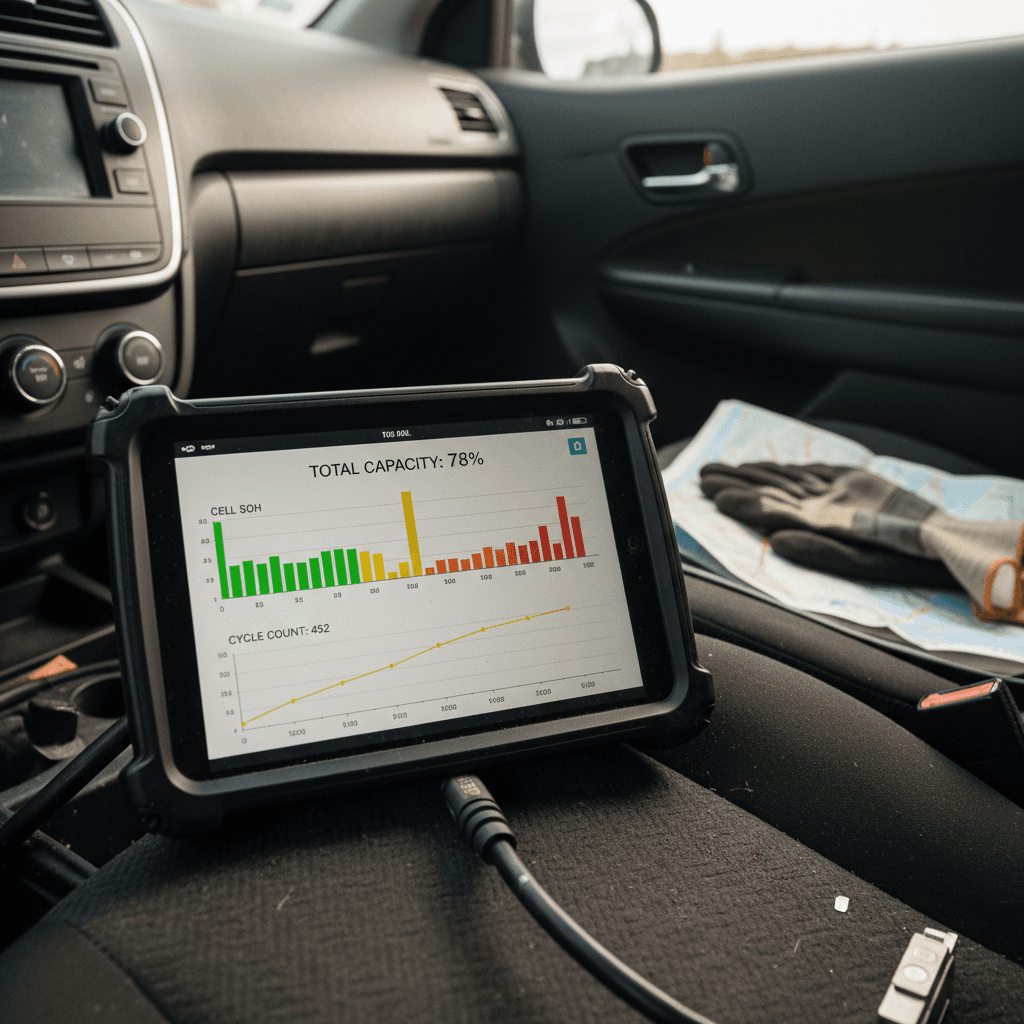
Ask for a quantified health report
A basic dashboard range estimate is not enough. Look for a <strong>battery health report</strong> that includes measured usable capacity, not just guesses based on mileage.
Review charging and climate history if available
Frequent DC fast charging, hot‑climate operation, and a history of high‑SOC storage can accelerate wear. Service records and telematics data (when available) tell part of this story.
Avoid vehicles with unresolved high‑voltage damage
If the vehicle has salvage or flood history, or major underbody repairs, insist on professional high‑voltage inspection and clear documentation before you buy.
Test real-world range, not just the gauge
On a test drive, note projected range at a given state of charge and compare it with the original EPA rating. Significant gaps could indicate capacity loss beyond normal expectations.
How Recharged evaluates EV battery health
Because the pack is the heart (and the most expensive component) of an electric vehicle, Recharged builds every transaction around verified battery data, not guesswork. That’s where the Recharged Score Report comes in.
Inside the Recharged Score battery health report
What you see when you shop a used EV on Recharged
1. Verified capacity
We use dedicated diagnostics to estimate the pack’s usable capacity relative to when it was new, not just what the dash reports on a single day.
2. Degradation profile
Where possible, we factor in age, mileage, and usage patterns to contextualize any capacity loss, so you know whether the battery is aging normally or not.
3. Fair market pricing
Battery health feeds directly into pricing. A car with a stronger‑than‑average pack can be worth more; one with accelerated degradation should be priced accordingly.
Ready to find your next EV?
Browse VehiclesMaking the numbers work for you
FAQ: lithium-ion battery for electric vehicles
Frequently asked questions about lithium-ion EV batteries
Bottom line: what this means for your next EV
Lithium-ion batteries made modern electric vehicles possible, and they’re improving faster than most shoppers realize. Today’s packs offer enough range for real‑world use, sophisticated protections against abuse, and lifespans that often outlast how long many people keep a vehicle. The key is understanding how chemistry, capacity, and usage patterns translate into the everyday experience of owning, or buying, a new or used EV.
If you’re comparing models, think about how far you actually drive, where you’ll charge most often, and how long you plan to keep the vehicle. If you’re shopping used, insist on transparent battery health data so you’re not taking a five‑figure component on faith. At Recharged, that’s built into every listing via the Recharged Score Report, alongside EV‑specialist support, financing, trade‑in options, and nationwide delivery to make your next electric car purchase as simple, and as informed, as it should be.