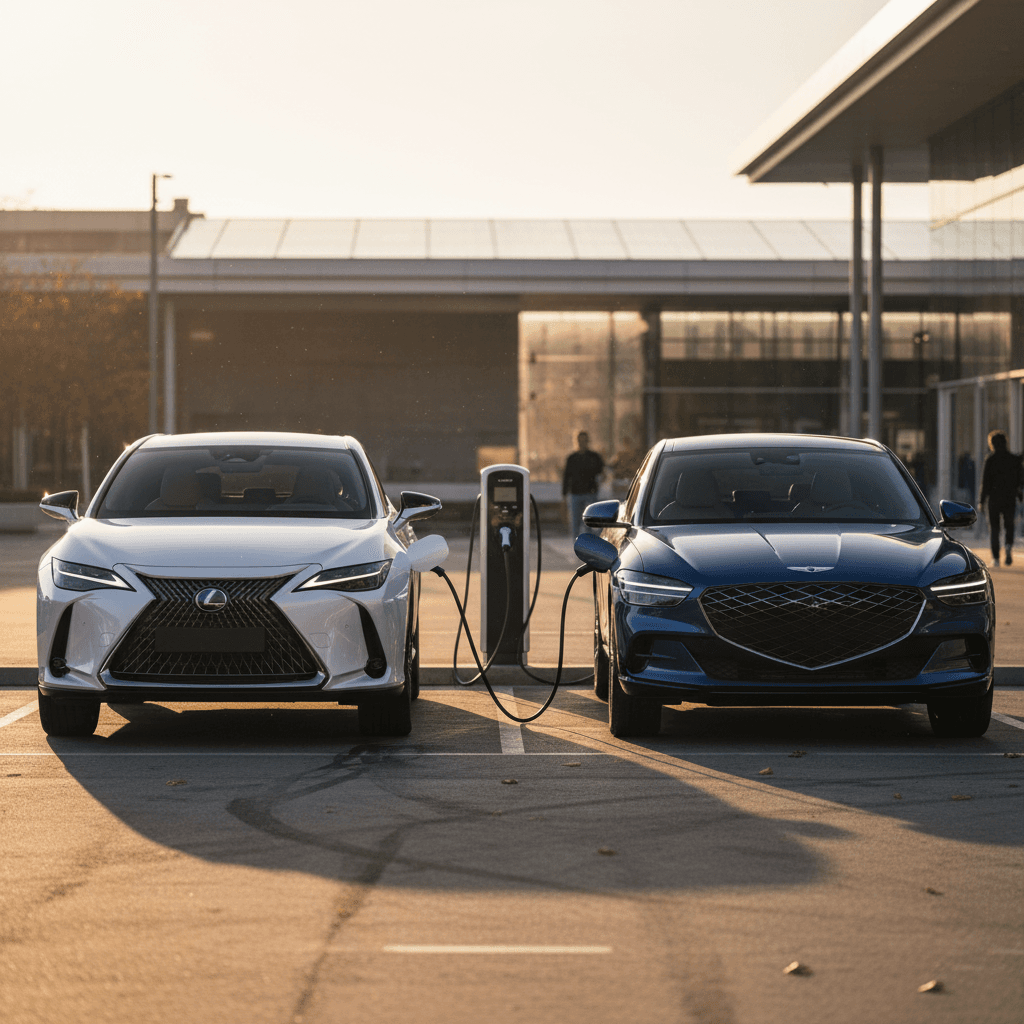
You’re shopping for a compact luxury electric SUV and two names keep popping up: the Lexus RZ and the Genesis GV60. On paper they look like close cousins, sleek, quiet, and packed with tech. But once you start comparing range, charging, ride quality, and features, some big differences appear. This guide puts the Lexus RZ vs Genesis GV60 head‑to‑head so you can decide which one fits your life, especially if you’re considering a used example.
Model years covered
Lexus RZ vs Genesis GV60: overview
Quick take: who each EV suits best
Both are compelling, but for different kinds of drivers
Lexus RZ: quiet, conservative luxury
Best if you want:
- Smooth, quiet commuting and a traditional luxury feel
- Simple, easy‑to‑use tech and a soft ride
- A familiar Lexus dealership and service experience
Watch for: modest range, average DC fast‑charging speeds, and higher pricing for the miles you get.
Genesis GV60: range and performance star
Best if you want:
- Longer range and ultra‑fast charging
- Sportier handling and strong acceleration
- Standout design and high‑tech interior
Watch for: newer dealer network and fewer service locations in some regions.
Core numbers at a glance (recent U.S. models)
Range and battery: which goes farther?
EPA-estimated range: Lexus RZ vs Genesis GV60
Representative U.S. EPA figures for popular trims. Exact numbers vary by model year, wheel size, and options.
| Model / trim | Battery (approx.) | Drivetrain | EPA-est. range |
|---|---|---|---|
| Lexus RZ 300e (18" wheels) | ~72.8 kWh | FWD | Up to 266 miles |
| Lexus RZ 300e (20" wheels) | ~72.8 kWh | FWD | Around 224–226 miles |
| Lexus RZ 450e (18" wheels) | ~71.4 kWh | AWD | Around 220 miles |
| Lexus RZ 450e (20" wheels) | ~71.4 kWh | AWD | 196 miles or less |
| Genesis GV60 Standard RWD | 77.4–84 kWh | RWD | Up to ~294–306 miles |
| Genesis GV60 Advanced AWD | 77.4–84 kWh | AWD | ~248–264+ miles |
| Genesis GV60 Performance AWD | 77.4 kWh | AWD | ~235 miles |
If you hate range anxiety, the GV60 generally gives you more cushion than the RZ.
Early Lexus RZ450e models landed with one of the weakest real‑world ranges in the luxury EV class, especially on 20‑inch wheels, where highway tests saw mileage tumble well below the EPA estimate. Newer 300e FWD trims improve things, and 2026 updates are targeting roughly 260–300 miles depending on configuration, but most RZs on the market today feel like short‑leash EVs compared with rivals.
The Genesis GV60, by contrast, makes its battery work harder. Even the dual‑motor Advanced AWD hovers around the mid‑200‑mile mark, and rear‑drive or long‑range variants stretch closer to 300 miles and beyond. Thanks to its 800‑volt architecture and efficient drivetrain, many owners report real‑world results that are at least in the same ballpark as the window sticker, sometimes better on gentle suburban driving.
Range rule of thumb
Charging speed and connectors
Lexus RZ charging
- Onboard AC charger: early models use a 6.6 kW unit; newer updates move toward ~11 kW, cutting Level 2 charge times.
- DC fast charging: capped at about 150 kW, with real‑world sessions often a bit lower.
- Typical times: about 9.5 hours from low to full on Level 2, and roughly 30–35 minutes from low to 80% on a strong DC fast charger.
- Connector: CCS1 for 2023–2025, with NACS adoption rolling in from the mid‑decade refresh for easier Tesla Supercharger access.
Genesis GV60 charging
- Onboard AC charger: roughly 11 kW, right in line with other modern EVs.
- DC fast charging: up to about 240 kW thanks to the 800‑volt system.
- Typical times: in ideal conditions, 10–80% can happen in around 18 minutes on a 350 kW DC fast charger.
- Connector: CCS1 on earlier U.S. models, with NACS ports rolling out on newer model years for direct Tesla Supercharger use.
Don’t chase the peak number alone
Performance and driving feel
Power and performance highlights
Representative specs; exact output and 0–60 mph times vary by year and trim.
| Model / trim | Drivetrain | Power (approx.) | Character |
|---|---|---|---|
| Lexus RZ 300e | FWD | ~201 hp | Relaxed and efficient, tuned for comfort. |
| Lexus RZ 450e | Dual‑motor AWD | ~308 hp | Strong enough for brisk merging, but not a hot rod. |
| Genesis GV60 Standard | RWD or AWD | 225 hp+ | Smooth, torquey, and efficient daily driver. |
| Genesis GV60 Advanced AWD | Dual‑motor AWD | ~314 hp | Quick, confident, and well‑balanced. |
| Genesis GV60 Performance AWD | Dual‑motor AWD | 429 hp (temporary boost) | Seriously quick, with a Boost button for extra shove. |
The GV60 is the athlete of this duo, while the RZ focuses on calm confidence.
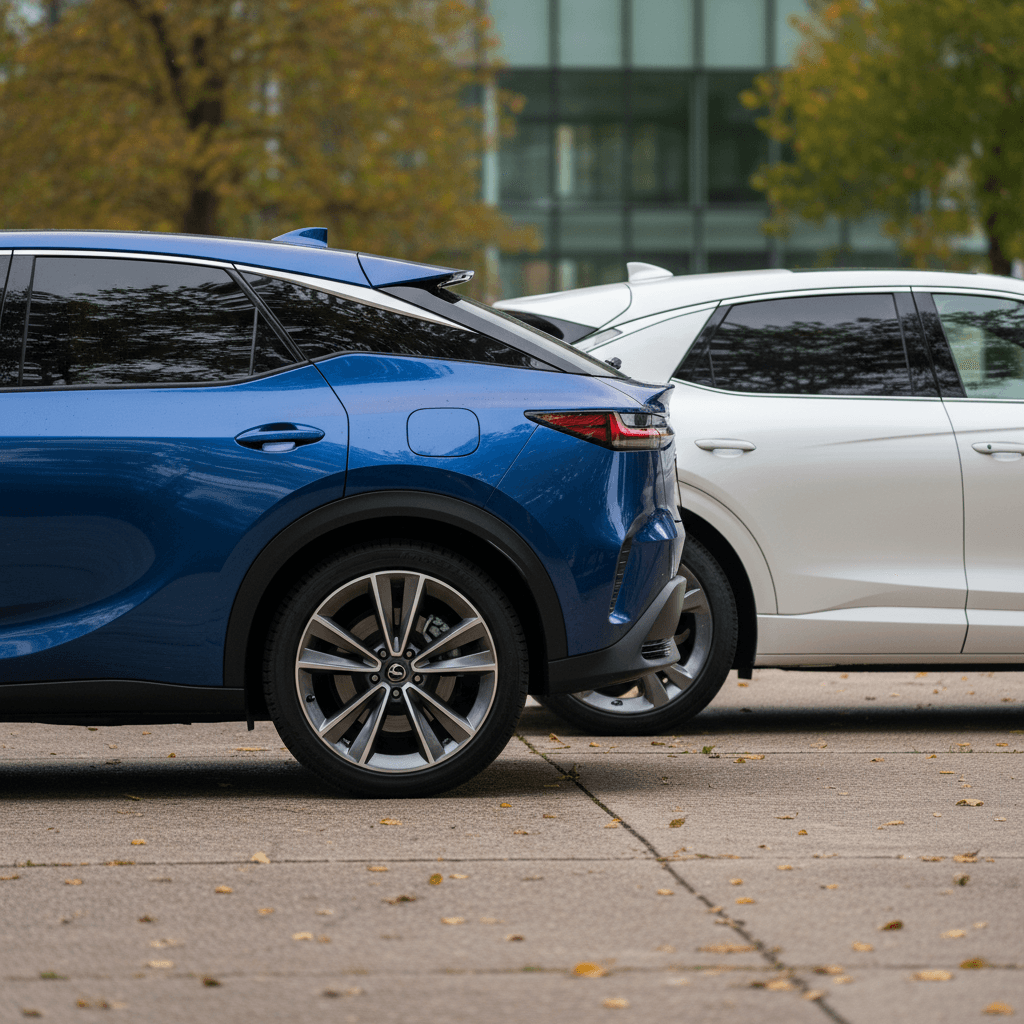
On the road, the Lexus RZ drives exactly how you expect a Lexus EV to drive: quietly and without drama. Steering effort is light, the suspension is tuned for comfort, and the cabin stays hushed even at highway speeds. You feel the instant torque off the line, but the RZ is more about smoothness than speed. Later 550e F Sport models add faux manual‑gear theatrics and more power, but most RZs you’ll encounter still lean hard toward serenity.
The Genesis GV60 pushes closer to the sporty side of the spectrum. Even in its calmer trims it feels eager, with more weight to the steering and a chassis that’s happier being hustled down a back road. Step into a Performance AWD model, tap the Boost button, and you’re shoved forward with sports‑sedan urgency. It’s still a quiet, comfortable SUV, but if you enjoy driving, the GV60 is the one that makes you smile more often.
Performance pick
Comfort, interior, and tech
Cabin character: Lexus warmth vs. Genesis theater
Both feel premium, but the experiences are very different.
Inside the Lexus RZ
- Design: airy, minimalist cabin with Lexus’ typical focus on soft materials and build quality.
- Seats: supportive and comfortable, with available synthetic suede and even radiant foot‑well heaters on some trims.
- Tech: 14‑inch touchscreen, straightforward Lexus infotainment, wireless Apple CarPlay/Android Auto, and available Mark Levinson audio.
- Vibe: Calm, quiet, and familiar, great if you’re coming out of a Lexus RX or NX.
Inside the Genesis GV60
- Design: bold and futuristic, with details like the crystal sphere shifter and sweeping digital displays.
- Seats: plush, with available Ergo Motion massage, excellent adjustability, and generous bolstering in Performance trims.
- Tech: dual widescreens, crisp graphics, robust voice controls, and fun extras like facial recognition and fingerprint start on some models.
- Vibe: High‑tech lounge, less traditional luxury, more modern design showcase.
Space is competitive in both SUVs. Rear‑seat room is fine for adults in either, though the GV60’s sweeping roofline can feel a bit cozier. Cargo space is adequate rather than cavernous, these are compact luxury crossovers, not three‑row family buses. If you routinely haul big strollers or dogs and gear, you’ll want to spend some time test‑packing both.
Try the seats on a long drive
Safety and driver-assistance
Both the Lexus RZ and Genesis GV60 are loaded with the kind of advanced safety tech you now expect in a premium EV. You’ll find automatic emergency braking, lane‑keeping assistance, adaptive cruise control, blind‑spot monitoring, and plenty of parking aids on virtually every trim.
- Lexus RZ: bundles its systems under the Lexus Safety System+ umbrella, with available 360‑degree camera, lane‑change assist, front cross‑traffic alert, and automated parking on higher trims.
- Genesis GV60: offers Highway Driving Assist, excellent lane‑centering on the highway, smart cruise that can adjust to speed limits, and sharp 360‑degree cameras. Performance trims may add more aggressive collision‑avoidance tuning.
Crash-test data
Ownership costs and depreciation
Sticker prices for new RZs and GV60s land in roughly the same ballpark, think well‑equipped luxury compact SUVs, but their ownership stories diverge in a few important ways.
Key cost factors to compare
Energy use and charging costs
The GV60’s higher efficiency and faster DC charging can lower your electricity costs on long trips and reduce paid fast‑charging time. The RZ’s modest range means you may fast‑charge more often if you road‑trip regularly.
Depreciation and resale value
Luxury EVs depreciate more sharply than their gas counterparts, and both of these are still building a track record. Historically, Lexus has held value well, but the RZ’s limited range may weigh on resale. The GV60’s strong specs make it attractive used, but Genesis is a younger brand.
Warranty coverage
Both brands offer strong EV component warranties. Always compare bumper‑to‑bumper and battery coverage for the exact year and trim, especially on used examples.
Maintenance and repairs
EVs have fewer moving parts than gas SUVs, so routine maintenance is low. But when repairs do crop up, luxury‑brand parts and labor aren’t cheap. Check where your nearest Lexus and Genesis EV‑certified service centers are located.
Mind the insurance bill
Buying used: Lexus RZ vs Genesis GV60
If you’re looking at a pre‑owned Lexus RZ or Genesis GV60, you’re in a sweet spot: both have already taken their biggest depreciation hit, and you can often step into a nicely optioned model for far less than original MSRP. But used EVs add one big question you can’t ignore, battery health.
How Recharged helps with used EVs
Used Lexus RZ vs Genesis GV60: what to check
Most of this applies to any used EV, but it’s especially important with these two.
1. Battery state of health
Ask for a battery health report or diagnostic scan, not just the range readout on the dash. Capacity loss can vary based on how the prior owner charged and drove the vehicle.
2. Fast‑charge history
Frequent DC fast‑charging isn’t automatically bad, but heavy use over years can accelerate wear. With an RZ’s slower charging, some owners may have leaned on DC more often; with a GV60, the quick charging makes it tempting to top up constantly.
3. Software and recalls
Make sure the car is up to date on software updates and any EV‑specific service bulletins. This is especially important for charging behavior and range estimation.
When a used RZ or GV60 makes more sense
Choose a used Lexus RZ if…
You value comfort, a quiet cabin, and a rock‑solid dealership network more than maximum range. Your daily driving is predictable and you mostly charge at home. You can find an RZ 300e with the newer charging hardware at a good price.
Choose a used Genesis GV60 if…
You want a compact luxury EV that can do <strong>daily duty and real road trips</strong>. Range and fast‑charge speed matter to you, and you like a slightly sportier, more design‑forward cabin.
Which luxury EV SUV is right for you?
Buy (or shop used) Lexus RZ if you’re a comfort-first driver
- You want an EV that feels like a familiar Lexus: quiet, soft‑riding, and easy to live with.
- Your driving is mostly local, and you’ll install a Level 2 charger at home.
- You prioritize dealership proximity and a long history of luxury ownership support.
- You find a strong deal on a newer RZ 300e or updated RZ with improved range.
Buy (or shop used) Genesis GV60 if you want a do-it-all EV
- You care about range and charging speed as much as comfort.
- You like distinctive design and tech‑forward interiors.
- You want brisk acceleration and more playful handling.
- Your region has solid Genesis EV support, or you’re comfortable with a little extra planning for service.
How Recharged fits into your search
Ready to find your next EV?
Browse VehiclesIf I had to choose a single all‑rounder for most drivers, the Genesis GV60 takes the win on the strength of its range, charging, and driving character. But if you’re already loyal to Lexus dealers, do most of your miles close to home, and value serenity above all, the RZ can still be a satisfying choice, especially at the right used‑EV price. The key is matching the EV’s strengths to your real life, not the spec sheet. That’s where a transparent battery report and a little expert guidance make all the difference.