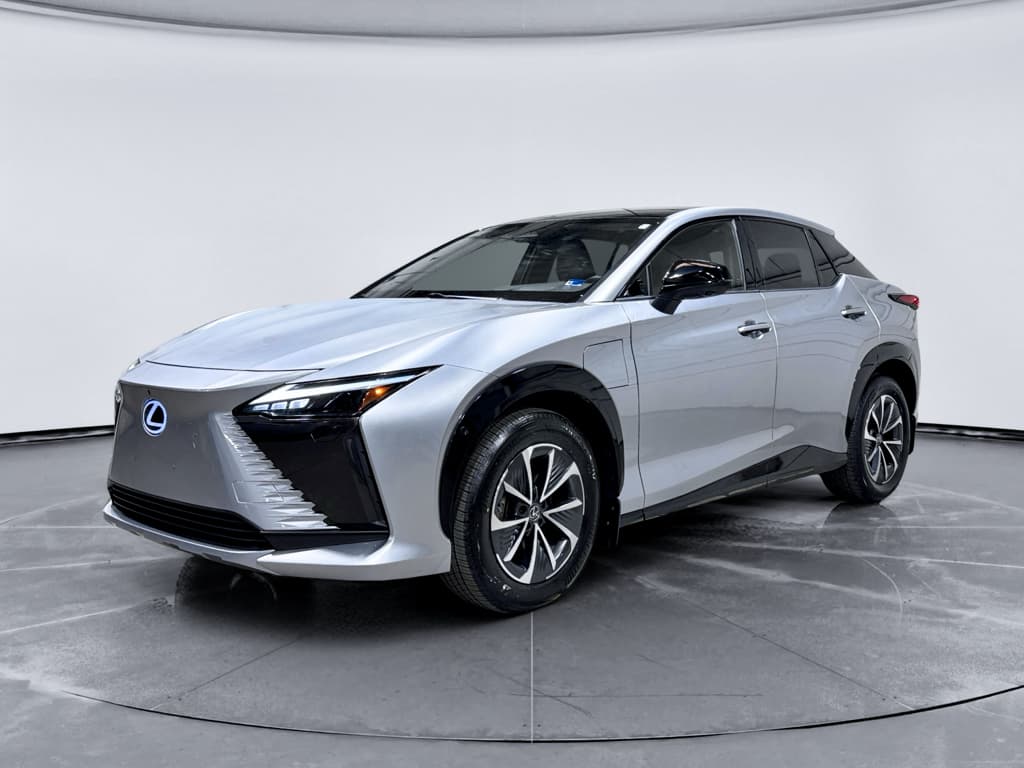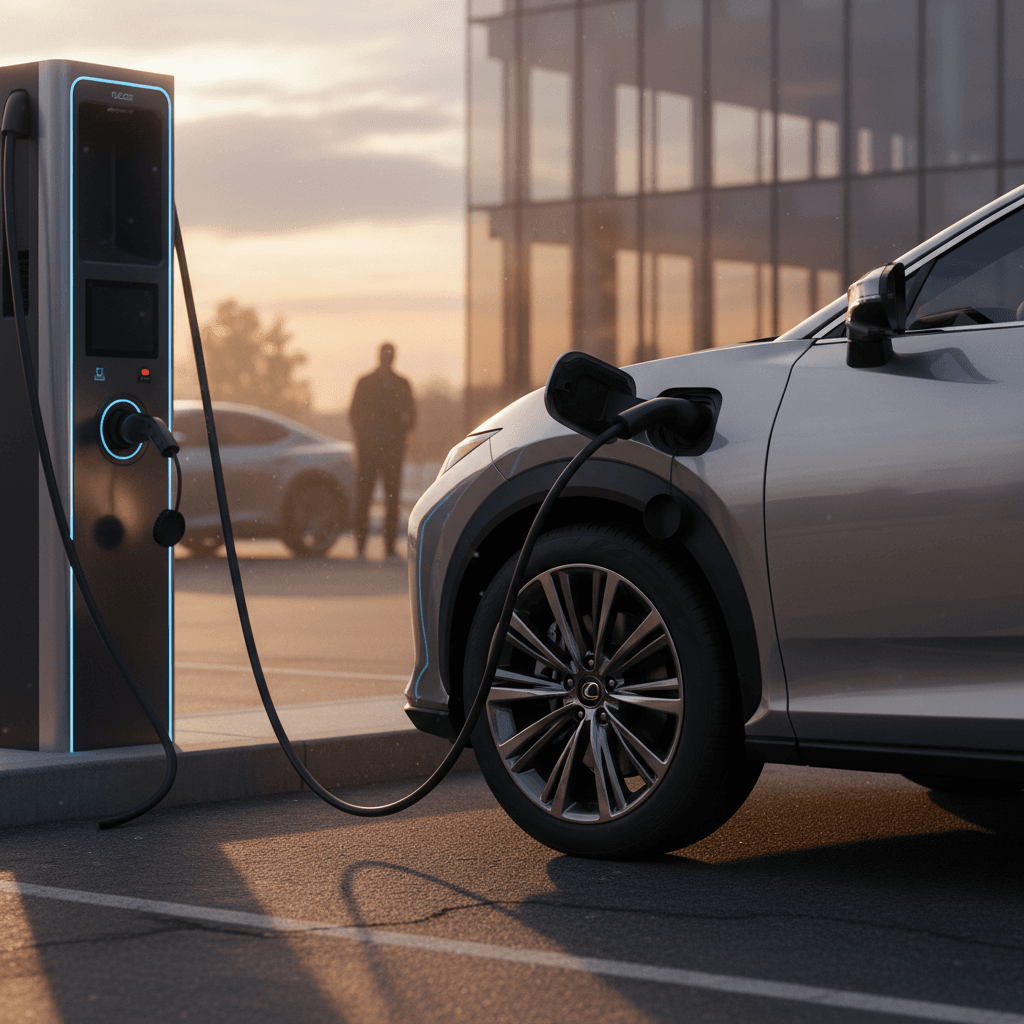
If you’re looking at a Lexus RZ, or eyeing a used one, you’ve probably noticed the glossy spec-sheet promise of up to ~150 kW DC fast charging and a 10–80% charge in around 30 minutes. This Lexus RZ charging speed test pulls those numbers apart and translates them into what you’ll actually experience at the plug: how fast it really charges, how long you’ll sit at a station, and what to expect on a road trip.
Two generations of RZ, two charging stories
Lexus RZ charging overview
Let’s start with the basics. The original Lexus RZ 450e launched with a roughly 71.4 kWh gross battery (about 64 kWh usable) and support for DC fast charging up to about 147–150 kW on a CCS connector. That’s competitive on paper with other premium electric crossovers in its class.
Lexus RZ 450e headline charging stats
By the 2026 model year, Lexus upgrades the RZ’s battery pack and thermal management, quotes an improved 10–80% DC charge time of about 30 minutes under ideal conditions, and switches U.S. models to the North American Charging Standard (NACS) port so you can plug straight into Tesla Superchargers without an adapter.
Battery size and official charging specs
Because a lot of “charging speed tests” mix trim years and markets, it’s helpful to separate the specs into two buckets: the original RZ 450e and the updated RZ with the larger battery and NACS port.
Lexus RZ battery and charging specs by generation
Key battery and charging figures you’ll see quoted in reviews and tests.
| Model / Years | Battery (usable) | Max DC power | Quoted 10–80% DC time | Onboard AC (L1/L2) | DC connector (NA) |
|---|---|---|---|---|---|
| RZ 450e (2023–2025) | ~64 kWh | 147–150 kW | ~28–38 min | 6.6 kW (optional 11 kW) | CCS1 |
| Updated RZ 350e / 500e / 550e (2025–on, region‑dependent) | ~70–77 kWh class | “Faster” (up to ~150 kW, better curve) | ~30 min (10–80%) | Up to 11 kW | CCS1 → NACS/SAE J3400 in NA from 2026 |
Numbers are manufacturer or trusted third‑party estimates under ideal conditions.
Mind the trim year
Lexus RZ charging speed test results (10–80%)
So what happens when you plug an RZ into a high‑power DC fast charger and actually watch the numbers? Independent testing on early RZ 450e models shows two important truths: the car can briefly hit its advertised peak of roughly 147–150 kW, but its average charging power is much lower over an entire session.
- Typical 150 kW station, 2023–2025 RZ 450e, mild weather, starting at 10%:
- • Peak power: ~140–150 kW right after ramp‑up
- • Average power, 10–80%: roughly 70–100 kW depending on temperature and station
- • Time 10–80%: commonly 30–40 minutes in the real world, even if some tests sneak under 30
- • Time 10–90%: about 80–90 minutes in at least one instrumented test, averaging only mid‑30 kW when you include the slow top‑end
That last figure is why some reviewers describe the early RZ’s charging as “slow” despite the impressive peak. Lexus plays it safe with battery temperature and tapering, so once you pass about 50–60% state of charge, power drops off more aggressively than you might see in some Korean or German competitors.
The number that really matters: average kW
Fast‑charging curve: what it actually feels like
From low state of charge (10–40%)
Arrive at a DC fast charger around 10–15% and the RZ usually ramps up quickly. You’ll see:
- Ramp‑up from 0 to ~120–150 kW in the first minute or two, if the battery is warm.
- Good speed through about 40% state of charge, adding range quickly.
- Strong miles‑per‑minute at this stage, which is why partial charges are so efficient on road trips.
Mid‑pack and taper (40–80+%)
After about 40–50%, the RZ begins to pull back power to protect the battery. Owners commonly see:
- Step‑down to ~90–110 kW in the middle of the pack.
- Further taper toward 50–70 kW approaching 70–80%.
- Very slow charging above 80%, where power can fall below 40 kW and the car adds miles slowly.
The upshot: on a trip, it’s usually fastest to unplug by 70–80% and get back on the road.
Real‑world vs. claimed charge times
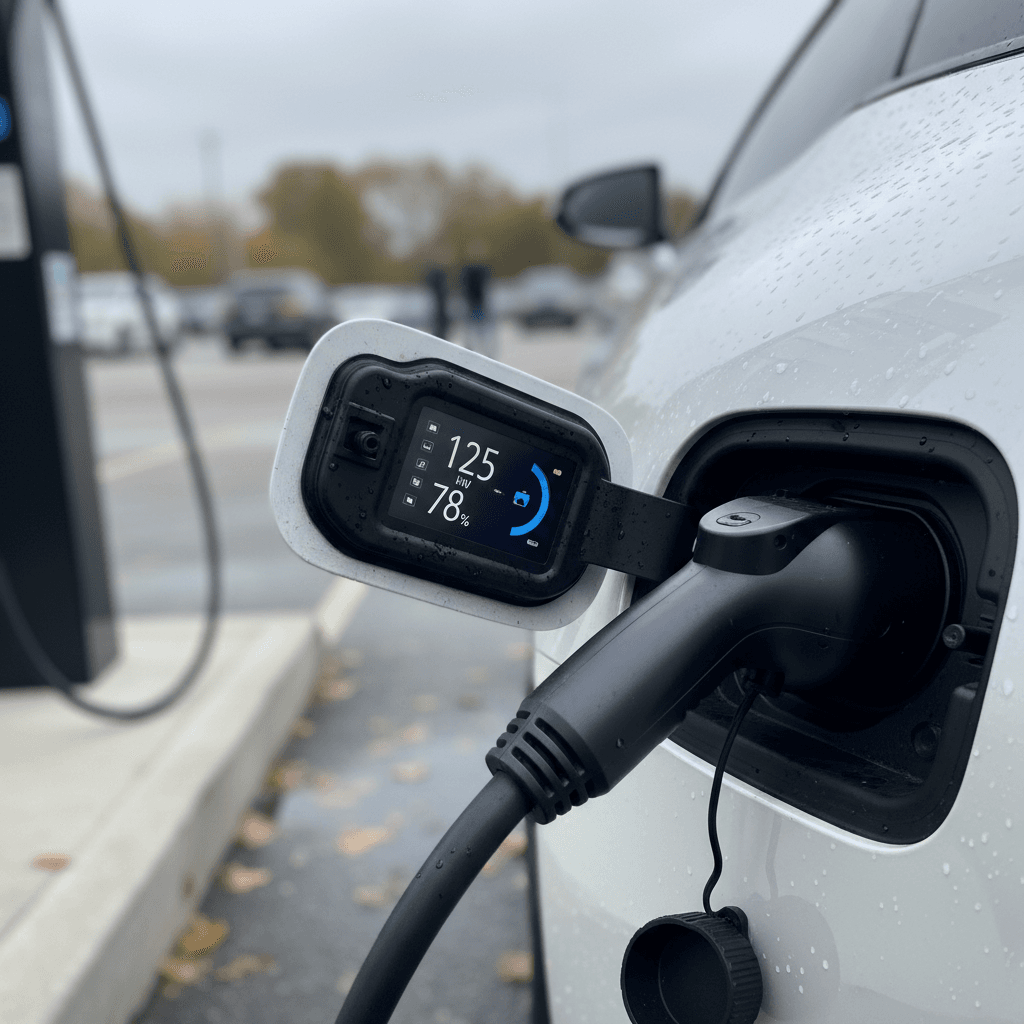
Lexus’ own messaging on the refreshed RZ says 10–80% in “around 30 minutes” under ideal conditions. Third‑party testing of the earlier RZ 450e shows that’s possible on paper, but like every EV, you only see those brochure numbers when everything lines up: warm battery, powerful charger, mild weather, and low starting state of charge.
How Lexus RZ charge times stack up
Brochure numbers vs. what drivers usually see on the road.
Manufacturer claim
10–80% in ~28–30 minutes on a high‑power DC charger, especially for updated RZ models with improved thermal management and battery preconditioning.
Independent tests
Instrumented tests of early RZ 450e models have logged:
- 10–80% in ~28 minutes on a 150 kW charger under ideal conditions
- 10–90% in ~85 minutes, averaging only mid‑30 kW over the whole session
Owner reality
For most owners using public CCS fast chargers:
- Plan on 30–40 minutes from 10–80%
- Expect slower results in winter or with crowded stations
Temperature is half the story
Home and Level 2 charging times
Most of your charging time in a Lexus RZ will be spent at home or at slower public Level 2 stations. Here the car’s onboard AC charger, not the DC rating, sets the pace. Early U.S. RZ 450e models came with a 6.6 kW onboard charger, with an 11 kW option in some markets; newer RZ variants move toward 11 kW as standard.
Lexus RZ Level 2 (AC) charging times
Approximate home and workplace charging times for the RZ 450e battery size.
| Charger type | Power (AC) | 0–100% time | Miles of range per hour* |
|---|---|---|---|
| 120V wall outlet (Level 1) | 1.4 kW | ~40–45 hours | 3–4 mi/hr |
| 240V, 30–32A home charger | 6.6 kW | ~9–11 hours | 20–25 mi/hr |
| 240V, 48A home charger (where 11 kW onboard is fitted) | 11 kW | ~5–6 hours | 35–40+ mi/hr |
Times assume an early RZ with ~64 kWh usable battery and typical charging losses.
For most owners, a 32–40A Level 2 home charger is plenty. You plug in at night and wake up with a full battery. The only time the 11 kW capability really matters is if you regularly arrive home with a very low state of charge and need a full pack again in just a few hours.
Don’t overspend on home hardware
Road‑trip planning in a Lexus RZ
On a long drive, charging speed turns into trip time. Early RZ 450e models have real‑world highway ranges closer to 180–220 miles depending on wheels and weather, and their conservative charge curve means you’ll get the best results with shorter, more frequent stops.
How to get the fastest possible charges in an RZ
1. Aim for 10–20% arrival
You’ll see the highest power when you plug in below about 20%. If you arrive at 40–50%, your session will feel slower because you’re already in the taper zone.
2. Unplug by 70–80%
Above ~80%, the RZ pulls power down sharply. For road trips, it’s usually quicker overall to leave early and add an extra stop than to wait for the last 20%.
3. Favor stronger stations
Look for 150 kW or 250 kW DC fast chargers from reputable networks. The RZ can’t use all of a 250 kW unit, but those sites often have better uptime and cooling.
4. Precondition when possible
The updated RZ adds smarter battery thermal management and, in some markets, preconditioning tied to navigation. Warming the pack before a fast charge helps you hit higher power sooner.
5. Watch sharing behavior
At some sites, paired chargers share power. If another car is plugged into the “twin” pedestal, both of you may charge more slowly. When you can, pick a stand‑alone unit.
6. Use Plug & Charge or app auth
Spending five minutes wrestling with RFID cards and apps eats into your trip time just as much as a slow taper. Get the payment setup done before your trip.
Good news for U.S. buyers: NACS access
Does fast charging hurt Lexus RZ battery health?
Lexus goes conservative with the RZ’s battery management, and that’s a good thing if you plan to own the car for a while, or buy one used. The usable capacity is slightly smaller than the physical pack, leaving a buffer at the top and bottom, and the charge curve is designed to avoid punishing the cells with extended high‑power charging at high state of charge.
Smart limits, longer life
- Early taper may be frustrating at the charger, but it reduces heat and stress on the pack.
- Conservative usable capacity (about 64 kWh out of 71.4 kWh) gives the software room to avoid 0% and 100% extremes.
- Liquid‑cooled battery helps keep temperatures in the comfort zone during repeated fast charges.
Owner habits still matter
- Avoid living at 100% SoC; charge to 70–80% for daily use when you can.
- Reserve DC fast charging for travel and the occasional emergency, not every commute.
- In extreme heat or cold, expect slower charging and consider shorter sessions.
Treat the battery kindly and the RZ’s cautious charge strategy should help it age gracefully.
Don’t mask battery issues with charge speed
Buying a used Lexus RZ: charging checks to make
If you’re shopping for a used Lexus RZ, charging is one of the easiest ways to tell how the car has been treated and how it will fit your life. The good news: Lexus’ conservative approach means many used RZs should still have healthy batteries. But it pays to be systematic.
Used Lexus RZ charging checklist
Confirm the charging connector
Early U.S. cars use CCS1; later ones get NACS. Make sure the port matches the public networks you’ll rely on and ask if any OEM adapter is included.
Ask about DC fast‑charge history
Frequent high‑power fast charging isn’t a deal‑breaker, but a car that lived on DC might show more battery wear. Service records or telematics reports can help fill in the picture.
Test a nearby DC fast charger
If possible, do a short 10–60% session during the test drive. You’re looking for normal ramp‑up, no unusual error messages, and power that roughly matches published curves for that model year.
Verify home charging hardware
Check that the seller’s home charger (if included) is properly installed and sized for the car’s onboard AC limits. A 40A Level 2 unit is a sweet spot for most RZ owners.
Review software and recalls
Ask a Lexus dealer to run the VIN for open campaigns or battery/charging‑related software updates. Some updates improve charging behavior and station compatibility.
Get an independent battery health report
With a marketplace like Recharged, every vehicle includes a Recharged Score Report with verified battery health and charging performance. That’s far more reassuring than a seller saying, “it seems fine.”
How Recharged can help
Ready to find your next EV?
Browse VehiclesLexus RZ charging speed FAQ
Frequently asked questions about Lexus RZ charging
The Lexus RZ’s charging story is a tale of two philosophies: ambitious peak numbers on the spec sheet, paired with a deliberately cautious charging curve designed to keep the battery healthy for the long haul. If you go in expecting 10–80% in a real‑world 30–40 minutes, plan your stops around that sweet 10–80% window, and make home Level 2 charging your daily workhorse, the RZ is an easy EV to live with, and, in newer NACS‑equipped form, a genuinely capable road‑trip partner. And if you’re searching for a used Lexus RZ, a transparent battery health report and verified charging performance, like you get with a Recharged Score, turn those charging speed tests into confidence you can bank on.