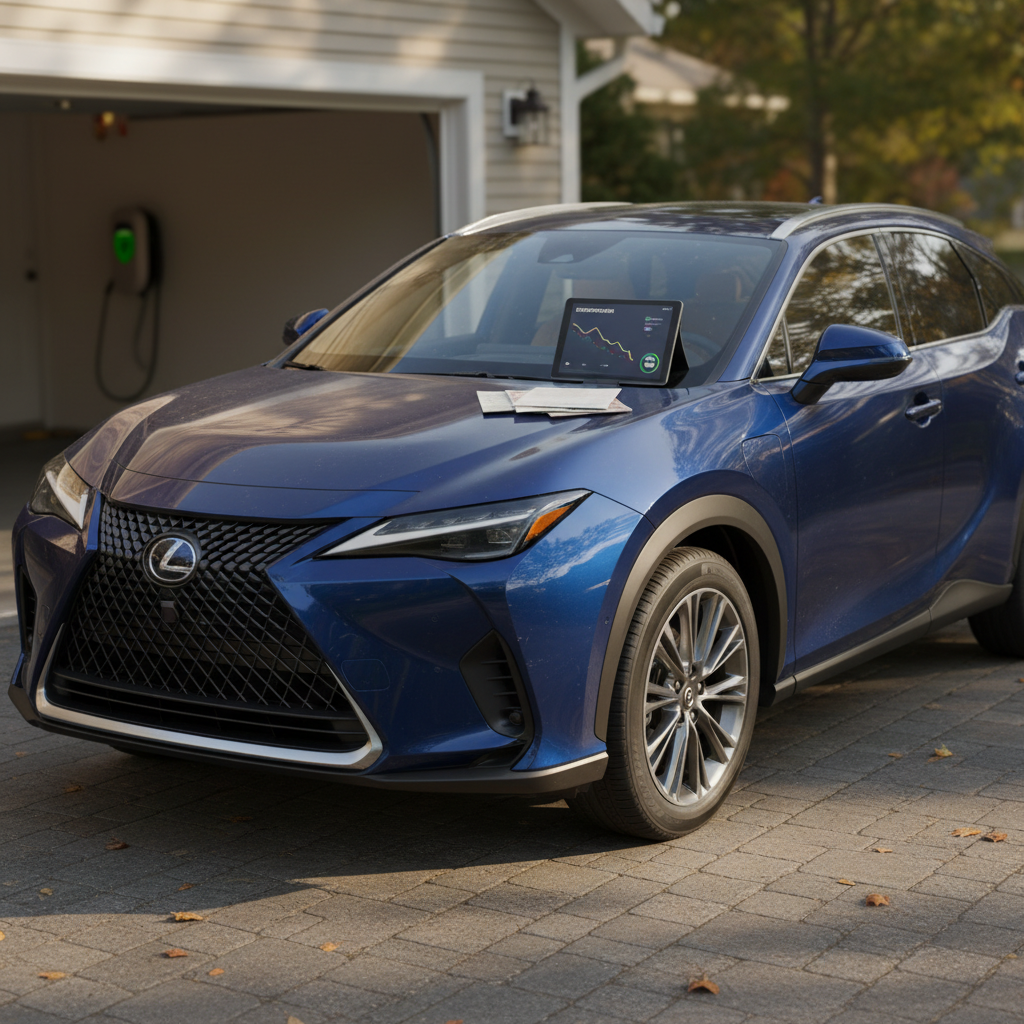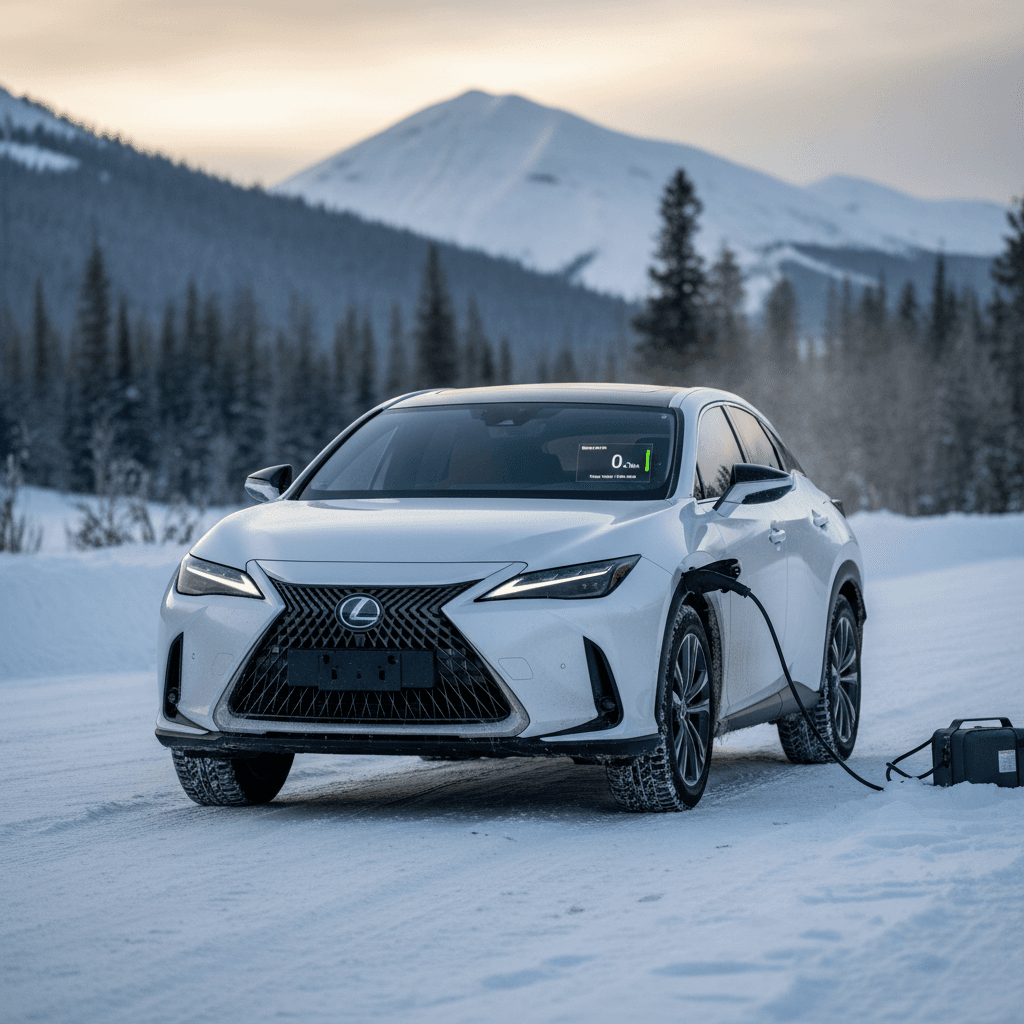
If you live where winter actually means winter, snow, slush, and air so cold it hurts your teeth, you’re right to worry about Lexus RZ 450e winter range loss percentage. The RZ is a calming, luxurious cocoon, but in the cold it also has a reputation for watching its range estimate fall like the Nasdaq in 2001. Let’s put real numbers on that, and then talk about how to live with (or shop for) an RZ if you’re facing serious winters.
Quick takeaway
Lexus RZ 450e Winter Range Loss at a Glance
RZ 450e range: paper vs. winter pavement
The RZ 450e’s 71.4 kWh battery and dual‑motor all‑wheel drive look fine on a spec sheet. The problem is what happens when you expose that hardware to colder temps: efficiency drops, the battery holds less usable energy, and the car spends a lot of power keeping you toasty. In independent winter testing and Recharged’s own road‑trip experience with the RZ, that usually translates to about one‑third of your range vanishing in real cold‑weather driving.
How Much Range Does the Lexus RZ 450e Lose in Winter?
Normal U.S. winter driving (20–40°F)
In the kind of winter weather most U.S. drivers see, call it 20–40°F (-6 to 4°C), mixed city/highway, snow on the ground but not the apocalypse, RZ 450e owners tend to report about 25–35% winter range loss. That’s with the car fully warmed, running the heat, and cruising in the 65–75 mph band.
- A 220‑mile EPA‑rated RZ 450e behaves more like a 145–165 mile car in these conditions.
- Short hops with a cold battery can feel worse, especially if you’re remote‑starting and pre‑heating from a low state of charge.
- The milder your winter and the more city driving you do, the closer you’ll stay to the 25% side of that range.
Deep‑cold highway use (0–20°F)
Drop temps into the teens or single digits, and things get predictable in a grim sort of way. Like every EV, the RZ now has to fight physics on three fronts: cold‑soaked battery, thick air, and serious cabin heating. In that world, you should absolutely budget for 35–45% winter range loss if you’re doing long highway runs.
Harsh‑winter rule of thumb
Why the percentage loss stings more in the RZ
Every EV loses range in winter, but the RZ starts from a smaller tank. When a 320‑mile crossover loses 30%, you still have 220+ miles in hand. When a 220‑mile RZ 450e loses 30%, you’re down near 150 miles, and that’s before you add a buffer for not running to zero. The same percentage hurts more because the baseline is modest.
Why the RZ 450e Struggles More Than It Should
On paper, the Lexus RZ 450e isn’t obviously doomed in winter. It has a ~71 kWh pack, dual‑motor all‑wheel drive, and the sort of heated everything you expect in a luxury crossover. But a few design choices conspire against you when the temperature drops.
The RZ 450e’s cold‑weather weak spots
None of them are fatal alone; together they add up to big winter losses.
Modest usable battery capacity
High‑drag, tall SUV body
HVAC and comfort loads
Dual‑motor all‑wheel drive
What about the RZ 300e?
Real‑World RZ 450e Scenarios: EPA vs Winter Reality
Numbers on a spec sheet don’t help much when you’re staring at a map and wondering if you can actually make it to Grandma’s without a 40‑minute DC fast‑charge. So let’s turn the Lexus RZ 450e winter range loss percentage into three simple, real‑world scenarios.
Lexus RZ 450e winter range scenarios
Approximate ranges assume a healthy 2023–2025 RZ 450e on factory tires, driven from 90% down to 10% state of charge.
| Scenario | Conditions | Expected Loss | Usable Winter Range |
|---|---|---|---|
| Mild winter commute | 35°F, mix of city and highway at 60–65 mph | ~25% | ~160 mi vs. ~210 mi in mild weather |
| Typical cold‑weather road trip | 25°F, 70–75 mph highway, dry roads | ~30–35% | ~135–150 mi vs. ~200–220 mi EPA |
| Deep‑cold highway slog | 5–10°F, 70–75 mph, heater working hard | ~40–45% | ~110–130 mi before you really want a charger |
These are estimates, not guarantees, treat them as planning tools, not promises.
Planning buffer that actually works
How to Reduce Winter Range Loss in Your Lexus RZ 450e
You can’t out‑argue thermodynamics, but you can make the RZ work a lot harder on your behalf. The goal is simple: keep the battery and cabin from doing huge temperature swings, and stop wasting energy on things that aren’t moving the car.
Practical ways to claw back winter range
1. Pre‑condition while plugged in
Use the Lexus app or in‑car timers to warm the cabin and, when supported by your charger, pre‑heat the battery while you’re still plugged in. That means the first 10–15 miles aren’t spent just dragging a cold‑soaked pack up to temperature.
2. Use seat and wheel heaters first
Heated seats and steering wheel use far less energy than blasting cabin air. Set cabin temp a bit lower, say 67–69°F, and let your body contact points do most of the comfort work.
3. Dial back speed on marginal legs
Above about 65 mph, aerodynamic drag climbs quickly. Backing down from 75 to 65 mph in the RZ can easily save <strong>10–15% energy</strong>, which is the difference between arriving calm and arriving on a flatbed.
4. Avoid repeated short trips on a cold battery
A bunch of two‑mile errands where the pack never warms up will nuke your consumption figures. Cluster errands into a single, longer drive when you can so the battery and drivetrain operate in their happy temperature window.
5. Keep tires properly inflated for winter
Cold air drops tire pressures. Under‑inflated tires increase rolling resistance and exacerbate winter losses. Check pressures at least monthly in cold weather and follow Lexus’s cold‑pressure spec, adjusting if you’ve moved to dedicated winter tires.
6. Be realistic about DC fast‑charging
In very low temps, the RZ may charge slower than the spec sheet suggests until the pack warms up. Plan extra time at your first winter fast‑charge stop, and favor stations right off the highway so the battery is warm when you arrive.
Good news for owners
Shopping Used? Winter Range Checklist for the RZ 450e
If you’re looking at a used Lexus RZ 450e, winter range isn’t just about the weather, it’s also about battery health, tires, and how the previous owner treated the car. The same cold weather that shortens range today can accelerate degradation if the car was repeatedly fast‑charged on cold packs.
Used RZ 450e winter‑range buying checklist
1. Get a real battery health report
A high‑quality battery test, like the <strong>Recharged Score battery health diagnostics</strong> included with every EV on Recharged, helps you separate normal winter loss from permanent capacity loss. A tired pack turns a marginal‑range EV into a liability.
2. Ask for real‑world winter consumption numbers
If you’re buying from a private seller or dealer who drove the car through at least one winter, ask what they saw on the dash in kWh/100 mi or mi/kWh during cold months, and at what speeds. Vague answers are a cue to assume the worst.
3. Check tires and wheel size
The RZ 450e’s bigger 20‑inch wheels look great but hurt efficiency, especially with aggressive winter rubber. If you live in snow country, a set of 18‑inch wheels with narrower winter tires is the nerdy but correct answer for better range.
4. Inspect for DC fast‑charging abuse
Occasional DC fast charging is fine; fast‑charging to 100% multiple times a week, especially in extreme temps, isn’t. Look for log history if available, or favor cars that lived with home Level 2 charging and fewer road‑trip marathons.
5. Test‑drive on the kind of route you’ll actually use
If winter range matters because you do a specific 90‑mile commute or ski‑weekend drive, replicate that in your test. Start with 80–90% charge, run at your normal speed, and see what the projected remaining range looks like at the halfway point.
6. Use expert help when you can
Cold‑weather range is one place where having an EV‑specialist in your corner pays off. At Recharged, our advisors can walk you through <strong>RZ vs alternatives</strong>, winter driving expectations, and whether a particular used RZ’s battery and history are a fit for your climate. "}],