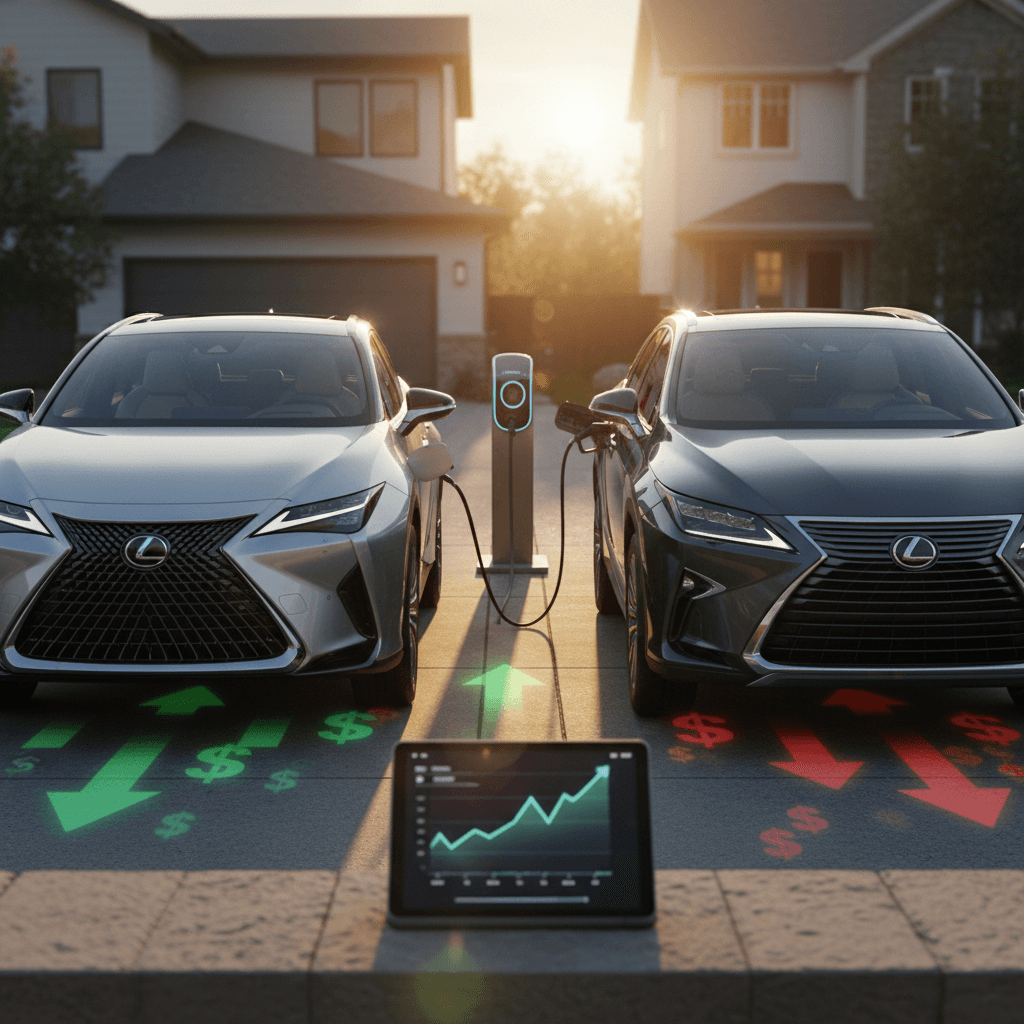
If you’re cross‑shopping the Lexus RZ 450e with a gas Lexus SUV like the RX, the sticker price only tells part of the story. To understand whether the RZ 450e really saves you money, you have to look at total cost of ownership, purchase price, fuel or electricity, maintenance, insurance, and resale value over several years.
What this guide covers
Why compare the Lexus RZ 450e to a gas SUV?
Lexus shoppers tend to prioritize comfort, refinement, and long‑term reliability. Adding an EV like the RZ 450e raises a new question: can a luxury electric SUV deliver the same experience for a lower total cost than a familiar gas model? When you factor in lower fuel and maintenance costs, plus potential incentives, the answer can absolutely be yes, but it depends on how you drive and how long you keep the vehicle.
- You’re deciding between an RZ 450e and a gas Lexus lease or purchase.
- You want to understand how fuel and maintenance savings stack up against a higher EV sticker price.
- You’re considering a used Lexus RZ 450e from a marketplace like Recharged and want a clear cost picture.
Which gas Lexus is the best comparison?
For a fair “apples to apples” comparison, we’ll line up the Lexus RZ 450e with a similarly sized and similarly priced gas Lexus SUV. The closest match in the real world is typically the Lexus RX 350 (two‑row midsize luxury SUV) with all‑wheel drive and a mid‑level equipment package.
Our comparison pair: RZ 450e vs RX 350
Well‑equipped AWD luxury SUVs with similar MSRP
Lexus RZ 450e (Premium or Luxury AWD)
- All‑electric, dual‑motor AWD
- EPA‑rated range roughly in the mid‑200‑mile band depending on wheels
- Typical new‑vehicle transaction price in the low‑to‑mid $60,000s before incentives
Lexus RX 350 AWD (gas)
- 2.4L turbocharged gasoline engine, conventional AWD
- EPA combined fuel economy around the mid‑20s mpg in real use
- Typical transaction price in the high‑$50,000s to low‑$60,000s when similarly equipped
Tip for real‑world shopping
Headline 5‑year cost summary
Estimated 5‑year ownership at 12,000 miles/year (U.S. averages)
These numbers are directional, not promises
Purchase price, incentives, and depreciation
At first glance, the Lexus RZ 450e can look a little more expensive than an equivalent RX. But the gap has narrowed as EV discounts have become more common. In some markets, effective transaction prices are very similar once you account for incentives and dealer pricing.
Illustrative 5‑year purchase & depreciation comparison
Approximate values for a new purchase in the low‑$60,000s price band, using typical luxury‑SUV depreciation patterns.
| Item | Lexus RZ 450e | Lexus RX 350 AWD (gas) |
|---|---|---|
| MSRP / transaction price | $62,000 | $60,000 |
| Estimated incentives / discounts | -$4,000 (EV rebates & dealer) | -$2,000 (dealer discount) |
| Effective initial outlay | $58,000 | $58,000 |
| Estimated value after 5 years / 60,000 miles | ≈$28,000–$32,000 | ≈$24,000–$30,000 |
| 5‑year depreciation hit (midpoint) | ≈$29,000 | ≈$31,000 |
All figures are estimates in 2026 dollars for comparison only.
Depreciation: EVs vs gas today
If you’re buying used, depreciation math shifts in your favor. Someone else has already eaten the steep first‑owner drop, so your 5‑year cost is dominated more by energy and maintenance than by the purchase price, one reason used luxury EVs can be outstanding values.
Energy costs: electricity vs gasoline
Fuel is where the Lexus RZ 450e can quietly claw back thousands of dollars over time, especially if you do most of your charging at home. Let’s use a simple 12,000‑mile‑per‑year scenario and U.S. national‑average prices for electricity and gasoline.
Illustrative annual energy cost comparison
Assumes 12,000 miles per year and a mix of city/highway driving.
| Metric | Lexus RZ 450e (EV) | Lexus RX 350 (gas) |
|---|---|---|
| Real‑world efficiency assumption | 3.0 mi/kWh | 25 mpg |
| Energy needed for 12,000 miles | ≈4,000 kWh | ≈480 gallons |
| Cost per unit | $0.16/kWh (home) | $3.75/gal |
| Annual energy cost (home‑heavy use) | ≈$640 | ≈$1,800 |
| 5‑year energy cost | ≈$3,200 | ≈$9,000 |
Electricity at $0.16/kWh, gasoline at $3.75/gal; adjust to your local rates for a more precise picture.
Charging mix matters
Mostly home charging
If you can plug in at home most nights, the RZ 450e’s fuel advantage is dramatic. Think in terms of hundreds of dollars per year instead of thousands. Over 5 years, it’s realistic to save $4,000–$6,000 versus running an RX 350 on gasoline, depending on your local prices.
Mostly public DC fast charging
If you live in an apartment and rely on paid DC fast charging, energy costs for the RZ 450e might come closer to parity with the RX 350. You’ll still gain on maintenance and possibly depreciation, but the pure “fuel” savings won’t be as jaw‑dropping.
Maintenance and repairs
EVs have far fewer moving parts than gas vehicles, no engine oil, spark plugs, exhaust system, or complex multi‑gear transmission. Lexus already has a strong reputation for reliability with the RX; even so, the RZ 450e typically wins the maintenance cost battle over time.
Where the RZ 450e saves you money on upkeep
Less routine service, fewer wear items, and no oil changes
No oil changes
Simpler drivetrain
Brake wear and other items
Estimated 5‑year routine maintenance & minor repairs
Typical owner experience for 60,000 miles, excluding major accidents or rare failures.
| Item | Lexus RZ 450e | Lexus RX 350 (gas) |
|---|---|---|
| Oil & filter changes | $0 | $800–$1,000 |
| Other scheduled services | $1,200–$1,600 | $1,600–$2,000 |
| Brakes, minor wear items | $500–$800 | $700–$1,000 |
| Estimated 5‑year total (midpoint) | ≈$2,000 | ≈$3,200 |
Figures assume proper maintenance intervals and out‑of‑warranty minor repairs done at a mix of dealer and independent shops.
EV advantage: fewer surprises
Insurance, taxes, and fees
Insurance costs for the RZ 450e vs an RX 350 will vary by driver profile and zip code. Some insurers currently rate EVs slightly higher due to expensive components and repair complexity, while others treat them similarly to gas equivalents.
- In many markets, you can expect similar or modestly higher premiums for the RZ 450e versus an RX 350 with the same driver profile.
- Some states charge extra annual EV registration fees to make up for lost gas‑tax revenue, anywhere from tens to a few hundred dollars per year.
- On the flip side, a handful of regions offer reduced registration fees, HOV lane access, or local EV perks that can offset costs or save time.
Don’t forget state‑level EV fees
Battery health and resale value
Battery health is the wild card many shoppers worry about. In practice, Lexus, like most established automakers, designs its batteries to retain most of their usable capacity through normal ownership, and warranties provide a backstop. Resale value for the RZ 450e will largely track how confident buyers are in the remaining range and battery life when you sell or trade in.
How Recharged reduces battery uncertainty
What helps RZ 450e resale
- Healthy remaining range that meets daily driving needs.
- Documented charging habits (e.g., mostly Level 2, limited frequent 100% DC fast charges).
- Clean accident history, consistent service records, and up‑to‑date software.
What could hurt resale
- Noticeable battery degradation and range loss versus original specs.
- Poor cosmetic condition or accident history.
- Major shifts in incentives or technology that suddenly make newer models much more attractive.
How costs change for used Lexus RZ 450e buyers
If you’re considering a used Lexus RZ 450e from a marketplace like Recharged, your cost profile looks even better. Depreciation, the biggest single cost for many new‑car buyers, has already done much of its work by the time the first owner trades out of the vehicle.
Why a used RZ 450e can be a sweet spot
Lower upfront cost, most of the fuel and maintenance savings
Lower capital cost
Fuel savings intact
Battery transparency
How Recharged fits in
Ready to find your next EV?
Browse VehiclesChecklist: Is the RZ 450e cheaper for you?
Key questions to answer before you decide
1. How many miles do you drive per year?
If you drive <strong>10,000–15,000 miles a year</strong>, fuel savings stack up quickly in favor of the RZ 450e. If you only drive 5,000 miles a year, the difference is smaller.
2. Can you charge at home or work?
Regular access to <strong>Level 2 home or workplace charging</strong> is the single biggest factor that turns the RZ 450e into a fuel‑cost winner.
3. What are your local electricity and gas prices?
In regions with <strong>high gas prices and reasonable electricity rates</strong>, the EV math looks excellent. If electricity is unusually expensive and gas is cheap, run your own numbers.
4. How long will you keep the vehicle?
The longer you own, the more years you have to amortize the purchase price and harvest fuel and maintenance savings. Over <strong>5–8 years</strong>, the RZ 450e’s advantages compound.
5. Are you open to buying used?
A <strong>used RZ 450e with verified battery health</strong> can undercut a similarly luxurious gas SUV on total cost while still feeling nearly new inside.
6. Do you value a quieter, smoother drive?
Total cost is one side of the ledger. Many owners also place a real value on the <strong>quiet, instant‑torque driving experience</strong> an EV like the RZ delivers.
FAQ: Lexus RZ 450e total cost vs gas SUV
Frequently asked questions
Bottom line: when the Lexus RZ 450e makes financial sense
When you zoom out and look at the Lexus RZ 450e’s total cost vs a gas Lexus RX 350, the EV often comes out ahead over a 5‑year window, especially for drivers who rack up average or above‑average mileage and can charge at home. You’ll likely spend less on energy and maintenance, while depreciation and insurance land in a similar ballpark.
If you’re open to a used RZ 450e with verified battery health, the math gets even more compelling. That’s where a marketplace like Recharged shines: you get a detailed Recharged Score Report, fair‑market pricing, financing options, and EV‑savvy specialists to walk you through the numbers. Run your own estimates using your local fuel and electricity prices, but don’t be surprised if the quiet, all‑electric Lexus turns out to be the smarter long‑term buy.