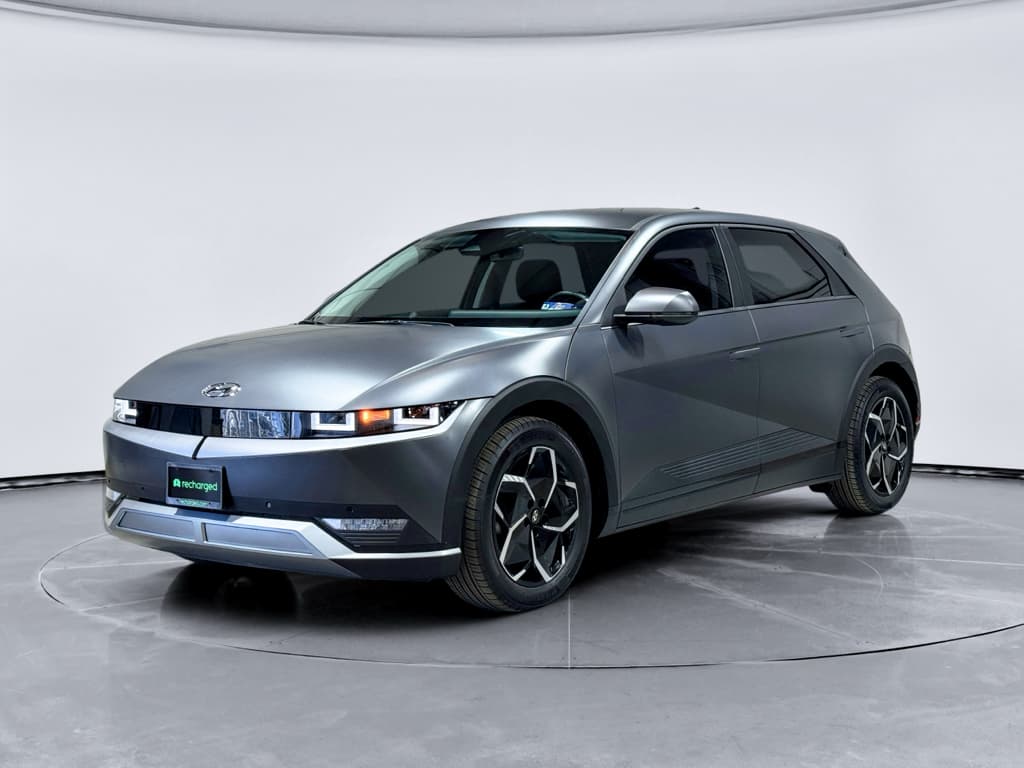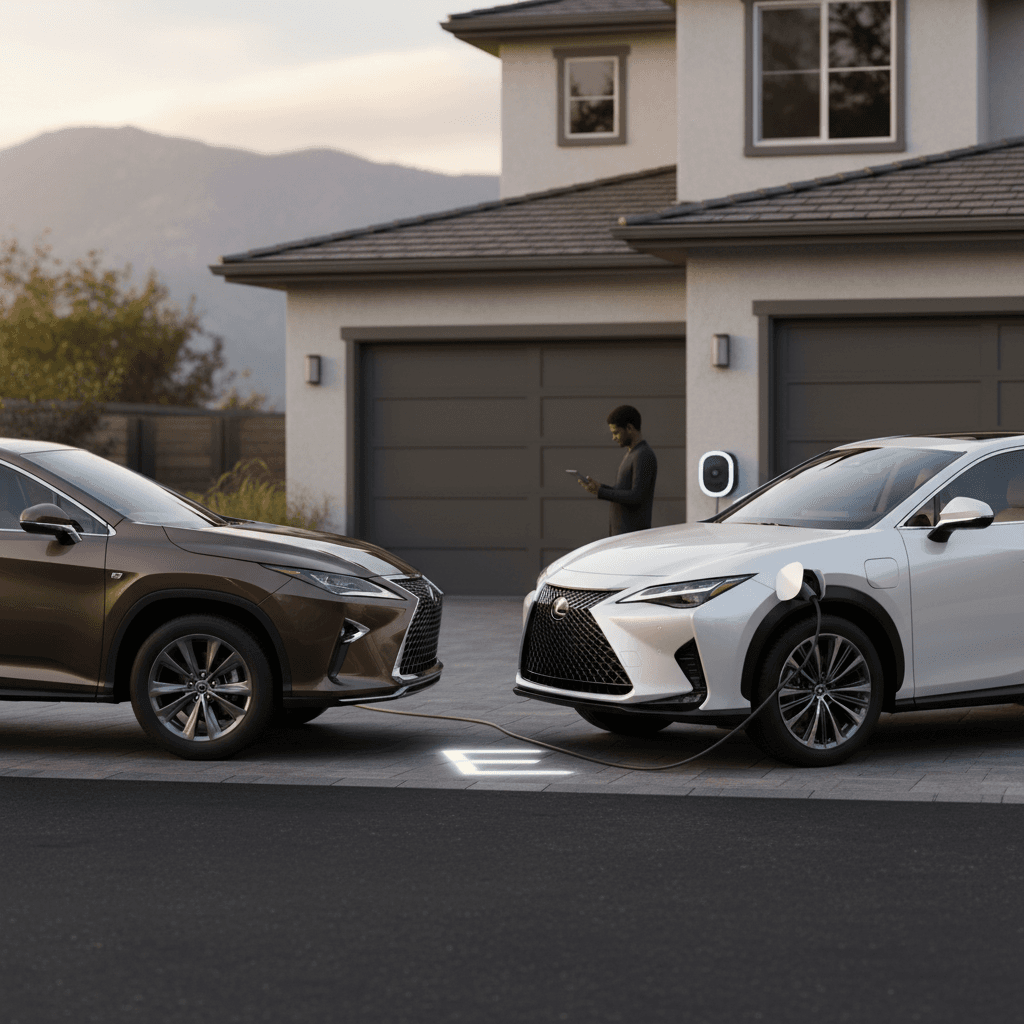
If you’ve spent years in a Lexus RX, you know exactly what you like: quiet, cushy, utterly predictable comfort. Now Lexus is nudging you toward its all‑electric SUV, the Lexus RZ 450e. This review looks at that switch specifically from an RX owner’s point of view, how the RZ feels, how far it really goes, what charging is like, and whether it makes sense to buy one new or used.
Who this review is for
Why RX Owners Are Looking at the RZ 450e
Three big reasons RX owners start eyeing the RZ 450e
It’s not just about “going electric”, it’s about what you’re used to from Lexus.
Future‑proofing your driveway
Curiosity about EV smoothness
Incentives & used‑EV value
On paper, the RZ 450e looks like the natural evolution of the RX: similar footprint, high‑spec interior, lots of safety tech. Underneath, though, it’s a dedicated EV on Toyota’s e‑TNGA platform with a 71.4 kWh battery, dual motors, and up to roughly 220–270 miles of official range depending on wheels and trim. Real‑world range, as you’ll see, is the big dividing line between happy and frustrated RZ owners.
What Really Changes When You Go From RX to RZ 450e
What will feel familiar coming from an RX
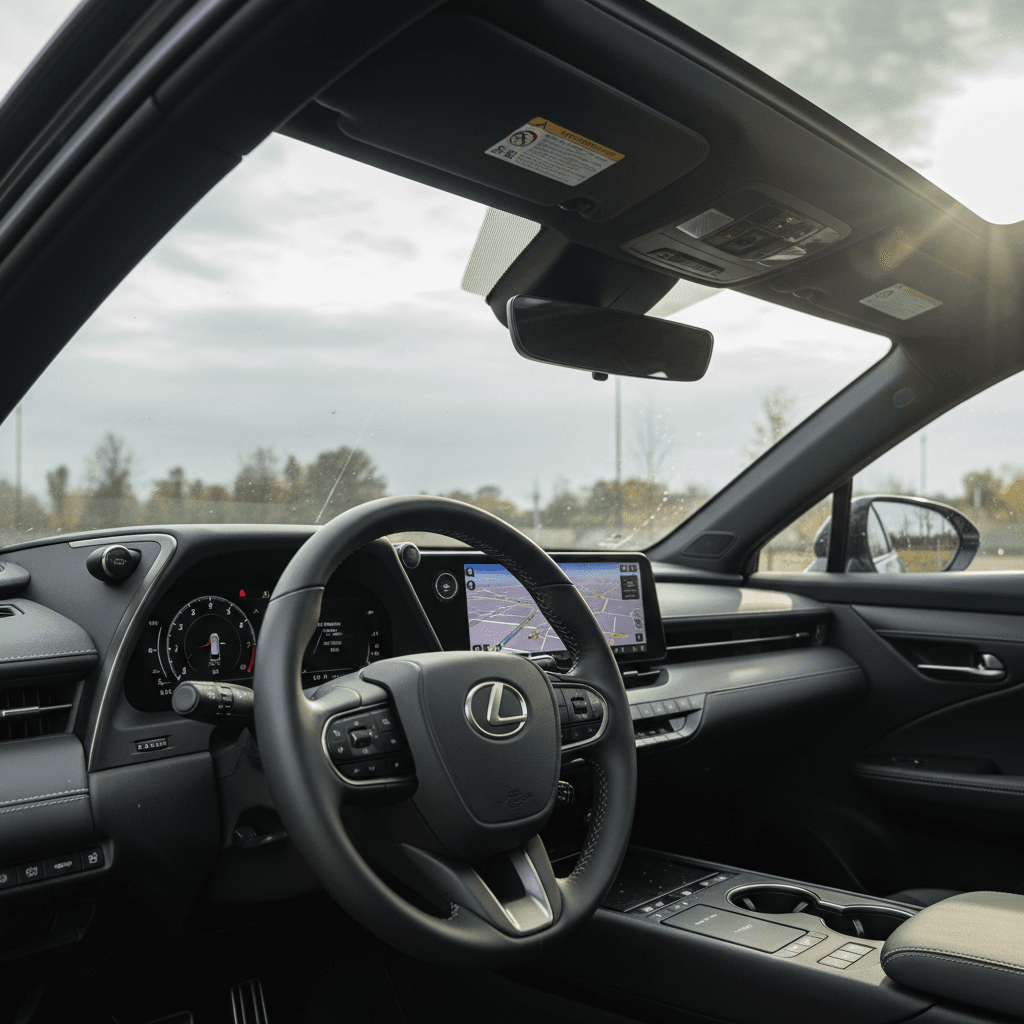
- Cabin quality: Soft‑touch materials, tight panel gaps, and that Lexus “no rattles allowed” obsession are all here.
- Ergonomics: Traditional steering wheel on most U.S. models, good sightlines, and intuitive controls. If you’ve used Lexus’ newer touchscreens, you’ll adapt quickly.
- Quietness: At city and suburban speeds, road and wind noise are extremely well controlled, this still feels like a Lexus first, EV second.
- Dealer support: You’re dealing with the same brand, same service culture, and often the same store that’s maintained your RX.
What’s genuinely different with the RZ 450e
- No engine, no gears: Power is instant and seamless; there’s no downshift or engine flare, just a steady push.
- Charging instead of fueling: You’ll trade five‑minute gas stops for overnight home charging and occasional 25–35 minute DC fast‑charge sessions on trips.
- Range mindset: In an RX, you ignore the fuel gauge until it’s low. In the RZ, you plan a little more, especially in winter or at highway speeds.
- Platform tuning: The RZ rides on a dedicated EV chassis, so weight is low and centered. It feels planted in corners in a way the RX never quite did.
Ride, Noise, and Comfort: Does the RZ Still Feel Like an RX?
Lexus knows its core audience, and it tuned the RZ 450e accordingly. If your happy place is an RX 350 or RX 450h gliding down a beat‑up suburban boulevard, you’ll feel right at home in the RZ, most of the time.
Comfort snapshots that matter to an RX owner
Spec the wheels like a comfort lover
What might surprise you is how *solid* the RZ feels over broken pavement. The heavy battery pack under the floor lowers the center of gravity and keeps the body from bobbing and pitching the way a tall, softly sprung gas SUV can. You still get that Lexus softness, but with less float.
Performance: Quiet Punch vs RX’s V6 or Hybrid
If your RX is a 350, you know the smooth V6 surge. If it’s a 450h, you know the gentle hybrid shove plus the drone when you really lean on it. The RZ 450e trades all of that for instant, silent torque. With about 308 hp from its dual‑motor all‑wheel‑drive system, it’s roughly in the same straight‑line ballpark as a V6 RX, but the sensation is different: like an elastic band rather than a multi‑gear transmission.
- In stop‑and‑go traffic, the RZ 450e is smoother than any RX, no gear hunting, no engine start/stop, just glide.
- On ramps and short merges feel easier; you get full torque the moment you ask for it.
- Steering is light but accurate, tuned for ease rather than sport. It’s closer to an RX than a German EV SUV.
- Progressive regenerative braking means you still use the brake pedal; it’s not a full one‑pedal car like some rivals. That makes the transition easier for RX drivers.
What about the steer‑by‑wire yoke?
Range Reality: How Far the RZ 450e Really Goes
This is the part every RX owner worries about, especially if you’re used to 400+ miles from a tank and a three‑minute fill‑up. The RZ 450e uses a roughly 71.4 kWh battery (about 64 kWh usable) and, depending on wheels and model year, carries EPA ratings in the low‑ to mid‑200‑mile range. Real‑world numbers depend heavily on how and where you drive.
Typical real‑world range for RZ 450e owners
Approximate ranges many owners report once the honeymoon period wears off. Your results will depend on speed, climate, and how often you fully charge.
| Scenario | Conditions | Approx. Usable Range | How it feels vs RX |
|---|---|---|---|
| Suburban commuting | 50–60 mph mix, mild temps, 18" wheels | 200–230 miles | Plenty for errands and commuting; you’ll rarely think about range with home charging. |
| Highway cruising | 70–75 mph, mild temps, 20" wheels | 160–190 miles | You’ll plan a fast‑charge every 2–3 hours on long trips. |
| Winter highway | Freezing temps, heater on, 70–75 mph | 130–160 miles | You’ll notice the hit; think of it as half to two‑thirds of the RX’s highway stamina. |
| City driving | Low speeds, mild temps | 220–250 miles | Stop‑and‑go actually helps; the RZ shines in urban use. |
Compared with an RX, you’ll think in terms of “day’s driving” rather than “multi‑day tank.”
The cold‑weather reality check
Charging: Learning a New Habit After Years of Gas Stops
Where an RX owner fills once a week and forgets about it, an RZ 450e owner usually charges a little bit every day. The car supports Level 1 (120V) and Level 2 (240V) AC charging, plus DC fast charging up to about 150 kW on CCS, the standard many non‑Tesla EVs use.
How the RZ 450e actually charges
Translate the specs into what life looks like day to day.
120V wall outlet (Level 1)
240V home charger (Level 2)
DC fast charging (public)
Home charging is the make‑or‑break
The RZ 450e’s earlier model years came with a 6.6 kW onboard AC charger; newer variants are moving toward 11 kW. When you’re shopping used, that spec matters less than simply having a 240V circuit available, either way, it’s an overnight affair. Fast charging at public stations will feel slower than some newer rivals, but if you only road‑trip a few times a year, it’s more of a patience test than a deal‑breaker.
Ownership Costs and Value Compared With an RX
Moving from RX to RZ 450e changes *where* your money goes more than *how much* you spend. You’ll trade fuel and some maintenance for electricity and, potentially, a higher insurance bill. Depreciation also looks different, especially if you’re shopping used.
Where the RZ 450e can save you money
- Energy costs: On typical U.S. electricity rates, many owners pay the equivalent of $1–$1.50 per gallon compared with gas.
- Maintenance: No oil changes, no exhaust, fewer moving parts. Brake pads tend to last longer thanks to regen.
- Incentives: Depending on model year and your tax situation, you may qualify for federal or state EV incentives, especially on certain used purchases.
Where RX ownership still has the edge
- Depreciation: Early RZ 450e models have dropped faster than mainstream RX SUVs, partly due to range criticisms and rapid EV tech improvements.
- Fueling flexibility: For frequent long‑distance drivers, the RX’s quick gas stops still win on cross‑country practicality.
- Resale familiarity: Everyone knows what an RX is and what to pay for it. The RZ is newer and more niche, so pricing can be choppier.
Where Recharged fits in
Ready to find your next EV?
Browse VehiclesBuying a Used RZ 450e After an RX: What to Watch
If your RX is paid off or nearly there, the smartest move may be to let someone else eat the RZ’s early‑EV depreciation and buy a well‑vetted used one. But just like you’d scrutinize an RX’s service history, you need to understand how an RZ’s previous owner treated the battery and charging system.
Used RZ 450e buyer tips for RX owners
1. Start with battery health, not leather quality
In an RX, a perfect interior is half the battle. In an RZ 450e, the battery pack is the star of the show. Look for a third‑party diagnostic, like the <strong>Recharged Score</strong>, that measures usable capacity and fast‑charge history, not just dashboard range estimates.
2. Check wheel size and trim for your range needs
If you’re nervous about range, favor RZs on smaller wheels. Bigger 20‑inch setups look sharp but nibble into real‑world miles and ride comfort.
3. Ask how the last owner charged
Frequent DC fast charging isn’t automatically bad, but a car that lived on max‑power fast chargers its whole life deserves a harder look. A good report will highlight that history.
4. Verify software updates and recalls
EVs live and die by their software. Make sure any RZ you’re considering has had the latest updates and any battery or charging‑system campaigns addressed.
5. Think about your driveway, not just the deal
Before you sign anything, confirm you can install a 240V outlet or charger where you park. Your RX never cared about that; your RZ will.
6. Compare total cost to a used RX
Don’t just compare monthly payments. Imagine your fuel and maintenance over three to five years in a late‑model RX versus an RZ 450e with home charging. That’s where the real story lives.
Quick Checklist: Are You Ready to Swap RX for RZ?
- You have (or can easily add) a 240V outlet or Level 2 charger where you park.
- Most of your driving is local, commuting, errands, school runs, rather than weekly 400‑mile trips.
- You value quiet comfort and effortless torque more than maximum highway range.
- You’re comfortable planning charging stops into a few long trips each year.
- You’re open to buying a used RZ 450e with verified battery health instead of insisting on brand‑new.
- You understand that early EVs like the RZ may depreciate faster than an RX, but can make up ground with lower running costs.
When you should probably stay in an RX
RX Owner to RZ 450e: Frequently Asked Questions
Frequently Asked Questions for RX Owners
Bottom Line: Who Should, and Shouldn’t, Switch to the RZ 450e
If you love your RX because it’s quiet, cushy, and drama‑free, the Lexus RZ 450e will feel like the same philosophy translated into EV form. Around town and on shorter commutes, it’s actually a nicer way to live: instant torque, no gas stops, and a warm garage start every morning with a full “tank.” Where the RX still wins is in long‑range, any‑time, any‑weather road‑trip convenience.
For RX owners who mostly drive locally, can install home charging, and are willing to adjust to 150–200‑mile highway legs, the RZ 450e, especially as a carefully vetted used example, is a smart next chapter. For those who live on the interstate or can’t easily charge at home, a late‑model RX, perhaps paired with a plug‑in hybrid down the line, may be the better bet for now. Either way, going through a specialist like Recharged gives you transparency on battery health, fair pricing, and expert guidance so you can move from RX to RZ with your eyes wide open.