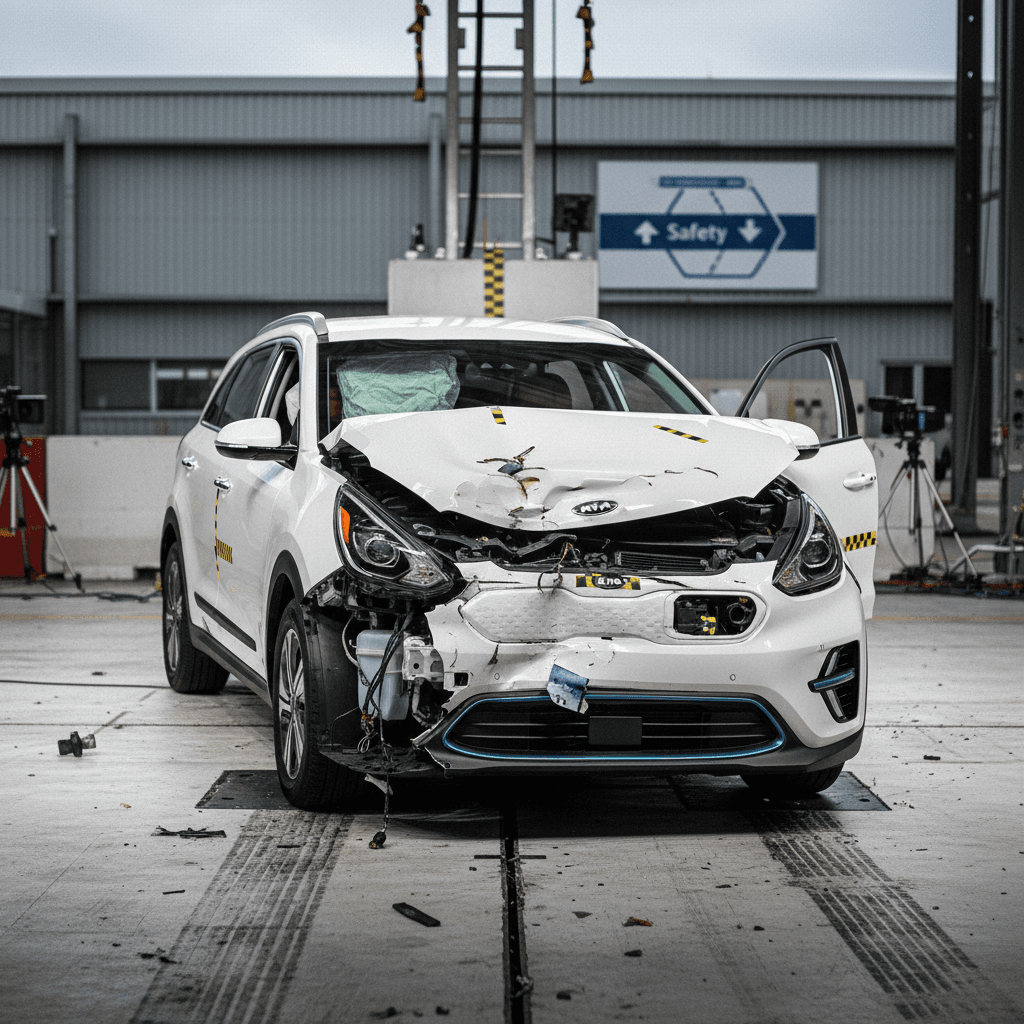
If you’re eyeing a Kia Niro EV, you’re probably juggling range, price, and tech, but for most families, the real deal‑breaker is safety. How does the Kia Niro EV safety rating stack up in crash tests, and what does that actually mean when something goes wrong on a Tuesday afternoon commute?
Quick Take
Overview: The Kia Niro EV’s Safety Story
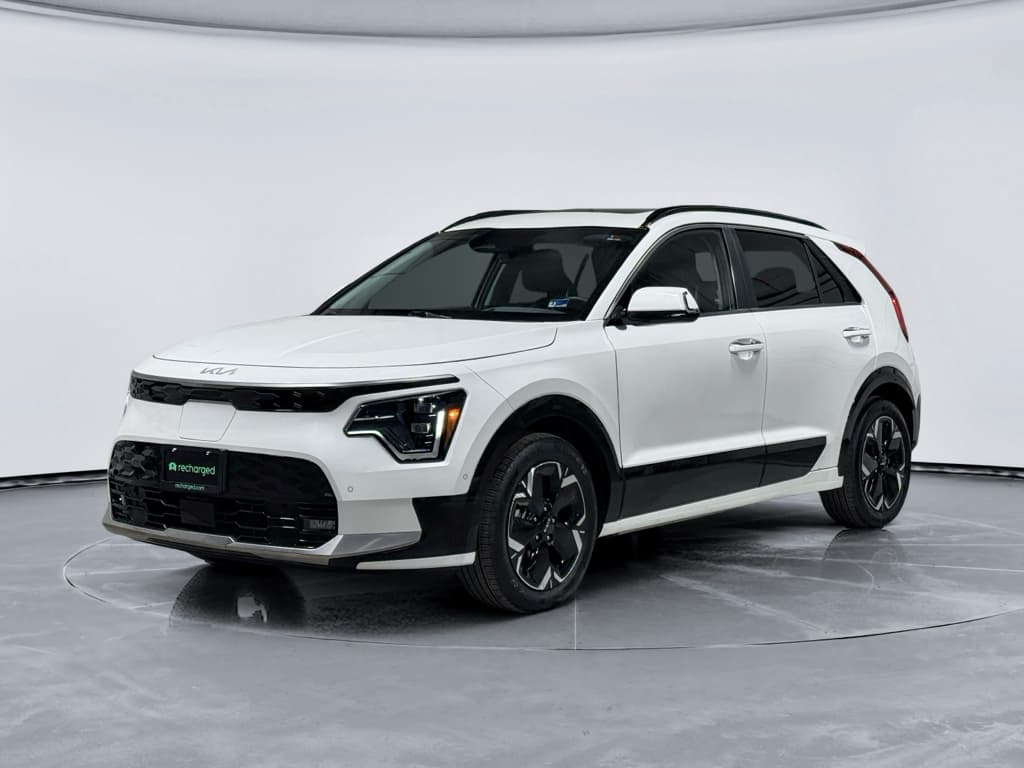
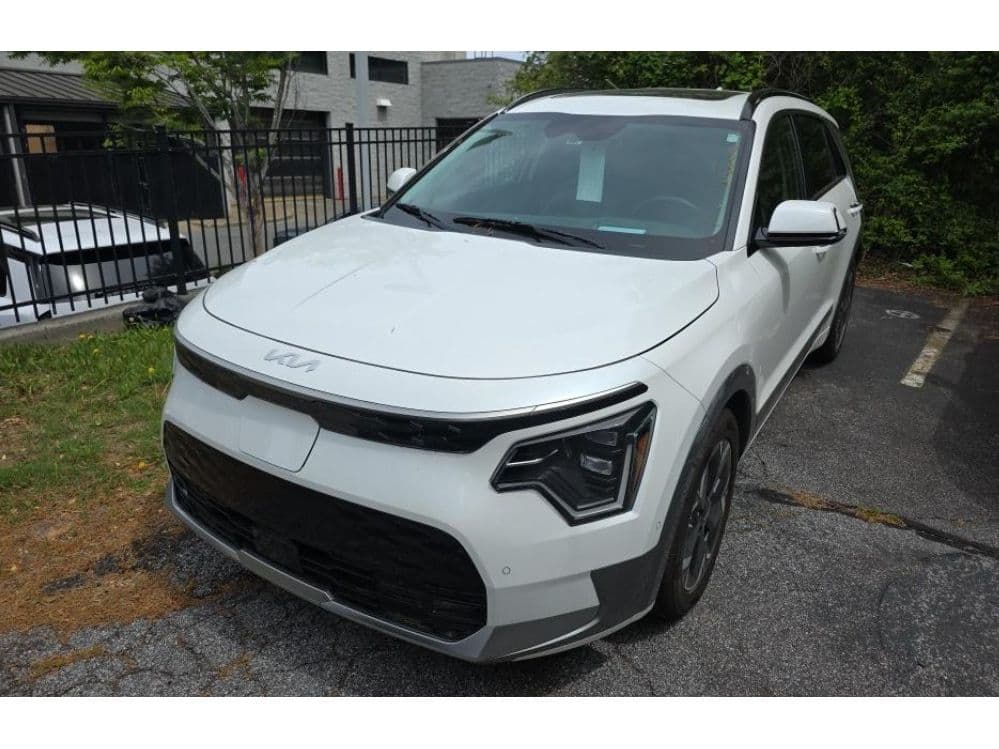
The Niro EV is Kia’s compact electric crossover, essentially the sensible shoes of the EV world. It shares its basic body structure with the hybrid and plug‑in hybrid Niro, models that have been evaluated by both NHTSA and IIHS in recent years. While not every single Niro EV configuration has a separate, public crash‑test score stamped on it, you’re not flying blind the way you might be with a low‑volume niche EV.
- Compact, front‑wheel‑drive electric crossover, roughly the size of a Subaru Crosstrek or Hyundai Kona
- Built on the same crash structure as the Niro hybrid/PHEV, which are on NHTSA’s test list for recent model years
- Standard with a thick layer of advanced driver‑assistance systems (ADAS), especially on 2023+ redesign models
- Backed by Kia’s excellent 10‑year/100,000‑mile powertrain warranty, which indirectly supports long‑term ownership safety and reliability
If You’re Shopping Used
Crash Test Programs 101: IIHS vs. NHTSA
Before you zoom in on the Niro EV specifically, it helps to decode the alphabet soup. Two big players define the safety conversation in the U.S.: NHTSA and IIHS. They test differently, score differently, and sometimes disagree in ways that confuse shoppers.
Two Main Safety Scorekeepers
Understanding who’s grading the Niro EV
NHTSA (Government 5‑Star Ratings)
What it is: The National Highway Traffic Safety Administration runs the federal 5‑Star Safety Ratings program.
- Frontal crash, side crash, rollover tests
- Single overall star rating from 1 to 5
- Helps you compare vehicles across segments
Best for: A quick, big‑picture look at crash protection.
IIHS (Independent Crash Lab)
What it is: The Insurance Institute for Highway Safety, a nonprofit funded by insurers.
- More specialized tests: small‑overlap front, updated side impact, pedestrian avoidance
- Ratings of Good, Acceptable, Marginal, Poor
- Top Safety Pick / Top Safety Pick+ awards for best performers
Best for: Deep dive on structure, headlights, and driver‑assist performance.
One Important Caveat
What We Know About Kia Niro EV Crash Tests Today
Here’s where we separate marketing from metal. As of early 2026, the Kia Niro family (hybrid and plug‑in hybrid) has been on NHTSA’s list for crash‑test evaluation and appears in IIHS databases by body style and model year. The all‑electric Niro EV rides on the same structure and uses the same basic crash shell.
Kia Niro Family: What The Crash Tests Cover
How to read ratings that apply to the Niro EV by association
| Program | What’s Tested | What It Tells You | Relevance to Niro EV |
|---|---|---|---|
| NHTSA 5‑Star Ratings | Frontal, side, rollover tests on Niro hybrid/PHEV | Overall star rating plus sub‑scores | Same crash structure, so protection trends apply to the EV |
| IIHS Crashworthiness | Small and moderate overlap front, side, roof strength, head restraints | How the cabin holds up and how well belts/airbags work | Same cabin and hard points; EV has added battery reinforcement |
| IIHS Crash Avoidance | Front crash prevention, headlights, LATCH usability | How well the car avoids or mitigates crashes | Most ADAS hardware and software is shared across Niro powertrains |
Exact letter grades vary by model year and trim, but this table shows the broad pattern for the current generation (2023+).
Why You Don’t See "Kia Niro EV" Everywhere in The Databases
What the Numbers Don’t Tell You
Active Safety & ADAS: What Helps You Avoid the Crash
The best crash is the one you never have. On that score, the Niro EV quietly punches above its weight. Kia loads even base trims with the kind of driver‑assistance tech that a decade ago would’ve been reserved for German flagships.
- Forward Collision‑Avoidance Assist with pedestrian and cyclist detection, tuned to spot vulnerable road users ahead and apply the brakes if you don’t
- Lane Keeping Assist and Lane Following Assist to keep the car centered and reduce “drift” accidents on boring commutes
- Driver Attention Warning that watches for signs you’re zoning out and suggests a break
- Blind‑Spot Collision‑Avoidance Assist with parallel‑exit functionality on higher trims, capable of braking you away from a car hiding in your blind spot
- Rear Cross‑Traffic Collision‑Avoidance Assist that can automatically brake when backing out of crowded parking lots
- Safe Exit Warning that yells when a cyclist or car is approaching as you open a door
- Adaptive cruise with lane‑centering and available Highway Driving Assist on newer models, which blends steering and speed control for calmer highway driving
Luxury‑Grade Tech in a Mainstream EV
Everyday Scenarios These Systems Tackle
- Stop‑and‑go traffic: Adaptive cruise and forward collision avoidance tame the accordion effect.
- Late‑night lane drifting: Lane keeping and following gently nudge you back where you belong.
- School pickup chaos: Rear cross‑traffic alerts when kids and SUVs are darting behind you.
Why It Matters for Used Buyers
In the used market, many older EVs lack this depth of standard ADAS. A 2023+ Niro EV with intact sensors and up‑to‑date software gives you a meaningful safety edge, especially if you share the car with a new driver.
Don’t Let Tech Numb You Out
Structural Design & Passive Safety: If the Worst Happens
Under the tidy sheetmetal, the Niro EV is doing some unglamorous but vital work. Like most modern Kias, it uses a mix of high‑strength and ultra‑high‑strength steel to manage crash energy, keeping the cabin intact while less important parts of the car crumple in a controlled way.
- Rigid safety cage around the passenger compartment with engineered crumple zones front and rear
- Strategic load paths that route impact forces under and around the cabin instead of through your knees and chest
- A floor‑mounted battery pack that actually lowers the center of gravity, helping stability and rollover resistance
- Multiple airbags (front, side, curtain) plus front‑center airbag on newer models to reduce head‑to‑head contact in side impacts
What About Battery Fires?
Pedestrian & Cyclist Protection
Kia has been leaning hard into vulnerable road‑user protection, and the Niro EV is part of that push. Recent model years focus not just on keeping you safe, but on being less lethal to the people outside the car.
How the Niro EV Tries Not to Be the Bad Guy
Key features aimed at people on the outside of the vehicle
Enhanced Pedestrian & Cyclist Detection
Newer Niro EVs extend the detection range for people and bikes and improve low‑light performance, giving the car more time to warn and brake before impact.
Junction Turning Assistance
The car watches crosswalks and bike lanes when you turn across traffic, a common site of serious crashes, and can brake if you misjudge a gap.
Virtual Engine Sound System
Because EVs are whisper‑quiet at low speed, the Niro EV generates exterior sound so pedestrians can actually hear you coming in parking lots and neighborhoods.
Why City Drivers Should Care
Real‑World Safety: How the Niro EV Feels on the Road
Crash labs tell one part of the story; the driver’s seat tells another. On the road, the Niro EV feels more like a well‑sorted appliance than a thrill ride, and that’s a compliment in the safety column.
- Predictable handling: Front‑wheel drive and a low, battery‑weighted chassis produce stable, understeer‑biased behavior that’s easy to control for average drivers.
- Moderate acceleration: With around 201 hp driving the front wheels, the Niro EV is quick enough for merging but not so brutal that it overwhelms the front tires in the wet.
- Firm but compliant ride: It won’t float like a luxury barge, but the suspension tuning helps keep the tires in consistent contact with the pavement, a quiet contributor to accident avoidance.
- Good outward visibility: Big glass and relatively thin pillars (for a modern crossover) help you see pedestrians and bikes that the cameras might miss.
If the Kia Niro EV has a personality, it’s the conscientious friend who always volunteers to be the designated driver, calm, predictable, and a little nerdy about rules.
Shopping a Used Kia Niro EV? Safety Checklist
In the used market, two Niro EVs can look identical on the lot but be worlds apart in safety because of software, damage history, or missing options. Here’s how to tilt the odds in your favor.
Used Kia Niro EV Safety Inspection
1. Verify Model Year & Generation
Aim for the 2023+ redesign if your budget allows; it benefits from the latest structural updates and ADAS tuning. Earlier Niro EVs can still be safe buys but may have a thinner feature set.
2. Confirm ADAS Features Are Present and Working
On a test drive, deliberately trigger lane‑keeping, adaptive cruise, and blind‑spot warnings in a controlled environment. If anything seems dormant or throws errors, budget for diagnosis, or walk away.
3. Pull a Full Vehicle History Report
Look for major accident damage, airbag deployments, or structural repairs. No crash test can compensate for a poorly repaired real‑world smash.
4. Inspect Cameras, Radars, and Windshield
Check that radar panels aren’t cracked and the windshield around the forward camera hasn’t been replaced with a bargain aftermarket piece that might interfere with calibration.
5. Ask for Service Records and Software Updates
Modern safety systems are code as much as hardware. Records that show recent dealer visits and updates are a quiet green flag.
6. Get a Third‑Party EV Inspection
A platform like <strong>Recharged</strong> goes deeper than a standard pre‑purchase check, measuring battery health and scanning safety systems so you don’t buy someone else’s problem child.
How Recharged Helps Here
Ready to find your next EV?
Browse VehiclesKia Niro EV Safety vs. Rival EVs
If you’re cross‑shopping, you’re probably looking at cars like the Hyundai Kona Electric, Chevy Bolt EUV (new or used), or a base Tesla Model 3. Where does the Niro EV land in that crowd?
Kia Niro EV vs. Common EV Alternatives (Safety Lens)
How the Niro EV’s safety story compares in broad strokes.
| Model | Crash Test Pedigree | ADAS Depth (Typical) | Notable Safety Strength |
|---|---|---|---|
| Kia Niro EV | Shares structure with Niro hybrid/PHEV tested by NHTSA/IIHS | Robust ADAS standard on 2023+; strong on pedestrian features | Balanced, family‑friendly safety with excellent value |
| Hyundai Kona Electric | Good IIHS history in small SUV class | Solid ADAS, though older models can be spartan | Compact size, agile around town |
| Chevy Bolt EUV | Fair crash‑test record; some older Bolts lack newer tests | ADAS availability varies widely by trim/year | Good value but narrower ADAS safety net on base models |
| Tesla Model 3 | Well‑publicized strong crash performance, but ratings have fluctuated with design changes | Powerful collision‑avoidance, though behavior can be inconsistent in the real world | Very rigid structure, low center of gravity |
Always check the exact model year and trim you’re considering, ratings and equipment can change quickly.
Think in Layers, Not Labels
FAQ: Kia Niro EV Safety and Crash Tests
Frequently Asked Questions
Bottom Line: Is the Kia Niro EV Safe Enough for Your Family?
If you think of safety not as a single number but as a layered defense, structure, airbags, electronics, visibility, and how the car behaves when you’re tired, the Kia Niro EV holds up well. It may not have the flashiest trophy from every crash lab, but it quietly stacks the right layers in the right order for the way most people actually drive.
For urban and suburban households who want an efficient, compact EV that won’t terrify the in‑laws or the insurance actuaries, the Niro EV is an easy car to recommend. And if you’re looking at the used market, buying through a platform like Recharged, with verified battery health, transparent history, and EV‑savvy support, turns a good safety story into a genuinely confident one.