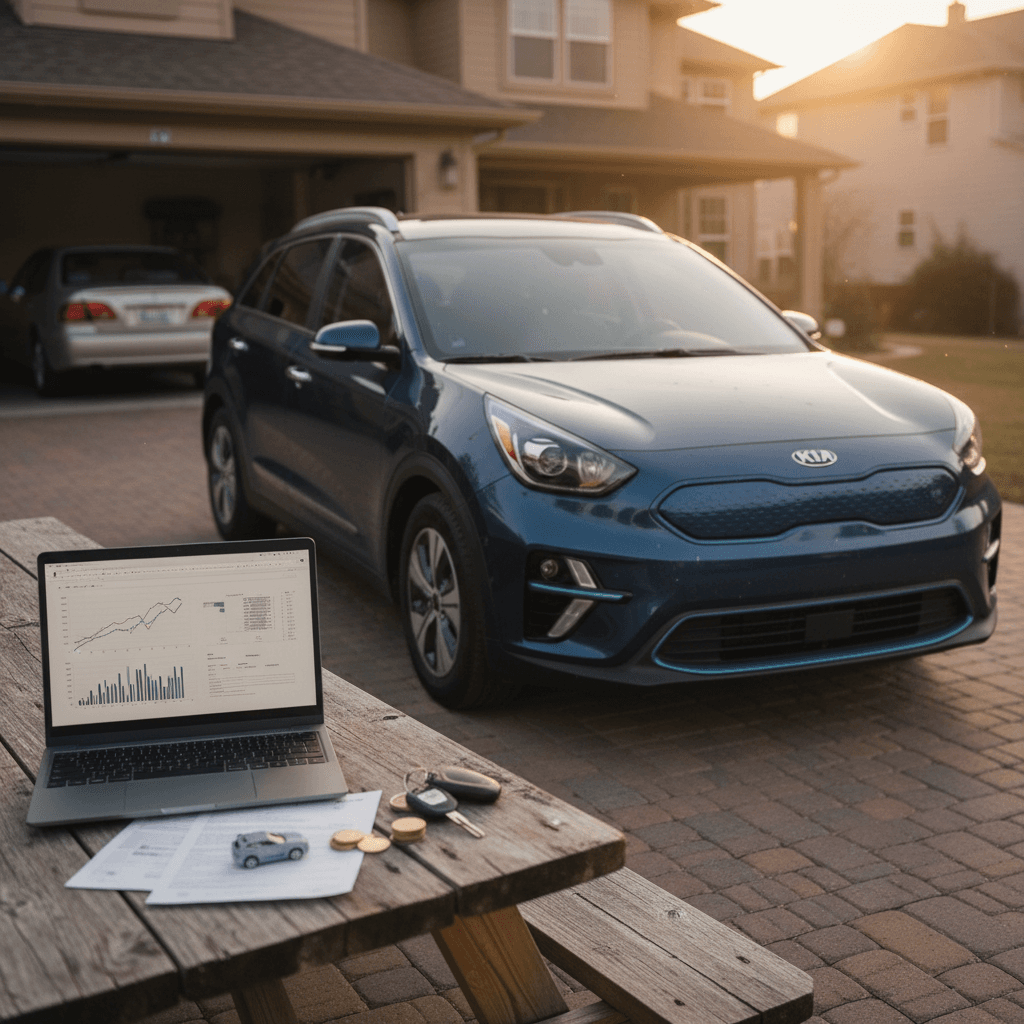
If you’re shopping for a used Kia Niro EV or thinking about selling yours, you’ve probably typed “Kia Niro EV KBB value” into a search bar. Kelley Blue Book is a useful starting point, but with EVs, especially the Niro, you need to look beyond a single number on a website to know what’s actually fair in today’s market.
Quick takeaway
Why Kia Niro EV KBB value matters now
The Kia Niro EV has quietly become one of the more practical used EVs on the market. It offers compact-SUV space, solid range, and mainstream pricing, without the premium-brand badge. That makes its trade-in and resale value especially important for budget-conscious buyers and owners trying to time a sale or upgrade.
Used EV pricing is more volatile than gas cars
That’s why understanding both KBB’s Kia Niro EV value and the real-world forces behind it is key whether you’re trying to negotiate at a dealership, sell privately, or compare offers from online buyers.
How KBB calculates Kia Niro EV values
Kelley Blue Book pulls in transaction data, listing prices, auction results, depreciation curves, and regional trends to estimate what a specific vehicle is worth under different scenarios, trade-in, private party, and dealer retail. When you look up a Kia Niro EV KBB value, you’re seeing an average built from thousands of data points, not a single sale.
What KBB looks at for a Kia Niro EV
- Model year (2019–present for the EV)
- Trim (EX, EX Premium, Wave, Wind, etc.)
- Mileage and usage pattern
- Condition (from rough to excellent)
- Accident history and title status
- Regional supply and demand
What KBB largely can’t see
- Actual battery state of health (SOH)
- Detailed fast-charging history
- Climate exposure that affects range
- Recent software or warranty work
- Dealer-specific incentives on EVs
Those blind spots are exactly where EV‑specific tools and marketplaces can add value.
Don’t treat KBB as a guarantee
Kia Niro EV model years, trims, and their impact on value
Not every Niro EV is created equal. When you’re comparing KBB values or real asking prices, you want to be sure you’re matching the right generation and trim.
Kia Niro EV generations & what buyers care about
Use this as a sanity check when comparing KBB values or online listings.
| Generation / years | Typical trims | EPA range (approx.) | Key value drivers |
|---|---|---|---|
| 1st-gen Niro EV (2019–2022) | EX, EX Premium | 239 mi | Lower price point, older styling, CHAdeMO/CCS public charging familiarity in some regions |
| 2nd-gen Niro EV (2023–present) | Wind, Wave, others | ~253 mi | Updated styling, newer tech and safety features, slightly better efficiency |
| Plug-in hybrid Niro (not EV) | Various | 26–34 mi EV + gas | Different animal entirely, don’t mix PHEV values with full EV pricing. |
Exact equipment varies by year and market, so confirm features on any individual vehicle.
Trim names matter in KBB
KBB vs. real used-market prices for the Kia Niro EV
Here’s the reality in early 2026: KBB’s Kia Niro EV values are often in the ballpark, but the market is jittery. Incentives come and go, gasoline prices move, and EV supply in a given metro area can swing from tight to bloated in a few months. That leads to gaps between KBB estimates and what cars actually transact for.
Where Kia Niro EV KBB value and market value diverge
Use this as a checklist when you’re comparing an offer to the guide number.
Local EV appetite
In EV‑friendly metros with strong charging networks and HOV perks, clean Niro EVs can sell above KBB private-party value.
Manufacturer & tax incentives
When new EVs get aggressive discounts or tax credits, used prices usually soften before KBB fully catches up.
Battery condition & range
A Niro EV with strong real‑world range is worth more than a similar car that’s lost a noticeable chunk of capacity, even if KBB treats them as identical.
If you see a dealer offer or online quote that’s well below KBB, don’t panic, but do ask two questions: “What are comparable Niro EVs actually selling for near me?” and “Is the buyer factoring in battery risk that KBB doesn’t?”
Battery health: The missing piece in Kia Niro EV KBB value
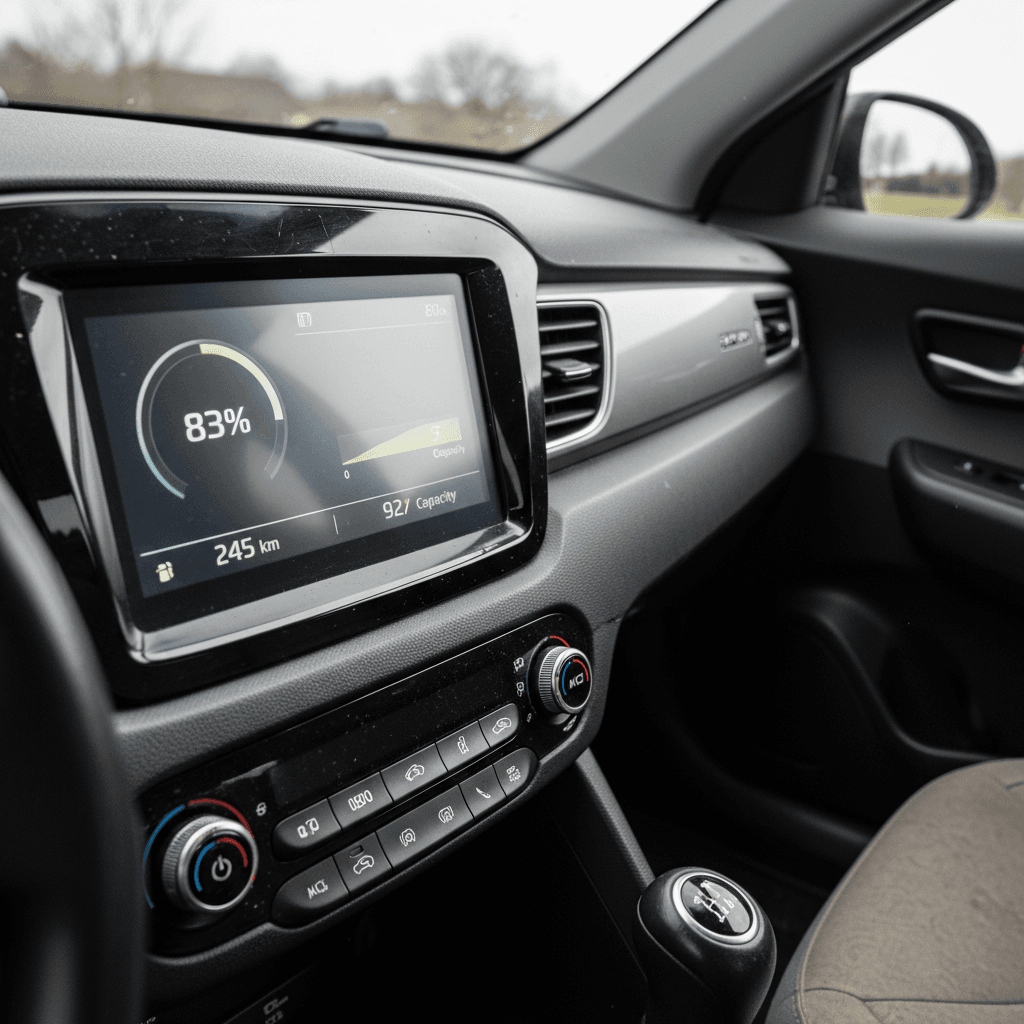
For a gasoline Niro, KBB’s formula works reasonably well. For a Kia Niro EV, the battery pack is the heart of the vehicle and the most expensive component to repair or replace. Yet KBB has no direct way to know if a given car’s battery is at 96% of original capacity or 77%.
- A high‑health pack means more real‑world range and better winter performance.
- A degraded pack can turn a 239‑mile Niro EV into a 180‑mile car in everyday driving.
- Shoppers who commute or road-trip regularly will pay a premium for vehicles that still deliver close to their original range.
How Recharged bridges this gap
How to check your Kia Niro EV KBB value (step-by-step)
You don’t need to be a data analyst to make sense of your Kia Niro EV’s KBB value. Follow this simple process, whether you’re buying or selling.
Step-by-step: Getting a realistic Kia Niro EV value
1. Gather your vehicle details
Write down the model year, exact trim, mileage, options (like sunroof, upgraded audio, heat pump), and your ZIP code. Have the VIN handy if possible.
2. Look up your KBB trade-in and private-party values
On Kelley Blue Book’s site, enter the details, select the right trim, and review <strong>both</strong> trade-in and private-party values to understand the spread.
3. Rate your vehicle condition honestly
KBB’s definition of “excellent” is stricter than most owners’ instincts. Err on the conservative side; most cars fall into the “good” bucket, not “excellent.”
4. Compare to live listings near you
Search used Kia Niro EV listings on major marketplaces in your region. Filter by similar year, trim, and mileage to see how asking prices stack up against KBB.
5. Factor in battery health and warranty
Check remaining battery warranty coverage and, if possible, get a battery health report. A strong pack and active warranty justify holding closer to the top end of KBB range.
6. Get at least one real offer
Use an offer tool, a local dealer appraisal, or a marketplace like Recharged for an actual bid. That’s the fastest way to see how theory compares to reality.
Use KBB as a range, not a single number
Six ways to improve your Kia Niro EV trade-in or sale price
If your Kia Niro EV’s KBB value looks lower than you hoped, you still have levers you can pull before you trade it in or list it for sale.
Practical ways to beat the basic KBB number
Small moves can add up to a stronger offer.
Detail inside and out
A thorough wash, interior cleaning, and odor removal can bump your condition rating and shrink the gap between trade-in and private-party value.
Organize service records
Proof of regular maintenance reassures buyers and appraisers, especially with EV‑specific services like brake fluid and battery coolant checks.
Fix cheap cosmetic issues
Minor wheel rash, small dents, and worn wipers are inexpensive fixes that make a vehicle feel well‑kept and justify stronger offers.
Show smart charging habits
If you can document mostly home charging and limited frequent 100% fast charging, that’s a selling point for long‑term battery health.
Know your battery warranty
Kia’s battery warranty terms are a comfort blanket for used buyers. Spell out remaining coverage in your ad or during negotiations.
Shop multiple offers
Don’t stop at the first trade‑in number. Compare dealer quotes, instant online offers, and marketplaces like Recharged to find the top of the market.
When KBB value breaks down: Real-world edge cases
There are scenarios where your Kia Niro EV KBB value may be more misleading than helpful. In these cases, live market data and EV‑specific diagnostics matter a lot more.
- Vehicles in very cold or very hot climates where range loss is more severe.
- High‑mileage Niro EVs used heavily for commuting or rideshare.
- Low‑mileage “garage queens” with older build dates but limited use.
- Cars that have fast‑charged multiple times per week for years.
- Regions that just rolled out stronger EV incentives or HOV privileges.
Watch out for “too good to be true” pricing
How Recharged uses, and goes beyond, KBB for Kia Niro EVs
At Recharged, KBB is one of several inputs, not the final word. For the Kia Niro EV and other battery‑electric models, we start with guidebook values, then layer in live listing data, auction trends, and verified battery diagnostics through the Recharged Score.
If you’re buying a Niro EV
- See a transparent Recharged Score Report with battery health and charging behavior.
- Compare pricing to fair‑market benchmarks so you know if it’s aligned with or better than KBB.
- Use expert EV‑specialist support to decode range, charging, and warranty questions.
You can shop fully online, with nationwide delivery available from Recharged.
If you’re selling a Niro EV
- Request an instant offer or explore consignment to capture more of your car’s value.
- Leverage objective battery health data to justify pricing above generic KBB.
- Tap into buyers who specifically want vetted used EVs, not just the cheapest listing.
Recharged can also evaluate trade‑ins and coordinate pick‑up, so you’re not stuck negotiating at a single dealership desk.
Kia Niro EV KBB value: FAQ
Frequently asked questions about Kia Niro EV KBB value
The bottom line on Kia Niro EV KBB value
Kelley Blue Book is still one of the best shorthand tools for gauging what a car is worth, but with the Kia Niro EV, KBB is only part of the story. Battery health, local EV demand, incentives, and even climate can tilt real‑world prices above or below the number you see on your screen.
If you’re buying, use your Kia Niro EV KBB value as a benchmark, then insist on clear, EV‑specific information about the battery and charging history before you commit. If you’re selling, present your vehicle as transparently and professionally as possible, and don’t rely on a single offer.
Marketplaces like Recharged are emerging to close the gap between guidebook values and EV reality, by combining fair‑market pricing data with verified battery diagnostics and EV‑specialist support. That combination is what turns a static KBB estimate into a confident, real‑world decision on a Kia Niro EV.