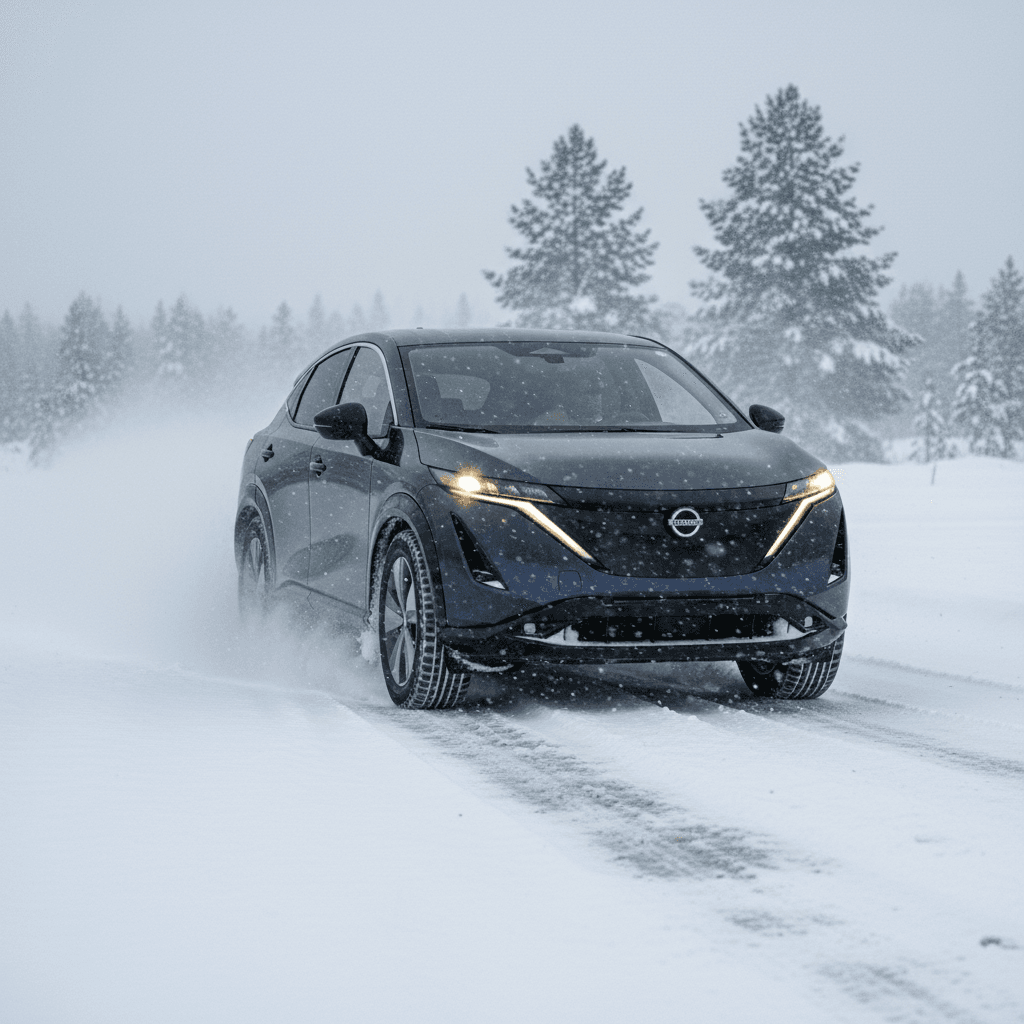
If you live where roads turn white for months at a time, it’s natural to wonder whether the Nissan Ariya is really best for snow and ice or if you’d be better off with something else. The short answer: a properly equipped Ariya, especially with e-4ORCE all‑wheel drive and good winter tires, is a genuinely capable winter EV. But like every electric crossover, it has tradeoffs you should understand before you buy.
Quick take
Is the Nissan Ariya Best for Snow and Ice? Quick Overview
Nissan Ariya Winter Performance at a Glance
When you look at owner reports and independent tests, a pattern emerges. The Ariya’s traction and stability in slick conditions are a strong suit, thanks to its sophisticated e‑4ORCE system and well‑tuned stability control. Where it lags top winter performers is range retention in deep cold; like many EVs, it can lose roughly a third of its rated range on frigid highway drives. If your winter driving is mostly local and you can charge at home, that’s rarely a deal‑breaker. If you road trip through harsh winters, you’ll need to be more deliberate about planning.
How the Nissan Ariya Handles Snow and Ice
Winter confidence comes down to three things: how the power is delivered to the road, how the stability systems intervene, and what’s happening where the rubber meets the snow. On all three counts, the Nissan Ariya is better thought‑out than many early EV crossovers.
Key factors in Ariya winter behavior
What actually makes it feel secure on snow and ice?
Smooth electric torque
Stability & traction systems
Low center of gravity
EVs like the Ariya often feel more secure in winter than similarly sized gas SUVs because the weight is low and evenly distributed, and the traction systems can react incredibly quickly.
Owner feedback from snowy regions
e-4ORCE AWD: Why It Matters in Winter
Nissan’s e‑4ORCE all‑wheel‑drive system is one of the reasons the Ariya earns high marks from winter drivers. Instead of a mechanical driveshaft and differentials, it uses a dedicated electric motor on each axle and software to decide how much torque to send front and rear, sometimes adjusting hundreds of times per second.
What e‑4ORCE does in snow
- Pre‑emptive torque shifts: It can send more power to the axle with better grip before you feel slip, helping you launch cleanly on icy intersections.
- Torque vectoring: By subtly over‑ or under‑driving an axle, it helps the Ariya rotate into a corner without feeling twitchy.
- Braking stability: e‑4ORCE coordinates motor braking with the friction brakes to keep the car composed when you lift off or brake on a slippery surface.
How FWD Ariya compares
- Still competent, but less secure: Front‑drive Ariyas rely more on traction control and good tires. On gentle snow they’re fine, but they can struggle more on steep, slick hills.
- Better efficiency: FWD trims are lighter and more efficient, which slightly helps winter range, but you give up some all‑weather traction margin.
- Best for mild winters: If you rarely see deep snow and mainly face cold rain or occasional dustings, FWD plus excellent tires can be enough.
My recommendation on drivetrains
Winter Range Loss in the Nissan Ariya
Where many shoppers get surprised isn’t how the Ariya drives in winter, it’s how far it goes. Like all EVs, the Ariya’s usable range shrinks in cold temperatures because the battery chemistry is less efficient and cabin heat draws sizeable energy. In Recharged’s own cold‑weather testing and aggregated owner reports, dual‑motor Ariya e‑4ORCE trims can lose around 25–35% of EPA‑rated range on freezing‑temperature highway drives.
Typical cold‑weather range expectations for Ariya
Approximate real‑world ranges in freezing conditions with mixed driving, assuming a healthy battery and appropriate tires.
| Trim example | EPA rated range (mi) | Typical winter mixed (mi) | Deep‑cold highway (mi) |
|---|---|---|---|
| FWD 63 kWh | ~216 | 150–170 | 130–150 |
| FWD 87 kWh | ~289 | 200–230 | 170–200 |
| e-4ORCE 63 kWh | ~205 | 140–160 | 120–140 |
| e-4ORCE 87 kWh | ~267 | 180–210 | 150–190 |
These are ballpark planning numbers, not guarantees. Your driving style, speed, elevation, wind, and temperature swing will all move the needle.
Don’t confuse winter loss with battery damage
- Short trips in sub‑freezing weather hurt efficiency most because the cabin has to warm up from cold every time.
- High speeds on a cold, wet freeway pile on aerodynamic drag and rolling resistance.
- Pre‑conditioning the cabin while plugged in can claw back a surprising amount of usable winter range.
- Using heated seats and steering wheel instead of cranking cabin heat lets you stay comfortable with less energy.
Ground Clearance, Tires, and Driving Modes
Power and electronics only get you so far in winter. To evaluate whether the Nissan Ariya is really “best” for snow and ice in your world, you also need to look at ground clearance, tires, and how its drive modes are tuned.
Hardware that shapes Ariya winter performance
How the Ariya’s physical package compares to typical crossovers for snow and ice use.
| Factor | Ariya detail | Winter impact |
|---|---|---|
| Ground clearance | Around 7+ inches for U.S. crossover trims | Enough for plowed streets and moderate snow ruts; not ideal for deep unplowed roads. |
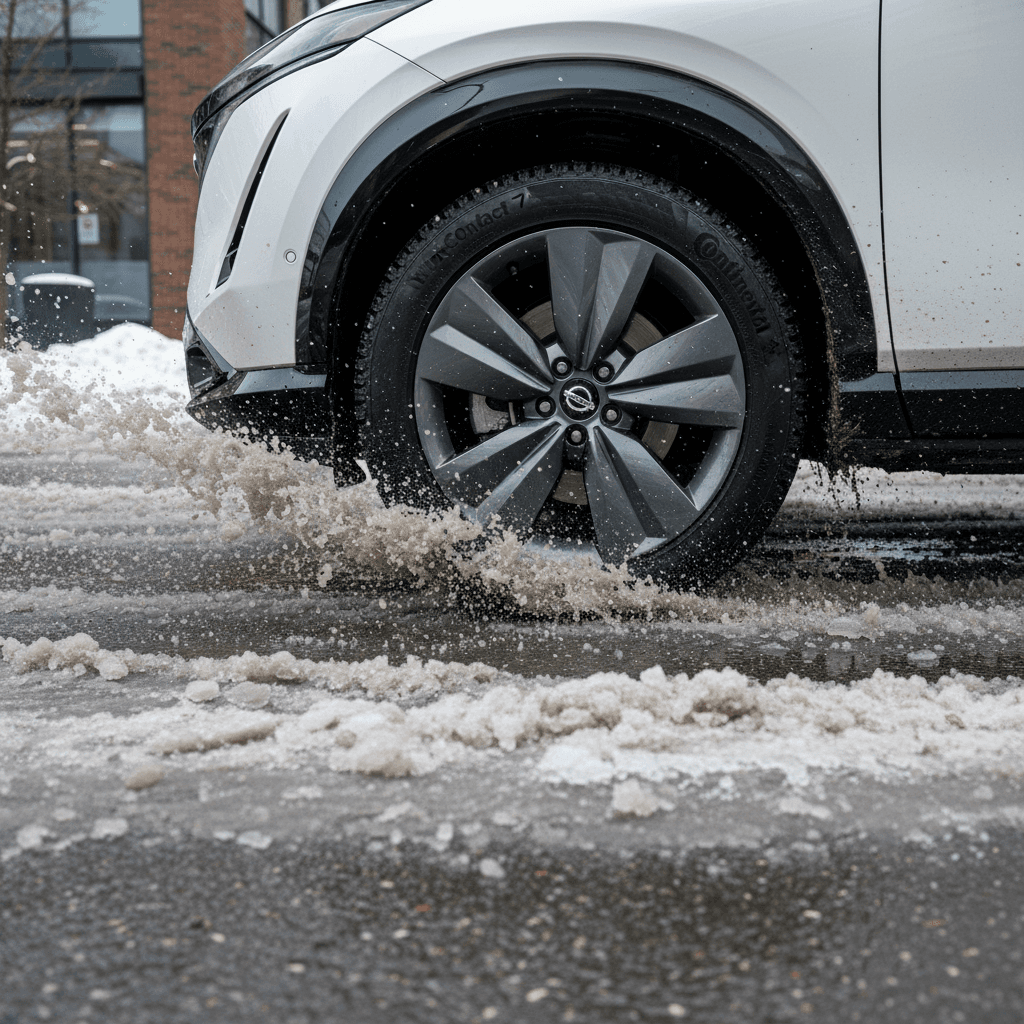
| Tire sizes | 19–20 inch wheels common | Big wheels look great but narrow 18–19" winter tires will give you better snow performance. |
| Curb weight | Heavier than many gas crossovers | Weight helps traction but can lengthen stopping distances if tires aren’t up to the task. |
| Brakes & regen | Strong regen plus conventional disc brakes | Regeneration can reduce brake fade on long descents; ABS and stability control handle split‑grip surfaces. |
Specs vary slightly by market and wheel size, but these are representative for U.S.‑market Ariyas.
Think like a winter rally driver
Using Ariya drive modes in winter
How to make the most of Snow mode and others
Snow mode
Eco mode
Sport mode (use sparingly)
Nissan Ariya vs Other EVs in Winter
When shoppers ask whether the Nissan Ariya is best for snow and ice, they’re really asking how it compares to rivals like the Tesla Model Y, Hyundai Ioniq 5, Kia EV6, and others. The answer is nuanced: the Ariya is among the better winter EVs for traction and comfort, but it’s mid‑pack for cold‑weather range efficiency.
Ariya e‑4ORCE vs Tesla Model Y AWD
- Traction: Both are excellent on snow with proper tires; Tesla’s stability systems feel a bit more aggressive, the Ariya a bit more relaxed.
- Range: Model Y typically hangs on to more winter range on long trips, thanks to very efficient motors and aggressive pre‑conditioning.
- Ride comfort: Ariya’s quiet cabin and smoother ride can make long winter drives feel less fatiguing.
Ariya vs Ioniq 5 / EV6
- Traction: All three offer sophisticated AWD systems; real‑world differences mostly come down to tires and tuning.
- Charging in cold: The Hyundai/Kia duo can be very fast at DC chargers once warm, but they can be more sensitive to cold‑soaked batteries.
- Range stability: All see 20–35% hits in deep cold; none is dramatically better than the others.
Ariya vs older EV crossovers
- Thermal management: Ariya’s liquid‑cooled pack and available heat pump put it ahead of older EVs that lacked robust cold‑weather systems.
- Software: Snow mode and modern stability tuning give you tools early EVs simply didn’t have.
- Result: As a used buy, a well‑spec’d Ariya can feel far more winter‑sorted than first‑generation EV crossovers.
So is it “the best” winter EV?
How to Set Up Your Ariya for Winter Driving
Practical steps to winter‑proof your Ariya
1. Choose the right drivetrain
If you regularly deal with snow‑covered roads or steep driveways, favor an <strong>e‑4ORCE AWD</strong> Ariya. Front‑wheel drive is fine for lighter winters, but AWD gives you more traction margin when it matters.
2. Invest in proper winter tires
A true winter tire (with the snowflake/mountain symbol) dramatically improves grip on snow and ice. Consider downsizing to a narrower wheel and tire combo for better deep‑snow performance.
3. Set up pre‑conditioning
Use the Ariya’s app or in‑car scheduling to warm the cabin while plugged in. That way, you’re drawing heat from the grid instead of your battery on cold starts.
4. Learn and use Snow mode
Familiarize yourself with how Snow mode feels in an empty parking lot. The softened throttle and traction control behavior will be your friend on slick intersections and ramps.
5. Adjust your charging habits
In winter, consider charging a bit more often so you’re not starting a cold‑weather commute with a nearly empty battery. That margin is cheap peace of mind when the forecast turns.
6. Pack a winter kit
Include a small shovel, brush, ice scraper, gloves, and warm layers. An EV like the Ariya can keep you warm if you’re stuck, but you still need basic tools if you slide into a snowbank.
Leverage home charging
Buying a Used Ariya for Snow? What to Check
If you’re shopping the used market, the Nissan Ariya can be an excellent cold‑weather daily driver, as long as you go in with eyes open. This is where a transparent battery report and a careful look at tires and options really pay off.
Used Nissan Ariya winter buying checklist
Confirm e‑4ORCE vs FWD
Don’t assume every Ariya is AWD. Check the build sheet or window sticker for e‑4ORCE, or verify via VIN and badging. If winters are serious where you live, treat AWD as a must‑have feature.
Review battery health and winter range
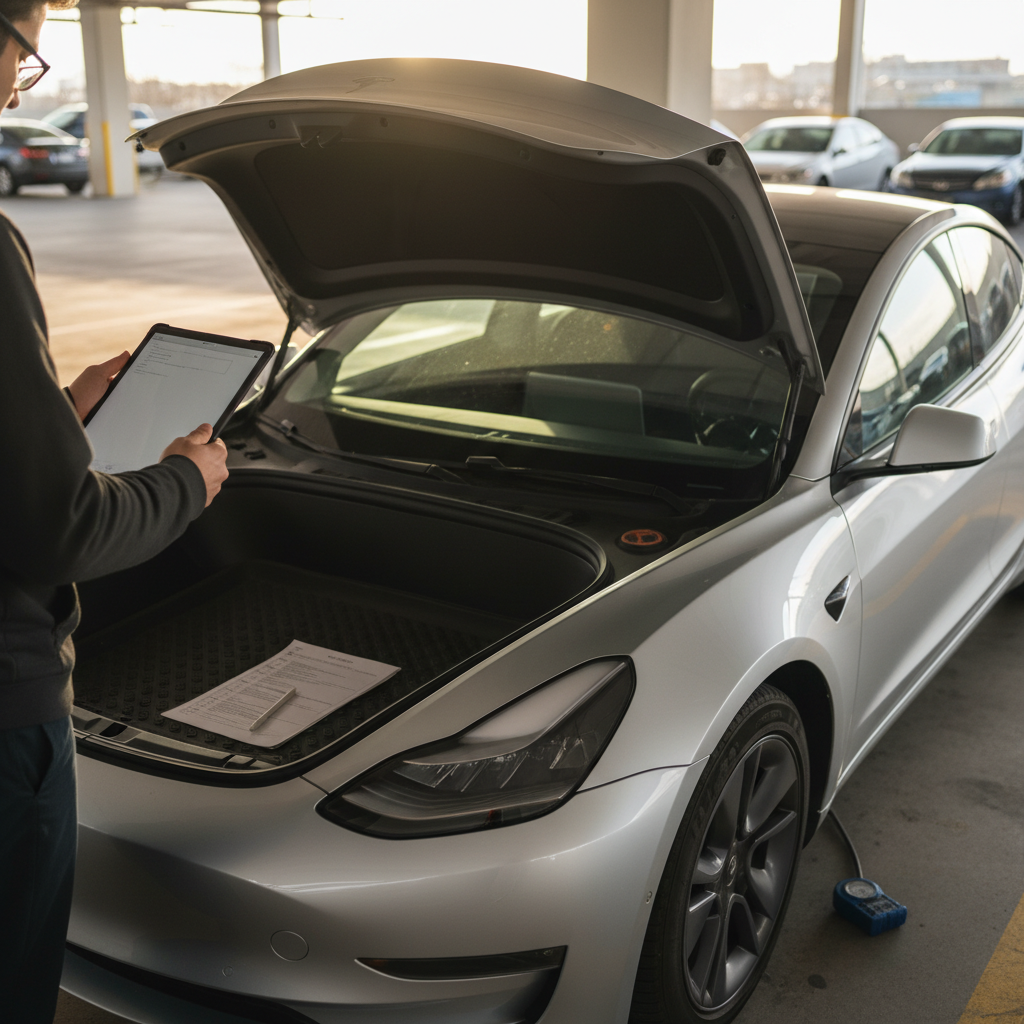
Ask for a <strong>battery health report</strong> or purchase from a seller who provides one. At Recharged, every Ariya includes a Recharged Score Report so you can see how the pack is performing before you commit.
Inspect current tires and age
Old, hardened all‑season tires will ruin any EV’s snow performance. Look at tread depth and date codes, and budget for a fresh set of winter or high‑quality all‑weather tires if needed.
Check for cold‑weather package features
Heated seats, heated steering wheel, and heated mirrors aren’t just luxuries in an EV winter, they’re efficient ways to stay comfortable without blasting cabin heat.
Test drive in mixed conditions if possible
If you can, schedule a drive on wet or slushy roads. Pay attention to how smoothly the car meters power and how early stability control intervenes.
Verify charging setup fits your life
Ask how the previous owner charged the car and whether they pre‑conditioned in winter. Plan where you’ll charge, home, workplace, or nearby Level 2, before the first snow flies.
How Recharged can help
Ready to find your next EV?
Browse VehiclesCommon Winter Mistakes Ariya Owners Make
- Assuming the EPA range applies in January. Plan on significantly less range in sustained sub‑freezing temps, especially at highway speeds.
- Relying on worn all‑season tires. Traction control can’t rewrite physics; if the tires can’t bite, the car can’t go, turn, or stop safely.
- Ignoring Snow mode. Many drivers leave the car in Normal or Sport all winter and never realize how much calmer Snow mode can make starts and low‑speed maneuvers.
- Not pre‑conditioning while plugged in. Warming a stone‑cold cabin from the battery every morning is one of the biggest range killers in winter.
- Driving as if it’s dry. EVs feel confident and quiet, which can lull you into carrying too much speed into icy turns or tailgating in snow. Give yourself more distance than you think you need.
Remember: traction ≠ stopping
Nissan Ariya Winter Driving FAQ
Frequently asked questions about the Ariya in snow and ice
Bottom Line: Is the Nissan Ariya Good in Snow and Ice?
If you equip it thoughtfully, the Nissan Ariya is absolutely a solid choice for snow and ice. e‑4ORCE all‑wheel drive, a low center of gravity, and well‑tuned Snow mode give it secure manners on slippery roads, and its quiet, comfortable cabin makes winter commuting less of a chore. The tradeoff is predictable for any modern EV: you’ll see meaningful winter range loss, especially on long highway drives in deep cold.
If most of your winter driving is local and you can charge at home, that’s a very manageable compromise, particularly if you invest in proper winter tires and learn to use the Ariya’s cold‑weather features. When you’re ready to find an Ariya that fits your climate and driving style, Recharged can help you compare trims, understand real‑world winter range, and see verified battery health before you buy.