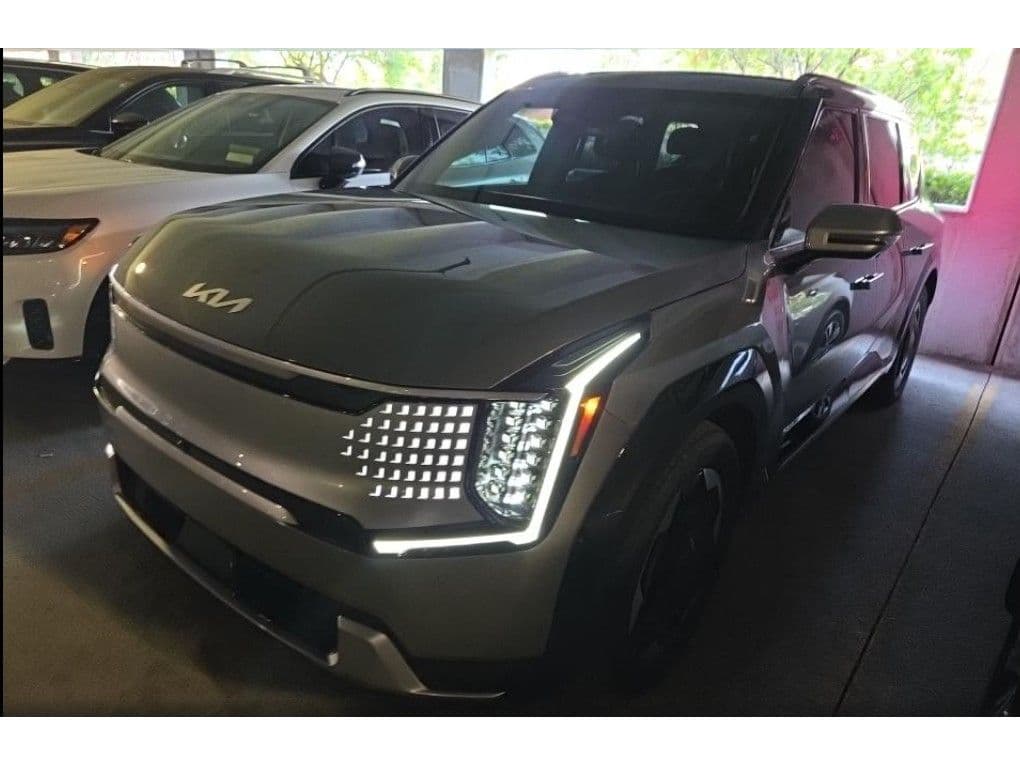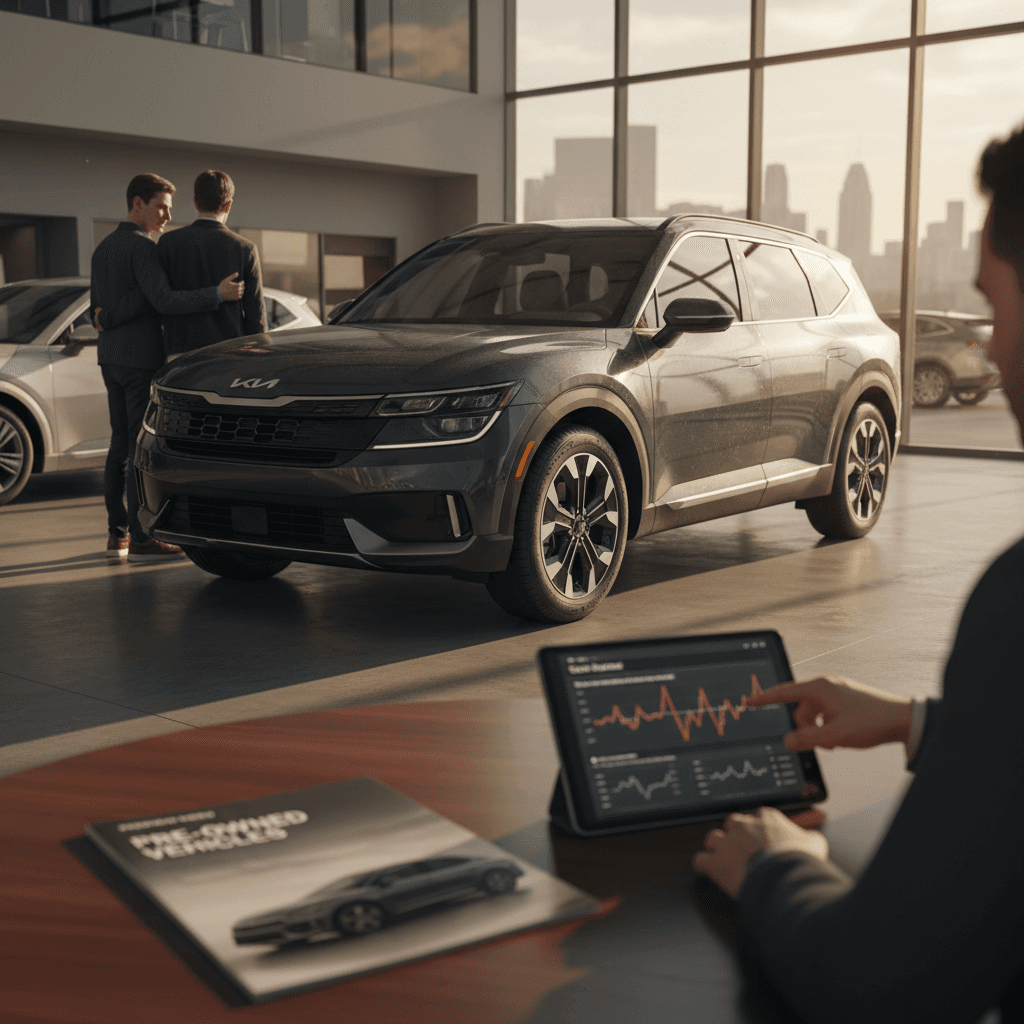
If you’re trying to figure out what a Kia EV9 is really worth, you’ll run into one phrase again and again: Kia EV9 KBB value. Kelley Blue Book has become the default pricing language for both shoppers and dealers, but EVs behave differently from gas SUVs, and that matters a lot when you’re talking about a brand‑new three‑row electric like the EV9.
Quick definition
Why Kia EV9 KBB value matters now
The Kia EV9 is one of the first mainstream three‑row electric SUVs, with 2024 and 2025 models still relatively new. That means there isn’t a decade of resale history the way there is for a Telluride or Sorento. Tools like KBB, Edmunds, and Recharged’s own pricing models help fill in the gap, blending early market data with broader EV trends so you’re not guessing at what a fair deal looks like.
Kia EV9 value snapshot (early-market data)
These numbers aren’t guarantees; they’re best‑available estimates in a fast‑moving EV market. But they give you a realistic starting point, especially if you’re trying to price a used EV9 or sanity‑check a dealer quote.
How KBB calculates Kia EV9 value
Kelley Blue Book doesn’t just spit out a single number for your EV9. It publishes a value range built from auction results, dealer transaction data, and private‑party sales, adjusted for your specific vehicle and ZIP code. For a new or nearly new EV9, KBB is also leaning heavily on forecast models, because there isn’t much real‑world resale data yet.
The main Kia EV9 KBB values you’ll see
Each value answers a slightly different question
Trade‑In Value
Question: What might a dealer offer for my EV9 as a trade?
- Assumes average condition
- Lower than private‑party value
- Convenience built into the price
Private‑Party Value
Question: What could I expect selling my EV9 directly to another driver?
- Usually higher than trade‑in
- Requires your own marketing & paperwork
- Marketable condition matters a lot
Typical Listing / Fair Purchase Price
Question: What’s a fair number to pay at a dealership?
- Reflects current retail asking prices
- Adjusted for incentives and local demand
- Often a bit below MSRP on new EV9s
Use ranges, not single numbers
KBB value vs. MSRP for the Kia EV9
To understand Kia EV9 KBB value, it helps to anchor it against MSRP. Kia’s own pricing for 2025 still lines up closely with 2024:
2025 Kia EV9 MSRP vs. typical new-market pricing
MSRPs exclude destination and incentives; KBB Fair Purchase estimates reflect typical national transaction prices.
| Trim | Approx. 2025 MSRP* | Typical KBB Fair Purchase Price (new) | Notes |
|---|---|---|---|
| Light (RWD) | Mid–$50,000s | Roughly $2,000 below MSRP | Best value for shoppers focused on price, but shortest range. |
| Light Long Range (RWD) | Around low $60,000s | Also several thousand under sticker | Adds a bigger pack and more range; a sweet spot for many buyers. |
| Wind (AWD) | Mid–$60,000s | Typically a bit under MSRP | First dual‑motor AWD trim, often in highest demand where winters are harsh. |
| Land (AWD) | Low $70,000s | Fair Purchase Price still under MSRP | More luxury equipment, smaller audience, values can be more sensitive to options. |
| GT‑Line (AWD) | Mid–$70,000s | KBB suggests a few thousand below MSRP | Top trim with more performance and features but smaller used‑buyer pool. |
Think of KBB’s Fair Purchase Price as the real‑world counterpart to MSRP.
MSRP is not market value
Early depreciation trends for the Kia EV9
Because the EV9 launched for the 2024 model year, depreciation modeling is still evolving. Early KBB data suggests a steeper initial drop than many gas SUVs, common for expensive EVs, but not out of line with other high‑end electric crossovers.
What early KBB data shows
- On paper, a 2024 EV9 can lose around 40–50% of its value in the first two years.
- That looks dramatic, but remember the EV9 starts in the mid‑$50,000s and climbs well into the $70,000s.
- High MSRPs plus fast‑moving tech are a recipe for sharp early depreciation across nearly all premium EVs, not just Kia.
Why the story is more nuanced
- Battery health and warranty transferability can support higher resale than a simple curve would suggest.
- Three‑row EVs are still rare; if gas prices spike again, demand for used EV9s could firm up values.
- State and federal incentives on new EVs can push used prices down even if demand stays strong.
Don’t over‑interpret 10‑year forecasts
The 7 biggest factors that change your EV9 KBB value
What KBB (and buyers) really care about
1. Trim and drivetrain
A GT‑Line AWD with maxed‑out equipment will always value differently than a base Light RWD. Higher trims depreciate faster in absolute dollars but can still attract buyers who want the most range or features for used‑car money.
2. Battery health and range
KBB doesn’t see your live state‑of‑health numbers, but buyers increasingly do. A battery that still delivers close to its original range commands more than one that’s noticeably down, especially on large‑pack EVs like the EV9.
3. Mileage and usage pattern
EVs tolerate mileage well, but 60,000 highway miles and 60,000 rideshare miles are not the same story. Consistent charging habits, modest DC fast‑charge use, and garaged parking all help preserve value.
4. Accident and repair history
Structural damage, airbag deployment, or major cosmetic repairs will push your EV9 toward the bottom of the KBB range. EV‑specific repairs, battery pack replacements, high‑voltage work, are scrutinized even more closely.
5. Options and software
Second‑row captain’s chairs, premium audio, and advanced driver‑assist packages add value, if buyers know they’re there. On the flip side, subscriptions or features that don’t transfer can make a loaded EV9 worth less than it looks on paper.
6. Local incentives and fuel prices
If new EV9s in your area are heavily discounted because of state incentives or dealer programs, used KBB values will follow. Likewise, a spike in gas prices can suddenly make electric three‑row SUVs more desirable.
7. Macro EV sentiment
News cycles about EV adoption, charging reliability, or policy shifts can nudge values up or down. KBB updates its numbers frequently to reflect real‑world bidding behavior at auctions and on dealer lots.
How to check your Kia EV9 KBB value step by step
If you own an EV9 or you’re thinking about buying one used, you should be checking more than one pricing source. Here’s how to get the most out of KBB specifically.
- Go to Kelley Blue Book’s website and select Kia → EV9 → the correct model year (2024 or 2025 for now).
- Choose whether you want a trade‑in, private‑party, or typical listing value, each serves a different purpose.
- Enter your ZIP code. EV values can shift meaningfully between, say, California and the Midwest.
- Pick the right trim (Light, Light Long Range, Wind, Land, or GT‑Line) and accurately choose your options.
- Input mileage and condition honestly. Over‑rating condition just sets you up for disappointment later.
- Note the value range, not just the headline number. Then repeat the process with another tool like Edmunds or Black Book to see how they compare.
- Use those ranges as a reference point when you look at real vehicles on marketplaces like Recharged, where you can see final asking prices side‑by‑side with verified battery health.
How buyers and sellers should read Kia EV9 KBB values
If you’re buying a used EV9
- Treat KBB’s dealer retail or typical listing value as an upper guardrail, not a target to pay.
- Cross‑check any asking price against KBB’s value and what similar EV9s are listed for on sites like Recharged.
- Be willing to pay toward the top of the range for excellent battery health, clean history, and desirable trims like Light Long Range or Wind AWD.
If you’re selling or trading in
- Expect retail buyers to anchor on KBB’s private‑party number and try to negotiate down.
- Dealers will anchor on KBB trade‑in value, but they’ll also look at their own auction and floorplan risk.
- Use supporting documentation (battery reports, service history, photos) to justify why your EV9 deserves the high end of the KBB range.
Where Recharged fits in
Using KBB value alongside the Recharged Score
KBB is good at one thing: turning a messy market into a single, digestible price band. But with EVs, especially something as new as the EV9, you also need to know why one vehicle deserves more than another. That’s where Recharged’s battery‑centric approach comes in.
KBB vs. Recharged: how they complement each other for the EV9
Use both to avoid overpaying, or underselling, your Kia EV9
What KBB brings
- National and regional pricing averages
- Trade‑in, private‑party, and retail values
- Historical data from other Kia models (like Telluride) and the broader EV market
- Quick sanity check on dealer quotes
What Recharged adds
- Verified battery state of health, not just odometer readings
- Recharged Score Report for each vehicle, summarizing pack health, charging history, and usage patterns
- Fair‑market pricing that bakes in real EV‑specific risks and upside
- Financing, trade‑in, and nationwide delivery tailored specifically to used EVs
Ready to find your next EV?
Browse VehiclesWhen KBB and Recharged disagree
Common mistakes people make with Kia EV9 KBB values
- Assuming EVs depreciate like gas SUVs. Early‑market EVs tend to shed value faster up front because tech is moving quickly and incentives distort new‑car pricing.
- Ignoring battery health. Two EV9s with identical specs and mileage can justifiably have thousands of dollars of spread if one pack is significantly healthier than the other.
- Using the wrong condition grade. Calling a car “excellent” when it’s really “good” or “fair” will show numbers a real buyer or dealer won’t honor.
- Forgetting about incentives. A heavily discounted new EV9 pulls down KBB values on nearly new ones; that’s not unfair, it’s just how markets work.
- Relying on a single pricing tool. Smart buyers and sellers check KBB, at least one other pricing source, and real‑world listings from EV‑focused marketplaces like Recharged.
Kia EV9 KBB value: FAQs
Frequently asked questions about Kia EV9 KBB value
Key takeaways on Kia EV9 KBB value
Kia EV9 KBB value is a powerful reference point, but it’s not the whole story. The EV9 is new, electric, and relatively expensive, which means early depreciation can look scary on paper, even as the vehicle itself remains a compelling long‑range family hauler. Use KBB to frame a reasonable price band, then let battery health, history, and local market conditions tell you where within that band a specific EV9 belongs.
If you want to take the guesswork out of it, start your search on Recharged. Every used EV9 we list comes with a Recharged Score Report, EV‑savvy pricing, and support from specialists who live and breathe this market. That way, KBB becomes a sanity check, not a source of anxiety, on your path to owning, trading, or selling a Kia EV9.